
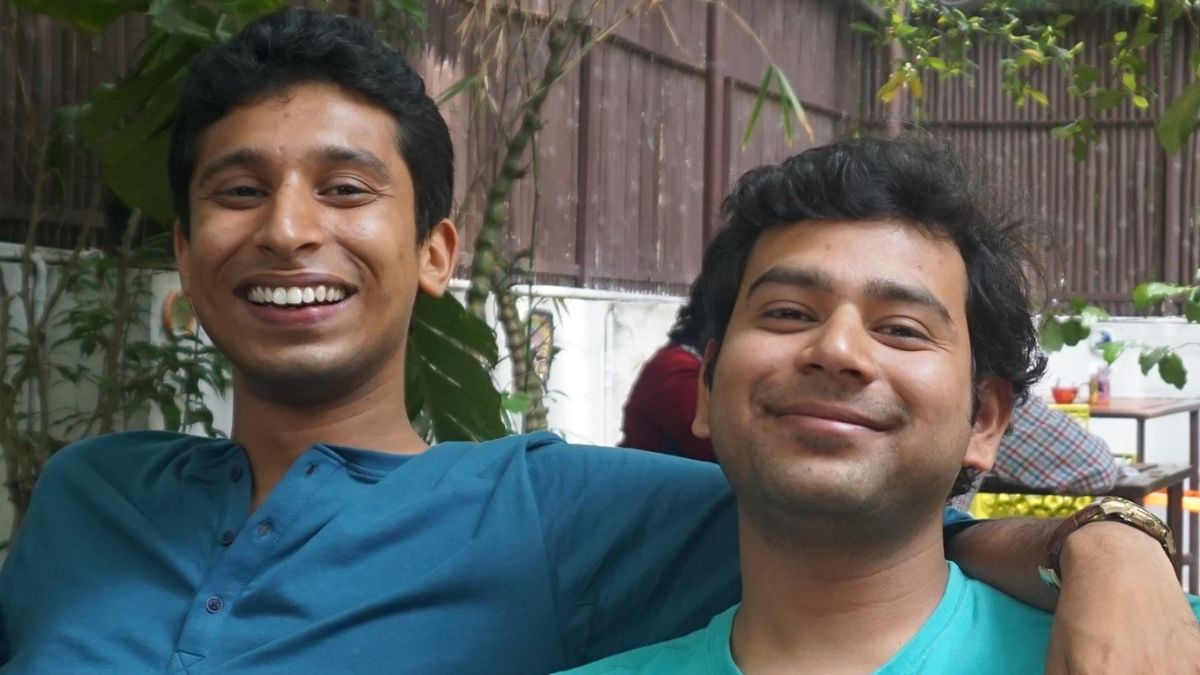
Lede | When Two Engineers Looked at India and Felt Something Was Missing
Meet Vidit & Sanjeev, Meesho Founder—two IIT graduates who did not begin with a grand vision of building a billion-dollar company, but with an uncomfortable question they couldn’t ignore.
In a country where ambition is everywhere but access is not, Vidit and Sanjeev noticed a silent gap. Millions of people wanted to earn, sell, and participate in the digital economy—but the systems were not built for them. E-commerce looked glamorous from the outside, but it demanded capital, inventory, English fluency, digital literacy, and risk tolerance. Most Indians had none of these.
This story unfolds in India during the mid-2010s, when smartphones were becoming cheap, data was becoming abundant, and WhatsApp was quietly becoming the most powerful distribution channel in the country. Commerce was already happening—inside family groups, neighborhood circles, and women-led WhatsApp communities. It just wasn’t visible to Silicon Valley-style metrics.
Vidit Aatrey and Sanjeev Barnwal didn’t “invent” social commerce. They observed it. And that distinction would define everything they built next.
Meesho—short for Meri Shop—was founded in Bengaluru in 2015, but its roots stretch much further back: into modest homes, competitive classrooms, failed experiments, and long nights filled with doubt. Before Meeshobecame one of India’s most talked-about unicorns, it was an idea people didn’t fully understand. Before it empowered millions of small sellers, it almost didn’t survive.
This is not a story of overnight success. It is a story of being wrong repeatedly, listening deeply, rebuilding painfully, and choosing empathy over elegance.
This is Part 1 of the journey—where the founders were still finding themselves, long before the world found Meesho.
2. Background and Early Life
2.1 Vidit Aatrey: Growing Up with Questions, Not Privilege
Vidit Aatrey did not grow up surrounded by entrepreneurs. His early life was defined by a familiar Indian rhythm—education first, stability valued, ambition quietly encouraged but never announced out loud.
Meet Vidit & Sanjeev, Meesho Founder: Journey, Struggles, Lessons. He was curious, competitive, and deeply uncomfortable with superficial answers. Teachers noticed that he didn’t just want to solve problems; he wanted to understand why they existed in the first place. That instinct—to question systems rather than accept them—would later become central to his entrepreneurial identity.
When Vidit entered IIT Delhi, it was a turning point. Not because IIT automatically creates founders, but because it exposes you to contrast. Inside those classrooms were students who questioned norms, challenged authority, and believed they could shape outcomes rather than wait for them.
At IIT, Vidit absorbed more than engineering. He absorbed possibility. He watched peers dream of startups, global impact, and unconventional careers. For the first time, the idea of building something from scratch didn’t feel reckless—it felt logical.
Yet, there was no romantic obsession with entrepreneurship. Vidit wasn’t chasing the startup badge. He was chasing meaning.
2.2 Sanjeev Barnwal: Discipline, Depth, and Silent Strength
Sanjeev Barnwal’s journey was quieter, but no less intense. Also an IIT Delhi graduate, Sanjeev gravitated naturally toward complex systems and hard engineering problems. While others enjoyed visibility, Sanjeev found comfort in depth.
Friends often described him as calm, composed, and deeply focused. He wasn’t the loudest voice in the room, but when he spoke, it carried weight. He believed good systems should be invisible—that technology should work silently in the background, enabling people rather than impressing them.
This belief would later shape Meesho’s architecture.
After IIT, Sanjeev joined Sony in Japan, a move that exposed him to global engineering discipline and an unforgiving standard of excellence. There, he learned patience, precision, and the value of building things that last.
If Vidit represented curiosity and product intuition, Sanjeev represented stability and execution. They didn’t mirror each other. They balanced each other.
3. Founder and Company Overview
3.1 Two Paths That Converged Before the Destination Was Clear
Meet Vidit & Sanjeev, Meesho Founder—not as visionaries with a polished pitch deck, but as professionals restless in comfortable jobs.
Vidit joined InMobi, where he witnessed the mechanics of consumer internet products, growth levers, and monetization models. It was a powerful learning ground, but something felt incomplete. Optimizing clicks and impressions felt distant from real human impact.
Sanjeev, meanwhile, was mastering engineering systems that operated at scale. He learned how large organizations think—but also how slowly they move.
Conversations between the two slowly shifted. From careers. To ideas. To frustration. one question that kept resurfacing: What problem in India actually matters?
They didn’t want to build “another app.” They wanted to build something that felt necessary.
3.2 Meesho Before Meesho: A Failed Beginning
Before Meesho existed, there was FashNear.
FashNear was a fashion discovery platform, inspired by Pinterest-style browsing. On paper, it made sense. In reality, it struggled. Users browsed, but they didn’t engage deeply. Retention was weak. Growth stalled.
This phase hurt.
Not because the idea failed—but because the founders had done “everything right” by startup textbooks, and it still didn’t work. Late nights turned into anxious mornings. Investor conversations grew awkward. Self-doubt arrived quietly.
But something unexpected happened during those user interactions.
Users weren’t just browsing. They were sharing.
They asked questions like:
“Can I send this to my friends?”
“Can I sell this to someone I know?”
That question would change everything.
4. The Problem, Insight, and Trigger
4.1 The Insight Others Missed
Vidit and Sanjeev began paying attention—not to dashboards, but to behavior.
They saw women sharing saree images in WhatsApp groups. College students reselling gadgets. Neighbors selling kitchenware through personal networks. This wasn’t theoretical commerce. It was real, messy, trust-driven commerce.
India wasn’t lacking sellers.
India was lacking infrastructure for sellers.
Traditional e-commerce platforms were built for brands, warehouses, and urban consumers. They weren’t built for homemakers in Indore or students in Siliguri.
This was the insight behind Meesho: enable selling without risk.
No inventory. upfront capital. logistics headaches.
Just a phone, a network, and trust.
4.2 The Emotional Trigger
The real trigger wasn’t market size. It was empathy.
When the founders saw women earning their first independent income through informal selling, something shifted emotionally. This wasn’t about scale anymore. It was about dignity.
That’s when Meesho stopped being an experiment—and became a mission.
5. Early Days and Initial Struggles
5.1 Building for People, Not PowerPoints
The early Meesho product was fragile. Bugs were frequent. Sellers were confused. Logistics partners failed. Returns ate into margins.
There was no playbook.
Vidit and Sanjeev handled customer support themselves. They listened to complaints, frustrations, and fears. Many sellers didn’t trust digital payments. Some didn’t understand margins. Others feared being cheated.
Every problem forced the founders to confront a reality: building for Bharat is harder than building for urban India.
5.2 What Turned Out to Be Harder Than Expected
Education was the hardest part.
Teaching people how to sell, how to price, and how to communicate with customers took patience. Growth was slow. Churn was high.
But every seller who succeeded reinforced belief.
Meesho wasn’t growing fast.
It was growing deep.
6. Failures, Setbacks, and Self-Doubt
6.1 When Progress Looked Like Stagnation
By the time Meesho began finding its footing, exhaustion had already set in.
The company was growing, but not in ways that impressed outsiders. The numbers moved slowly. Unit economics were fragile. Operational fires erupted daily. For Vidit Aatrey and Sanjeev Barnwal, progress often felt invisible.
There were weeks when nothing seemed to work. Sellers stopped responding. Logistics partners failed without warning. Refunds climbed faster than revenues. And every setback felt personal.
The hardest part wasn’t the problem itself.
It was the silence after it.
No applause. No validation. Just the quiet fear that maybe this model was fundamentally flawed.
6.2 The Lonely Weight of Being the Founder
Founders rarely talk about how isolating doubt can be.
Inside Meesho, Vidit and Sanjeev carried optimism for their team while privately questioning their own judgment. There were nights when they wondered whether they were forcing a story that wasn’t meant to exist.
Vidit later reflected that self-doubt doesn’t arrive dramatically. It arrives slowly, disguised as fatigue.
And yet, neither founder allowed themselves the luxury of quitting. Too many sellers were now dependent on the platform. Too many livelihoods were connected to something that still felt fragile.
7. Validation and Early Traction
7.1 The First Moment That Changed Everything
Real validation did not come from investors.
It came from a seller.
When Meesho users began sharing stories of earning consistently—sometimes for the first time in their lives—the narrative shifted. Homemakers spoke about financial independence. Small-town sellers talked about confidence.
These weren’t viral testimonials. They were quiet, deeply human moments.
For Vidit Aatrey, this was the turning point. The startup stopped being an experiment. It became responsibility.
7.2 Why This Belief Was Different
This belief wasn’t based on dashboards. It was rooted in impact.
Meesho wasn’t just facilitating transactions. It was creating micro-entrepreneurs across India. The product was messy, but the outcome was clear.
That clarity gave the founders strength during the next, more brutal phase.
8. Funding, Money, and Growth Constraints
8.1 Convincing Capital to Believe in the Unconventional
Raising capital for Meesho was never straightforward.
Social commerce, WhatsApp selling, reseller-based e-commerce—these ideas didn’t fit traditional venture models. Many investors struggled to see scale in a business built on informal networks.
But some did.
Backers like Sequoia Capital recognized something deeper: Meesho wasn’t chasing affluent users. It was building infrastructure for India’s next 300 million digital consumers.
Funding arrived, but cautiously.
8.2 Growth Without Recklessness
Even after raising capital, Meesho refused to chase vanity growth. Vidit and Sanjeev had seen what reckless expansion did to startups.
Cash was treated as oxygen, not fuel for fireworks.
Every rupee spent had to move the mission forward. This discipline would later become one of Meesho’s quiet strengths.
9. Team Building and Leadership Evolution
9.1 Early Hiring Mistakes Hurt More Than Product Bugs
The founders learned quickly that hiring wrong people was more damaging than building wrong features.
Some early hires struggled with ambiguity. Others didn’t align with Meesho’s empathy-driven culture. Letting them go was painful.
For Vidit, this was one of the most emotionally draining phases. You don’t fire resumes—you part ways with people who trusted you.
9.2 Becoming Leaders, Not Just Builders
As Meesho scaled, Vidit and Sanjeev had to let go of control.
Vidit evolved from a hands-on product thinker into a long-term steward of vision. Sanjeev transitioned from writing code to building engineering leaders.
Leadership was no longer about being the smartest person in the room. It was about building rooms that could function without them.
10. Growth, Scaling, and Operational Chaos
10.1 How Meesho Disrupted Indian E-commerce Quietly
Meesho didn’t win by shouting louder.
It won by listening better.
By focusing on value-conscious users, vernacular language, and trust-based commerce, Meesho rewired how Indian e-commerce worked. It served people Amazon and Flipkart weren’t built for.
This was not a flashy disruption.
It was a structural one.
10.2 When Systems Broke Under Success
Growth exposed cracks.
Logistics failures multiplied. Fraud attempts increased. Returns surged. Technology had to scale faster than people.
Sanjeev Barnwal’s engineering discipline became critical here. Systems were rebuilt. Processes hardened. Quiet fixes prevented public disasters.
Most users never noticed these battles.
That invisibility was the victory.
11. Personal Sacrifices and Burnout
11.1 The Cost Nobody Sees
Success came at a personal price.
Long stretches without rest. Missed family moments. Constant mental load. Founders rarely shut down emotionally because the company never sleeps.
Burnout didn’t announce itself. It accumulated.
Vidit later admitted that there were periods when joy disappeared entirely. Everything became transactional—even success.
11.2 Learning to Breathe Again
Over time, both founders learned something essential: sustainability applies to people too.
Delegation, boundaries, and trust weren’t luxuries. They were survival mechanisms.
12. Lessons, Beliefs, and Values
12.1 What the Journey Taught Them
The biggest lesson Meesho taught its founders was humility.
Markets don’t bend to ambition.
Users don’t care about narratives.
Only value survives.
Vidit Aatrey’s startup mindset evolved from speed to patience. Sanjeev Barnwal’s IIT discipline evolved into people-first leadership.
12.2 Values That Never Changed
Despite scale, some values remained untouched:
User trust over growth.
Long-term thinking over short-term wins.
Frugality over ego.
These weren’t slogans. They were scars earned.
13. Meet Vidit & Sanjeev, Meesho Founder: Present Challenges and Future Vision
13.1 The Struggles Haven’t Ended
Even today, Meesho faces pressure—profitability, competition, regulation, and expectations.
Unicorn status didn’t remove uncertainty. It amplified it.
The founders remain restless, cautious, and deeply aware of how quickly things can unravel.
13.2 The Problem They’re Still Obsessed With
The future vision is simple, but heavy:
Bring the next 100 million Indians into digital commerce—on their own terms.
Not by forcing behavior.
But by respecting it.
Meet Vidit & Sanjeev, Meesho Founder—not as symbols of success, but as builders still carrying the weight of belief.
Because the hardest part of building something that matters
is knowing it can still break.
And choosing to build anyway.
About foundlanes
foundlanes is India’s leading founder-stories platform, documenting the real journeys behind iconic startups and emerging companies. We go beyond headlines to capture struggles, failures, emotions, and lessons that rarely make it to press releases. Every story on FoundLanes is deeply researched, human-first, and written to preserve entrepreneurial truth—not hype—for India’s builders, dreamers, and future founders.