Summary
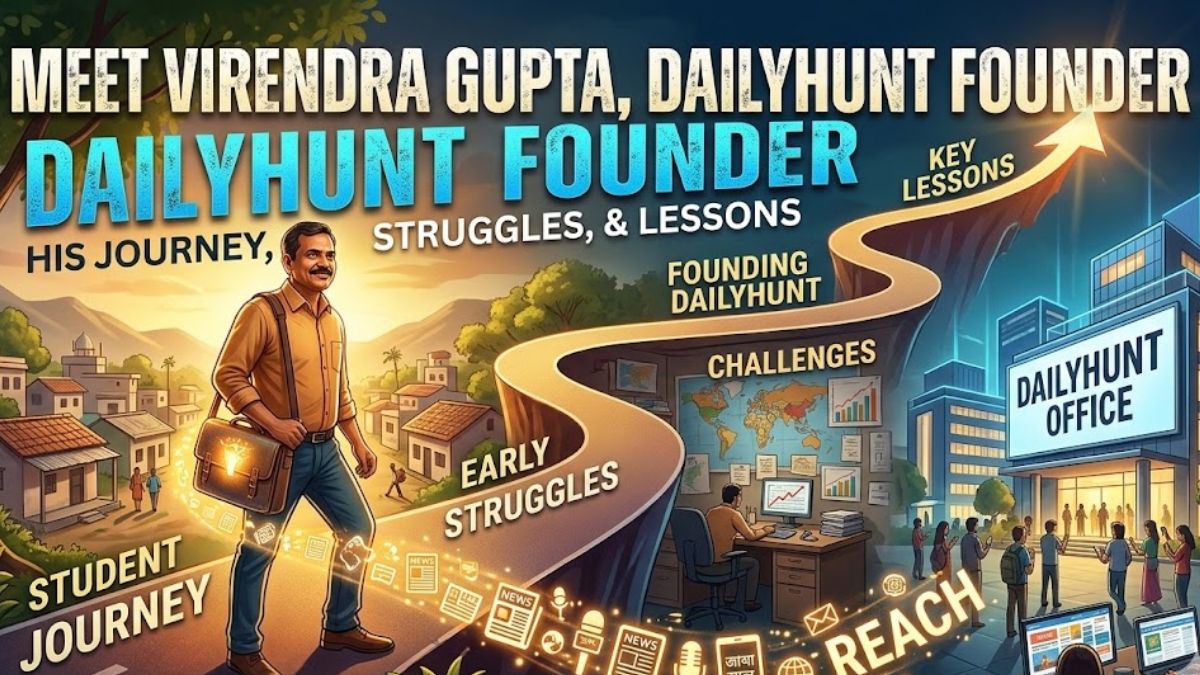
The story of Virendra Gupta Dailyhunt founder is one of foresight, resilience, and a deep understanding of India’s diverse digital landscape. Virendra Gupta, an engineer-turned-entrepreneur from India, built one of the country’s largest local-language content platforms, Dailyhunt, by identifying a gap that many global internet companies overlooked. While the internet revolution initially focused heavily on English-speaking urban users, Gupta saw a much larger opportunity in connecting millions of Indians who preferred consuming content in their native languages.
Virendra Gupta founded VerSe Innovation in 2007 with the vision of delivering digital information services to Indian mobile users. At a time when smartphones were still emerging, his company offered value-added services such as SMS-based alerts for jobs, property, and news. But Gupta realized early that the future would belong to mobile internet platforms. In 2011, he acquired a mobile news aggregator called Newshunt and gradually transformed it into what the world now knows as Dailyhunt.
Dailyhunt, headquartered in Bengaluru, became a pioneering news and content discovery platform delivering stories in multiple Indian languages. The platform now offers content in more than 14 languages and serves hundreds of millions of users across India. Gupta’s mission was not simply to build another news app. His larger vision was to democratize information for India’s “Bharat” audience, the vast population outside metro cities who consume content in regional languages. Through Dailyhunt and VerSe Innovation, he created an ecosystem that connects publishers, creators, and users across linguistic and geographic boundaries.
Over the years, the company attracted major global investors and expanded into new platforms like the short-video app Josh, strengthening its presence in India’s digital media ecosystem. The Virendra Gupta entrepreneur journey reflects how long-term vision, technological innovation, and persistence can shape a startup into a digital media powerhouse.
1. Background and Early Life
1.1 Early Life and Family Background
The Virendra Gupta success story begins in India, where he grew up during a period when technology and telecommunications were beginning to transform the country. Although details about his early family life remain relatively private, Gupta’s upbringing shaped his strong interest in engineering, technology, and problem solving. Like many future entrepreneurs, he developed an early curiosity about how technology could solve real-world problems. This curiosity eventually led him toward engineering education and later into the telecommunications industry, where he would gain the experience that shaped his entrepreneurial journey.
Gupta is known among industry peers as someone who prefers focusing on building products rather than staying in the spotlight. Even today, despite running one of India’s largest digital content platforms, he maintains a relatively low public profile.
1.2 Education and Academic Foundations
Virendra Gupta pursued a Bachelor of Engineering in Electronics and Communication from MBM Engineering College in Jodhpur. After completing his engineering degree, he went on to pursue a Master of Management from the Shailesh J. Mehta School of Management at IIT Bombay. His academic journey exposed him to both technical and managerial disciplines. This combination of engineering knowledge and business management later proved crucial in building technology-driven startups.
During his time in management school, Gupta developed a deeper understanding of how technology businesses operate, how markets evolve, and how entrepreneurs can build scalable companies. These educational foundations would later influence the way he approached the Dailyhunt startup journey India.
2. Founder and Company Overview
2.1 Introduction to Virendra Gupta Dailyhunt Founder
Virendra Gupta is the founder of Dailyhunt and co-founder of VerSe Innovation, one of India’s leading digital media technology companies. Before becoming an entrepreneur, Gupta built a long career in the telecom industry. He worked with companies such as Bharti Cellular, OnMobile, BPL Mobile, and Trilogy, gaining more than two decades of experience in telecommunications and mobile services.
This background gave him deep insight into how mobile networks worked and how digital services could be delivered to millions of users.These experiences eventually inspired the Virendra Gupta startup journey that led to the creation of Dailyhunt.
2.2 The Birth of VerSe Innovation
In 2007, Gupta founded VerSe Innovation as a mobile value-added services company. At that time, smartphones were still rare in India. Most internet access happened through basic mobile phones. VerSe initially delivered information services through SMS and USSD, offering updates related to jobs, real estate, news, and other topics. The company quickly grew and became profitable, serving millions of mobile users across India and other emerging markets. But Gupta sensed that a major shift was coming.
2.3 Acquisition of Newshunt and the Birth of Dailyhunt
In 2011, Gupta acquired a mobile news aggregator called Newshunt, which was developed by former Nokia engineers. The app allowed users to read news and ebooks in multiple Indian languages. Gupta saw enormous potential in the platform. He believed that the future of the internet in India would depend on local language content rather than English-only platforms. Over the next few years, the product evolved and was eventually rebranded as Dailyhunt in 2015. This transformation marked the beginning of the Dailyhunt startup story.
2.4 Target Audience and Market Served
Dailyhunt focused on a massive but underserved audience. India’s internet ecosystem had long been dominated by English-language platforms targeting urban audiences. But Gupta recognized that the majority of Indians prefer consuming information in their native languages. Dailyhunt therefore built a platform that aggregates news, videos, and entertainment content in languages such as Hindi, Tamil, Telugu, Bengali, Marathi, Gujarati, Kannada, Malayalam, Punjabi, Urdu, Assamese, Bhojpuri, and Odia. This multilingual approach allowed the platform to reach hundreds of millions of users across India.
2.5 Dailyhunt Business Model
The Dailyhunt business model revolves around content aggregation, personalization, and digital advertising. The platform partners with thousands of publishers and content creators. It distributes their content through personalized feeds based on user interests and language preferences. Dailyhunt generates revenue through advertising, brand partnerships, and premium content offerings. The model also supports creators and publishers by helping them reach large audiences.
3. The Problem, Insight, and Trigger
3.1 Recognizing the Information Gap
One of the defining insights behind the Virendra Gupta Dailyhunt story was the realization that millions of Indians lacked access to digital content in their own languages. In the early 2010s, most digital platforms focused on English-speaking users. However, India is home to hundreds of languages and dialects. Gupta believed that the next phase of internet growth would come from regional-language users.
3.2 The “Bharat” Internet Opportunity
The Virendra Gupta entrepreneur story is closely linked to the rise of “Bharat internet,” a term often used to describe the next billion internet users in India. These users live mostly outside major metropolitan cities and prefer local-language content. Gupta built Dailyhunt specifically for this audience. The platform aimed to bridge the digital divide by making information accessible to people regardless of their language.
3.3 The Trigger Moment
Gupta’s decision to focus on consumer internet came when he realized that traditional mobile value-added services would soon become obsolete as smartphones and mobile internet expanded rapidly. Although his existing business was profitable, he saw that the future belonged to internet platforms rather than telecom services. This insight led him to acquire Newshunt and pivot the company toward the consumer internet market.
4. Early Days and Initial Struggles
4.1 Technical Challenges in Regional Languages
When Virendra Gupta set out to build Dailyhunt, the vision was ambitious: a digital platform that could deliver content in multiple Indian languages. In 2012, this was no small feat. Smartphones and operating systems at the time were not designed to handle complex Indian scripts. Fonts often appeared broken, text rendered incorrectly, and content was completely unreadable on certain devices.
Gupta and his team faced the technical reality that off-the-shelf solutions wouldn’t suffice. They had to develop a proprietary rendering engine capable of displaying regional-language content consistently across devices. This required painstaking testing on multiple phones, operating systems, and screen resolutions. Every bug they fixed felt like a small victory, but the work was grueling and often frustrating. The stakes were high if the text didn’t display correctly, users would abandon the platform immediately.
This early technical hurdle was more than a coding problem; it was a cultural and linguistic challenge. India is incredibly diverse, with over a dozen major languages and hundreds of dialects. Ensuring each language appeared accurately meant understanding local nuances, fonts, and script behavior. Overcoming these technical challenges laid the foundation for Dailyhunt’s success and demonstrated Gupta’s commitment to truly inclusive digital content.
4.2 Convincing Publishers
Technology alone wasn’t enough. Dailyhunt’s success depended on content, and for that, they needed publishers on board. But convincing traditional media to go digital was an uphill battle. Newspapers, magazines, and local content creators were skeptical. Many questioned whether users would consume news online, especially in regional languages.
Gupta and his team spent months building trust, often visiting small-town publishers in person, explaining the platform, and demonstrating the potential reach. They emphasized that Dailyhunt could connect publishers with millions of users they couldn’t otherwise reach. Slowly, relationships were formed. Early adopters of the platform saw an increase in engagement and audience reach, validating the team’s persistent efforts. The publisher network that Dailyhunt built during these formative years became a critical differentiator for the platform.
4.3 Building a Sustainable Product
In the early stages, Dailyhunt was far from the polished, personalized platform it is today. The team experimented relentlessly with content formats, user interfaces, and recommendation algorithms. Some iterations failed spectacularly; others provided small but valuable insights.
Gupta realized that the platform needed to evolve beyond a simple news aggregator. Users craved personalized experiences. The team began focusing on content discovery tailored to individual language preferences, reading habits, and engagement patterns. Over time, the product matured into a platform that not only aggregated content but anticipated user needs. This iterative process of trial, error, and refinement was critical it transformed Dailyhunt from a functional product into a deeply engaging, habit-forming platform for millions of users.
5. Failures, Setbacks, and Self-Doubt
Like every founder navigating uncharted waters, Gupta faced moments of doubt. Transitioning from a telecom services background to leading a consumer internet platform required a complete shift in mindset, strategy, and operational execution. Early failures included misjudged product features, misaligned user experiences, and challenges in scaling infrastructure for a rapidly growing audience.
The pressure was immense. Competing with global tech giants while trying to serve a diverse, regional user base felt like an impossible task at times. Yet, Gupta’s persistence and long-term vision kept the team moving forward. Every setback became a learning opportunity, teaching the company how to optimize for performance, scalability, and user satisfaction. These difficult early years forged a resilience that would define Dailyhunt’s growth trajectory.
6. Validation and Early Traction
The first signs of success came when Dailyhunt began attracting millions of users across various Indian languages. Between 2012 and 2014, the platform’s active user base grew rapidly, proving that there was a strong demand for localized digital content. By 2014, before securing major venture funding, Dailyhunt had already demonstrated traction and engagement metrics that validated Gupta’s vision. The growing user base confirmed that India’s appetite for regional-language content was real, and that a platform addressing this need could scale nationally. This early traction became a key factor in attracting investors and setting the stage for future growth.
7. Funding, Money, and Growth Constraints
Dailyhunt’s rapid expansion required capital. The company attracted investment from prominent global venture firms, including Sequoia Capital India, Matrix Partners, Omidyar Network, Falcon Edge Capital, ByteDance, Goldman Sachs, and Sofina. These investors not only provided funding but also strategic mentorship, enabling Dailyhunt to scale infrastructure, hire talent, and expand into new product lines.
Over the years, parent company VerSe Innovation raised billions in funding, achieving a multi-billion-dollar valuation. These investments allowed the company to focus on innovation, technology, and user growth without being constrained by financial limitations. Funding became more than just money it was validation, confidence, and a catalyst for executing Gupta’s long-term vision.
8. Team Building and Leadership Evolution
Building the right team was critical to Dailyhunt’s evolution. In 2018, a key leadership decision reshaped the company: Umang Bedi, former head of Facebook India, joined as co-founder. His expertise in scaling technology platforms and building operational efficiency strengthened the leadership team significantly.
Gupta focused on product innovation, content strategy, and long-term vision, while leaders like Bedi helped scale operations, partnerships, and business processes. This complementary leadership approach allowed Dailyhunt to balance innovation with execution. It also demonstrated that assembling the right team people who understand technology, business, and user behavior was essential to navigating India’s complex digital content ecosystem.
9. Growth, Scaling, and Operational Challenges
As Dailyhunt gained traction, scaling the platform became a monumental challenge. Supporting millions of users consuming billions of minutes of content every month required not just more servers, but smarter infrastructure. Gupta and his team invested heavily in building a robust technology backbone capable of handling high traffic while maintaining a smooth user experience.
Beyond infrastructure, personalization became critical. Dailyhunt needed sophisticated machine learning algorithms to tailor content to each user’s language, preferences, and reading habits. This required a combination of engineering expertise and linguistic knowledge. Indian languages are diverse, and understanding the nuances of grammar, regional dialects, and user behavior was essential for relevance. By marrying cutting-edge technology with deep local-language insight, Dailyhunt carved a unique space in India’s crowded digital media ecosystem, standing out not just as a news aggregator but as a platform that truly understood its users.
Operational challenges extended beyond technology. Scaling a multilingual platform meant coordinating across multiple teams product, engineering, content, and partnerships while maintaining speed and quality. Every new feature, algorithm update, or expansion into a new language had to be tested rigorously. These were not minor hurdles; they were daily battles that tested the resilience and ingenuity of the team. Yet, overcoming these challenges cemented Dailyhunt’s position as India’s leading regional-language content platform.
10. Personal Sacrifices and Burnout
Founders of high-growth startups often pay a personal price, and Gupta’s journey was no exception. The relentless pace of scaling Dailyhunt demanded long hours, constant decision-making, and the emotional weight of leading a fast-growing company. Burnout is a real threat in such high-pressure environments.
To manage this, Gupta maintained a disciplined lifestyle. Daily yoga, fitness routines, and mindfulness practices became his anchors, allowing him to manage stress and maintain clarity amid chaos. These personal practices were not just habits they were survival tools. They enabled him to think strategically, make tough decisions under pressure, and remain present for his team. Balancing personal wellbeing with the demands of a rapidly scaling business was a delicate act, but it became a core component of his leadership philosophy.
11. Lessons, Beliefs, and Values
Virendra Gupta’s journey offers profound lessons for entrepreneurs. At the heart of his approach is a deep belief that technology should empower people rather than exclude them. Dailyhunt’s focus on regional languages was not just a market opportunity it was a mission to include millions of first-time internet users and give them access to information in their own language.
Another cornerstone of Gupta’s philosophy is the importance of long-term vision. The success of Dailyhunt was not built overnight. It emerged from years of experimentation, persistence through failures, and an unwavering belief in the potential of regional-language internet content. Gupta consistently prioritized sustainable growth over short-term wins, understanding that real impact and value take time to create.
Additionally, his journey underscores the value of resilience, adaptability, and empathy. Founders must navigate technical challenges, market skepticism, and operational hurdles while keeping their teams motivated and aligned. Gupta’s ability to anticipate market trends, invest in talent, and combine technology with human insight demonstrates how visionary leadership translates into tangible results. Ultimately, Dailyhunt’s story is a testament to the power of combining vision, perseverance, and empathy. Gupta’s experiences reveal that building a transformative platform requires more than technology it demands courage, human-centric thinking, and an unwavering commitment to creating impact.t would evolve in India years before the trend became obvious.
12. Present Challenges and Future Vision
Even today, the Virendra Gupta Dailyhunt founder journey continues to evolve. VerSe Innovation has expanded beyond Dailyhunt to build a broader digital ecosystem that includes short-video platforms, creator networks, and premium content services. One of the company’s major products is Josh, a short-video platform built to serve India’s regional-language creator community.
The company has also made strategic acquisitions, including the digital newsstand platform Magzter, as part of its plan to build a global digital media network. Looking ahead, Gupta remains focused on one central mission: ensuring that every Indian, regardless of language or location, can access information and digital content. The Dailyhunt growth strategy India continues to revolve around technology, localization, and empowering creators across the country. His journey demonstrates how a deep understanding of local markets can create globally significant technology companies.
About foundlanes.com
foundlanes.com is India’s leading startup idea discovery platform. It helps entrepreneurs find actionable startup opportunities, market insights, and industry-specific guidance to turn ideas into real businesses. With deep research and practical resources, foundlanes supports founders at every stage, from idea validation to launch and growth.