Summary
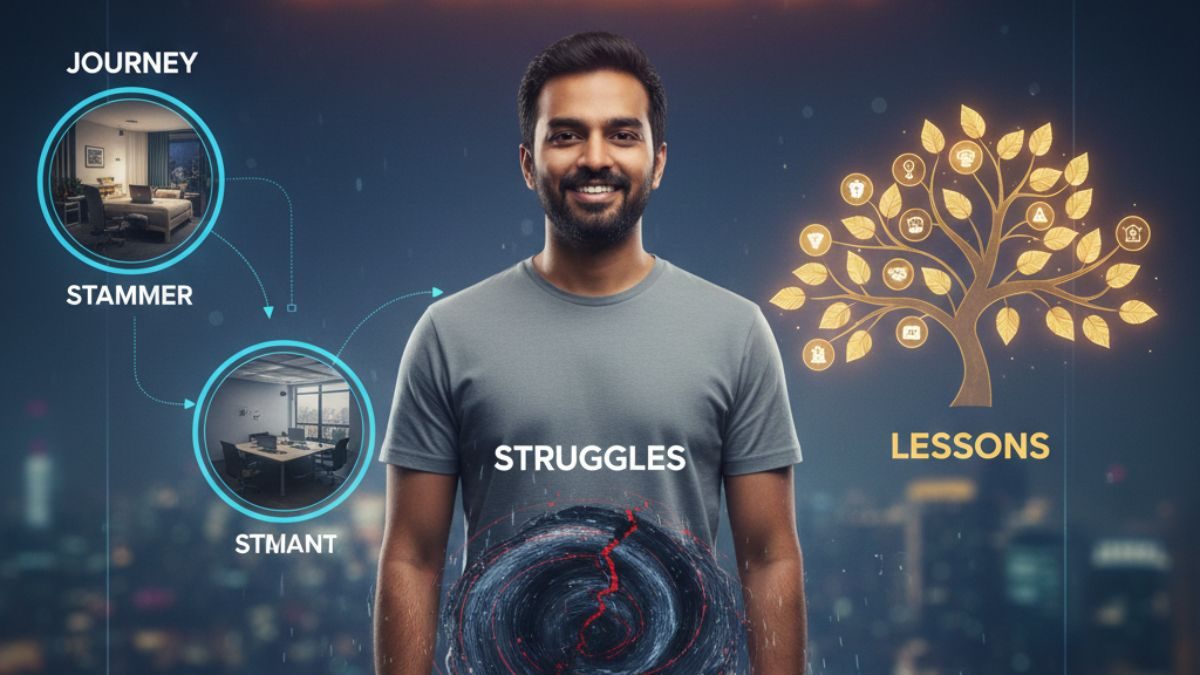
Meet Yashash Agarwal, the co-founder and CEO of Gamezop, one of India’s most intriguing success stories in casual gaming. His rise isn’t a tale of overnight virality but a slow burn built on curiosity, persistence, and a willingness to rethink how people play. Born in India in the mid-1990s, Yashash launched Gamezop in 2015 with his brother Gaurav while still a student at Shri Ram College of Commerce. The idea came from a simple frustration. Why should anyone have to download ten different apps just to enjoy a few minutes of play? That tension led them toward a bet many dismissed at the time: HTML5 gaming could reshape how casual games travel across the internet.
Gamezop didn’t just build a gaming app. It built an engine that could sit inside other apps and turn them into mini gaming hubs. That shift unlocked something powerful. Partner apps began to see higher engagement and new revenue streams without building anything themselves. Early believers came on board, from angels in India to global investors like BITKRAFT Ventures, Velo Partners, and FJ Labs. With that support, the company began scaling at a pace that surprised even its founders. Today Gamezop’s network spans thousands of partners in more than 70 countries. It now goes beyond gaming through new verticals like Quizzop, Astrozop, and Criczop. This is the story of how Meet Yashash Agarwal Gamezop Founder became more than a headline. It’s about early risks, the quiet lessons behind setbacks, and how conviction turned a college project into a global entertainment layer.
1. Background and Early Life
Yashash Agarwal grew up with a natural pull toward screens, systems, and stories hidden inside games. What began as a childhood fascination slowly became a lens through which he understood how people behave, what keeps them engaged, and how small design choices can turn a simple moment into something memorable. When he moved to Delhi for college at Shri Ram College of Commerce, that interest only deepened. Between classes and assignments, he found himself studying user behavior, digital communities, and the gaps between what players want and what most gaming products offered.
His academic life in commerce gave him an early understanding of business fundamentals. At the same time, the environment around him exposed him to India’s growing startup movement. Even though little is publicly recorded about his upbringing, it’s clear that his early years shaped an instinct for balancing creativity with business discipline. By the time he reached college, he wasn’t just playing games. He was studying the mechanics behind why games work and how technology could simplify everyday experiences. Those early sparks paved the way for his first entrepreneurial experiments and eventually the foundation on which Gamezop was built.
2. Founder and Company Overview
2.1 Introducing Yashash Agarwal
To understand Gamezop, you have to understand the way Yashash sees the world. He has the clarity of someone who knows the value of patience and the confidence of someone who has built things from scratch. With his brother Gaurav, he turned a small student-led initiative into a global platform used by millions. Industry recognition followed naturally. His inclusion in Forbes Asia’s 30 Under 30 and Fortune India’s 40 Under 40 wasn’t just about numbers. It was a nod to how he reimagined the distribution of casual gaming in a way the industry hadn’t fully considered.
Behind the accolades is someone who still speaks about the early days with an almost nostalgic honesty. He talks about the failures that never made it to social media, the lonely stretches of experimentation, the trade-offs that come with building something new, and the thrill of watching a product click for the first time. That mix of humility and clarity is what continues to guide Gamezop’s evolution.
2.2 Company Overview and Offerings
Gamezop, incorporated under Advergame Technologies Pvt Ltd in 2015, started with a simple idea that slowly grew into a multi-layered product ecosystem. The premise was bold for its time: allow users to play instantly by embedding high-quality HTML5 games into apps and websites. This removed friction and expanded the reach of games far beyond traditional app stores.
Over the years, Gamezop evolved into more than a gaming platform. It became a distribution engine for interactive content. Quizzop offers engaging quizzes that keep users hooked. Astrozop taps into the deep cultural interest in astrology. Criczop brings cricket content to audiences who live and breathe the sport. Each vertical shows how Gamezop understands different slices of engagement and builds around them.
For partner apps, the impact is measurable. Increased retention. Longer session durations. New monetisation avenues. And all of this without heavy engineering investments.
2.3 Target Audience and Market Served
Gamezop serves a vast audience, but it does so indirectly. Its real customers are app publishers and digital platforms that want to enrich user experience. Whether it’s an entertainment app, a finance product, or an e-commerce platform, Gamezop’s B2B2C model helps them create delightful moments of engagement inside their own ecosystems.
This approach allowed Gamezop to scale across boundaries of geography and industry. Today its partners operate in retail, news, lifestyle, payments, and more. Users from different cultures and countries interact with the same gaming layer in ways that feel native to each platform. That adaptability became one of Gamezop’s strongest differentiators.
2.4 Year of Founding and Business Stage
Founded in 2015, Gamezop has moved through stages that many startups don’t survive. A college experiment became a real product. A small product became a revenue engine. And that engine became a global network.
From seed funding to international Series A backing, the company has grown into a mature startup with a presence in more than 70 countries. It continues to expand its content verticals and deepen partnerships with global publishers. What started as an idea born out of curiosity has become part of the everyday digital experience for millions.
3. The Problem, Insight, and Trigger
In the mid‑2010s, mobile gaming in India and many global markets faced a major friction point: gamers had to find, download, and install separate apps for each game. This slowed discovery and limited engagement, especially for casual players who wanted a quick play experience without the commitment of full app installs. Yashash and his brother saw this problem firsthand. They believed that if music, video, and text content could travel seamlessly through browsers and embedded experiences, games should too. Translating that insight to gaming required a fundamental shift: what if games could be played instantly, anywhere, with zero installs?
The early trigger was not just a product idea but a broader insight into human digital behavior. Casual games are intuitive and short format by nature. Requiring installs created a psychological and technical barrier that fragmented users and throttled engagement. The brothers realized that HTML5 gaming, paired with strategic integration into popular digital products, could rewrite how games entered daily user interactions. This insight became the foundation of Gamezop’s mission: seamless play, distributed broadly, monetised creatively.
4. Early Days and Initial Struggles
When Gamezop began, the idea of casuallu accessible gaming integrated into non‑gaming apps was unconventional. Most mobile gaming ventures at the time focused on building traditional standalone apps for gamers. Yashash and his brother bet on a different path, one that required convincing both investors and partners that frictionless gaming had real commercial value. Their early assumptions included the belief that HTML5 games would perform well enough to compete with native apps. In reality, performance limitations and varying browser behavior created technical challenges that the team had to overcome through iterative experimentation and optimisation.
Another struggle was market education. Convincing product teams at partner apps that gaming could improve retention and revenue required both data and patience. For many app teams, gaming was still a siloed vertical, separate from core user flows. Gamezop had to not only sell a technology but a behaviour change in product strategies. Talent acquisition posed its own early challenges. Recruiting engineers and product professionals willing to take a bet on a non‑traditional gaming model in India took effort and credibility. Many in the ecosystem were tuned to more conventional web or app startups. Crafting a narrative around this new distribution model meant Yashash had to be both evangelist and engineer at once.
5. Failures, Setbacks, and Self Doubt
Gamezop’s journey has included moments that tested the team’s resolve. Early user engagement rates fluctuated. Some game categories performed better than others, forcing the team to rethink curation strategies and partner incentives. Revenue models had to adapt as partner app behaviours evolved. While the company saw growth, scaling profitably while maintaining product quality demanded constant iteration. Unlike consumer‑facing platforms that connect directly with players, Gamezop’s B2B2C model meant that success hinged on two audiences: partners and players. Delighting both simultaneously created pressures that sometimes led to slow adoption cycles.
Public sentiment and comparisons with more traditional mobile gaming companies added to the internal pressure. Founders often field questions about competitive differentiation—a moment that can lead to self‑doubt when benchmarks are unclear or competitors have more mainstream visibility. Though no specific personal emotional accounts from Yashash are widely reported in public sources, the competitive climate of gaming startups and the need to innovate constantly likely contributed to periods of introspection and recalibration within the leadership team.
6. Validation and Early Traction
Concrete validation came when Gamezop began signing major partners willing to embed its gaming centre directly into their products. Instead of chasing end users directly, the platform gained traction through integrations with well‑known apps looking to boost engagement metrics. This approach accelerated Gamezop’s deviation from the pure gaming vertical to a platform that powered behavioural moments inside digital experiences. Seed funding in early 2016, including $350,000 from investors such as Kwan Entertainment and prominent industry angels, offered early external validation and helped the team scale technology and distribution efforts.
User traction grew as integration partners saw measurable increases in engagement. Over time, Gamezop was powering tens of millions of games monthly without requiring players to download anything, proving the core concept at scale. These early wins fortuitously coincided with investor interest that led to a significant Series A round of about ₹32 crore (roughly $4.3 million) led by BITKRAFT Ventures, Velo Partners, and FJ Labs, cementing belief in the Gamezop model and preparing the company for global expansion.
7. Funding, Money, and Growth Constraints
Funding was a critical element in scaling Gamezop beyond a proof‑of‑concept. After initial seed support, the Series A round propelled the company to invest in deeper technical development, broader partner acquisition, and strategic global plans. BITKRAFT Ventures’ backing was significant not just for capital but for domain expertise. As one of the world’s largest gaming‑focused funds, BITKRAFT provided Gamezop with credibility and strategic direction in esports, immersive entertainment, and distribution models.
Despite these financial infusions, the startup still faced growth constraints typical in platform businesses. Scaling distribution across diverse geography required localisation, technical support, and business development hires, putting pressure on resource allocation. Monetising the engagement reliably while offering partners a compelling revenue share also meant balancing short‑term gains with long‑term sustainability. These capital challenges forced the Gamezop leadership team to be lean and strategic, reinforcing product‑led growth combined with partnership sell‑through rather than heavy marketing spend.
8. Team Building and Leadership Evolution
One early leadership challenge was aligning a team around an unconventional product that merged gaming with traditional app ecosystems. Yashash and Gaurav had to wear many hats: visionary, operator, recruiter, and culture carrier. They focused on bringing in talent that was curious, adaptable, and comfortable with iterative problem‑solving.
As the company scaled, the founders learned the importance of defining roles clearly and establishing processes that could empower teams without centralized decision bottlenecks. Delegation became essential to operational efficiency and to drive focus on strategic priorities.Gamezop’s leadership philosophy emphasises communication, clarity, and a shared understanding of the company’s mission. Founders had to navigate the dynamics of working with siblings, especially in moments of professional disagreement, while maintaining trust and respect. Their approach was to separate roles and responsibilities so that business decisions remained objective.
9. Growth, Scaling, and Operational Challenges
Gamezop’s growth wasn’t the kind that arrives suddenly. It was a slow, methodical climb built on a go-to-market strategy that required the team to win trust one conversation at a time. Since the platform depended on embedding games inside existing apps, every pitch meant proving that something as simple as play could lift engagement, stretch retention, and generate new revenue. Many partners were skeptical at first. But once they saw session times grow and churn drop, Gamezop’s value became self-evident.
Behind the scenes, the real work was even harder. Building a consumer app is one thing. Designing a plug-and-play gaming infrastructure that has to function across operating systems, device types, bandwidth variations, and design languages is an entirely different challenge. The team spent years creating APIs, SDKs, dashboards, and support layers that felt effortless on the surface but demanded enormous engineering discipline underneath. Every integration surfaced something new: an app with strict data-privacy requirements; a finance platform that needed latency almost at zero; a media product that wanted the gaming experience to feel visually native. These weren’t just technical problems—they were puzzles that shaped the evolution of the platform.
Scaling beyond India introduced another set of complexities. When Gamezop expanded into the Middle East, including a hub in Bahrain with a $4 million investment, it wasn’t simply about entering a new market. It meant interpreting local regulations, earning the trust of regional partners, and understanding how users in different cultures interact with games and interactive content. User behavior in Dubai isn’t the same as Delhi. Content preferences in Bahrain aren’t identical to Mumbai. These nuances required patient adaptation, deeper research, and a willingness to rebuild parts of the product for new contexts. Growth for Gamezop wasn’t linear. It moved in waves—each wave exposing new weaknesses, new opportunities, and new realizations about what it means to build a global entertainment layer.
10. Personal Sacrifices and Burnout
Every founder knows that growth comes with a personal cost, and Gamezop was no exception. The pressure of building something that keeps millions engaged can be isolating, especially when every decision carries weight for teams, investors, and partners. Even though Yashash hasn’t shared detailed public accounts of burnout, anyone who has built a tech company recognizes the invisible toll. The late-night debugging sessions. The strategic doubts you carry home. The anxiety that comes from knowing the next misstep could erase months of progress.
For founders, the emotional load often comes long before the world sees success. It shows up in long stretches of uncertainty, the tension between work and relationships, and the slow erosion of personal space. When the team is growing fast and new markets are opening up, the pace becomes relentless. Decisions get faster, stakes get higher, expectations compound, and the boundary between work and life fades almost entirely. Across India’s tech and gaming ecosystem, this experience is nearly universal. The glamour of startup life hides a deeper truth. The path requires resilience, a reliable support system, and the ability to step back before exhaustion becomes collapse. For founders like Yashash, pacing growth isn’t just a business need. It’s a survival strategy.
11. Lessons, Beliefs, and Values
Some lessons arrive early in a founder’s journey. Others arrive only after long nights spent wrestling with a product problem or steering through an unexpected market shift. For Yashash, one of the earliest realizations was that innovation only matters if it solves a real user need. Gamezop wasn’t built around technology for its own sake. It was built to make gaming easier, lighter, and more accessible. The magic of instant gaming wasn’t a flashy feature. It was an answer to a problem most users had grown accustomed to without questioning.
Another belief that shaped Gamezop’s path was the power of partnerships. Instead of building a walled-off ecosystem, the company positioned itself as an ally to thousands of apps. That choice created a distribution model that allowed Gamezop to scale globally without aggressive consumer acquisition. It made the company useful, not competitive, and that distinction became one of its biggest advantages. Lean thinking also became part of the team’s DNA. Instead of chasing every opportunity, they focused their energy on strengthening their core product, refining their analytics, deepening partner relationships, and scaling thoughtfully. It’s a mindset that prioritizes clarity over chaos, discipline over distraction.
At the heart of it all is a quiet set of values: build what matters, respect the people who trust your product, and hold on to the belief that good things are built slowly, through care, conviction, and the humility to learn as you grow. If you’d like, I can continue rewriting the remaining sections in the same style or help craft a fully polished long-form feature piece.
12. Present Challenges and Future Vision
Today, Gamezop continues to evolve at the intersection of gaming, engagement tech, and embedded experiences. Ongoing challenges include maintaining competitive differentiation as mobile gaming and interactive content proliferate. Emerging technologies like AI, immersive gameplay, and global monetisation models require continuous innovation. The leadership philosophy Yashash brings is centred on adaptability, learning, and cultural clarity. He emphasises building teams that can navigate complexity while staying connected to core mission goals.
Looking ahead, the company’s long‑term vision is to become the world’s largest distribution network for digital interactive content, starting with games and extending to quizzes, astrology, cricket, and beyond. Its expansion into international markets like the Middle East reflects a belief that frictionless engagement is a universal need in digital products. Above all, Yashash remains obsessed with solving the core problem he started with: reducing barriers to play and making engaging content a seamless part of everyday digital experiences. As the global gaming and digital engagement landscape continues to grow, the Gamezop model could serve as a blueprint for how embedded interactivity drives user loyalty, retention, and monetisation.
About foundlanes.com
foundlanes.com is India’s leading startup idea and deep-dive platform built for founders, operators, and serious entrepreneurs. We go beyond surface-level advice to deliver grounded, research-backed, and experience-driven startup content.
Every guide on foundlanes.com is designed to help readers think clearly, act strategically, and build sustainably. This cloud kitchen startup guide is part of our mission to document real business pathways in India’s evolving startup ecosystem.