Summary
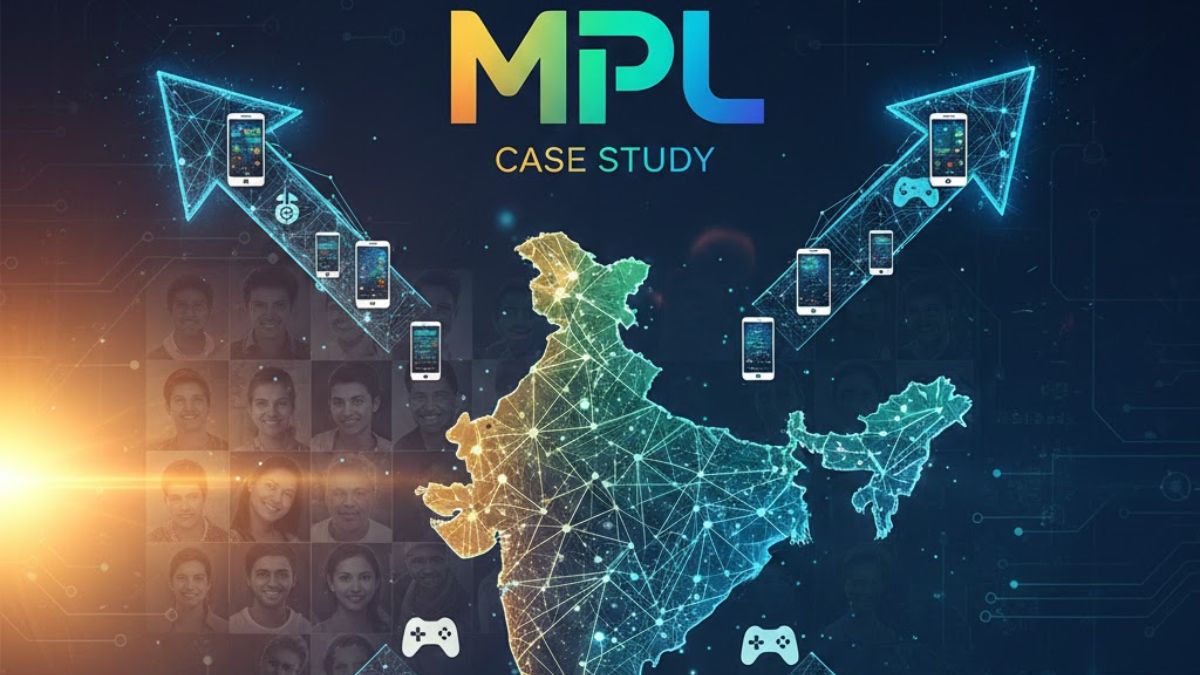
Mobile Premier League, better known as MPL, is a mobile gaming and real-money gaming platform that grew from a small experiment into one of India’s most recognisable gaming products. This MPL Case Study highlights how it began with a simple idea: India had millions of smartphone users who played casual games every day, but they lacked a seamless way to compete, participate in tournaments, and win small rewards. MPL set out to organise that behaviour at scale.
The company was founded by Sai Srinivas and Shubh Malhotra, two entrepreneurs who had earlier co-founded the hardware startup Creo. They launched MPL in 2018, based in Bengaluru, at a time when online gaming in India was beginning to move from hobbyist culture to mainstream entertainment. The founders noticed growing interest around skill-based gaming, casual tournaments, and fantasy sports, yet the market lacked a single platform that offered all of these formats together.
MPL works as a marketplace for games. Developers integrate their games into the MPL app, and users participate in paid or free competitions. The platform facilitates matchmaking, tournaments, and prize distribution. MPL also expanded into fantasy sports, e-sports, and interactive gaming categories as Indian users became more comfortable with real-money gaming. Its growth was built on distribution, a wide variety of game formats, and an aggressive marketing strategy during major events.
Public data shows that MPL has raised more than 375 million dollars from investors such as Sequoia Capital India, SIG, RTP Global, and Pegasus Tech Ventures. At its peak, it reported tens of millions of registered users, making it one of the largest mobile gaming platforms in Asia. MPL’s journey includes rapid expansion, tough regulatory headwinds, strong competition from platforms like Dream11, and a series of strategic pivots that shaped its product and business model.
This MPL case study traces how the startup identified an opportunity, executed at speed, scaled across India, and adapted to a changing real-money gaming ecosystem. It examines the decisions, setbacks, and industry dynamics that influenced MPL’s path, offering a grounded analysis for readers of FoundLanes.com who track India’s digital, consumer, and gaming sectors.
1. Origin Story and the Road to MPL
The origins of MPL can be traced back to the founders’ first startup, Creo, which built smartphones and streaming hardware. Although the company eventually shut down, it created a foundation for understanding how Indian consumers behave on mobile devices. The founders learned how people interact with apps, what holds their attention, and how competition helps certain categories take off.
When Creo closed, the team spent time observing how casual gaming was evolving. India’s smartphone shipments were rising, mobile data prices had fallen sharply after the launch of Reliance Jio, and millions of young Indians were spending more time on games like ludo, cricket simulators, and puzzle titles. But the market was fragmented. Each game had its own app, its own community, and its own monetisation model. Users who wanted variety moved between different apps, often uninstalling one game to try another.
This fragmentation gave the founders an idea. Instead of building one game, why not build a system where any game could operate? They imagined a platform where users could switch between genres without leaving the app, and developers could distribute their games to a ready user base. A tournament and real-money model would make competition more exciting and give users a reason to return. The idea matured into MPL.
2. Founder Journey, Motivation, and Early Struggles
Sai Srinivas and Shubh Malhotra had worked together for years, building consumer hardware and digital experiences at Creo. They were used to handling complex operations and tight hardware cycles, which helped when they moved into gaming. Their motivation for MPL came from three observations. Casual gaming was exploding. People enjoyed competitive formats. And smartphone behaviour in India was shifting toward low-commitment entertainment.
But the transition from hardware to gaming brought challenges. They needed to understand game dynamics, developer ecosystems, reward structures, fraud risks, and the legal boundaries around real-money gaming. They also had to create trust among users who had never paid money to enter a mobile tournament. In the early days, MPL struggled with retention. Users joined out of curiosity, played a few matches, and left. The platform had limited games. Prize pools were small. Payments required careful handling because the category involved real money. The founders spent long hours speaking with gaming studios, convincing them to integrate their titles into MPL. They refined the onboarding flow, experimented with reward mechanics, and spent heavily on customer support to reduce friction.
These efforts set the tone for how MPL would operate. It learned that the Indian gaming audience needs clarity, fairness, and consistent value, especially when money is involved. The founders focused on user trust as much as product polish, which later helped the company scale quickly.
3. The Market Problem MPL Identified
Before MPL launched, India’s mobile gaming sector had two distinct worlds. One was casual gaming, dominated by hyper-casual titles and small arcade games. The other was fantasy sports, which saw attention during cricket season. The two categories rarely overlapped. The casual gaming world had massive user bases but weak monetisation. Fantasy sports had strong monetisation but seasonal interest.
MPL saw an opportunity between these worlds. It wanted to bring casual gamers into a structured, competitive environment. It wanted to build an all-season platform that didn’t depend on one sport or one event. The company believed people liked the idea of earning small winnings while playing simple games. But no platform offered a single destination that combined game variety, competitive play, and real-money rewards.
The problem was not just market fragmentation. It was also the experience. Casual games were usually played alone. MPL turned them into community-driven events. Fantasy sports platforms like My11Circle, MyTeam11, and FanFight operated during major tournaments. MPL wanted daily engagement across dozens of categories. The founders recognized that a marketplace model could solve distribution problems for developers while offering a broad catalogue for users. They decided to build a system that supported multiple game types, handled payments, managed tournaments, controlled fraud, and ensured a level playing field. This approach turned a fragmented user base into a unified audience.
5. How MPL Built and Evolved Its Product
MPL’s first version was simple. It offered a handful of hyper-casual games integrated into a single app. Users entered paid tournaments and won small cash prizes. But scaling this model required deep engineering work. Building a gaming marketplace meant creating developer tools, SDKs, analytics dashboards, and an event-driven backend that could handle thousands of matches at once. MPL needed strong anti-fraud measures because any real-money platform attracts misuse. The company invested in identity verification, gameplay integrity systems, and continuous monitoring.
The tournament system was the heart of the product. MPL designed multiple formats. Some required top scorers to win prizes. Others offered instant battles. The variety encouraged repeat play. The company also added free tournaments for new users to reduce hesitation around paid entries. Over time, MPL expanded beyond hyper-casual titles. It entered fantasy sports, poker, rummy, quizzes, and e-sports. The fantasy category helped MPL acquire sports fans who previously used only dedicated fantasy platforms. The broader catalogue improved retention. The combination of gaming variety, rewards, and tournaments helped the app grow across India’s metros and tier-two cities.
MPL also built internal studios to create exclusive content. This move reduced dependency on third-party developers and gave MPL control over game design, difficulty levels, and engagement mechanics. Exclusive titles allowed MPL to differentiate itself from competitors.
6. Early Traction, First Customers, and the Validation Phase
MPL’s early traction was shaped by a mix of curiosity, experimentation, and rapid iteration. When the platform entered the market in 2018, it didn’t carry the brand recognition it has today. Most users discovered MPL through social media ads, referrals, and small influencer partnerships. The initial user base consisted of casual gamers who wanted quick entertainment rather than deep gaming complexity. The validation phase began when users started competing in tournaments repeatedly. Winners shared their results online, which drew more people to try the app. In the first few months, the user base grew faster than expected. This growth revealed two strong signals. People enjoyed the idea of competing for small rewards, and short-format games worked well with India’s mobile-first population.
The company refined its onboarding experience so new players could reach their first match quickly. It reduced friction during registration and payment flow. This attention to frictionless gameplay helped MPL improve early retention, which is critical in mobile gaming. The team also learned that players returned when they had multiple game options. This insight pushed MPL to accelerate integrations with new developers and expand its catalogue beyond simple arcade-style titles. The validation phase gave MPL confidence that it could build scale. It also helped the team understand the behavioural patterns that would influence future decisions. Users tended to play in short bursts, respond well to clear prize structures, and explore new genres when presented inside a single app. These insights served as the foundation for the next stage of growth.
7. Business Model and Revenue Approach
MPL’s business model relies on tournament participation, commissions, and game-related spending. At its core, MPL charges an entry fee for most paid competitions. A portion of the entry fee goes into the prize pool, and the rest becomes platform revenue. The model is similar to what fantasy sports platforms follow, but MPL applies it to a much wider range of games. As MPL grew, it added multiple revenue streams. Fantasy sports became an important category because it brought in sports-driven spending patterns during cricket season. Skill-based games, including puzzle titles and arcade competitions, provided daily recurring revenue. Certain users preferred strategy-heavy games like rummy or poker, while others gravitated toward fast-paced arcade formats.
Another revenue source came from developer partnerships. When third-party creators integrated their games through MPL’s SDK, the platform earned a share of tournament earnings. This turned MPL into a distribution channel for studios that struggled to acquire users on their own. MPL avoided intrusive advertising inside games because it wanted to maintain a clean user experience. Instead, it focused on transaction-based revenue. By keeping the model transparent, MPL strengthened user trust. Clarity around prize pools, winnings, and withdrawals helped the company stand apart in a category where user skepticism is common.
Over time, MPL shifted resources to categories that offered predictable revenue. Fantasy sports delivered high-volume activity during cricket tournaments. Casual games sustained traffic throughout the year. Together, these segments balanced seasonality and kept the platform active across all demographics.
8. Funding Journey and Investor Participation
MPL’s funding journey reflects both the platform’s ambition and the rapid growth of real-money gaming in India. Over several rounds, the company raised more than 375 million dollars from investors such as Sequoia Capital India, SIG, RTP Global, Moore Strategic Ventures, and Pegasus Tech Ventures. These investors were drawn by India’s expanding gaming market and MPL’s early signs of scale. The early rounds helped MPL invest in engineering, game development, and marketing. Scaling a gaming marketplace required heavy spending on infrastructure, payments systems, and fraud detection. MPL also needed to acquire users quickly to reach network effects, and this required significant marketing spend.
Later rounds supported geographic expansion. MPL entered new markets in Asia and experimented with regions that had similar gaming behaviours. The company also explored e-sports partnerships and collaborated with gaming tournaments to position itself as a mainstream entertainment brand. Funding helped MPL move from being a casual gaming app to a broader entertainment platform. However, investor expectations also increased. MPL had to balance growth with responsible gaming standards, regulatory compliance, and operational discipline. With rising competition in India’s gaming sector, the company needed to demonstrate that it could sustain user acquisition and maintain strong retention without relying solely on high marketing spend.
Despite the pressures, MPL managed to create a clear narrative around scale, technology, and product evolution. This reassured investors that the company was committed to building a long-term gaming ecosystem rather than chasing short-term spikes.
9. Go-To-Market Strategy and Distribution Channels
MPL’s go-to-market strategy focused on accessibility, distribution, and trust. From the beginning, the team recognised that gaming is a high-volume, low-barrier category. Users don’t require long explanations. They want quick access and instant gratification. MPL used this insight to shape how it reached new audiences. One of its earliest distribution tactics involved aggressive digital advertising. The company ran targeted campaigns on platforms where young smartphone users were active. The idea was simple. Show users the chance to compete, win small prizes, and play simple games. This message resonated, especially in tier-two and tier-three cities where mobile gaming was becoming a common pastime.
Another key tactic was the referral system. MPL gave rewards when existing users brought in new players. This created network loops that helped the platform expand organically. Referrals performed well because users trusted recommendations from friends more than ads, especially when real money was involved. MPL also invested in influencer partnerships. Content creators on YouTube and gaming platforms showcased the games, tournaments, and winnings. These collaborations helped the company reach audiences that were sceptical of real-money gaming.
During major sporting events, MPL partnered with teams and leagues to increase visibility. Cricket was a natural fit, and MPL leveraged this association to push its fantasy sports category. The company positioned itself as a gaming destination during high-traffic periods, which helped acquire sports fans and convert them into long-term users. Distribution was not limited to marketing. MPL optimised its APK distribution after real-money gaming apps were restricted on mainstream app stores. The team created a smooth download experience through its website, supported by ads and social media links. This approach became a critical strategy for expanding in a category where distribution hurdles are common.
10. Brand Positioning and Messaging Evolution
MPL’s brand positioning evolved with the market. In the early years, the messaging focused on fun, lighthearted competition, and small rewards. As the platform expanded into more categories, including fantasy sports and skill-based games, its branding began emphasising trust, fairness, and transparency. The company understood that real-money gaming requires stronger credibility than typical entertainment products. MPL invested in customer support, clear withdrawal processes, and visible security layers. These elements were incorporated into the brand narrative.
As MPL grew, it advertised during cricket tournaments, partnered with well-known athletes, and featured mainstream celebrities in campaigns. This helped move the brand from niche gaming circles to a wider audience. Users started seeing MPL as a legitimate entertainment platform rather than an experimental gaming app. The messaging also shifted to highlight variety. MPL wanted users to see it as a destination with dozens of games, events, and tournaments. The company positioned itself not only as a gaming brand but also as a platform for friendly competition. This broader identity helped MPL stand out from fantasy-only competitors.
At the same time, MPL maintained a straightforward tone. Its communication focused on outcomes, fairness, and engagement. The brand avoided overcomplicated storytelling, which helped keep the platform relatable across different age groups and regions.
11. Key Challenges, Failures, and Turning Points
MPL encountered several challenges as it scaled. One of the earliest obstacles was user trust. Real-money gaming in India comes with scepticism. Users worry about rigging, delayed withdrawals, and unclear prize structures. MPL had to earn trust through transparent operations, fast settlements, and consistent customer support. The second major challenge was regulatory uncertainty. Real-money gaming in India sits in a complex environment where state-wise laws vary. MPL had to update its policies and restrict access in certain regions depending on legal developments. This required ongoing legal work and operational adjustments.
Competition also intensified. Fantasy sports giants like Dream11 had strong brand recall and deeper pockets. Younger platforms like Mobile Premier League Indonesia in other markets began exploring similar models. MPL needed constant innovation to maintain differentiation. There were internal turning points as well. The platform experienced high marketing costs that strained unit economics. The team had to refine acquisition strategies and focus more on retention. Another challenge involved game fairness. Keeping every tournament balanced required investment in gameplay integrity systems.
Despite these hurdles, MPL moved forward. It refined its product mix, invested in compliance, and expanded internationally to diversify. These decisions helped stabilise growth and strengthened MPL’s position as a long-term player in the gaming sector.
12. Operational Execution and Scaling Decisions
As MPL moved past its early hyper-growth phase, the company had to shift from rapid experimentation to scalable systems. The platform handled millions of matches each day across multiple game categories, which required strong engineering, real-time data processing, and fault-tolerant systems. Scaling a gaming marketplace is not only about adding servers or increasing bandwidth. It involves balancing user load, securing payments, ensuring fairness, and preventing gameplay manipulation at high volumes.
MPL focused on backend reliability early. The company fortified its match hosting architecture so tournaments could run even during peak hours, especially during cricket matches. Real-money gaming platforms face sudden surges in traffic, and any downtime affects revenue, user trust, and brand reputation. MPL built internal tools that monitored gameplay anomalies and flagged suspicious activity in real time. This became a crucial layer for maintaining integrity.
The team also invested in internal content studios. This decision reduced reliance on third-party developers and gave MPL more control over game lifecycles. With in-house teams, the company could adjust difficulty levels, design tournaments, fix issues quickly, and optimise titles based on player data. It also allowed MPL to experiment with new formats that were tailored for Indian audiences. Scaling decisions extended to payments. MPL integrated with multiple payment gateways to ensure smooth deposits and withdrawals. Fast withdrawals became one of its competitive strengths. In a category where trust determines whether a user returns or not, payment reliability is essential. MPL’s operations team worked to reduce friction at every step, from KYC verification to settlement timelines.
The company also built a strong customer support function. Support teams handled user complaints, fraud reports, and gameplay queries. As MPL expanded into more categories, support became an indispensable part of operational stability. The leadership understood that scaling a real-money gaming platform in India requires not only growth but also operational discipline.
13. Competitive Landscape and Differentiation
India’s online gaming market is vast, diverse, and highly competitive. MPL entered a space dominated by fantasy sports players like Dream11, but its focus was different. Instead of relying on one sport or one category, MPL built breadth into its product. This distinction became central to its competitive strategy. While fantasy sports platforms surged during cricket tournaments, MPL maintained year-round activity through casual and skill games. This helped it smooth out revenue seasonality and expand into demographics that were not limited to sports enthusiasts. The platform’s marketplace model also gave it flexibility. MPL could add or remove games based on performance, user preferences, and regulatory changes. This agility helped it stay ahead in a fast-changing market.
Competition intensified as new players entered the real-money gaming segment. Many startups tried to specialise in single genres like ludo, poker, or rummy. Others attempted broad platforms similar to MPL. Differentiation came down to execution quality, trust, game variety, and marketing reach. MPL invested heavily in visibility during major cricket events, which helped establish brand recall. It also positioned itself as an inclusive platform that catered to both casual gamers and serious competitors. MPL’s commitment to fairness and fast withdrawals became additional points of differentiation in a crowded market.
At the same time, MPL had to deal with global competition. International gaming companies expanded their presence in Asia, and India became a target market due to its large mobile population. MPL responded by improving its technology stack, exploring partnerships, and expanding to regions with similar gaming behaviour. These steps helped the company maintain a leadership position in India’s real-money gaming ecosystem.
14. Growth Metrics, Milestones, and Achievements
Publicly available data shows that MPL grew rapidly from its launch in 2018. At its peak, the platform reported tens of millions of registered users and a wide catalogue of games that spanned casual, fantasy, and skill-based formats. MPL became one of the few Indian gaming companies to achieve unicorn status, reflecting investor confidence and market potential. One of MPL’s early milestones came when it expanded into fantasy sports during major cricket tournaments. This move significantly boosted engagement and revenue. The platform also secured partnerships with sports teams, expanded into e-sports events, and built a strong brand presence during seasons when cricket dominated national attention.
MPL also grew internationally. The company experimented with new markets in Asia and explored opportunities where mobile gaming was already popular. This reduced the risk of being limited to a single geography and helped MPL diversify its user base. Another noteworthy milestone was the development of internal game studios. This strategic move allowed MPL to create exclusive content, optimise performance, and gather deeper insights into user behaviour. It added stability to the product catalogue and helped the platform maintain originality in a market crowded with similar game formats.
While MPL’s exact revenue figures are not publicly disclosed, investor reports highlight strong transaction volumes, high tournament participation, and robust user activity during peak seasons. The company’s ability to handle millions of matches per day became a testament to its technical infrastructure and operational maturity.
15. Team Building and Leadership Approach
MPL’s leadership style grew out of the founders’ experience at Creo. They valued speed, experimentation, and cross-functional collaboration. The company adopted a culture where product, engineering, and data teams worked closely together. This approach helped MPL iterate quickly, especially in the early years when the platform was still figuring out its ideal game mix. The team grew quickly, with hires in engineering, fraud detection, data analytics, design, and marketing. Real-money gaming requires specialised skills, particularly around gameplay integrity, payment security, and user safety. MPL invested in professionals with backgrounds in fintech, mobile gaming, and consumer internet platforms. These hires helped maintain strong internal controls and safeguard user interests.
Leadership emphasised transparency and communication. As MPL expanded into new regions and added more game categories, clarity across teams became essential. The company adopted systems to monitor game performance, detect anomalies, and respond quickly to emerging issues. This operational structure helped MPL scale without losing agility.
Team building was also influenced by compliance needs. Since real-money gaming must adhere to state-wise regulations, MPL built legal and policy teams that tracked regulatory shifts. This helped the company adapt without major disruptions, even during moments when certain states imposed restrictions on skill-based gaming. The organisation’s culture reflected a balance between gaming creativity and operational discipline. MPL aimed to create an environment where teams could innovate while maintaining strict oversight on fairness, fraud prevention, and user trust. This blend became part of MPL’s identity as it matured.
16. Technology, Systems, and Product Infrastructure
MPL’s technology stack played a central role in its scaling success. The platform needed to support real-time tournaments, handle high-frequency transactions, and maintain fair gameplay across all devices. This required a robust backend capable of processing thousands of concurrent sessions. The company invested in cloud infrastructure, real-time monitoring tools, and data pipelines that tracked user behaviour patterns. These systems helped MPL personalise game recommendations, detect fraudulent sessions, and optimise tournament design. For example, difficulty levels in certain games could be adjusted based on performance data to ensure that the experience remained competitive and fair.
MPL also built an internal framework for game integrations. Developers could plug their games into the platform through an SDK, which provided APIs for scoring, matchmaking, and tournament hosting. This ecosystem allowed MPL to scale its catalogue without building everything in-house.
Security was another priority. With real-money transactions involved, MPL implemented rigorous identity checks, multi-layer fraud filters, and anomaly detection algorithms. These systems monitored gameplay speed, device behaviour, and suspicious patterns such as coordinated cheating. Keeping the platform clean was essential for maintaining trust and protecting genuine players. The company also paid attention to user experience. Low-latency gameplay, fast loading screens, and smooth transitions between games became key differentiators. MPL realised that casual gamers often drop off when an app becomes slow or confusing, so every interaction was optimised for speed and clarity. These technical investments made MPL resilient in a market that requires both entertainment value and financial reliability. They also allowed the company to handle traffic spikes during events such as major cricket matches or new game launches.
17. Regulatory, Legal, and Industry-Specific Hurdles
The regulatory landscape for real-money gaming in India is complex. Rules vary across states, and the distinction between games of skill and games of chance often determines whether a platform can operate legally. MPL’s operations had to adapt to these shifting conditions. Certain states imposed restrictions on real-money gaming, prompting MPL to adjust access in those regions. The company worked with legal experts to interpret updates, comply with local guidelines, and maintain responsible gaming norms. This ongoing compliance work was resource-intensive but essential for reducing legal risk.
The company also had to maintain strict policies around age verification, KYC processes, and payment settlements. Any lapses could affect user trust and attract regulatory scrutiny. MPL invested in systems that enforced responsible gaming limits and provided users with tools to manage their playing habits. Another challenge came from industry-wide concerns about unfair play. Regulators and players demanded transparency around gameplay integrity, especially in skill-based games. MPL’s fraud detection systems and internal audits helped demonstrate its commitment to fairness, which became important for both compliance and reputation.
The company also navigated restrictions from mainstream app stores on real-money gaming apps. This forced MPL to distribute its APK independently. While the hurdle was significant, MPL built a smooth download flow on its website and used marketing channels to guide users. This workaround required constant optimisation but allowed the platform to continue growing despite distribution constraints.
18. Current Status of the Startup
MPL remains one of India’s most recognisable gaming platforms, with a large user base and a wide catalogue of games. It has expanded into new markets, experimented with e-sports, and continued refining its fantasy sports segment. The company has also focused on operational efficiency, user trust, and product stability as the ecosystem matures.
While the broader real-money gaming industry faces ongoing regulatory reviews, MPL continues to adapt by strengthening compliance, adjusting game mixes, and maintaining strong operational processes. Its investments in technology, fraud prevention, and internal studios form a stable foundation for long-term relevance. MPL has diversified its offerings across casual gaming, fantasy sports, and skill-based categories. This mix allows it to operate throughout the year without depending solely on sports seasons. The company also continues to build partnerships, expand into new demographics, and explore strategic opportunities in regions with similar user behaviour.
19. Future Outlook and Long-Term Vision
MPL’s future outlook depends on several factors. The Indian gaming industry is projected to grow as smartphone adoption increases, digital payments expand, and young users seek new entertainment formats. Real-money gaming, in particular, is expected to remain popular despite regulatory complexity.
For MPL, long-term growth will likely come from four areas. First, sustained gaming variety. Providing dozens of genres keeps the platform relevant for different user segments. Second, responsible gaming and compliance. As regulations evolve, platforms that prioritise safety and transparency will stand out. Third, new market expansion. MPL’s earlier experiments outside India indicate a willingness to explore regions where gaming culture is strong. Fourth, technology innovation. Enhancing gameplay fairness, reducing latency, and improving user experience can help MPL stay ahead of competitors.
MPL may also explore adjacent categories such as e-sports events, creator-led gaming communities, and interactive entertainment formats. These extensions could position the company as more than a real-money gaming provider. They could turn MPL into a broader digital gaming ecosystem that integrates competition, content, and community. While challenges around regulation, competition, and user-level economics will persist, MPL’s ability to adapt has been one of its defining strengths. The company will need to balance growth and compliance, innovate responsibly, and maintain trust in a fast-moving market. If it does, MPL could remain a major force in India’s gaming industry for years to come.
About foundlanes.com
foundlanes.com is India’s leading startup idea discovery platform. It helps entrepreneurs find actionable startup opportunities, market insights, and industry-specific guidance to turn ideas into real businesses. With deep research and practical resources, foundlanes supports founders at every stage, from idea validation to launch and growth.