Summary
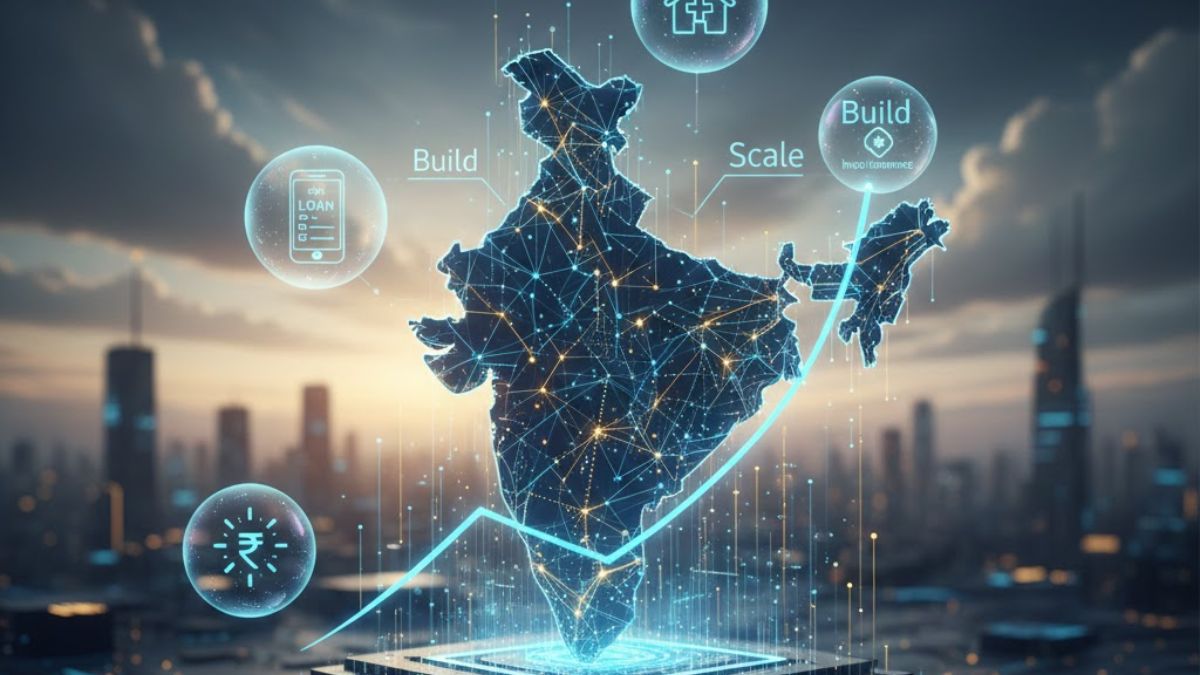
The Navi Technologies Case Study tells the story of a fintech venture that has grown from a bold idea into one of India’s most talked-about financial services platforms. At its core, Navi Technologies is a technology-driven financial services company offering digital lending, insurance, and payment products. The startup exists to reimagine how Indians access credit, mutual funds, insurance, and everyday financial services in a mobile-first, digital world.
Navi was started to address persistent pain points in India’s financial services market: complexity, lack of transparency, and inaccessibility for large segments of the population. In an era when digital adoption was accelerating, many Indians still found financial products confusing or hard to obtain through traditional channels. Navi’s founders saw an opportunity to make financial services simpler, clearer, and more affordable by building a digital ecosystem that combined lending, payments, wealth products, and insurance on a single platform.
Navi Technologies was founded in 2018 by Sachin Bansal, the co-founder of Flipkart, and Ankit Agarwal, a seasoned banking professional with deep experience in financial services development. The company is headquartered in Bengaluru, India, and operates across the country. Its flagship offerings include unsecured personal loans and home loans through its RBI-registered non-banking financial company Navi Finserv, as well as mutual funds, health insurance, and UPI payments via the Navi UPI app.
As of 2025, Navi continues to grow its user base and transaction volume, ranking among the top UPI apps in India with hundreds of millions of transactions. The company has also raised significant debt funding — including ₹170 crore (~$20 million) in a 2025 round led by PhillipCapital — to support its expansion in lending, payments, and insurance. This case study charts Navi’s journey from its origin story and early product evolution to its business model, regulatory challenges, competitive landscape, growth milestones, and future outlook — offering deep insights into how a fintech startup scales in one of the world’s fastest-growing digital financial markets.
1. Origin Story and Early Background
Navi’s genesis lies at the intersection of India’s digital transformation and financial inclusion challenges. In the late 2010s, India witnessed a rapid shift toward mobile internet usage, driven by affordable smartphones and data access. Yet many financial services still operated through offline channels, complicated paperwork, and bureaucratic processes. After exiting Flipkart — India’s e-commerce pioneer — in 2018, Sachin Bansal had both capital and experience but was motivated by a new vision: building technology that could simplify complex services for millions of users. Partnering with Ankit Agarwal, whose background included senior roles in banking — where he saw firsthand how legacy financial products failed customers — Bansal began shaping an idea that would eventually become Navi.
Early on, the leadership focused on understanding the “front door” problem many Indians faced with financial products: discovery, accessibility, and clarity. Traditional banks and lenders offered products through branches and intermediaries, making it hard for tech-savvy users to get quick approvals or transparent pricing. Navi aimed to create a fully digital, app-centric experience where customers could apply for loans, buy insurance, or invest in mutual funds entirely through their phone.
The startup initially operated under the name BACQ Acquisitions Private Limited before transitioning to the Navi brand — short for “navigate,” reflecting a promise to help users navigate financial choices with clarity. From the beginning, the vision was expansive: create a broad financial ecosystem that did not just focus on lending but also wealth and risk management products, all integrated under one roof. This combination of seasoned entrepreneurship and a clear market gap gave Navi a head start in India’s emerging Indian fintech ecosystem, where mobile first-time users were ready for digital first-time financial products. The founders’ belief was simple yet profound: Indians deserved financial services that were easy to discover, simple to use, and backed by technology that reduced friction at every step.
2. Founder Journey, Motivation, and Early Struggles
Sachin Bansal’s story before Navi is widely known in India’s startup narrative. As co-founder of Flipkart, he built one of the country’s most successful tech companies. But after Flipkart was acquired by Walmart, Bansal spent time considering his next move — and deliberately chose a space that was challenging and underserved: financial services. Bansal’s motivation was driven by a belief that technology could democratize access to financial products. He saw India’s millions of users embracing smartphones and apps but still facing hurdles when trying to borrow money, save for the future, or protect themselves with insurance. Partnering with Ankit Agarwal — whose experience spanned banking, risk management, and enterprise operations — brought balance to the founding team.
Yet building a fintech startup was not easy. The founders had to navigate regulatory uncertainty, heavy compliance requirements, and the challenge of building trust in a space where mistakes can have significant financial consequences. Early decisions included acquiring existing businesses — such as the general insurance brand from a distressed seller — to gain product licenses and industry experience. In those early years, the team faced the reality that financial products are not “one size fits all.” User behaviour varied widely across India, and convincing urban and rural populations alike to trust a digital app for loans or investments required significant education. Navi spent considerable time building user interfaces that emphasized transparency, clear pricing, and quick decisions.
The founders also dealt with the practical challenge of scaling engineering and product development teams capable of building secure fintech infrastructure. Competent financial product engineering was in high demand globally, and attracting top talent to Bangalore — while also maintaining company culture — was a continuous effort. Despite these challenges, the leadership’s resilience, combined with a clear vision for digital financial inclusion, set the company on a trajectory that would see it expand into multiple product lines and scale rapidly.
3. The Problem Navi Identified in the Market
India’s financial services landscape has long been characterized by friction. Traditional banking often meant physical branch visits, paperwork, and opaque pricing. Financial products such as personal loans, home loans, mutual funds, and insurance carried complex terms that many users found hard to understand. Even when digital offerings emerged, most were narrow in scope. Lending apps focused on credit alone, wealth platforms handled mutual funds, and insurance players offered risk products. Few companies attempted to bring these services together under a holistic customer experience.
This fragmentation created a real pain point for users who wanted simplicity and transparency. It also made cross-selling difficult for providers — a customer engaging with mutual funds might never consider a personal loan or insurance within the same ecosystem. Navi identified this market gap early. The company’s founders believed that a financial platform had to offer a seamless journey from discovery to decision, regardless of the product category. Users wanted clear pricing, no hidden fees, and predictable experiences. Navi also recognized that the emerging mobile-first population was ready for a digital solution that removed traditional barriers such as documentation and intermediaries.
The venture aimed to solve multiple problems at once: reduce complexity in financial services, improve accessibility for users across income levels, and bring diverse products into a unified app experience. Instead of forcing users to work with multiple providers, Navi sought to become a one-stop digital financial services destination. This problem statement — high friction, fragmented services, and low trust in digital solutions — became the core driver for the company’s expansive product strategy
4. How Navi Built and Evolved Its Product
Navi was built on a simple belief: financial services should feel as easy as using a good consumer app. The team spent its early months developing the technology backbone that would let users apply, verify documents, and receive financial products with minimal steps.
- Lending Products
Lending came first because the demand was clear. Personal loans were often the first financial product many young Indians needed, but traditional banks weren’t built for speed. Navi created a fully digital process with quick eligibility checks and transparent EMIs. It focused on predictable experiences rather than headline rates. - As the product matured, the team introduced home loans through its NBFC arm. This required deeper risk modeling and a more robust underwriting engine, which pushed Navi to strengthen its data infrastructure and KYC systems.
- Mutual Funds
Navi entered the mutual fund space by offering low-cost index funds. While many fintechs added wealth products as an afterthought, Navi treated it as a core offering. Customers could invest directly in funds through the app with clear explanations and simple language. Low expense ratios helped the product gain trust early. - Insurance
The company acquired an existing insurance business to fast-track its entry into health and general insurance. Buying instead of building saved years of licensing and regulatory processes. From there, the team rebuilt the product experience with the same principles used in lending: simple pricing, easy claims, and minimal paperwork. - UPI Payments
UPI became the entry point for millions of users. Navi’s UPI product focused on reliability and predictable performance. Once users trusted the app for payments, they were more willing to explore loans or investments. UPI gave the company a daily-use product rather than just episodic financial offerings.
Over time, Navi’s suite of products expanded not because the company wanted to check boxes, but because each addition made the ecosystem more complete. The result was a financial platform that handled borrowing, spending, investing, and protecting, all inside one mobile application.
5. Early Traction and Validation
Navi gained traction in phases. The lending business provided the first big wave of users because personal loans were straightforward, high demand, and easy to distribute digitally. Early adopters were mostly salaried professionals in urban centers who wanted a fast, reliable alternative to banks.
Once the mutual fund arm launched, it began attracting a different type of customer: individuals who wanted transparent index funds with low fees. This helped Navi build credibility in the wealth management space. The biggest leap came when the company entered the UPI ecosystem. UPI not only expanded Navi’s reach but also gave it daily transaction volume. This placed Navi among the top payment apps in India by 2025 and brought in millions of users who had never previously interacted with its lending or insurance products. Navi’s early traction validated two ideas. First, there was strong demand for simple financial products. Second, a one-app ecosystem could work if each product offered clear value on its own.
6. Business Model and Core Revenue Drivers
Navi operates as a diversified financial platform, so its revenue model spans multiple categories.
- Lending Revenue
This remains the strongest driver. Navi generates income through interest on personal loans and home loans, along with processing fees and other lending-related charges. Because it operates its own NBFC, the company controls underwriting and collections, giving it better margins than marketplaces. - Insurance Premiums
Health insurance and general insurance contribute steady revenue. Navi focuses on policy premiums, renewals, and cross-selling opportunities. Insurance also deepens long-term customer value because policies renew annually. - Asset Management
Index funds generate income through management fees. Navi’s low-cost approach means margins are lean, but the scale makes it worthwhile. Asset management also boosts trust, since low-fee funds signal customer-first intent. - UPI Payments
UPI is mainly a user acquisition and engagement tool. It doesn’t produce direct revenue, but it brings daily usage, payment history, and distribution for higher-margin products. The more a customer uses UPI, the easier it is to cross-sell a loan or insurance policy later. - Cross-Product Synergy
Navi’s long-term revenue strategy isn’t built on any single product. It’s about lifetime value. A customer who starts with UPI may eventually take a loan, begin investing, and buy insurance. Each product reinforces the others, making the ecosystem stickier.
The business model shows that Navi is not just a lender or an investment platform. It’s a financial services stack with multiple revenue engines working together.
7. Funding History and Capital Strategy
Navi’s capital strategy is unusual compared to typical startups. Instead of chasing frequent equity rounds, the company relied heavily on the founders’ capital and later on debt funding to scale lending operations.
- Founder Capital
Sachin Bansal invested a significant portion of his personal wealth into Navi. This allowed the company to grow without immediate pressure from outside investors. - Debt Funding
Debt became essential once the lending product scaled. In 2025, Navi secured around ₹170 crore (about 20 million USD) in debt funding from PhillipCapital. This wasn’t an isolated event. Debt gave Navi the power to expand its NBFC operations while keeping ownership intact. - Selective Acquisitions
The company also used capital to acquire businesses like an existing general insurance firm and other regulated entities. This let Navi bypass long regulatory approval processes and build products faster. - IPO Plans
In its earlier years, Navi explored the possibility of an IPO. While regulatory shifts delayed those plans, the intention showed that Navi aims to operate with the discipline of a mature financial institution.
This combination of founder investment, debt financing, and strategic acquisitions helped the company scale quickly without losing control or focus.
8. Go-to-Market and Distribution
Navi’s go-to-market strategy leaned heavily on digital distribution. The app became the central hub for discovery, onboarding, and product usage.
- Mobile-first Distribution
All products were designed for mobile from day one. The team knew that India’s growth would come from smartphone users, not desktop users. A clean app experience reduced friction and made onboarding simple. - UPI as a Distribution Layer
UPI accelerated distribution across the country. Once users installed Navi for payments, promoting loans or insurance through in-app prompts became seamless. - Trust Through Pricing
Low expense ratios in mutual funds and transparent EMI calculators in lending helped win trust. In a sector where skepticism is common, clarity was a differentiator. - Acquisition Through Utility
Navi didn’t rely on large marketing budgets. Instead, it created utility-driven products that attracted users because they solved immediate needs: sending money, paying bills, taking a loan, or buying insurance. This approach created a flywheel where product usefulness drove organic growth, which reduced acquisition costs and increased lifetime value.
9. Brand Positioning and Messaging Evolution
Navi’s brand positioning has remained consistent since its early years. It focused on financial products that are simple, transparent, and fast. While many fintechs used emotional messaging around empowerment or lifestyle, Navi stayed close to clarity. Its communication centered around things users cared about most: low costs, predictable experiences, and no hidden fine print.
As the company expanded from lending to insurance and investments, the messaging shifted from single-product utility to a broader identity as a complete financial platform. Instead of portraying itself as a challenger to banks, Navi framed its products as straightforward alternatives. This helped position the company in the minds of users who were comfortable with digital services but still cautious about financial decisions. Marketing remained understated. Navi didn’t rely on celebrity endorsements or large advertising campaigns. The focus was on making the product speak for itself. Users encountered simple, informational messaging that explained how EMIs worked, what index funds meant, or how claims were processed. It reflected a product-led growth strategy, where brand trust was earned through clarity rather than noise.
10. Key Challenges, Failures, and Turning Points
Navi’s journey included major challenges, many shaped by the regulatory nature of finance. The lending business required consistent compliance with RBI norms, especially around KYC, interest rates, and underwriting practices. Building this infrastructure from scratch took time and created operational pressure in the early phases.
The insurance segment brought its own hurdles. Claims processes are complex, and redesigning an existing insurer into a modern digital-first brand required deep operational work. The team had to rebuild workflows while retaining the reliability customers expected from a licensed insurer. Another turning point came during the company’s early IPO planning stages. Market conditions and regulatory considerations delayed those plans. While this slowed the company’s timeline, it influenced Navi to strengthen its internal financial discipline and refine its long-term strategy.
Competition was another challenge. The fintech ecosystem in India is crowded, with players focusing on lending, credit, UPI, and insurance. Navi had to defend its market share in each category while building a unified platform that felt cohesive. Balancing growth with compliance and product quality was one of the most complex parts of its evolution. These challenges shaped Navi’s philosophy. Instead of chasing rapid expansion, the company adopted a steady approach centered on reliability, transparency, and long-term customer trust.
11. Operational Execution and Scaling Decisions
Scaling a fintech company in India is a test of execution more than vision. Navi invested early in engineering talent, risk modeling, and regulatory expertise. This helped the company move quickly without compromising compliance.
Building its own NBFC allowed Navi to control the full lending lifecycle, from underwriting to collections. This decision was central to its strategy. It gave the company flexibility to refine credit models, adjust its risk appetite, and learn from customer behavior. Home loans required deeper operational capability, so Navi invested in field operations and verification processes that blended digital systems with ground-level execution. Insurance operations needed a different approach. Claims management, underwriting, policy servicing, and regulatory reporting had to function with precision. Navi used technology to simplify customer interfaces, but the backend required skilled teams who could manage it at scale.
In asset management, operational execution meant maintaining low expense ratios while offering stable, diversified index funds. This required partnerships, robust compliance, and reliable fund administration. The company’s scaling decisions reflect a pattern. Navi entered regulated sectors intentionally and built systems that could sustain long-term operations. Instead of experimenting with too many ideas, the team focused on execution depth in each business line.
12. Competitive Landscape and Differentiation
India’s fintech ecosystem has grown rapidly over the past decade. Companies such as Paytm, PhonePe, Google Pay, Cred, Groww, PolicyBazaar, and Zerodha operate in segments that overlap with Navi’s offerings. Competing in lending, investments, insurance, and payments means facing specialized rivals in every category.
Navi’s differentiation comes from its integrated model. Most fintechs excel in one or two verticals. Navi built a portfolio that spans payments, lending, insurance, and asset management within one app. While this requires more operational discipline, it gives Navi a long-term advantage. Users don’t need to switch between apps to manage their financial lives. The company’s focus on simple pricing also sets it apart. In mutual funds, Navi became known for low-cost index funds. In insurance, it emphasized straightforward policy terms. lending, it maintained transparent EMI plans. This clarity appealed to customers who were wary of fine print and hidden charges often seen in traditional financial services.
Another differentiator is capital strategy. Navi didn’t rely heavily on venture capital. With strong founder backing and access to debt, the company scaled without dilution pressure. This allowed it to prioritize product quality over aggressive growth tactics. Competition remains intense, but Navi’s approach centers on reliability, transparency, and breadth of product offering rather than heavy marketing or incentives.
13. Public Metrics, Milestones, and Achievements
Navi’s milestones reflect steady progress in multiple verticals. The lending arm extended personal loans to millions of users across the country. The home loan segment grew as the company strengthened its underwriting models and improved the customer experience.
Its mutual funds gained traction with cost-conscious investors who preferred index funds. Over time, the asset management arm became a recognized player in the passive investment space. Insurance expanded through the acquisition of an established insurer. Navi rebuilt its service experience and positioned itself as a digital-first provider. The company’s health and general insurance products became known for their clear terms and quick onboarding.
The biggest public milestone came when Navi entered the UPI payments space. Within a short period, it became one of the leading UPI apps by 2025, adding millions of users. UPI brought daily engagement and allowed Navi to distribute financial products more effectively. These achievements showed that a multi-product fintech ecosystem could work if built with discipline and clarity. Navi grew by solving real gaps in lending, investing, and insurance rather than by relying on promotional campaigns.
14. Team Building and Leadership
Team building has been one of Navi’s strengths. The leadership emphasized engineering talent, risk analysts, compliance professionals, and product managers who understood financial systems well. Hiring for depth rather than breadth allowed the company to build strong vertical teams across lending, insurance, and asset management. Sachin Bansal played an active role not just as a founder but as a strategic leader. His experience at Flipkart shaped his approach to culture and execution. He encouraged long-term thinking and disciplined decision-making, avoiding the fast-growth mindset common among many startups.
The company built specialized teams for regulated segments. Insurance required actuarial talent. Asset management needed fund managers and SEBI compliance experts. The lending business relied on credit risk and collections specialists. Bringing these diverse professionals under one roof helped the company manage its broad product range. Navi’s leadership style centered on efficiency, clarity, and accountability. Teams were encouraged to build products that solved real problems and could sustain large volumes without friction.
15. Technology, Operations, and Platform Architecture
Navi’s technology stack was shaped by the needs of regulated industries. Handling loans, insurance claims, fund management, and UPI transactions required infrastructure built for accuracy and scale. The company invested heavily in backend systems that could process data securely and in real time. Engineering teams designed modules that allowed lending, investments, and insurance to operate independently while still sharing customer profiles and analytics.
Machine learning models were central to risk assessment. The lending engine evaluated creditworthiness using repayment history, bank statements, transaction behavior, and thousands of alternate data points. Over time, these models learned to detect patterns relevant for underwriting small-ticket personal loans as well as large home loans. Insurance operations had a different technological requirement. The company built digital submission and verification systems that made claim filing more transparent. While the backend still relied on regulated processes, the customer-facing flow remained clean and fast.
UPI required a different layer of engineering. Payments infrastructure needed to handle millions of transactions per day at high concurrency. Navi built this system with a focus on reliability and failovers. As transaction volume grew, the app remained consistent, reinforcing its position as a dependable UPI option. Across all verticals, the technological philosophy stayed the same: build simple front-end flows, automate complex backend tasks, and maintain reliability at scale.
16. Regulatory, Legal, and Industry-Specific Complexities
Fintech companies operate in one of the most regulated sectors in India, and Navi had to navigate multiple regulators. The Reserve Bank of India supervised its lending operations. IRDAI governed every aspect of its health and general insurance business. SEBI oversaw its asset management products. NPCI regulated its UPI operations. This led to strict rules around data security, KYC, credit underwriting, permissible charges, disclosures, and claim handling. Navi built compliance teams that worked closely with regulators to align product design with industry norms.
One major regulatory development influenced the digital lending ecosystem. The RBI tightened guidelines around loan disbursement, data sharing, and collection practices. Navi adapted early, using these guidelines to refine its own operating model. Being registered as an NBFC gave the company more structure compared to fintech players who relied solely on third-party lending partners.
Insurance brought additional rules around policy wording, solvency margins, distribution norms, and claims management. Navi’s acquisition of an existing insurer helped it inherit longstanding compliance structures. Even then, modernizing these systems took time. Operating across four regulated verticals meant each team had to maintain precision. Compliance wasn’t an add-on; it shaped product design, operational workflows, and customer communication. The company’s disciplined approach helped it avoid many pitfalls common in fast-growing fintechs.
17. Current Status of Navi Technologies
Navi entered 2025 with a multi-vertical fintech ecosystem built around lending, insurance, investments, and payments. The Navi app grew significantly after integrating UPI, which expanded daily user engagement. The personal loan business remained stable, and home lending continued to grow as verification processes matured.
Navi Mutual Fund strengthened its position in the passive investing category. Low-cost index funds remained its core offering, appealing to long-term investors. The insurance segment focused on improving claim experience and expanding digital distribution. The company’s disciplined approach created a stable financial profile. It did not chase hypergrowth, which allowed it to scale sustainably even during fluctuating market conditions. Navi continued to prioritize operational depth over aggressive expansion.
Publicly available information shows that Navi has kept its financials and strategy updates transparent, especially after it filed draft IPO documents. While market conditions influenced the timing of its listing plans, the disclosures offered insights into its revenue mix, expenses, and long-term vision. The platform now represents one of the most diversified fintech ecosystems in India, combining lending, insurance, asset management, and payments into a cohesive offering.
18. Long-Term Vision and Future Outlook for Navi Technologies Case Study
Navi’s long-term vision centers on simplifying finance for millions of Indians. Its products aim to provide reliable credit, transparent insurance, low-cost investments, and seamless payments within a single ecosystem. This direction has been consistent since launch and continues to guide its roadmap.
In the coming years, Navi may expand its lending portfolio further. As credit demand rises across urban and semi-urban India, the company’s NBFC infrastructure positions it well to scale responsibly. Improvements in underwriting models could help it reach new borrower segments while maintaining control over credit risk. Insurance is likely to see deeper digital integration. The company has already built strong digital flows, but claims management remains a complex area industry-wide. Navi may continue focusing on simplified policies and faster reimbursements, which align with user expectations.
Investments could see more passive funds and retirement-oriented products. Low-cost investing remains a significant opportunity in India, and Navi’s focus on index funds gives it a strong foundation in this category. UPI holds strategic importance in the long run. Payments create daily touchpoints that no other financial product can match. This gives Navi a distribution advantage for cross-selling lending, insurance, or investment products, as long as the experience remains seamless and dependable.
From a broader perspective, Navi is building a long-term institution rather than a short-term fintech story. Its disciplined growth, operational depth, and multi-product focus show its intent to become a full-stack financial services company built on simplicity and trust. As digital finance becomes mainstream across India, Navi’s strategy positions it to remain a meaningful player in the Indian fintech ecosystem. The company’s future outlook is tied to how effectively it can balance innovation, compliance, and customer experience while operating in sectors that demand precision and stability.
About foundlanes.com
foundlanes.com is India’s leading startup idea and deep-dive platform built for founders, operators, and serious entrepreneurs. We go beyond surface-level advice to deliver grounded, research-backed, and experience-driven startup content.
Every guide on foundlanes.com is designed to help readers think clearly, act strategically, and build sustainably. This cloud kitchen startup guide is part of our mission to document real business pathways in India’s evolving startup ecosystem.