Summary
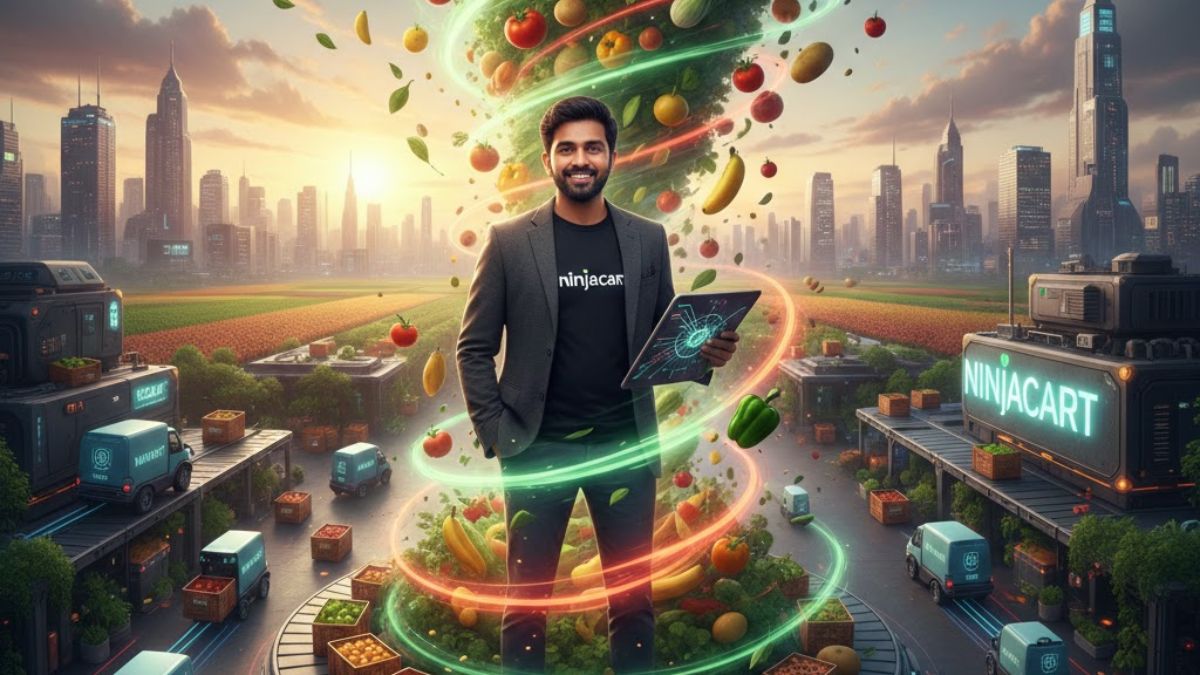
The journey of Thiru Sankar, Founder of Ninjacart, is one of the most defining stories in India’s agritech landscape. What began as a series of failed attempts and painful lessons eventually shaped India’s largest fresh-produce supply chain platform. This profile explores the who, what, when, where, why, and how of an entrepreneur who built a company that redefined the farm-to-retail ecosystem. Ninjacart was created to solve a recurring and deeply rooted problem in India’s agricultural economy: the broken supply chain between farmers and retailers. Farmers often lose income due to middlemen, wastage, delayed payments, and lack of market information. Retailers struggle with inconsistent quality, unpredictable prices, and unreliable delivery. The founders recognized that building a transparent, data-driven supply chain could eliminate inefficiencies that were decades old.
The startup was founded in Bengaluru in 2015
The startup was founded in Bengaluru in 2015 by a team that included Thiru Sankar, Thirukumaran Nagarajan, Sharath Loganathan, Ashutosh Vikram, and Kartheeswaran Kandasamy. They originally experimented with a consumer tech idea before discovering the fresh-produce supply chain problem through the struggles of local retailers. What followed was a grueling, high-pressure transformation into an agritech logistics company that demanded a different kind of operational intensity. Ninjacart works by connecting farmers directly with retailers through a streamlined supply chain powered by technology, data, and efficient logistics. The company purchases produce from farms early in the morning and delivers it to retailers in less than 12 hours. This reduces wastage, ensures fair prices for farmers, and guarantees reliable supply for retailers.
The company has raised capital from investors including Tiger Global, Accel, Flipkart, and Walmart. Today, Ninjacart is one of India’s most influential agritech companies, serving thousands of farmers and retailers across multiple cities. What follows is a deeply reported, human-centric look at the life, mindset, struggles, and evolution of Thiru Sankar as he built Ninjacart into a company that changed how fresh produce moves in India.
1. Background and Early Life
Thiru Sankar grew up in Tamil Nadu in a middle-class family that valued discipline, education, and hard work. His early environment shaped his worldview in ways that later helped him navigate the volatility of startup life. Like many first-generation entrepreneurs from smaller towns, Thiru understood the pressure of building stability and the responsibility of proving that risk-taking can lead to meaningful impact. His education exposed him to technology and problem-solving, but his real influences came from a curiosity about how systems worked. Whether it was understanding how businesses scaled or how supply chains functioned behind the scenes, Thiru’s mind was naturally inclined toward operations and process-driven thinking. These instincts would one day become the backbone of Ninjacart’s operational rigor.
During his student years, he developed an analytical mindset and a strong appetite for execution-oriented work. This made him gravitate towards roles that required him to solve inefficiencies. Those early experiences prepared him for the unpredictable and often chaotic nature of entrepreneurship in India’s agriculture sector, where unpredictability is the only predictable constant.
2. Founder and Company Overview
2.1 Introduction to the Founder
Before founding Ninjacart, Thiru Sankar cultivated a unique blend of operational discipline, technological acumen, and calm under pressure. He wasn’t the type to chase media headlines or build hype around himself. Instead, he focused on understanding complex systems, spotting inefficiencies, and designing practical solutions. Colleagues often remark on his ability to translate chaos into order, whether it was managing logistics challenges or aligning cross-functional teams. This methodical, patient approach became the bedrock of Ninjacart’s culture. Thiru’s leadership is defined not by flamboyance but by relentless attention to detail and the courage to experiment in high-stakes, unpredictable environments, qualities that would later prove critical in transforming India’s fresh-produce supply chain.
2.2 Company Overview and Offerings
Ninjacart is more than a platform. It is a logistics and technology ecosystem built to solve India’s fractured fresh-produce supply chain. From farm to store, Ninjacart integrates collection centers, cold chain logistics, distribution hubs, and real-time tracking, ensuring produce reaches retailers within hours of harvest.
The company’s offerings are deeply interlinked:
- Farmer Procurement Services: Helping farmers secure fair, predictable prices without being exploited by middlemen.
- Supply Chain Logistics: Optimized routing and cold-chain management that reduces spoilage and ensures freshness.
- Retailer Delivery: Fast, reliable deliveries of fresh produce with demand forecasting to prevent stockouts.
- Tech-Driven Insights: Data analytics optimize pricing, matchmaking between supply and demand, and route efficiency.
The impact is measurable: Ninjacart claims substantial reduction in wastage, consistent farmer incomes, and retailers reporting higher satisfaction due to reliability and predictability. The platform doesn’t just move produce; it moves value, trust, and confidence across the supply chain.
2.3 Target Audience and Market Served
Ninjacart addresses two deeply interdependent audiences:
- Farmers: Thousands of smallholder farmers gain fair pricing, predictable demand, and a platform that cuts out exploitative middlemen.
- Retailers: Independent kirana stores, supermarket chains, and foodservice businesses access consistent, high-quality produce with minimal disruption.
The fresh-produce sector in India is one of the largest and most fragmented markets, spanning diverse geographies, crops, and price points. By focusing on both ends producers and consumers Ninjacart has created a trust-based network that bridges gaps traditional supply chains could not, while simultaneously building scale in major metros and expanding rapidly into Tier 2 and Tier 3 cities.
2.4 Year of Founding and Business Stage
Founded in 2015 in Bengaluru, Ninjacart began as a small experiment supplying vegetables directly to consumers. Early struggles taught the team that consumer delivery could never succeed without first fixing the underlying supply chain. This insight pivoted the company to a B2B model, connecting farmers directly with retailers. Over the years, Ninjacart has evolved from a scrappy startup into a mature organization with robust processes, advanced technology systems, and strong leadership layers. Its growth trajectory reflects operational rigor, continuous learning, and an unwavering commitment to solving systemic inefficiencies in Indian agriculture.
3. The Problem, Insight, and Trigger
3.1 Core Problem Identified
India’s fresh-produce supply chain was historically fragmented, inefficient, and unpredictable. Farmers struggled with low, inconsistent prices. Retailers faced uncertainty in sourcing, stockouts, and daily price fluctuations. Wastage was rampant due to delays, poor storage, and lack of coordination. The system relied heavily on manual processes and middlemen, making scalability nearly impossible. Thiru and his team realized that digital marketplaces alone could not fix the problem. The challenge was structural: without rebuilding logistics, procurement, and routing, no app or platform could ensure reliable supply or fair pricing.
3.2 Personal Insight Behind the Idea
The idea emerged during an unrelated consumer commerce project. Retailers repeatedly complained about sourcing produce not online traffic. Thiru observed firsthand that the pain was operational, not digital. He recognized that by optimizing logistics, streamlining procurement, and integrating technology, both farmers and retailers could gain predictability, efficiency, and fairness. This was a foundational insight: success would require deep engagement with the realities on the ground, not just an elegant digital interface.
3.3 Trigger Moment to Start
The pivotal moment came during an early experiment delivering vegetables directly to consumers. The project failed but the failure revealed a bigger truth: the supply chain itself was broken. This realization sparked the birth of Ninjacart as a B2B platform. Thiru understood that building this required grit, patience, and an unflinching willingness to operate in chaotic, real-world conditions qualities he naturally embodied. The failure was not a setback; it was a signal, highlighting where the system needed intervention and where impact could be transformative.
4. Early Days and Initial Struggles
4.1 Early Assumptions and Hard Lessons
In the early days, Thiru Sankar and his co-founders believed that layering technology on top of India’s existing supply chains would solve the bulk of the problems. They quickly realized this assumption was overly simplistic. Fresh-produce logistics wasn’t just inefficient it was fundamentally broken. No software, dashboard, or app could bypass delays, spoilage, or unpredictable farmer-retailer interactions.
The team spent countless hours immersed in the ground reality: wandering crowded wholesale markets before dawn, riding alongside delivery trucks on bumpy rural roads, observing farmer trade behaviors, and noting the quirks of each vegetable category. They recorded everything from peak harvest timings to local vendor bargaining tactics to understand the complexity that no textbook or startup playbook could capture.
4.2 Entrepreneurial Struggles on the Ground
Operational chaos was the constant adversary. Trucks arrived late, produce spoiled in transit, retailers modified orders at the last minute, and farmers struggled to meet demand. Every day presented a new crisis. Thiru often recounts nights when deliveries failed, customer complaints spiked, and the entire logistics chain threatened to collapse. The realization hit hard: they weren’t merely building a tech startup they were reconstructing a supply chain from scratch, a system that had existed in fragmented and unreliable form for decades. The intensity of these early struggles tested every facet of leadership decision-making under stress, hands-on problem solving, and stamina. There were no shortcuts; solutions had to be practical, immediate, and implementable on the ground.
4.3 The Hardest Challenges
The most unforgiving challenge was real-time matching of supply and demand. Forecasting errors were costly: excess supply led to spoilage, insufficient supply caused stockouts, and mistakes eroded trust among farmers and retailers alike. Operationally, hiring and managing frontline teams, running collection centers, and balancing cash flows demanded unrelenting energy and attention. Many startups falter at these points, but Thiru embraced the grind. He became a leader forged in the field, learning to stay calm during crises, make decisive interventions, and immerse himself in the operational heartbeat of the business. Every early failure became a lesson. Every bottleneck became a blueprint for improvement. By the end of those initial months, Thiru had not just built a team he had built an operational culture rooted in resilience, adaptability, and real-world problem solving.
5. Failures, Setbacks, and Self-Doubt
5.1 Toughest Phase of the Journey
The earliest phase of Ninjacart was filled with failures. The founding team had entered a sector where experience mattered more than ambition, and the supply chain punished even the smallest mistakes. For Thiru Sanar, the toughest period was the first few quarters of operations, when the company’s daily failures piled up faster than its wins. Trucks broke down. Retailers cancelled orders. Farmers refused to supply because competitors paid slightly more. Wastage soared beyond tolerable limits. There were days when the team bought produce but couldn’t sell enough, leading to painful losses. Every night felt like a post-mortem of what went wrong.
5.2 Early Failures and Major Setbacks
One major setback came when the team realized the B2C model they initially pursued was fundamentally flawed. They couldn’t match the economics of neighborhood vegetable shops. Delivery costs were too high, customer retention was low, and logistical challenges were enormous. Pivoting to B2B wasn’t just a product change. It was an identity shift that rendered months of work nearly useless. Even after the pivot, a string of operational failures followed. Retailers complained about fluctuating quality. Farmers complained about inconsistent demand. Teams made errors during grading, sorting, and packing. At one point, the founders questioned whether the business was even viable.
5.3 Moments of Self-Doubt and Emotional Lows
Self-doubt became an everyday companion. Thiru spoke later about how he questioned whether he was the right person for a business this demanding. The emotional toll was heavy. On some days, the founders had to wake up at 3 a.m., go to markets, resolve issues, return to the office, and work until midnight. Thiru’s lowest moments didn’t come from external criticism but from the fear that they were failing the farmers and retailers who trusted them. Every broken promise felt personal. But these lows forged the resilience that would later define the company.
6. Validation and Early Traction
6.1 First Real Validation
The first meaningful validation came quietly but powerfully. A small group of retailers, initially skeptical, began returning consistently. They praised Ninjacart’s reliability, transparency in pricing, and punctual deliveries. These early adopters didn’t just accept produce they challenged the team, offered feedback, and demanded the highest standards. For Thiru Sankar and the team, this was transformative. It wasn’t just about orders; it was about trust earned through action, consistency, and responsiveness. That tiny cohort of merchants became a living proof of the company’s thesis: if supply chain execution could be perfected at a local scale, growth wasn’t just possible it was inevitable.
6.2 Early Revenue Growth and Feedback
Word of mouth spread slowly but steadily across retail clusters. Order volumes increased organically, as retailers realized that Ninjacart delivered produce fresher than wholesale markets, reliably and on schedule. Farmers, too, noticed a difference. Payments were prompt, and pricing was transparent a stark contrast to the opaque, middleman-driven system they were used to. These small wins were critical. Each satisfied retailer, each on-time payment to a farmer, became a building block of trust and momentum. Early revenue wasn’t massive, but it was consistent. More importantly, it validated the core hypothesis: technology-enabled, transparent supply chains could work in India, even amidst market fragmentation and logistical unpredictability.
6.3 Why This Moment Changed Belief
For Thiru, this period was emotionally pivotal. It wasn’t the growth chart that mattered it was the confirmation that the vision was real. Both ends of the marketplace farmers and retailers were beginning to value the service, signaling that Ninjacart’s solution solved a tangible, urgent problem. This validation renewed the team’s sense of purpose. The months of operational chaos, missed deliveries, and sleepless nights suddenly had meaning. Every misstep became a lesson, every small win a signpost that perseverance could translate into meaningful impact for thousands of people.
7. Funding, Money, and Growth Constraints
7.1 Bootstrapped Beginnings and Early Investors
Initially, Ninjacart survived on the founders’ savings and modest early capital. But as the company’s ambitions grew—building cold-chain infrastructure, operating collection centers, and scaling delivery fleets the financial demands exploded. Each day required cash outflows to procure produce, pay farmers, and manage logistics. This was when institutional investors recognized the potential. Accel and Tiger Global became early believers, backing the company with both capital and guidance. Later, strategic investments from Flipkart and Walmart strengthened Ninjacart’s credibility and scale, cementing its role as a key player in India’s agritech ecosystem.
7.2 Capital Challenges and Cash Flow Realities
Even with funding, cash flow remained a constant struggle. Ninjacart had to balance daily procurement costs with farmer payments, maintain working capital for inventory moving across cities, and wait for retailer payments that weren’t always immediate. Each mismatch created tension. Thiru navigated lender negotiations, operational budgets, and revenue cycles with relentless attention to detail, ensuring that neither farmers nor retailers suffered. The company learned that financial discipline and operational foresight were as critical as technology or logistics in building a scalable supply chain.
7.3 Early Growth Limitations
Scaling Ninjacart wasn’t simply about raising more capital it required deep local insights and operational patience. What worked in Bengaluru route planning, crop sourcing, and retailer engagement couldn’t be replicated automatically in Chennai, Delhi, or Mumbai. Regional differences in climate, crop cycles, retailer preferences, and logistics availability demanded city-specific strategies.
Growth became a city-by-city process. Thiru invested time in building leadership teams in each region, setting up local collection centers, and understanding market-specific dynamics. The approach was deliberate: expanding too quickly could lead to chaos rather than sustainable scale. Through this disciplined, ground-up methodology, Ninjacart built operational resilience while steadily increasing market coverage, laying the foundation for the nationwide impact it achieves today.
8. Team Building and Leadership Evolution
8.1 Early Hiring Mistakes
In the early days, hiring was rushed. The team needed people fast drivers, graders, procurement staff, operations leads. This led to hiring mismatches where individuals were either overwhelmed by the pace or unprepared for the demands of supply chain execution. Thiru later reflected that skill fit was not enough. The company needed people with emotional resilience, operational discipline, and a willingness to work long, unpredictable hours.
8.2 Delegation Challenges
As the company grew, delegation became a challenge for Thiru. The founders were used to being involved in every decision, from procurement routes to quality checks. Letting go required trust and building that trust took time. The turning point came when the company created leadership layers. These leaders brought structure, accountability, and specialization. Delegation then became a strength, freeing founders to focus on strategy rather than firefighting.
8.3 Leadership Learnings Over Time
Thiru evolved from a hands-on operator to a system architect. He learned the importance of designing processes that scaled even when founders weren’t present. His leadership became calmer, more analytical, and more grounded in data. He also developed a style rooted in empathy towards farmers, employees, and frontline workers. Ninjacart’s culture today reflects those values: operational excellence, transparency, and continuous improvement.
9. Growth, Scaling, and Operational Challenges
9.1 Brand Positioning and Go-to-Market Learnings
Positioning Ninjacart as a reliable, tech-driven supply chain solution required strong storytelling and consistent delivery. Farmers were initially skeptical about working with a startup. Retailers couldn’t believe that next-morning delivery of fresh produce would be reliable every single day. Trust became the core of the brand. Over time, as Ninjacart delivered consistently, trust turned into loyalty.
9.2 Scaling Challenges
Scaling introduced new problems. Morning operations became a race against time. A small glitch at 4 a.m. could derail hundreds of deliveries. Cities with unpredictable traffic tested routing systems. Cold chain failures could destroy entire batches. Each city brought its own set of lessons. Thiru and the team built systems that absorbed shocks, corrected quickly, and improved with every mistake.
9.3 Operational Breakdowns and Fixes
There were days when hubs were understaffed, trucks got delayed, and farmers delivered produce that didn’t meet quality standards. To fix this, Ninjacart invested in quality protocols, route optimization tools, temperature-controlled logistics, and farmer education programs. These fixes weren’t glamorous, but they were essential. The company became known for its relentless focus on operations a direct reflection of Thiru’s mindset.
10. Growth, Scaling, and Operational Challenges
Scaling the business proved to be a different game from the scrappy early days. The company had already shown it could create impact at a small scale. Moving from a few collection points to a full city operation introduced challenges that could not be solved through hustle alone. Processes broke, communication gaps widened, and several assumptions stopped working as volumes grew.
The team was confident that demand would grow as long as supply continued to be reliable. What they hadn’t accounted for was how unpredictable supply chains became at higher volumes. A small delay at a farm collection point could disrupt the entire delivery chain inside a city. Fixing these issues required systems thinking, not quick fixes. It also required more discipline around planning and forecasting.
10.1 Brand positioning evolved as the company expanded into new markets
Brand positioning evolved as the company expanded into new markets. In the early months, it was known primarily as a buyer of produce. Retailers saw it as a dependable supplier but weren’t clear about its long-term value. Over time, better communication, consistent pricing, and reliable service helped build stronger relationships in each new area. The company started to be viewed as a long-term partner rather than a temporary vendor.
Operational breakdowns became inevitable as the network grew. Cold storage facilities malfunctioned, routes were mismanaged, and the technology platform struggled to keep up with the load. Each breakdown was followed by long, exhausting nights of problem solving. Many fixes involved rethinking the entire architecture rather than patching individual issues. These experiences hardened the founder’s understanding of scaling a supply chain startup.
Moving into new geographic markets created new layers of complexity. Each city had its own rhythm, crop patterns, and retail habits. Copy-pasting the existing playbook never worked. The company had to learn how to adapt its operational model to each new environment while maintaining consistency in quality and service. This demanded patient learning cycles and rigorous execution.
Managing people at scale also became demanding. Rapid expansion meant bringing in more managers, specialists, and operators. Ensuring everyone aligned with the company’s values required deliberate leadership. This phase marked the moment when the founder realized that the company could no longer rely only on hustle culture. It needed strong systems, clear communication, and predictable workflows.
Despite all the challenges, growth continued. Markets opened up, customer loyalty increased, and the technology matured. The company’s biggest strength was an ability to learn quickly and adapt even faster. Every operational setback provided a lesson that shaped the next phase of scaling.
11. Personal Sacrifices and Burnout
Behind the growth curve and operational wins was a more difficult personal phase for the founder. Scaling a company required long hours, constant travel, and the ability to stay calm in the middle of chaos. Those who worked closely with him during this period recall how he rarely slept more than four or five hours a night. There were days when he moved between warehouses, retail markets, investor calls, and internal reviews without a break. Entrepreneurial pressure took a toll on his mental and physical health. Even though he didn’t openly discuss burnout, the signs showed up quietly. There were moments when the exhaustion was visible, especially during back-to-back crises around supply chain breakdowns. Building a company that touched thousands of farmers and retailers created a sense of responsibility that became emotionally heavy.
Personal relationships absorbed part of the cost. Celebrations were missed, family time became scarce, and social life nearly disappeared. Entrepreneurship often demands this trade-off, but living through it felt harder than anticipating it. The founder found himself thinking constantly about the business, even during rare moments of rest. Switching off felt impossible.
There were also emotional lows that came from feeling stuck or overwhelmed. A major operational failure or a cash flow crunch often triggered sleepless nights. In quieter moments he wondered whether the burden was sustainable. These periods of doubt rarely surfaced in public but shaped his understanding of what it meant to lead a high-growth company. Despite the exhaustion, he never considered stepping away. The mission mattered more than personal comfort. The determination to solve India’s fragmented fresh produce supply chain became a source of energy. The more challenging the journey became, the clearer the mission felt. This deep sense of purpose helped him push through burnout and return to work with renewed focus.
12. Lessons, Beliefs, and Values
Years of building the company shaped the founder’s belief system. He learned to see supply chains as living ecosystems rather than mechanical processes. Every component, from farmer interactions to logistics design, required empathy and continuous attention. Treating the ecosystem with respect became a central principle. One of the biggest lessons was the importance of patience. In the early stages, he assumed problems could be solved quickly as long as the team worked harder. He later realized that systemic challenges in agriculture required time and persistence. Building trust with farmers, earning loyalty from retailers, and developing reliable infrastructure could not be rushed.
Humility also became a core value. The early belief that technology alone could fix India’s agricultural inefficiencies faded with experience. He came to understand that listening mattered more than imposing solutions. The most effective improvements came from conversations with farmers, delivery partners, and retail shop owners who experienced the system every day. Another important learning was around people. Hiring the right individuals made the difference between chaos and stability. He learned to value team members who took ownership, stayed resilient, and worked with integrity. This helped him evolve into a more thoughtful leader who prioritized empowerment over control.
12.1 Cash discipline became a non-negotiable principle
Cash discipline became a non-negotiable principle. Supply chain businesses are capital intensive and unforgiving with mistakes. Running out of capital or mismanaging cash flows could collapse operations overnight. This awareness shaped the company’s philosophy on unit economics and sustainable growth. A deeper belief formed around the idea that impact and business could go hand in hand. Improving farmer incomes while delivering fresh, affordable produce to retailers proved this. The founder’s long-term vision was always to build a system that served everyone fairly. This value continued to guide strategic decisions. Above all, he learned that perseverance outweighed talent, strategy, or resources. The journey tested him repeatedly, but staying committed made all the difference. This belief remains central to how he views entrepreneurship today.
13. Present Challenges and Future Vision
13.1 Featuring: Thiru Sankar and Ninjacart
Even as the company reaches maturity, challenges continue. The fresh produce supply chain in India is constantly shifting due to climate patterns, pricing dynamics, and evolving customer expectations. The founder leads with a clear focus on innovation, knowing that past success cannot guarantee future relevance. Maintaining efficiency at scale remains a priority, especially as operations expand into newer regions. Competition has increased, with more agritech startups entering the space. While this validates the market, it also demands sharper execution. The company is investing heavily in technology, analytics, and forecasting tools to stay ahead. Building resilience against climate disruptions has also become an important part of the strategy.
One of the ongoing struggles is ensuring farmer loyalty in a market where intermediaries still exert influence. The company continues to work on creating more transparent systems, faster payments, and better support services. These efforts help build long-term stability in the supply chain. As a leader, he has embraced a more balanced approach. He focuses on sustainable operations instead of growth at any cost. His current leadership philosophy emphasizes clarity, empathy, and accountability. He believes a company can scale only when its people feel empowered and aligned with the mission.
Looking ahead, the long-term vision remains centered on solving inefficiencies across India’s agricultural value chain. He wants to build systems that can deliver fresher produce, better prices, and a more predictable marketplace. The mission that began years ago continues to guide every new initiative. The future remains challenging, but his belief in the company’s purpose is stronger than ever.
About foundlanes.com
foundlanes.com is India’s leading startup idea discovery platform. It helps entrepreneurs find actionable startup opportunities, market insights, and industry-specific guidance to turn ideas into real businesses. With deep research and practical resources, foundlanes supports founders at every stage, from idea validation to launch and growth.