News Summary
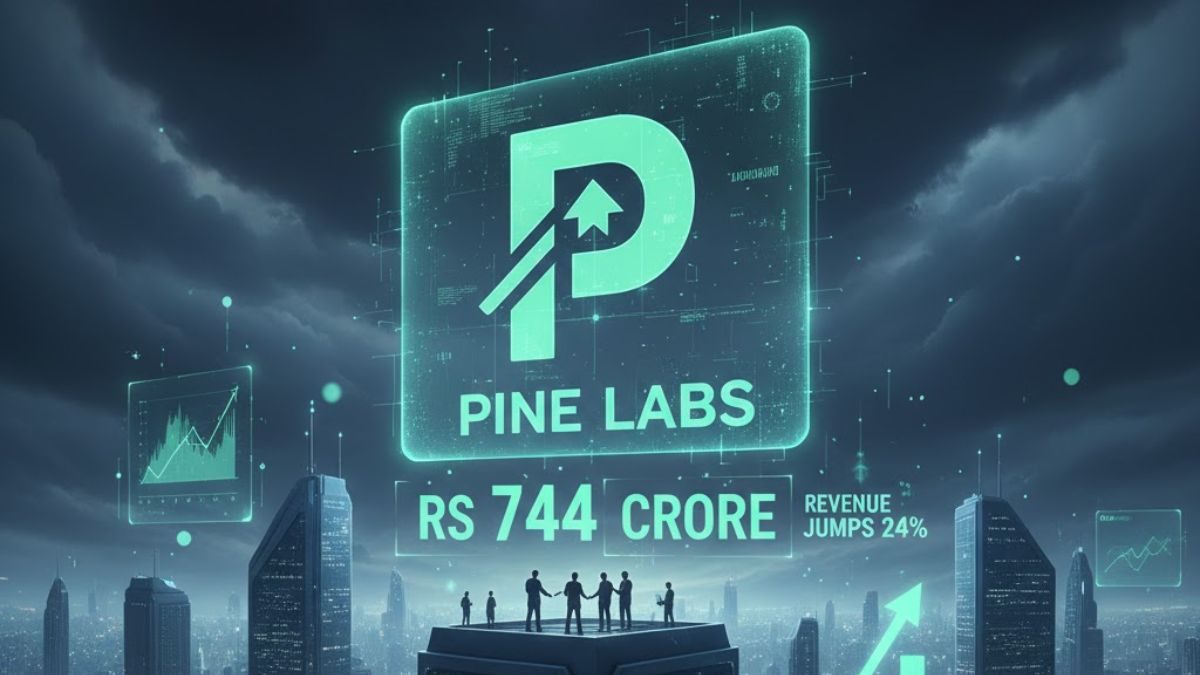
Pine Labs Turns Profitable in Q3 FY26, marking a major shift in the fintech firm’s financial journey. The payments and merchant commerce platform reported a consolidated net profit of Rs 42 crore for the December quarter, compared to a loss in the same period last year. At the same time, its revenue rose 24% year-on-year to Rs 744 crore, supported by steady growth across merchant payments, consumer credit, and platform-led services.
This result also marks Pine Labs’ second consecutive profitable quarter, signaling improving operational discipline and a clearer path to sustainable growth. The company has been focusing on cost optimization, sharper product execution, and deeper penetration among enterprise merchants. These efforts appear to be paying off as scale begins to translate into profitability.
According to financial disclosures covered by multiple business news platforms, Pine Labs saw improved margins during the quarter. The company benefited from higher transaction volumes, better monetization of value-added services, and continued adoption of its digital payment and lending products. Its presence across India and select international markets also helped diversify revenue streams.
The performance comes at a time when the Indian fintech sector is under pressure to show financial resilience. After years of cash-heavy expansion, investors are now rewarding firms that demonstrate profitability, efficient business models, and predictable revenue. Pine Labs’ Q3 FY26 numbers place it among a smaller group of fintech startups that have successfully moved closer to long-term sustainability. As Pine Labs Turns Profitable, the company strengthens its position in India’s competitive fintech ecosystem. The results also reinforce a broader industry trend where growth and discipline are no longer seen as trade-offs but as parallel goals for successful startups.
1. Introduction: Pine Labs Turns Profitable in a Tough Fintech Climate
Pine Labs Turns Profitable at a moment when India’s fintech landscape is still adjusting to tighter capital conditions and heightened regulatory scrutiny. For years, the sector celebrated growth at all costs, but Q3 FY26 results show a more measured, disciplined path. Pine Labs posted a consolidated profit of Rs 42 crore, reversing losses from the previous year, while revenue climbed 24% to Rs 744 crore—a clear signal that sustainable scale is possible when strategy and execution align.
This performance is not just numbers on a sheet; it reflects a shift in mindset. Pine Labs has consciously moved away from aggressive cash burn and unchecked expansion. Instead, the company focused on strengthening its core platforms, improving unit economics, and ensuring operational discipline. The result is a fintech business that demonstrates consistency and resilience—a rare feat in an ecosystem still learning to balance growth with profitability.
In a sector facing rising investor scrutiny and regulatory oversight, Pine Labs’ results stand out. They suggest that fintech companies can achieve the delicate balance of scale, revenue growth, and healthy margins if they build robust business models rather than chase headline valuations.
2. Q3 FY26 Financial Performance Breakdown
2.1 Revenue Growth Driven by Core Businesses
During Q3 FY26, Pine Labs reported consolidated revenue of Rs 744 crore, marking a 24% year-on-year increase. This growth was rooted in the company’s strong merchant network and adoption of its digital payment and commerce solutions. Large and mid-sized businesses increasingly rely on Pine Labs to process payments, manage billing, and extend consumer credit offerings.
Recurring revenue played a stabilizing role, reducing the company’s reliance on one-off integrations or seasonal transaction spikes. By deepening its relationship with merchants, Pine Labs ensured that every incremental transaction contributes meaningfully to the top line. The growth is as much about volume as it is about trust—the confidence merchants place in Pine Labs to handle payments seamlessly, reliably, and securely.
2.2 Swing to Profitability
The net profit of Rs 42 crore in Q3 FY26 represents a stark reversal from losses recorded in the same quarter last year. But the significance goes beyond the number itself. It underscores disciplined cost management, operational efficiency, and a strategic focus on profitable growth.
This quarter marked the second consecutive profitable period—a small streak that carries an outsized message. Profitability here is not a one-off anomaly; it is becoming a predictable outcome, signaling to investors and the market that Pine Labs has moved into a new maturity phase. In a sector where startups often rely on funding to paper over losses, these results demonstrate that scaling a fintech platform responsibly is both possible and rewarding.
3. Understanding Pine Labs’ Business and Working Model
3.1 What Pine Labs Does
At its core, Pine Labs is a fintech enabler for merchants and consumers alike. Its services span digital payments, merchant commerce, and consumer credit solutions. Beyond simply processing transactions, Pine Labs provides tools that make everyday commerce smoother and more intelligent. Merchants can accept card and digital payments seamlessly, manage loyalty programs, access analytics, and offer installment-based purchases—all from a single integrated platform. Over time, Pine Labs has transformed from a payment processor into a commerce enabler, expanding its addressable market and embedding itself deeper into the operational fabric of merchant businesses.
3.2 Platform-Led Approach
The platform-centric model is the backbone of Pine Labs’ growth story. Merchants integrate once and gain access to a suite of services, increasing dependency and reducing churn. For consumers, the platform enables easy credit, frictionless payments, and smoother checkout experiences. This network effect—where more merchants and consumers amplify the platform’s value—drives sustainable growth and higher margins over time. Each new participant not only adds direct revenue but strengthens the ecosystem, creating an interdependent cycle of engagement, trust, and scalability. By focusing on both sides of the transaction, Pine Labs has built a business that balances human experience, operational excellence, and financial discipline—a blueprint for how fintech can grow responsibly in India’s complex market.
4. Revenue Model and Monetization Strategy
4.1 Transaction-Based Revenue
A cornerstone of Pine Labs’ financial success lies in its transaction-based revenue. Every card swipe, digital wallet payment, or point-of-sale transaction contributes directly to the company’s income. As merchants process more transactions, revenue scales almost organically.
India’s rapid adoption of digital payments—accelerated by demonetization, UPI growth, and consumer comfort with cashless options—has created an environment where Pine Labs thrives. But the story isn’t just about volume. Higher adoption also means merchants increasingly rely on Pine Labs for core financial operations, deepening engagement and making this revenue stream both predictable and resilient. Each transaction processed represents not just a number, but a small reinforcement of trust in the platform, a trust that converts into sustained business growth.
4.2 Value-Added Services
Beyond transaction fees, Pine Labs has deliberately built a portfolio of high-margin, value-added services that reinforce merchant dependence and increase profitability. Analytics tools offer merchants actionable insights into sales trends, customer behavior, and inventory management. Loyalty programs allow businesses to retain and reward customers, turning occasional buyers into habitual ones. Consumer financing—through installment plans or buy-now-pay-later options—directly impacts conversion rates and drives higher basket sizes.
These services do more than generate revenue; they strengthen relationships. A merchant using loyalty tools and analytics alongside payments is less likely to switch platforms. Over time, this creates a virtuous cycle: merchants grow their businesses, Pine Labs captures more revenue, and consumers benefit from seamless experiences. The diversified revenue mix has been instrumental in enabling Pine Labs to turn profitable, demonstrating that fintech growth need not come at the expense of discipline.
5. Founders, Leadership, and Company Background
Pine Labs began as a technology-driven payment solution company, aiming to simplify merchant operations in a fragmented financial landscape. Over the years, it has matured into one of India’s most respected fintech players, a transformation fueled by visionary leadership and a relentless focus on execution.
CEO Amrish Rau has been central to this journey. His philosophy marries aggressive growth with operational discipline—a balance rare in the fintech space. Under his guidance, Pine Labs has carefully calibrated expansion, focusing on building robust systems before scaling revenue aggressively. This discipline is now visible in the financial statements: profits are returning, not by accident, but as the natural outcome of strategic, well-executed decisions.
The leadership team emphasizes a culture of accountability, metrics-driven decision-making, and a clear understanding of merchant and consumer pain points. While capital has supported growth in earlier phases, recent performance highlights a shift toward internal cash generation, operational efficiency, and sustainable scale—a mark of maturity in a fast-evolving industry.
6. The Problem Pine Labs Solves
6.1 Fragmented Merchant Payments
For many merchants, accepting payments is a labyrinthine process. Multiple payment modes, diverse vendors, and inconsistent integrations create inefficiencies and lost revenue. Pine Labs solves this by offering a unified platform that consolidates card, wallet, and digital payments. Merchants no longer juggle multiple providers; they gain simplicity, reliability, and scalability. This solution has human impact too: small business owners spend less time troubleshooting payments and more time serving customers. Each smooth transaction becomes a small but significant affirmation of trust and operational stability.
6.2 Access to Consumer Credit
Another critical problem Pine Labs addresses is the lack of easy access to short-term consumer credit at the point of purchase. Many consumers hesitate to buy higher-value items or delay spending due to cash flow constraints. Pine Labs bridges this gap with installment-based payments and financing solutions. For merchants, this means higher conversion rates and increased sales; for consumers, it translates to purchasing power, flexibility, and convenience. The platform creates an ecosystem where each participant—merchant or consumer—derives tangible benefit. By solving these interconnected problems, Pine Labs has positioned itself not just as a payment processor, but as a commerce enabler, creating value that resonates across India’s growing digital economy.
7. Industry Growth Trends Supporting Fintech Profitability
7.1 Digital Payments Expansion
India’s digital payments ecosystem has transformed dramatically over the past decade. Smartphones have become ubiquitous, UPI has simplified peer-to-peer transfers, and government policies continue to incentivize cashless transactions. Consumers and merchants alike are more comfortable with digital options than ever before.
For Pine Labs, this expanding digital footprint creates a structural tailwind. Each increase in transaction volume translates into higher, more predictable revenue. But beyond numbers, it represents a broader behavioral shift: merchants are no longer reluctant to adopt technology, and consumers are actively seeking convenience, transparency, and speed. Pine Labs benefits not only from the growth in sheer payment volume but from this shift in trust and engagement, which allows its platform to become central to the merchant-consumer interaction.
7.2 Shift Toward Sustainable Fintech Models
The fintech funding landscape has matured. Investors no longer reward growth for growth’s sake; they seek repeatable, scalable business models that demonstrate profitability. In this climate, Pine Labs’ recent performance—turning a profit while continuing to expand—signals strategic maturity. This isn’t just a financial milestone; it’s a statement of operational discipline. Pine Labs has shown that careful cost management, focused expansion, and platform-led monetization can coexist with growth ambitions. In doing so, it positions itself as a blueprint for other startups navigating a world where access to capital is more selective and sustainable performance is valued above hype.
8. Competitive Landscape
8.1 Direct Competitors
Pine Labs operates in a crowded and competitive environment. Other payment platforms and merchant service providers in India, including established domestic players and emerging startups, compete on service breadth, pricing, and technology. Yet Pine Labs’ edge lies in the depth of its platform. By integrating payments, consumer credit, analytics, and loyalty services, it creates a holistic ecosystem that competitors often struggle to match. Scale amplifies this advantage—merchants benefit from a network effect as more consumers transact on the platform, while the company captures higher value per engagement.
8.2 Indirect Competition
Indirectly, Pine Labs competes with banks and international payment processors that offer merchant acquiring and credit solutions. While these incumbents bring financial heft and legacy trust, they often lack agility and the integrated, technology-first approach Pine Labs offers. The company differentiates itself through seamless onboarding, unified operations, and value-added services that directly enhance merchant profitability and consumer convenience.
9. Funding, Investors, and Financial Discipline
Pine Labs has historically benefited from institutional capital and venture funding, which fueled its product expansion and market penetration. However, Q3 FY26 demonstrates a deliberate pivot: the company now prioritizes efficient capital utilization and internal cash flow generation.
This shift toward financial discipline is consequential. By achieving profitability, Pine Labs reduces dependence on external funding, builds resilience against market fluctuations, and signals confidence to investors that growth can be sustainable. For the startup ecosystem, it’s a proof point: scale and profitability are not mutually exclusive—they can reinforce each other when underpinned by disciplined execution.
10. Why Q3 FY26 Matters for the Startup Ecosystem
Pine Labs’ Q3 FY26 results carry significance beyond the company’s balance sheet. They offer a tangible lesson for the Indian startup ecosystem: fintechs, and by extension other tech startups, can achieve scale without sacrificing fiscal responsibility.
In an era where funding conditions are tightening and investor expectations are rising, Pine Labs sets a benchmark. It demonstrates that thoughtful product integration, platform-led monetization, and disciplined operations can drive profits while continuing to expand market share. For entrepreneurs navigating uncertain environments, this example underscores that sustainable growth is not just a strategic ideal—it is achievable, measurable, and repeatable.
11. The Startups News Perspective
TheStartupsNews.com follows developments like Pine Labs’ closely because they illuminate the broader evolution of India’s fintech and startup ecosystem. Fintech has long been a sector defined by rapid innovation, aggressive growth, and often, high cash burn. Stories like Pine Labs’ Q3 FY26 performance are a different kind of narrative—one rooted in discipline, resilience, and measured expansion.
This milestone reflects a larger industry shift. Indian startups are moving beyond chasing valuation headlines and growth at any cost. Investors, founders, and professionals alike are beginning to prize sustainability, unit economics, and repeatable revenue models. By reporting on such developments, TheStartupsNews.com connects its readers to these changing benchmarks, helping them understand that in today’s ecosystem, profitability is no longer optional—it is increasingly central to long-term credibility and market leadership.
12. Learning for Startups and Entrepreneurs
Pine Labs’ journey offers lessons that go beyond financial statements. First, scale alone does not guarantee success. Rapid expansion without careful attention to margins and operational discipline can lead to fragility. Pine Labs demonstrates that sustainable unit economics are the foundation of enduring growth. Second, the platform-led model underscores the value of creating integrated solutions. By building a single ecosystem for merchants that combines payments, analytics, loyalty tools, and consumer credit, the company not only improves operational efficiency but also deepens engagement, reduces churn, and strengthens margins over time.
Third, disciplined cost management is non-negotiable. Pine Labs’ ability to control spending while maintaining growth trajectories shows that profitability is a strategic outcome of conscious choices, not a random byproduct of success. For founders, the takeaway is simple yet profound: growth and profitability are not mutually exclusive. With the right strategy, a clear vision, and operational discipline, startups can scale responsibly and deliver sustainable value. Pine Labs’ Q3 FY26 results stand as proof that long-term thinking, patience, and meticulous execution pay off in tangible ways.
Conclusion
Pine Labs Turns Profitable in Q3 FY26, reporting a consolidated net profit of Rs 42 crore alongside a 24% revenue increase to Rs 744 crore. These figures are more than numbers—they mark a defining moment for the company and for India’s fintech sector. The results highlight disciplined execution, a robust platform-led business model, and favorable macro trends in digital payments adoption. They also underscore a deeper lesson: in an era of intense scrutiny and tighter funding conditions, sustainable growth matters more than ever.
As Pine Labs establishes a repeatable pattern of profitability, it sets a benchmark for other startups navigating the same ecosystem. The company becomes a living case study, showing that careful strategy, operational rigor, and attention to unit economics can coexist with ambitious scale. More than just a milestone, Q3 FY26 positions Pine Labs as a symbol of fintech’s evolving maturity and offers a blueprint for building enduring, profitable, and trusted businesses in India’s dynamic startup landscape.
About foundlanes.com
foundlanes.com is India’s leading startup idea and deep-dive platform built for founders, operators, and serious entrepreneurs. We go beyond surface-level advice to deliver grounded, research-backed, and experience-driven startup content.
Every guide on foundlanes.com is designed to help readers think clearly, act strategically, and build sustainably. This cloud kitchen startup guide is part of our mission to document real business pathways in India’s evolving startup ecosystem.