Summary
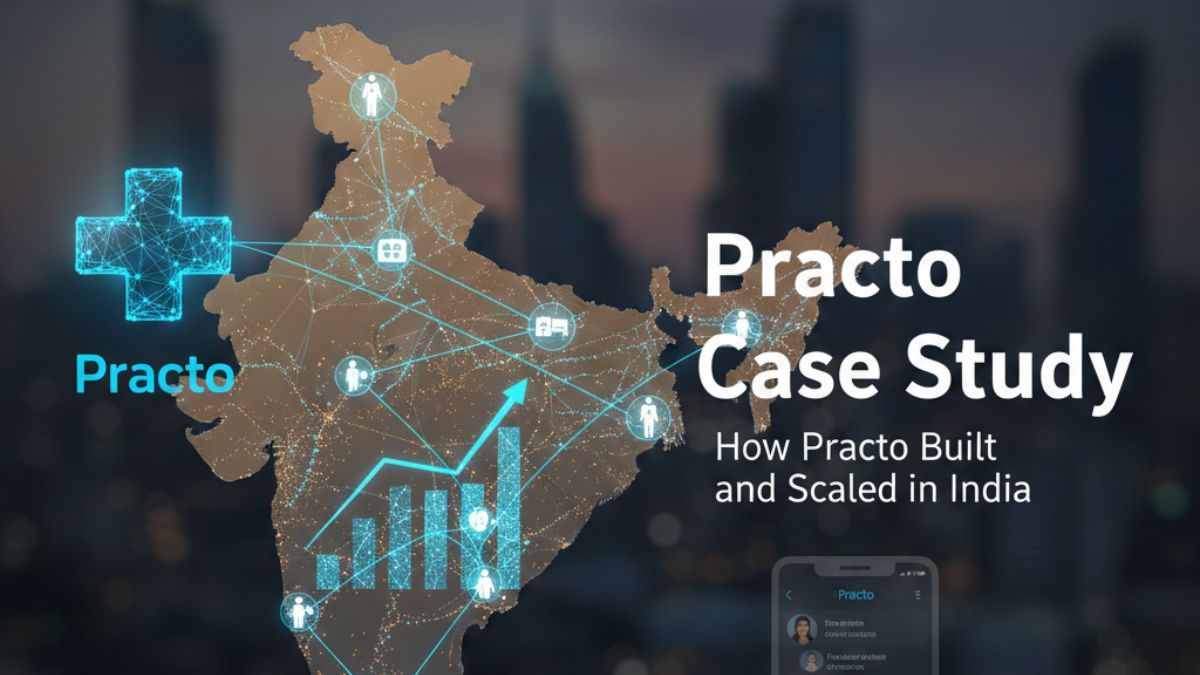
The story of Practo begins in a small college computer lab in Karnataka, but its impact has rippled across India’s digital healthcare ecosystem. Over more than a decade, Practo has grown from a basic appointment-booking tool into one of the country’s most influential digital healthcare platforms. It connects millions of patients and thousands of doctors every month, offering everything from telemedicine consultations to digital health records. Today, it holds a central position in a sector that was once unstructured, scattered and frustrating for ordinary families navigating India’s healthcare maze.
Practo was founded by two engineering students, Shashank ND and Abhinav Lal, in 2008. The idea wasn’t born out of a classroom assignment or a business plan competition. It came from something far more personal and emotional: a moment when Shashank watched his father struggle to find the right surgeon. Navigating hospitals and specialists felt chaotic and overwhelming, and the lack of trustworthy information online made the process even more stressful. That experience didn’t leave him. It grew into a stubborn question: Why was finding a doctor in India still so painful? The lack of transparency bothered him. The absence of digital records bothered him. The helplessness of families bothered him.
He shared this frustration with Abhinav
He shared this frustration with Abhinav, and the two of them began sketching out a solution. Their conversations turned into code. Their code turned into a prototype. And that prototype became the first version of Practo, built inside their college in Surathkal. Even in its earliest form, Practo had a clear purpose. It wanted to make healthcare simpler. wanted to give people choices. wanted to help families avoid the kind of confusion and stress Shashank had seen firsthand.
The startup began in Bengaluru, and the founders stayed rooted there as the city evolved into India’s tech powerhouse. Over time, Practo expanded into multiple countries, raised more than $220 million, and grew into a platform that now powers appointments, online consultations, diagnostics, digital medical records and more. At a time when digital healthcare barely existed in India, Practo dared to dream differently. It wanted to create an ecosystem, not just an app. It wanted to bring structure to a sector that had long felt intimidating and opaque for ordinary people.
This case study digs deep into that journey. It analyzes the founders’ struggles, the product choices that shaped Practo, the moments when the company almost broke, and the decisions that helped it scale. It explores how the team built trust in a domain where accuracy and credibility matter more than anything. And it examines the realities of growing a healthcare startup in a country where millions need care, but the system isn’t always ready to deliver it.
1. The Spark That Led to Practo
The seed for Practo was planted long before Shashank wrote a line of code. It began in a hospital corridor where he waited with his father, stressed and anxious. The specialist they were referred to felt like a shot in the dark. There was no reliable online platform to compare surgeons, read reviews, check success rates, or even understand their experience. Everything depended on word-of-mouth, and sometimes even guesswork.
This helplessness stayed with him. It was the kind of moment that changes a person. When you see someone you love struggle with uncertainty, it shakes you. It forces you to confront how fragile healthcare access can feel, especially in India. Shashank wasn’t interested in complaining about the system. He wanted to fix it. Back at NITK Surathkal, he discussed this with Abhinav. They were both young, but the problem felt too important to ignore. They didn’t have money, experience or connections. What they did have was curiosity, determination and a sense that the world needed something better.
1.1 Late nights in the computer lab became normal
Late nights in the computer lab became normal. While their classmates prepared for placements or GRE exams, these two 20-year-olds were trying to design software that could manage appointments and digitize medical records. It wasn’t glamorous. It wasn’t smooth. And almost no one believed this tiny idea would go anywhere. But they kept working because they felt a responsibility. No one teaches you how to build a healthcare startup when you’re still in college. You learn by doing, by failing, by trying again, and by trying better. Practo’s earliest version wasn’t built to “scale.” It wasn’t built with a grand Silicon Valley vision. It was built to solve a problem that had personally hurt someone they loved. And that kind of motivation is different. It’s deeper. It pushes you through days when nothing seems to work and no one seems to care.
1.2 The Founders’ First Struggles
Building a healthcare startup in India in 2008 was like pushing a rock uphill. Doctors didn’t use computers. Clinics didn’t believe in digital systems. And almost everyone they pitched to had the same reaction: Why do we need this? The founders heard “no” so often that they started counting refusals the way other startups count downloads. Abhinav reached a point where he started doubting whether this was the right path. He even considered taking a job overseas. His parents were worried. Practo was still an abstract dream, and dreams don’t pay bills. It took almost ten days of emotional conversations before he finally convinced them that this was worth trying. That this mission mattered. That he needed to see it through.
Those early days were filled with uncertainty. The founders walked from clinic to clinic because they couldn’t afford taxis. They offered demos to doctors who barely looked up from their desks. They explained digital medical records to practitioners who still scribbled appointments in diaries. It was humbling. It was frustrating. And it was emotionally draining. But through all this, the founders held on to one belief: that healthcare deserved better, and someone needed to build it.
2. The Problem Practo Saw in India
India’s healthcare system was a maze. Patients didn’t know where to go. Doctors didn’t have organized tools. Records were buried in files that no one read again. Hospitals worked in silos. Clinics worked in isolation. There was no real structure. You could book flight tickets online in 2008, You could order books onlineand You could even order food. But you couldn’t find a reliable doctor online.
And the emotional impact of that gap was massive. When someone gets sick, families panic. They worry. They want the best doctor. want clarity. want answers. What they often got instead was confusion. Practo realized that healthcare wasn’t just about doctors or hospitals. It was about trust. It was about helping people feel less alone during scary, uncertain times. The founders believed that transparency could change the system. If people had access to accurate information and verified doctors, they could make better decisions. If clinics had software, they could manage patients more smoothly. This wasn’t just a business opportunity. It was a chance to improve millions of lives.
3. Building the First Product: Practo Ray
Practo Ray, the first product, was supposed to be simple. A tool clinics could use to manage appointments and store records. But simplicity is hard. Especially in healthcare. Every clinic had different workflows. Doctors had different preferences. Receptionists had different habits. And convincing them to switch from pen and paper to a laptop was like asking them to change how they had worked for decades.
But something started to shift. The first few clinics that used Practo Ray found their days smoother. Fewer missed appointments. Faster scheduling. Clearer patient histories. Word spread slowly. Not through advertisements, but through conversations doctors had with each other. Practo Ray was not just software. It was a quiet revolution. And it laid the foundation for everything the company would build next.
4. Early Traction and the First Signs of Validation
Practo didn’t explode overnight. It grew one clinic at a time. One city at a time. One doctor at a time. And each small win felt emotional for the founders because they had fought so hard for every inch of progress. In 2010, when the company was still young, a well-known clinic chain in Bengaluru agreed to use Practo Ray across multiple branches. For Shashank and Abhinav, this wasn’t just another customer. It was proof that even established healthcare providers could trust a product built by two young engineers. They had walked into doctors’ offices expecting skepticism, but instead, they found curiosity.
More clinics joined. More practitioners experimented with the software. And slowly, Practo reached a tipping point where it no longer had to explain why digital records mattered. Doctors began asking how fast they could get the system installed. Those days were emotional for the team. They remembered every rejection from their early years. Every clinic that told them they were too young. Every doctor who asked if two college kids really understood healthcare. Validation never comes clean and polished. It comes in fragments. But those fragments were enough to keep them going. This early traction did something more important than boosting numbers. It proved that the healthcare system, as rigid as it was, could be nudged toward change. And once the doctors were on board, the founders knew it was time to dream bigger.
5. From B2B Tool to Consumer Platform
Around 2012, India’s internet landscape was transforming. Smartphones were everywhere. Affordable data packs were reshaping consumer habits. People were searching, browsing, buying, and learning online. The founders saw a shift. And they made one of the boldest decisions in the company’s journey: they expanded Practo from a B2B clinic tool into a consumer-facing platform where patients could search for doctors and book appointments directly. This wasn’t just a product decision—it was an emotional one.
They remembered how helpless Shashank’s family had felt. remembered the confusion in hospitals. remembered how difficult it had been to access trusted medical information. And they felt a responsibility to change that. So Practo.com was born. It wasn’t perfect at launch. The search listings were limited. Verification was tough. And the idea of “online doctor booking” felt unfamiliar to most Indian families. But what made it work was relatability. People were tired of calling clinics repeatedly. They were tired of arriving only to be told the doctor was unavailable. They were tired of navigating the healthcare system blindfolded. Practo offered something simple but powerful: choice, clarity, and convenience.
The platform allowed users to:
- Search for verified doctors
- Read reviews
- Compare qualifications
- Book appointments instantly
- Avoid long phone calls
The emotional impact of this cannot be overstated. For families dealing with illness, even the smallest bit of clarity can feel like relief. Practo was no longer just software. It was becoming a companion for people seeking care.
6. The First Major Funding Breakthrough
By 2011, Practo had reached a stage where the founders had two options: grow slowly on their own or raise capital to accelerate expansion. They weren’t chasing investors. In fact, investors came to them. When Sequoia Capital, one of the world’s most respected venture firms, expressed interest, the founders felt a mix of disbelief and pride. They had built Practo quietly, driven by empathy more than ambition. Now a global investor wanted to be part of that mission.
In 2012, Practo raised its first major funding round—$4 million. For the founders, this wasn’t just money. It was validation that their problem mattered. That the world believed in their vision. That the dream born in a college lab had weight beyond campus walls. The team celebrated, but the moment didn’t make them complacent. It made them accountable. They felt a deeper sense of responsibility toward their mission, their customers, and the ecosystem they were helping shape.
The funding allowed them to:
- Hire more engineers
- Improve infrastructure
- Expand to more cities
- Build the consumer platform faster
- Strengthen their verification systems
And for the first time, the team felt they had the breathing room to think bigger.
7. The Scale Years: Expansion, Pressure and Breakthroughs
After the first funding round, Practo entered one of its most intense phases. Growth was exhilarating, but it was also overwhelming. Healthcare is not an industry where you can afford mistakes. Every listing, every record, every appointment carries real human consequences. The pressure inside the company was real. As the platform expanded to cities like Mumbai, Delhi, Hyderabad and Chennai, the team faced everything from operational hurdles to cultural differences. Clinics in one city worked differently from those in another. Doctors had unique workflows. Patients had different expectations.
The team listened. Adapted. Adjusted. Learned. And then improved. During these years, Practo also made a strategic leap into online consultations, long before telemedicine became mainstream in India. For the founders, this wasn’t just a business expansion. It was an emotional necessity. They had met patients who traveled hours for a five-minute follow-up. saw families struggle with last-minute emergencies. They understood how isolating it could feel when illness hits and you have no easy way to consult a doctor.
Online consultations felt like a way to close that gap. It brought healthcare to people’s phones, removing distance, fear and uncertainty. It wasn’t easy. Doctors needed training. Users needed reassurance. Regulations were limited and often unclear. But Practo persisted. And when telemedicine adoption exploded during the COVID-19 pandemic years later, the team felt a mix of pride and gratitude. Their early belief in digital consultations had finally found mainstream acceptance.
8. The Emotional Reality of Building in Healthcare
Too often, startup stories describe growth charts, funding rounds and valuations. But building something in healthcare is different. It weighs on the soul. You carry the burden of knowing that your product affects people at their most vulnerable. You think about the mother searching for a pediatrician at midnight. The son trying to find a cardiologist for his ageing father. The diabetic patient looking for follow-up care. The woman needing privacy while consulting a gynecologist.
Behind every search query is a story. Behind every appointment is anxiety. Every consultation is hope. The founders felt this responsibility deeply. Their decisions had emotional consequences. And that changed how they built features, handled data, trained support teams and designed the user experience. This emotional core—this empathy—became one of Practo’s biggest strengths.
9. The Breakthrough Years and the Turning Points
Practo had reached a stage where the idea was validated, the product had early traction, and the team had grit. What it still lacked was scale. The Indian healthcare industry was massive, unstructured, and emotionally charged. For millions of Indians, a medical visit was not just another task. It was fear, trust, confusion, and sometimes desperation. Practo was trying to bring order to this world without losing the human side of healthcare.
The next phase of Practo’s journey was not only about expanding the product. It was about learning how to navigate a vast, unpredictable system. This period defined the company’s identity, shaped its leadership approach, and forced them to solve problems few Indian startups had encountered at the time.
10. The Rise of Digital Healthcare Platforms in India
When Practo started scaling, the Indian healthtech ecosystem was still at a very early stage. The idea of searching for a doctor online or booking appointments digitally felt unusual to most people. Healthcare was built on personal relationships, informal referrals, and word-of-mouth trust. Doctors relied on reputation, and patients relied on stories from friends or relatives.
This landscape began shifting around 2013 and 2014. Cheap smartphones were spreading across the country. Internet data costs were falling. People were becoming more comfortable with digital solutions in areas like food delivery, taxis, and payments. Healthcare was slower to adapt, but the opportunity was real. Digital healthcare platforms—what many still called online doctor consultation apps or appointment booking apps—became more than a niche experiment. Practo benefitted from this cultural shift, but it also helped shape it. The company wasn’t just riding the wave. It was building the wave in real time.
11. The Push Toward Telemedicine and the Turning Point for Practo
One of the biggest turning points came when the team recognized the emotional frustration people carried around healthcare access. Finding the right specialist in a new city. Getting a second opinion without navigating a long queue. Understanding lab reports that looked like they belonged in a different language. These weren’t minor inconveniences. They were daily sources of anxiety.
Telemedicine seemed like an answer, but it wasn’t yet mainstream. There were regulatory uncertainties, trust barriers, and cultural skepticism. Practo wanted to move into online doctor consultations, but the team had to decide whether to step into a market that was not fully ready. What convinced them was a string of user stories. A young working mother who couldn’t take time off to sit in hospital queues. A family who lived hundreds of kilometers away from a medical specialist. College students who didn’t know where to turn for mental health support. These stories were not metrics. They were reminders of why the team had started this journey.
Practo slowly expanded into telemedicine, but with a focus on trust and reliability. The company didn’t treat online consultation as a standalone feature. It positioned it as part of a larger healthcare experience—medical history, prescriptions, doctor availability, and follow-ups. The human side of care remained at the core.
12. Product Strategy: Building a Unified Healthcare Experience
As Practo entered its building-at-scale phase, the product strategy became clearer. The healthcare experience had to feel like one continuous path, not a fragmented set of steps. A patient should be able to: Search for a doctor, Book an appointment, Consult online or offline, Upload reports
Receive prescriptions, Book diagnostic tests and Access medical history. All in the same place.
This idea shaped what eventually became Practo’s ecosystem approach. The company didn’t think in terms of features. It thought in terms of journeys. A parent worried about a child’s fever. A diabetic patient managing long-term conditions. A young adult looking for mental health support. Healthcare was personal, and the product had to reflect that.
13. Scaling Operations in a Fragmented Market
The biggest challenge was the messy nature of Indian healthcare. Hospitals had different systems. Clinics followed their own processes. Doctors often worked across multiple establishments. There was no standardized digital record-keeping. Sometimes, the simplest task—confirming a doctor’s availability—was complicated.
Practo had to solve thousands of small operational problems that would never appear in a textbook. A clinic might close early without notice. A doctor might shift to a different location. Hospitals updated schedules manually on a whiteboard kept behind the reception desk. Practo’s operations team learned to adapt by building strong relationships with doctors and front-desk staff. There were days when the team traveled across the city just to verify a clinic’s new address or schedule. It was unglamorous work, but it strengthened Practo’s credibility. Every corrected listing improved the product. Every accurate appointment built trust. Over time, this ground-level discipline became one of the company’s strongest differentiators.
14. Brand Positioning: From Tech Product to Healthcare Companion
During its early scaling years, Practo went through several identity questions. Was it a tech company offering a marketplace? A productivity tool for clinics? A telemedicine platform? A patient-facing app? The truth was that Practo was all of these at once.
The brand evolved accordingly. Instead of promising to change healthcare overnight, Practo focused on being reliable and easy to use. The messaging shifted toward empowerment—helping patients make informed decisions and helping doctors manage their practice smoothly. A major shift came when the brand began framing itself as a long-term healthcare companion. The idea wasn’t to replace hospitals or doctors. It was to bridge the gaps between them and the everyday person.
15. Competition and the Need to Differentiate
As healthtech gained momentum, new players entered the market. Some focused solely on telemedicine. Others targeted diagnostics. A few concentrated on content and preventive health. The competitive landscape expanded quickly. Practo remained committed to its integrated model. Instead of specializing narrowly, it built horizontally. A doctor listing platform. A telemedicine service. A diagnostics booking system. A software suite for clinics.
This approach wasn’t easy to execute, but it allowed Practo to differentiate itself. While competitors were building standalone solutions, Practo was knitting services together. This created a deeper engagement loop. Patients returned because their medical history lived on the platform. Doctors stayed because their workflow became smoother. Over time, this ecosystem approach shaped the company’s long-term identity.
16. Internal Team Culture and Leadership Evolution
Scaling a healthtech company tested the team in ways they hadn’t expected. Healthcare is a serious responsibility. Mistakes carry emotional weight. Leadership had to grow from being enthusiastic founders to disciplined operators.
Practo’s internal culture transitioned into one that valued reliability, empathy, and accountability. The team learned to balance innovation with caution. Each new feature went through layers of medical validation and legal review. The founders also made intentional changes in leadership, bringing in experienced operators where needed. It wasn’t always easy. There were debates, delays, and the pressure of expectations. But these years taught the team how to lead with both confidence and humility.
17. Scaling, Challenges, and the Road Ahead
Practo’s journey after the mid-2010s became a mix of opportunity, pressure, breakthroughs, and hard lessons. The company had reached a point where millions of people were using the platform every month. Doctors trusted its software. Hospitals recognized its impact. Investors were watching closely. The company was no longer a young startup trying to be heard. It had become a leader in a category that barely existed a few years earlier.
These years shaped the identity that people associate with Practo today. But they also exposed the complications of operating in a sector as emotional and regulated as healthcare. This is the stage where Practo learned to grow with restraint, adjust strategy in real time, and stay committed to its original purpose even when the world around it shifted constantly.
18. Funding, Investor Conversations, and Growing Expectations
As Practo scaled across India and expanded to new categories, it secured significant funding rounds from marquee investors. These investments helped the company accelerate hiring, expand internationally in Southeast Asia for a period, improve its telemedicine infrastructure, and strengthen both patient-facing and doctor-facing products.
But funding also changes expectations inside a startup. It introduces speed, targets, and a new pressure to show results while still exploring young markets. Healthcare doesn’t grow in straight lines. Adoption comes in waves. Behavior changes slowly. People trust digital platforms for movies, taxis, and food far more easily than they trust them for medicine and health advice. Practo had to learn how to spend carefully and measure success in ways that made sense for its sector. Growth was not just about user numbers. It was about credibility. It was about accuracy, privacy, regulatory compliance, and operational reliability. These are things that take time but matter in the long run.
19. The Challenges of Scaling in Indian Healthcare
Scaling a healthtech company in India is unlike scaling in any other sector. There is no universal standard for medical data. There is no single regulatory authority for digital healthcare operations. Patients walk into hospitals with handwritten files that date back decades. Doctors operate independently, often across multiple clinics. Hospitals maintain their own systems, none of which talk to each other.
Practo had to build around this chaos. It had to double down on its ground operations team. had to stay patient with clinics that still relied on pen and paper. had to design software flexible enough to work with the unpredictable schedules of specialists. had to build telemedicine workflows that felt natural for doctors who had never used remote consultation tools before. It was exhausting work. Sometimes it felt like the company was trying to create order in a system that wasn’t sure it wanted that order. But this effort eventually became one of Practo’s biggest strengths. The more deeply the team understood the chaotic landscape, the more accurately it could build tools that solved real problems.
20. Navigating Regulations and the Slow Pace of Digital Healthcare Reform
Healthcare regulations in India evolved slowly. For years, telemedicine operated in a gray zone. The lack of formal guidelines meant platforms had to be extra cautious. Practo built strong internal compliance processes and consulted with medical experts regularly. It wanted to ensure that doctors weren’t exposed to legal risks and patients weren’t misled. A major shift occurred in 2020 when India released formal Telemedicine Practice Guidelines. For the first time, there was a clear framework for online consultations, prescriptions, and remote patient management. This was a defining moment for the entire digital healthcare ecosystem. Practo, which had spent years operating responsibly despite the regulatory uncertainty, found itself well-positioned. It didn’t need to change its model dramatically. Instead, regulatory clarity gave it room to accelerate.
21. The Pandemic Surge and the Emotional Weight Behind It
The COVID-19 pandemic pushed telemedicine into the mainstream in a matter of weeks. Suddenly, millions of people needed medical help without stepping out of their homes. Hospitals were overwhelmed. Doctors were stretched beyond their limits. Families were desperate for reliable information. During this time, Practo saw one of the sharpest user surges in its history. Online consultations increased dramatically. People sought help for symptoms, mental health support, and chronic conditions. The company also expanded access to verified information and launched features that connected patients with COVID-related resources.
Behind the surge were difficult emotions. People were scared. Doctors were exhausted. The Practo team itself was dealing with stress and uncertainty while trying to keep essential services running around the clock. Many employees worked through sleepless nights, helping users navigate critical situations. These months tested the company’s resilience in ways no one had anticipated. Looking back, this period was a reminder of why healthcare companies exist at all. Practo wasn’t built to grow fast. It was built to help people when they needed it most.
22. Product Evolution and the Push for a Unified Healthcare Experience
After the pandemic, the company revisited its original thesis: healthcare should feel coherent. People shouldn’t have to stitch their own journey across dozens of apps, clinics, labs, and pharmacies. A unified experience doesn’t just save time. It reduces stress.
Practo continued investing in:
- Appointment bookings
- Online consultations
- Electronic health records
- Medicine delivery partnerships
- Diagnostic test bookings
- Chronic care programs
These weren’t flashy features. They were stepping stones toward a long-term goal of making healthcare less overwhelming. The company also refined its doctor-facing tools to help practitioners manage both in-person and digital workflows seamlessly. Over time, Practo wasn’t just a place to find a doctor. It became a place to manage your entire healthcare life.
23. Business Model, Revenue Streams, and Sustainability
Practo’s business model evolved around the idea of connecting different parts of the healthcare ecosystem. It generated revenue in ways that aligned with its purpose. The largest streams have historically included software subscriptions for doctors and clinics, consumer services like online consultations, listing enhancements, and diagnostic services. The company also invested in insurance partnerships and preventive health programs over time. The goal wasn’t only to expand revenue. It was to build a model that supported long-term sustainability without compromising on trust or ethics.
The healthtech category isn’t always easy for investors because revenue grows slower than user numbers. Practo stayed patient. Its leadership maintained a balance between scale and responsibility. The company didn’t chase every new trend. Instead, it doubled down on the services it believed would matter ten years from now.
24. Leadership, Teambuilding, and the Culture of Responsibility
Healthcare requires a unique kind of team culture—one grounded in empathy, resilience, and honesty. Practo’s leaders realized this early. They built a culture that encouraged team members to speak up when something felt off, even if it slowed the launch of a product. Mistakes in healthcare have real consequences. Accountability wasn’t a slogan. It was a necessity.
The company invested heavily in engineering talent, customer support, compliance, and clinical advisory teams. The support teams became a backbone of the company, often dealing with emotional user situations. Leadership emphasized mental health support internally and encouraged balance, especially after the difficult pandemic years. The culture wasn’t perfect, but it matured. It moved from early-stage chaos to a balanced environment where innovation and responsibility could coexist.
25. Competitive Landscape and How Practo Stayed Relevant
Over the years, new digital healthcare platforms emerged. Some focused on content. Others targeted pharmacy delivery or lab diagnostics. A few specialized solely in telemedicine. Competition made the market more vibrant, but it also pushed Practo to stay sharp.
The company’s advantage was its integrated model. Users could manage appointments, consultations, medical records, and diagnostics all in one place. Doctors could handle scheduling, patient history, and digital consultations through a single interface. This depth created loyalty. It also created a defensible position that wasn’t easy to replicate. Healthcare works best when it feels personal. Practo earned trust by staying consistent.
26. Milestones, Metrics, and Public Achievements
Practo’s public metrics show years of sustained growth across consumer and doctor-facing solutions. The company expanded across dozens of cities in India and achieved significant digital adoption across specializations. During major public health events, consultations surged by millions.
The Doctor Discovery platform remains one of the most widely used tools for appointment booking in India. Practo’s telemedicine service became a familiar name in households during the pandemic and continues to be a major part of its business. While the company doesn’t disclose every metric publicly, the broader impact is visible in how people talk about healthcare convenience today. The idea of “just book it on Practo” became part of everyday language in many urban families.
27. Where Practo Stands Today
Today, Practo operates in a more mature healthtech ecosystem. Digital healthcare platforms are no longer unusual. People are comfortable with online doctor consultations. Diagnostic bookings are increasingly common. Awareness around preventive health has grown. The company continues improving its core products while exploring long-term healthcare programs, specialist networks, and chronic-condition support. Practo remains headquartered in Bengaluru, still driven by the idea that transparency and access can reduce the emotional burden of healthcare for millions of Indians.
28. Future Outlook: The Next Ten Years of Practo
The next decade will shape the most important chapter of the Practo story. India’s healthcare infrastructure is expanding. Digital health records are becoming mainstream. Telemedicine is here to stay. Insurance penetration is rising. Preventive care is gaining acceptance.
Practo is positioned to play a significant role in this transformation. The company’s future outlook includes building deeper long-term care programs, strengthening online doctor networks, enhancing the Practo app experience, and continuing to unify offline and online journeys. It also plans to expand its role in diagnostics and digital health records as national initiatives gain momentum. If the company succeeds, it won’t just be a startup success story. It will be a part of how India reimagines healthcare access for generations to come. The Practo Case Study will continue to evolve as the platform builds for the next chapter of healthtech growth.
About foundlanes
foundlanes.com is a digital platform dedicated to documenting the journeys of Indian startups with depth, honesty, and editorial clarity. It publishes detailed founder stories, case studies, business breakdowns, and ecosystem insights designed to help readers understand how India’s most influential companies are built. The platform focuses on accuracy, strong research, and human-centered storytelling.