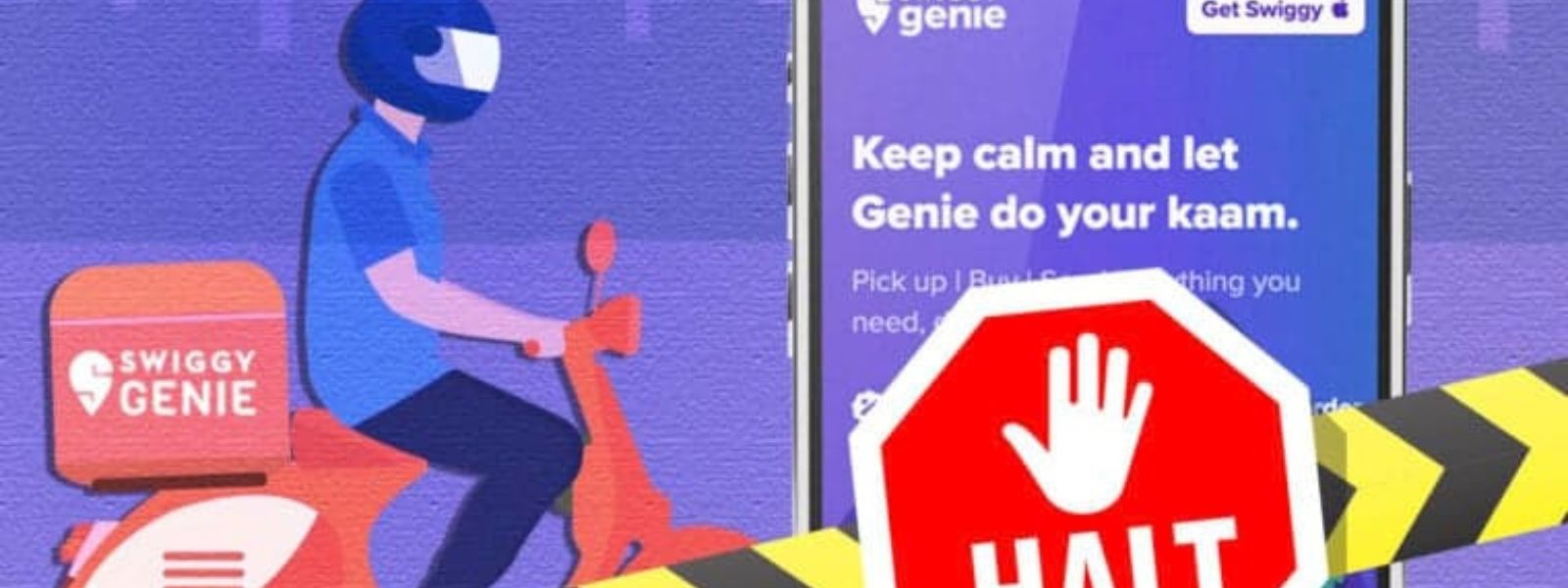
In a surprising turn of events, Swiggy suspends Genie delivery service across several Indian cities. The move has left many users puzzled, especially in major metros like Bengaluru, Mumbai, and Delhi NCR, where the service has been unavailable for days. Swiggy Genie, launched during the early pandemic days in April 2020, provided users a convenient way to pick up and drop parcels locally. However, the feature has now either disappeared from the app entirely or shows a message that it is “temporarily unavailable.”
Swiggy responded on social media, stating that Genie is taking a “little break from granting wishes” and that there is no fixed timeline for its return. While users are speculating various reasons behind the decision, Swiggy has remained tight-lipped about specifics. This is not the first suspension of Genie. In 2022, Swiggy paused Genie operations in several cities, citing higher demand for its core food delivery and Instamart quick commerce services.
The recent suspension aligns with Swiggy’s growing focus on scaling newer verticals like Bolt, its 10-minute delivery initiative that just expanded to 500+ cities. This latest move may indicate a deeper restructuring within Swiggy’s logistics and delivery model. With rival Zomato also shutting down its own ultra-fast delivery service and homestyle meal platform, the competitive dynamics in India’s foodtech and logistics landscape are clearly shifting.
This exclusive report explores Swiggy’s business model, Genie’s background, earlier suspensions, and what this means for the startup ecosystem, logistics startups, and delivery aggregators in India. We also unpack learnings for entrepreneurs from Swiggy’s evolving strategy and decision-making during scaling transitions.
1. Introduction to Swiggy: Business Model, Founders, and Services
1.1 Who Founded Swiggy and When?
Swiggy was founded in 2014 by Sriharsha Majety, Nandan Reddy, and Rahul Jaimini. While Majety and Reddy had backgrounds in technology and logistics, Jaimini was an IIT Kharagpur alumnus and worked previously with Myntra. They launched Swiggy with the intent to bridge the gap in India’s food delivery infrastructure.
1.2 Swiggy’s Core Revenue Model
Swiggy generates revenue through multiple verticals. Its primary model includes commission from restaurants, delivery charges from customers, advertising revenue, and subscription programs like Swiggy One. Over time, it diversified into Swiggy Instamart (grocery delivery), Swiggy Genie (parcel pickup/drop), and Swiggy Dineout (restaurant booking and discounts).
1.3 Swiggy’s Funding Journey
Swiggy has raised over $3.6 billion from investors like Prosus, Accel, SoftBank, and Invesco. In early 2022, it hit a valuation of $10.7 billion, making it one of India’s most valuable unicorn startups. It competes closely with Zomato in the foodtech space, both diversifying aggressively into new logistics and commerce categories.
1.4 Services Swiggy Offers
Swiggy’s ecosystem today includes:
- Food delivery from restaurants.
- Grocery and daily needs via Instamart.
- Parcel pick-up and drop via Genie.
- Table reservations and dining offers through Dineout.
- 10-minute hyperlocal delivery through Bolt.
Each of these services has helped Swiggy expand its footprint beyond traditional food delivery.
2. Background of Swiggy Genie
2.1 When Was Genie Launched?
Swiggy Genie was introduced in April 2020, shortly after the national COVID lockdown. It was initially active in 30 cities and helped users with local courier needs—whether picking up groceries, sending documents, or delivering forgotten items.
2.2 Genie’s Value Proposition
The service filled a crucial gap for urban dwellers, especially during lockdowns. Users could send anything across the city via delivery partners within hours. It was simple, reliable, and cheaper than hiring a full courier service.
2.3 Earlier Suspensions of Swiggy Genie
In 2022, Swiggy had temporarily halted Genie services in Mumbai, Bengaluru, and Hyderabad. The reason cited was operational prioritization due to increased demand for food orders and grocery deliveries. Genie resumed later in a phased manner.
3. Swiggy Suspends Genie Delivery: Current Developments
3.1 What Has Happened Now?
In May 2025, Swiggy suspends Genie delivery service once again, this time across more cities. While the company hasn’t officially confirmed a complete shutdown, users across Bengaluru, Mumbai, and Delhi NCR report that the service has disappeared from the app.
3.2 Swiggy’s Official Response
Swiggy responded to a query on X (formerly Twitter), saying, “Genie is taking a little break from granting wishes”. They added that while there’s no fixed return timeline, the team is working hard to bring it back.
3.3 What Might Be Behind This Move?
Although Swiggy hasn’t disclosed detailed reasons, industry experts speculate it could be:
- Resource reallocation towards Bolt and Instamart.
- Operational inefficiencies or logistics constraints.
- Financial prudence to control burn rate amid cost optimization.
4. Industry Insights and Competitive Landscape
4.1 Rising Focus on Quick Commerce
Swiggy recently announced that Bolt, its 10-minute delivery platform, has expanded to over 500 cities. This marks a serious bet on the growing quick commerce wave in India.
4.2 Zomato’s Parallel Decisions
Zomato recently shut down its 15-minute food delivery and Zomato Everyday, reflecting similar issues in demand and scalability. The two foodtech giants seem to be pivoting away from non-core, capital-heavy experiments.
4.3 Indian Hyperlocal Market Trends
India’s hyperlocal logistics sector is highly fragmented and competitive. Players like Dunzo, Shadowfax, and Rapido are also struggling with profitability. Genie’s pause could be a strategic pullback until operational costs align with revenue expectations.
5. What This Means for Swiggy’s Business Strategy
5.1 Consolidation Over Expansion
Swiggy may now prefer to consolidate operations and double down on high-margin verticals. Genie, being logistics-intensive and often low-margin, may not align with its revised growth strategy.
5.2 Importance of Sustainable Scaling
Swiggy suspending Genie delivery also reveals a broader truth: scaling too fast without profitability can strain logistics startups. As funding tightens, sustainable unit economics have become a priority.
5.3 User Communication Gaps
Despite the pause, Swiggy hasn’t issued a detailed statement to its user base. This can lead to trust issues or frustration among loyal users. Transparent communication will be key going forward.
6. Learning for Startups and Entrepreneurs
6.1 Prioritize Core Offerings First
Startups must identify their strongest service line and prioritize resources accordingly. Swiggy is focusing on Bolt and Instamart now, which show better ROI.
6.2 Don’t Scale Beyond Demand
While innovation is essential, expansion without adequate demand or margin can become a liability. Genie’s case underscores the need for product-market fit before nationwide scaling.
6.3 Communication Is Crucial
Keeping users informed, especially during service changes or pauses, builds long-term loyalty. Even a temporary pause like Genie’s needs better communication.
6.4 Watch the Competition
Swiggy likely observed Zomato’s pullback from ultra-fast delivery and aligned its own decisions. Monitoring competitive movements helps startups make better strategic choices.
About The Startups News
When it comes to decoding India’s dynamic startup ecosystem, The Startups News leads the way. Whether you’re tracking pivots like how Swiggy suspends Genie delivery or watching startup funding, we deliver timely, factual, and in-depth reporting. From business model breakdowns to strategic learnings, we empower entrepreneurs, investors, and operators with every update. Follow us at https://foundlanes.com for startup news that actually matters.