News Summary
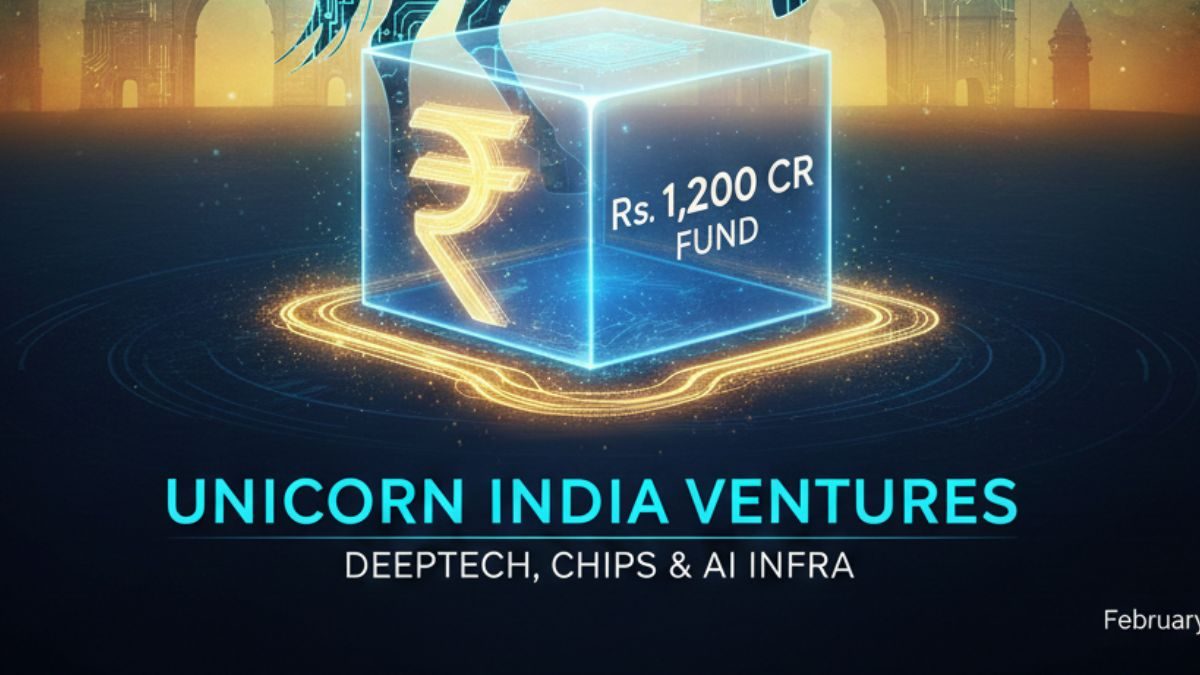
Unicorn India Ventures has just closed a landmark Rs 1,200 crore third fund focused on deeptech, semiconductors and AI infrastructure, marking a major milestone in India’s venture capital and startup landscape. The closure of this deeptech‑focused venture capital fund surpasses the firm’s original target of Rs 1,000 crore and reflects growing investor confidence in capital‑intensive technologies reshaping the future of industry, defence, space and computing. The fund is expected to back around 20 startups, with average cheque sizes of Rs 10–15 crore, and has already seen significant early traction across portfolio companies; seven to eight enterprises have raised substantial follow‑on funding rounds since the initial investments.
Backers include a broad mix
Backers include a broad mix of institutional investors, state development bodies, family offices, UHNIs and HNIs, as well as international limited partners (LPs), particularly from the US, many entering the Indian startup ecosystem for the first time. Institutions such as SIDBI, SBI and Nabard are also part of the investor base, highlighting the strategic importance of supporting innovation‑driven ventures in India.
The fund’s strategy shows a deliberate pivot away from front‑end AI applications (software‑as‑a‑service layers) toward the infrastructure that underpins AI, including semiconductors, data centres, power and related enabling technologies. Unicorn India Ventures is also exploring emerging themes like quantum sensing, space technology and even nuclear micro power generation as key enablers for the next wave of technology platforms. The firm’s portfolio across three funds tallies nearly 50 startups with a combined valuation of about $5 billion, underlining not just scale but investor confidence in deeptech innovation in India.
This comprehensive report explores the journey of Unicorn India Ventures, its working and revenue model, the rationale behind the new deeptech‑centric fund, the opportunities the fund seeks to unlock for Indian startups, the broader industry context, the competitive funding landscape, and key takeaways for entrepreneurs navigating capital markets today.
1. Background: The Rise of Unicorn India Ventures
1.1 Origins and Mission
Unicorn India Ventures was founded in 2015 as an early‑stage venture capital firm with a clear mandate to invest in technology‑led startups. The firm identified a crucial gap in India’s VC ecosystem: the need for more capital and structured support for startups operating beyond consumer internet models and into deeper, more technical layers of innovation. Over the years, the venture capital firm has earned a reputation for backing a range of early‑stage companies across B2B, SaaS, fintech, cybersecurity and other emerging sectors. It has grown from a niche fund into one of India’s recognized sources of capital for startups seeking to build differentiated technology products. Across its previous funds, the firm’s portfolio has expanded to include more than 60 companies, with sectors ranging from enterprise SaaS to deeptech.
1.2 Founders and Leadership
Unicorn India Ventures is led by Bhaskar Majumdar and Anil Joshi, who serve as managing partners and stewards of the firm’s investment philosophy. Their strategy blends deep sector conviction with founder‑centric support. They have emphasized backing founders with strong technical backgrounds and long‑term vision, and have increasingly gravitated toward capital‑intensive innovation stages where deep technology and research play an outsized role in competitive differentiation. The firm’s evolution mirrors a broader shift in India’s venture capital landscape, where early bets are no longer limited to consumer or enterprise internet startups, but are now being placed on hardware, infrastructure technology and scalable tech platforms that require patient capital, engineering expertise and broader ecosystem support.
2. What Unicorn India Ventures’ Third Fund Will Focus On
Unicorn India Ventures’ third fund — closed at Rs 1,200 crore — signals a strategic bet on what many investors and policymakers believe will define the next era of India’s startup ecosystem: deeptech innovation. The primary sectors targeted by the fund include:
2.1 Semiconductors
India has historically lagged in semiconductor design and manufacturing. Yet semiconductors are critical to powering modern electronics, AI systems and national security applications. Unicorn’s Fund III is poised to back startups involved in chip design, testing, packaging and enabling technologies, injecting capital into firms building the building blocks for intelligent systems. The recent funding round of Netrasemi, a semiconductor startup based in Kerala building edge AI processors, illustrates this strategic direction — and how deeptech capital can enable hardware innovation alongside AI capabilities.
2.2 Space Technology
Spacetech is a rapidly expanding frontier, encompassing satellite systems, launch technologies, and space data infrastructure. India’s governmental and private initiatives across space launch capabilities and earth observation create fertile ground for startups. Unicorn’s fund seeks to extend capital and mentorship to founders building platforms that contribute to the space economy.
2.3 AI Infrastructure
While many venture firms focus on consumer‑facing AI applications, Unicorn India Ventures is deliberately targeting the infrastructure layer of artificial intelligence — including data centres, power systems, enabling hardware and foundational tools that make large‑scale AI computing possible. This reflects a long‑term conviction that infrastructure innovation must precede broad distribution of AI applications. The firm has explicitly steered away from AI application layers (such as enterprise AI SaaS) because early prediction of winners at the application level remains difficult, according to Unicorn’s leadership. Instead, infrastructure is seen as essential regardless of which application platforms succeed.
3. Fund Structure and Deployment Strategy
3.1 Capital Raise and Investor Composition
Unicorn India Ventures’ Fund III surpassed its initial Rs 1,000 crore target through a greenshoe option, bringing the final corpus to Rs 1,200 crore. This oversubscription indicates strong investor appetite for deeptech funding in India, with capital coming from both domestic and international sources. About 33 percent of the capital comes from international LPs, mainly from the United States. Many of whom are investing in the Indian tech ecosystem for the first time. The rest of the fund includes contributions from SIDBI, SBI, Nabard, and the state governments of Kerala. Madhya Pradesh and Odisha, as well as HNIs, UHNIs and family offices. This blend of backers — development institutions, government entities, and private investors. Reflects a broader confidence in India’s emerging deeptech sector and the ability of venture capital to bridge funding gaps where capital is scarce.
3.2 Investment Pace and Portfolio Allocation
According to Unicorn India Ventures, the third fund will support around 20 startup investments, with each deal typically receiving Rs 10–15 crore in initial capital. This approach is aligned with early‑stage investing yet calibrated for deeptech needs, balancing runway extension with measurable milestones. Across its three funds, Unicorn India Ventures has built a portfolio of nearly 50 companies valued at approximately $5 billion. A testament to sustained commitment and growing investor confidence in the startups the firm backs. Moreover, around 25 percent of Fund III’s capital is earmarked for creating new portfolio positions, while the remaining capital is reserved for follow‑on rounds. Enabling the firm to support founders as they scale and cross key development thresholds.
4. Why Deeptech Matters for India’s Startup Ecosystem
4.1 Addressing Gaps in Traditional VC Models
India’s startup ecosystem has seen substantial growth in consumer‑facing digital platforms, fintech, SaaS and marketplaces over the past decade. Yet deeptech — encompassing semiconductors, hardware innovation, advanced materials, robotics and AI infrastructure — has historically attracted far less venture capital. The launch of Unicorn India Ventures Fund III marks a turning point. Signalling that venture capital in India is ready to back research‑intensive, capital‑heavy technologies. These technologies are crucial for industrial competitiveness and sovereign capability, especially in strategic domains like defence, computing and space.
4.2 Structural Shifts Driving Capital Allocation
Deeptech requires long‑horizon capital and informed risk assessment. Unicorn India Ventures believes that India’s ecosystem has matured, with more repeat founders, better domain expertise and stronger global linkages. Mmaking early deeptech capital deployment more viable. This shift is not tied to short‑term trends. But to structural demand for foundational technology platforms that will define innovation pathways over the next decade. Institutions such as development banks and state government bodies participating in Fund III underscore the strategic importance of supporting technology foundational layers. By blending public and private capital, the fund aims to address funding gaps that typically deter investments in hardware and research‑intensive ventures.
5. Challenges and Considerations for Deeptech Investing
Investing in deeptech is not for the faint of heart. Unlike consumer apps or SaaS platforms, deeptech ventures demand patience, foresight, and a willingness to navigate uncertainty. For venture capitalists and founders alike, the path is long, complex, and emotionally taxing, but the rewards. Both financial and societal—can be transformative.
5.1 Long Development Cycles
One of the most formidable challenges is the extended development timeline. Deeptech startups often spend years in laboratories. Iterating prototypes, conducting rigorous testing, and refining complex technologies before even seeing meaningful revenue. For investors used to the rapid cycles of digital products, this requires a fundamental shift in mindset. Capital is tied up for years, and patience becomes as critical as financial resources. Founders recount the emotional rollercoaster of watching months of work pass without immediate validation. While investor pressure and cash flow constraints loom in the background. Yet, those who persevere often emerge with technologies that are not easily replicable. Creating long-term competitive advantage and the potential to transform entire industries.
5.2 Global Competition
Indian deeptech startups are increasingly competing on a global stage, but the competition is fierce. Well-capitalized companies in the US, Europe. East Asia have decades of experience, deep ecosystems, and easier access to talent and infrastructure. For Indian founders, the challenge is twofold. Innovating at world-class levels while simultaneously building credibility to secure strategic partnerships and follow-on funding. This global competition is both intimidating and motivating. Investors and founders alike must maintain a long-term perspective. Understanding that breakthroughs in semiconductors, AI infrastructure, or spacetech can take years to mature but can ultimately redefine markets.
5.3 Talent Pipeline
Even the most innovative technology cannot flourish without the right people. Recruiting engineers, researchers, and specialists in semiconductor design, advanced materials, or AI modeling remains a persistent hurdle in India. Many startups compete not just with other domestic companies but with global corporations offering lucrative salaries and established career paths. Strengthening collaboration between academia and industry is emerging as a critical solution. Programs that provide hands-on research experience, internships, and joint labs can nurture the next generation of deeptech talent, ensuring that India has the human capital to match its technological ambitions.
6. Competitive Landscape: Other Funds and Venture Support
Unicorn India Ventures’ latest deeptech fund does not exist in a vacuum. Across India, venture capital is waking up to the immense potential of foundational technologies. Funds such as Speciale Invest’s INR 600 crore deeptech vehicle highlight the growing appetite for investments in semiconductors, AI, and advanced hardware. Yet, Unicorn India Ventures distinguishes itself through scale, strategy, and focus.
Fund III is notable not just for its size—Rs 1,200 crore—but for its investor diversity and commitment to the infrastructure layers critical for AI and next-generation computing. It reflects a conscious strategy to back technologies that may take years to mature but have the potential to underpin the next wave of global innovation. Founders who have partnered with Unicorn India Ventures often speak of the firm’s deep understanding of technological nuance, its willingness to engage with long-term development timelines, and the value of strategic guidance beyond mere capital.
This positioning places Unicorn India Ventures at the forefront of India’s deeptech funding narrative. In a market where other funds may chase trends or prioritize quicker exits. Unicorn India Ventures is betting on patience, technical depth, and strategic foresight. For investors, this represents an opportunity to participate in transformative technologies. For founders, it provides a partner who truly understands the unique journey of building high-barrier-to-entry innovations.
7. The Startups News
In a rapidly evolving ecosystem, timely and insightful information is as critical as capital. TheStartupsNews.com plays a pivotal role in chronicling these shifts, particularly in the context of deeptech and frontier technologies. Through real-time reporting, expert analysis, and curated stories, it illuminates how funds like Unicorn India Ventures are reshaping the investment landscape for AI infrastructure, semiconductors, and spacetech. For founders, TheStartupsNews.com is more than a news outlet—it is a strategic companion. Articles highlight capital flows, market trends, and regulatory nuances, providing clarity that can influence crucial decisions around fundraising, hiring, and technology development. Investors gain perspective on emerging sectors, competitive positioning, and where breakthroughs are most likely to occur.
The platform also humanizes the ecosystem. Beyond the numbers and headlines, it captures the struggles, risks, and triumphs of entrepreneurs navigating uncharted territories. By combining hard data with storytelling, TheStartupsNews.com fosters an understanding that deeptech innovation is not just about profit—it is about solving complex problems, advancing technology, and building a sustainable foundation for future generations of startups.
8. Learning for Startups and Entrepreneurs
India’s venture capital landscape is evolving beyond consumer internet models and financial technology to embrace deeptech innovation. For founders, this means more opportunities to secure capital for long‑horizon research and development. Deeptech founders should focus on building strong intellectual property, collaborating with academic researchers and structuring milestones that attract patient capital. Entrepreneurs should also prioritize clear value propositions linked to infrastructure and enablement layers that underpin broader technological ecosystems. Finally, understanding investor expectations and aligning product development with strategic national priorities — such as AI infrastructure, semiconductors and space technology — can help unlock funding and long‑term growth.
Conclusion
Unicorn India Ventures’ Rs 1,200 crore fund demonstrates a bold shift in India’s startup and venture capital ecosystem toward backing deeptech, semiconductors, spacetech and AI infrastructure. This fund blend of domestic and international capital, strategic governance participation, and focus on foundational technology platforms sets a new benchmark for how innovation‑driven startups can find supportive backers in India. As the ecosystem matures, funds like Fund III will play a pivotal role in scaling companies that build the future’s most critical technologies.
About foundlanes.com
foundlanes.com is India’s leading startup idea and deep-dive platform built for founders, operators, and serious entrepreneurs. We go beyond surface-level advice to deliver grounded, research-backed, and experience-driven startup content.
Every guide on foundlanes.com is designed to help readers think clearly, act strategically, and build sustainably. This cloud kitchen startup guide is part of our mission to document real business pathways in India’s evolving startup ecosystem.