How Zomato Built and Scaled in India — A Quiet Idea That Refused to Stay Small
Every iconic startup story begins not with ambition, but with irritation. How Zomato built and scaled in India did not start with dreams of disrupting food delivery or becoming a publicly listed tech company. It began with a very ordinary frustration inside an office building in Delhi. People were hungry. Menus were missing. Phone numbers were wrong. Nobody knew where to order lunch from without wasting time. In 2008, India was not thinking about food-tech startups. Smartphones were rare, GPS was unreliable, and ordering food online sounded indulgent rather than essential. Restaurants barely had websites, let alone digital menus. The idea that food discovery itself could be a product seemed almost trivial. Yet that trivial inconvenience exposed a deeper problem — information asymmetry in a country obsessed with food.
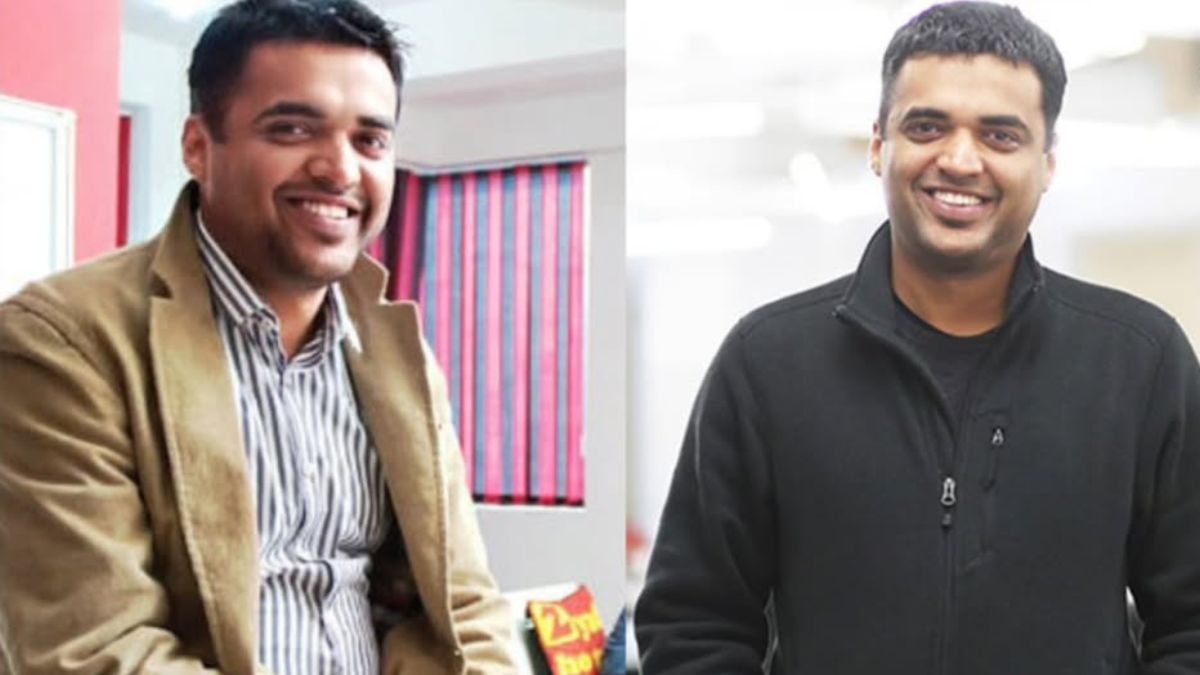
Zomato exists today because that problem was noticed early, taken seriously, and solved patiently. The company was founded by Deepinder Goyal and Pankaj Chaddah, both IIT Delhi graduates working at Bain & Company. What began as an internal solution to organize restaurant menus inside their office slowly revealed something larger: India’s food ecosystem was vast, emotional, chaotic — and completely undocumented.
Zomato, headquartered in Gurugram, Haryana, was officially launched in 2008 under the name Foodiebay. It did not deliver food. It did not offer discounts. did not promise speed. simply showed people where to eat, what to expect, and how much it would cost. Over time, that simplicity became the foundation for one of India’s most complex consumer internet businesses. How Zomato built and scaled in India is ultimately a story of patience, repeated reinvention, and the courage to stay in the game long after the glamour fades.
1. India in 2008: A Country Not Ready for Food-Tech
To understand Zomato’s origin, one must understand India in 2008. Urban India was growing, but convenience had not yet become a default expectation. Ordering food meant calling a landline, hoping someone answered, and trusting that the menu slipped under your door last month was still valid. Discovery relied on colleagues, guards, or neighbors. Restaurants operated offline by instinct. Most were family-run, cost-sensitive, and skeptical of anything “internet-related.” Advertising meant pamphlets. Branding meant a hoarding near the road.
In this environment, the idea of digitizing menus was not revolutionary — it was invisible. This invisibility worked both against and for Zomato. Against it, because few understood why such a product mattered. For it, because there was no competition chasing the same problem. The Indian startup ecosystem had not yet learned to romanticize scale. Survival mattered more.
1.1 An Accidental Product Inside Bain & Company
Inside Bain & Company’s Delhi office, employees faced the same lunch dilemma every day. Printed menus were shared, misplaced, outdated. Someone would always end up ordering the wrong dish or calling the wrong number.
Deepinder Goyal decided to fix it — not as a startup, but as a personal efficiency hack. He began collecting menus, scanning them, and uploading them to a shared internal page. No branding. No vision deck. Just usefulness. Something unexpected happened. People started relying on it. Not occasionally, but daily. That quiet adoption was Zomato’s first signal. There were no growth charts, no investor meetings. Just a recurring human behavior — hunger met by clarity.
1.2 When a Side Project Demanded Commitment
As the internal tool grew, the founders faced a decision familiar to many early-stage entrepreneurs. Continue with stable jobs, or explore something uncertain that had not yet proven it could become a business. There was no funding waiting. No ecosystem cheering them on. Food discovery was not a hot category. Yet the pull was strong. The problem felt real. The solution felt needed. They chose to quit. That decision — leaving a prestigious consulting career for an unglamorous idea — would define Zomato’s tone for years. Practical, unromantic, execution-first.
1.3 From Foodiebay to Zomato: Naming a Long Journey
The platform launched publicly as Foodiebay. It focused on Delhi NCR, one city at a time, one restaurant at a time. But the name created confusion. It sounded derivative. It did not feel owned. In 2010, the founders renamed the company Zomato. The new name carried no literal meaning. That was intentional. It allowed the brand to grow into its identity rather than be boxed by it. More importantly, it marked a shift in thinking. This was no longer just a utility. It was becoming a consumer brand. How Zomato expanded across India would depend heavily on this early clarity of identity.
2. The First Real Problem: Convincing Restaurants to Care
Consumers adopted Zomato faster than restaurants did. Restaurant owners did not immediately see value in being listed. Many questioned why anyone would look at menus online when they could simply call. Zomato’s early teams walked into restaurants personally. They scanned menus. They explained patiently. updated listings manually. This was slow, unscalable, and expensive. But it built something far more valuable than speed — trust.
Restaurants began noticing customers referencing Zomato when ordering or visiting. Footfall increased. Calls became more accurate. Over time, resistance softened. Zomato learned a crucial lesson early: in India, adoption does not come from disruption. It comes from reassurance.
2.1 Accuracy as a Growth Strategy
In its early years, Zomato did not chase growth metrics. It chased correctness. Menus were verified. Addresses were checked. Timings were updated repeatedly. Mistakes were fixed fast. This obsessive focus on accuracy became its first moat. Users returned because Zomato worked. Not because it was flashy, but because it reduced friction in everyday decisions. That reliability would later allow Zomato to attempt far more complex businesses.
3. Early Revenue: Selling Belief Before Selling Ads
Monetization came cautiously. Zomato began selling advertising space to restaurants — featured listings, highlighted placements, branded pages. For small restaurant owners, this required belief in something intangible: online visibility. Sales conversations were slow and personal. The company earned not just revenue, but credibility. This early business model was fragile, but it taught Zomato how to speak to small businesses — a skill that would become critical later. In hindsight, this phase anchored Zomato’s understanding of the food delivery business not as a tech problem, but as a human one.
4. The Moment Food Delivery Entered the Conversation
For years, Zomato resisted becoming a delivery company. Discovery was working. Traffic was growing. Reviews were flowing. The platform had identity. But consumer behavior was shifting. Smartphones were becoming affordable. On-demand convenience was no longer a luxury. Competitors were experimenting with food delivery. Investors were asking hard questions. Zomato faced a painful truth: discovery alone would not define the future. How Zomato built and scaled in India required stepping into logistics — the messiest, least forgiving layer of the food ecosystem.
4.1 A Strategic Leap With No Safety Net
Entering food delivery meant burning cash, hiring fleets, managing cancellations, handling complaints, and dealing with food quality issues outside Zomato’s direct control. It meant moving from being an information company to an operations-heavy business. The transition was not smooth. Early delivery experiments struggled. Unit economics were unclear. Losses mounted. But walking away was not an option. Zomato had learned something fundamental by then — once consumer habits change, platforms must follow or disappear.
5. A Company Standing at the Edge
By the mid-2010s, Zomato stood at a crossroads. It had brand trust, massive traffic, and restaurant relationships. But it also faced rising competition, ballooning costs, and strategic uncertainty. What it did next would determine whether it remained a useful app — or became a defining company in India’s startup ecosystem.
6. Standing at the Edge: When Scale Became a Question of Survival
By the time food delivery became unavoidable, Zomato was no longer a scrappy information website. It was a known consumer brand with traffic, recall, and restaurant relationships across Indian cities. Yet none of that guaranteed survival. Food delivery was not an extension. It was a transformation.
How Zomato built and scaled in India entered its most painful phase here — when certainty disappeared and execution errors became public. Unlike discovery, delivery could not be solved with data alone. It required boots on the ground, people on bikes, real-time coordination, and customer support that absorbed anger, delays, and disappointment. For the first time, Zomato was responsible not just for information, but for outcomes.
6.1 The Reality of Logistics in Indian Cities
India’s cities are unpredictable ecosystems. Traffic does not follow maps. Addresses are incomplete. Elevators don’t work. Rains rewrite timelines. Restaurants run late. Customers change their minds. Zomato learned this not through spreadsheets, but through thousands of failed orders. Early delivery operations were inefficient. Costs were high. Complaints were frequent. The promise of “hot food, on time” clashed with ground reality. Yet retreating was no longer possible. Food delivery was becoming the primary way consumers interacted with restaurants. Discovery was turning into a funnel, not a destination.
6.2 Building the Delivery Engine From Scratch
Zomato chose to build rather than outsource. It invested in hiring delivery partners, building routing algorithms, and setting up support infrastructure. Every mistake was expensive. Every delay damaged trust. Unlike markets where logistics maturity already existed, India demanded improvisation. Delivery density varied wildly between neighborhoods. Peak hours were unpredictable. The company responded by building technology that adapted in real time — dynamic assignment, surge pricing, incentive-based supply balancing. How Zomato scaled its business in India was no longer about ideas. It was about endurance.
7. Competitive Pressure and the Weight of Comparison
Food delivery in India quickly became a two-player battlefield. Competition intensified customer expectations and investor scrutiny. Discounts escalated. Delivery fees compressed. Marketing budgets ballooned. Zomato was forced into a paradox — spend more to retain users, while being questioned about losses. This period reshaped leadership thinking. Growth at any cost was no longer defensible. But stopping growth meant irrelevance. The company had to grow smarter, not louder.
7.1 Failures That Were Not Hidden
Several experiments failed publicly. Zomato exited international markets where scale did not justify continued investment. It shut down verticals that distracted from core delivery. It acknowledged miscalculations openly. For a long time, failure carried stigma in Indian startups. Zomato’s leadership chose transparency instead. This honesty did not reduce criticism, but it preserved internal trust. In retrospect, these exits were not retreats. They were acts of focus.
8. Restaurant Relationships Under Strain
As delivery volumes increased, tensions with restaurant partners surfaced. Commission rates were questioned. Operational dependencies increased. Small restaurants felt squeezed by margins. Zomato responded by introducing data tools, promotional support, and operational insights. The goal shifted from extraction to enablement. The company learned a difficult truth — platforms do not win by overpowering suppliers. They win by keeping the ecosystem alive. This recalibration marked a quieter but more sustainable phase of Zomato’s growth story in India.
9. Brand Positioning: From Utility to Emotional Presence
Early Zomato branding was functional. Over time, it evolved into something more conversational, sometimes irreverent, sometimes vulnerable. Social media became a voice, not just a channel. Communication reflected real moments — hunger, frustration, humor, celebration. This emotional positioning mattered. Food is personal. Zomato stopped talking like a platform and started speaking like a companion. In a crowded food delivery business, personality became differentiation.
9.1 Customer Acquisition Beyond Discounts
Discounts brought users in. But they did not keep them. Zomato invested in loyalty programs, personalization, and consistency. The aim was habit formation, not deal dependency. User retention improved when the app became predictable — reliable ETAs, fewer cancellations, transparent communication. How Zomato expanded across India depended less on promotions and more on trust built order by order.
10. Technology as a Quiet Backbone
Much of Zomato’s work became invisible to users. Routing systems improved. Forecasting models matured. Restaurant onboarding became faster. Support automation reduced friction. These were not headline-grabbing innovations, but they reduced losses. Technology did not eliminate chaos. It absorbed it. This quiet engineering discipline separated surviving platforms from collapsing ones in the Indian startup ecosystem.
11. Going Public: A Moment of Reckoning
Zomato’s decision to go public marked another turning point. Listing meant transparency. Losses were no longer startup problems; they were shareholder concerns. Narratives had to be backed by numbers. Public scrutiny was intense. Every metric was dissected. Every decision was debated. Yet going public also changed the company’s posture. Zomato was no longer building optional futures. It was building accountability.
11.1 Learning to Operate Under a Microscope
Quarterly results introduced a new rhythm. Operational discipline tightened. Cost structures were examined line by line. Growth targets were contextualized. The romance of scale gave way to the mathematics of sustainability. This transition is often under-discussed, but it defines whether a startup becomes a lasting company. Zomato crossed that threshold visibly, imperfectly, but deliberately.
12. Leadership and Cultural Evolution
As the company matured, leadership communication shifted. Less bravado. More restraint. Decisions were explained, not justified. Failures were contextualised, not spun. Internally, teams were encouraged to think long-term. Burnout was acknowledged. Speed was balanced with sanity. This cultural recalibration mattered as much as any product change.
3. The Present-Day Zomato
Today, Zomato operates at scale across Indian cities, handling millions of orders, complex logistics, and a vast merchant network. It is no longer discovering its market. It is defending and refining it. Profitability conversations coexist with growth ambitions. Efficiency is valued alongside innovation.
Zomato’s current form reflects the accumulation of lessons learned the hard way.
4. Future Outlook: How Zomato Built and Scaled in India Still Unfolds
How Zomato built and scaled in India is not a closed chapter. The future will be shaped by tighter margins, stricter regulations, and evolving consumer behavior. Convenience will remain in demand, but patience for inefficiency will decline. Zomato’s roadmap appears focused on deeper operational discipline rather than expansion for its own sake. Technology will continue to reduce friction. Restaurant partnerships will require balance, not dominance. Most importantly, the company’s survival instinct — sharpened over years of pressure — remains its strongest asset. Zomato’s story does not teach founders how to win fast. It teaches them how to stay.
About foundlanes.com
foundlanes.com is an editorial knowledge platform dedicated to documenting India’s startup ecosystem through deeply researched case studies, founder journeys, and business analysis. It focuses on how startups are actually built, scaled, corrected, and sustained — beyond surface-level success stories — offering long-form insight for founders, operators, and decision-makers.