Summary
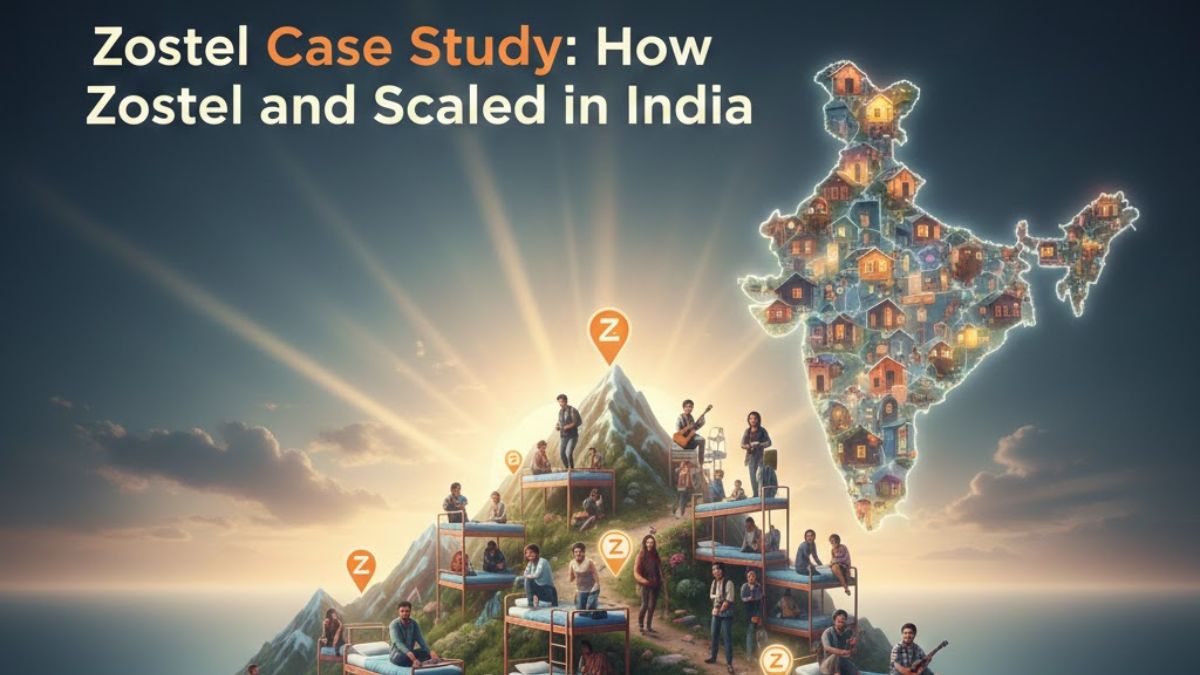
The Zostel Case Study traces the rise of one of India’s most influential travel startups — a company that reshaped the backpacker hostel sector in a market long dominated by budget hotels and unstructured guesthouses. Zostel Hospitality Pvt. Ltd. runs a network of vibrant, community-focused hostels across India and beyond, making experiential travel accessible to a generation of young adventurers. Founded in August 2013, Zostel opened its first property in Jodhpur, Rajasthan, and has since expanded to operate 90+ hostels in India and Nepal.
Zostel was started to fill a market gap: despite India’s growing travel culture, there was no organized hostel chain offering affordable, safe, and social accommodation for budget travellers. Prior to Zostel’s emergence, backpackers often ended up in low-quality lodges that lacked community spaces or structured environments for connection. The founders — a group of IIM, IIT and MDI graduates — envisioned a new kind of travel experience that combined affordability with quality, social interaction and cultural exchange.
The company is based in Gurgaon, a suburb of New Delhi, and from this base it built a distributed network of properties across key domestic and international destinations. Its business model centres on a franchisee-owned, franchisee-operated (FOFO) structure, enabling rapid expansion with limited capital outlay and engaging local entrepreneurs as operators.
Zostel’s offerings range from basic dormitories to private rooms, as well as experiential travel programs under sub-brands like Zostel Homes and Zostel Plus. Despite early funding challenges and competition, the company managed to scale organically through community engagement, digital bookings, and partnerships, hosting millions of travellers over more than a decade. Recent figures show the company processing over ₹166 crore (about US$20 million) in annual accommodation bookings with consistent growth. This Zostel Case Study explores the company’s origin, growth strategy, challenges, competitive landscape, operational scale-up, and future vision, providing a comprehensive view of how a homegrown travel startup built one of India’s most recognisable experiential hospitality brands.
1. Origins and the Birth of a Travel Idea
Zostel began as an experiment by a group of seven young graduates from top Indian management and technology institutions who saw a gap in India’s travel accommodation landscape. Until 2013, backpacker hostels — common in Europe and Southeast Asia — were virtually absent in India. Budget travellers, both domestic and international, often faced inconsistent quality, unsafe lodgings, and a lack of structured community spaces.
The first Zostel hostel opened on 15 August 2013 in Jodhpur, Rajasthan. The founding team pooled their resources — initial capital reportedly around ₹20 lakh — and leveraged their collective experiences from college travels abroad. These journeys exposed them to hostel cultures where travellers connected organically, shared stories, and built lasting relationships — experiences they wanted to bring back to India.
While the idea of running a hostel might appear straightforward, the founders’ vision was deeper than just lodging. They wanted to create community-centric spaces where travellers could meet, engage in activities, participate in cultural exchanges, and feel at home. This focus on community would become a cornerstone of Zostel’s future strategy, differentiating it from budget hotels and guesthouses that focused primarily on price rather than experience. The fledgling venture tapped into a growing trend of solo travel and experiential tourism among Indians and foreign backpackers alike. This market, while nascent, showed early signs of appetite for affordable, social, and well-managed accommodation, validating the company’s core idea in its earliest months.
2. Founders, Motivation, and Early Struggles
Zostel’s founding team included individuals from diverse academic backgrounds. Among them were graduates of IIM Calcutta, IIT BHU, and MDI Gurgaon who brought complementary skills in management, operations, and technical thinking. Their motivation stemmed not from a desire for profit alone, but from a shared belief that travel could be more inclusive, social, and accessible.
In the early stages, the founders faced typical startup struggles. Limited capital meant that they often handled host responsibilities personally — maintaining facilities, managing bookings, engaging guests and cleaning rooms. Raising awareness about a new concept in a largely untested market was another uphill battle. Many travellers, especially Indians, were unfamiliar with the idea of a hostel with shared dormitories and community areas, and some needed convincing before they would try it.
To fund initial operations and expansion, Zostel raised its first significant investment — Rs 5 crore from Malaysia-based angel investor Presha Paragash in May 2014. This early backing gave the company essential runway to open additional properties in Jaipur and Jodhpur, and begin building systems for operations and community engagement. Despite the capital infusion, the team encountered hurdles that tested their resolve. Managing traveller expectations, ensuring consistent quality across properties, and building a brand that was still unknown in the broader tourism ecosystem required continual adjustment. Early feedback shaped how the team refined amenities, social programming and digital booking flows — elements that would become core to Zostel’s identity.
3. Market Context and the Problem Zostel Aimed to Solve
Before Zostel’s emergence, India’s hospitality sector largely divided into budget hotels and high-end resorts. Truly affordable, community-oriented backpacker hostels were virtually nonexistent. This gap was more than a market opportunity — it represented a cultural void in a country with rich travel traditions but a fragmented infrastructure for youth and solo travellers.
Traditional budget hotels focused on cost, often at the expense of cleanliness, safety, and social experience. International backpackers frequently struggled to find lodgings that matched their expectations of vibrant common spaces, trustable facilities, and opportunities to meet other travellers. Domestic travellers, especially younger explorers, often defaulted to hotels that lacked the social infrastructure making travel memorable.
Zostel’s approach was to blend the budget element with social architecture — creating spaces that were both affordable and engaging. The properties were designed with communal areas, game zones, libraries and shared kitchens in some locations, encouraging interaction and discovery. This experiential layer of travel became central to Zostel’s value proposition and appeal. This model also helped travellers combat what the broader tourism industry lacked: a sense of community and shared adventure. In foreign markets like Europe and Southeast Asia, backpacker hostels served as hubs for cultural exchange and low-cost travel. Zostel aimed to replicate and localise this model in India, anticipating that solo, low-budget travel would soon rise alongside the country’s economic growth and digital connectivity.
4. Building the Product and Brand Experience
Zostel’s ‘product’ was more than beds and rooms. It was a lifestyle experience built around community and discovery. Each property maintained a consistent design language, combining affordability with safety, cleanliness and social spaces. These elements were crucial in differentiating Zostel from traditional budget hotels that prioritised cost but neglected comfort or vibe. Hostels under the Zostel brand featured dormitories with several beds, private rooms for small groups and common lounges where travellers could congregate. Many locations hosted events such as movie nights, cultural dinners, bonfires and local tours that helped build a social rhythm and kept guests engaged beyond just sleeping arrangements.
Digital booking channels, OTA partnerships, and a robust online presence facilitated discovery and reservations. Zostel invested in mobile-friendly websites and integrated booking platforms that made it easy for travellers — especially overseas guests — to plan stays in advance. It also cultivated direct booking incentives, community newsletters, and social media engagement that helped propagate brand affinity among global backpackers. Over time, the brand expanded beyond simple hostels. Sub-brands such as Zostel Homes, Zostel Plus, and Zo Villas offered differentiated experiences — from homestays with local flavour to higher-end boutique stays. This diversification helped attract a broader traveller segment while maintaining the core community ethos that defined Zostel’s early appeal.
5. Early Traction and Validation
Zostel’s early traction was rooted in strong word-of-mouth and organic demand among travellers who found value in the community experience. Within the first few years, Zostel expanded to multiple locations beyond Jaipur and Jodhpur, including Udaipur, Agra, Varanasi, Delhi, Goa, Rishikesh and Pushkar. By hosting thousands of backpackers annually — over 20,000 per month in some snapshots reported in 2015 — Zostel proved that demand extended beyond a niche audience. This validation came at a time when India’s tourism sector was experiencing growth, particularly in experiential travel and solo exploration.
The concept’s appeal to both domestic and international guests was a key sign of product-market fit. Initially, a large majority of Zostel’s guests were foreigners, but over time, a growing share of Indian travellers began embracing backpacker hostels for both leisure and workations. While early funding helped expand properties and improve operations, real validation came from repeat stays, global backpacker communities recommending Zostel locations, and organic user-generated content shared by travellers across blogs and social platforms.
6. Business Model and Revenue Approach
Zostel’s business model evolved steadily as the company expanded across India. The core structure today is a franchise-led, asset-light model that allows rapid growth without major real-estate investment. Each hostel is owned and operated by independent franchise partners while the brand provides centralised support for marketing, design guidelines, booking systems, and operational playbooks. This FOFO approach helped Zostel scale to dozens of cities with limited capital deployment, staying nimble in a competitive hospitality sector.
The company earns revenue through franchise fees, booking commissions, and brand licensing charges. Since operational costs are borne by franchise partners, Zostel focuses on strengthening brand equity, maintaining quality control, and growing demand through digital channels. For partners, the model offers a chance to build a profitable hostel business using Zostel’s established systems, design templates, and customer base. For the company, it creates a predictable, scalable revenue stream tied to occupancy and booking volumes.
The model benefited from a growing shift toward experiential travel. As backpacker culture took hold among Indian travellers, hostels became more than budget alternatives. They turned into community spaces where guests participated in activities, events, and local experiences. Since social engagement drives repeat stays and strong word-of-mouth, Zostel’s brand gained traction even in destinations with limited advertising spend.
Zostel later expanded into sub-brands such as Zostel Homes to diversify revenue and offer more premium or intimate experiences. While these properties operate under the same brand umbrella, they create additional revenue streams by attracting families, remote workers, and travellers seeking quieter, boutique stays. Over time, the combination of strong digital distribution and an asset-light franchise structure became the backbone of the Zostel business model, influencing many newer hostel chains and independent operators across India.
7. Funding History and Growth Through Capital Efficiency
One of the defining characteristics of Zostel’s journey is its lean funding footprint. Aside from its early angel investment in 2014, the company scaled with remarkable capital efficiency. The Rs 5 crore raised from Malaysia-based investor Presha Paragash gave the startup essential breathing room to expand operations and build early brand traction, but Zostel never relied heavily on venture capital to fuel its expansion.
This path contrasts sharply with many Indian hospitality and travel startups that pursued aggressive VC-funded growth. Zostel’s founders frequently spoke about avoiding rapid, unsustainable expansion that could compromise experience quality. Instead, they focused on building a strong community-centric brand and refining operational processes before multiplying locations. The reliance on a franchise model also reduced the need for major infrastructure investments. Local partners bore the costs of property development while Zostel provided brand, design frameworks, operational oversight, and digital distribution. This approach helped the chain enter new markets quickly without tying up capital in real estate or property management.
Over the years, Zostel attracted interest from investors intrigued by its strong brand recall and loyal traveller base. However, the founders maintained their controlled scaling approach, prioritising sustainability over speed. This discipline helped Zostel avoid the financial volatility that affected many internet-first hospitality startups during industry downturns. By focusing on community, consistent service standards, and digital discovery, the company demonstrated that hospitality brands could grow meaningfully even without continuous funding rounds.
8. Go-to-Market Strategy and Distribution Channels
Zostel’s go-to-market strategy hinged on a combination of digital visibility, community trust, and experiential branding. In an industry where price comparisons and hotel ratings influence consumer decisions, Zostel found an advantage by prioritising unique travel experiences over pure cost. The brand’s early users were international backpackers who naturally shared travel recommendations within global communities. Their reviews, blogs, and social media posts helped Zostel gain organic visibility without large-scale advertising. As more properties opened, the company focused on photography, user-generated social content, and digital storytelling to shape its public narrative.
Bookings flowed through Zostel’s website, partner OTAs, and direct outreach. Direct bookings played an increasing role as the brand matured, supported by a streamlined booking engine and loyalty incentives. Social media platforms, especially Instagram, helped Zostel reinforce its identity as a hub for young, adventurous travellers. Photos of common rooms, murals, events, and scenic views became integral to the brand’s digital personality.
Zostel also invested in partnerships with local tour operators, adventure companies, transport providers, and regional governments. These collaborations helped create curated travel experiences, from treks and cultural tours to regional events. By integrating local experiences into its offering, Zostel strengthened customer engagement and differentiated itself from conventional budget hotels. Word-of-mouth remained the strongest distribution channel. Guests often recommended hostels to friends, shared their stays on social platforms, and returned to Zostel properties in other destinations. This cyclical pattern sustained occupancy rates across seasons and contributed to consistent growth throughout the company’s early and middle phases.
9. Brand Positioning and Messaging Evolution
Zostel positioned itself as more than an affordable stay option. From the beginning, the company emphasised community, culture, and experience. The brand often highlighted stories of travellers bonding over bonfires, sharing meals, joining group activities, and discovering destinations together. This messaging distinguished Zostel from budget hotels, which focused primarily on price or convenience. The brand identity evolved to include vibrant colours, youthful design language, murals painted by local artists, and curated social spaces. These visual elements made each hostel both photogenic and memorable, organically reinforcing the brand narrative on platforms where visual storytelling matters.
As Zostel expanded into Zostel Homes and other sub-brands, messaging evolved to appeal to slightly different audiences. Homes positioned themselves as calm, scenic escapes in lesser-known destinations, attracting travellers seeking privacy and nature. Zostel Plus properties offered more premium amenities while maintaining the social, laid-back spirit that defined the original offerings. Throughout its evolution, the core message — community, discovery, and budget-friendly exploration — remained consistent. This clarity helped Zostel maintain strong brand recall even as the Indian hospitality landscape adopted similar concepts.
10. Key Challenges and Turning Points
Zostel’s journey was marked by several internal and external challenges that tested the organisation’s resilience. Among the most significant hurdles was a lack of public understanding about how hostels operate. In a country where shared accommodation wasn’t widely accepted, Zostel had to educate travellers about safety, cleanliness, and the advantages of community-based stays. Operational consistency was another challenge. With a growing network of franchise properties, ensuring that each hostel maintained consistent service standards required robust playbooks, audits, and training. The brand experienced growing pains as some partners struggled with the fast-paced expectations of managing a social, community-oriented property.
The company also encountered regulatory complexities, especially in certain tourist destinations where local hospitality regulations were inconsistent or outdated. Navigating these obstacles required working closely with authorities and adjusting operational models where needed.
A major turning point came when domestic travel surged around 2017–2020. Young Indian travellers increasingly embraced hostels as trendy, safe, and culture-rich alternatives to hotels. Zostel benefited significantly from this shift, with rising occupancy rates and stronger brand loyalty across the network. The COVID-19 pandemic was another defining phase. While hospitality businesses across the world faced uncertainty, Zostel leveraged its distribution of smaller, community-centric hostels in natural and less crowded locations. Domestic travellers seeking safe, scenic escapes helped revive the brand faster than many expected, and Zostel Homes saw particular interest during the early recovery phase.
11. Operational Execution and Scaling Decisions
Zostel’s operational playbook became one of its strongest assets as the company expanded across India. The founders understood early that hostels require a very different operational rhythm compared to hotels. Social spaces need daily upkeep, community activities need consistency, and guests expect both freedom and structure. These demands pushed Zostel to build clear guidelines for design, cleanliness, staffing, check-in processes, and community engagement.
The scaling decisions were influenced by two major principles. The first was maintaining an asset-light model. The second was ensuring that each property reflected Zostel’s youthful, friendly identity. To make this feasible across cities, Zostel built a framework that helped new partners create properties aligned with brand values while allowing them to adapt to regional needs.
Expansion decisions were grounded in data from travel forums, social media behaviour, and growing traffic trends in emerging destinations. Zostel often entered towns before they became mainstream tourist hubs. This approach strengthened its reputation as a brand that curated lesser-known travel experiences. Locations such as Bir, Spiti, Gokarna, and Varkala became popular in part because Zostel hostels acted as anchors for backpacker communities.
12. Competitive Landscape and Differentiation
When Zostel launched in 2013, India’s hostel market was nearly non-existent. Budget hotels dominated the value segment, while guesthouses offered little consistency. Zostel carved out space by introducing the idea of community-first budget accommodation, a concept already thriving in Europe and Southeast Asia. Over time, competitors emerged. Brands like The Hosteller, goSTOPS, and several regional chains entered the field with their own models. Budget hotel aggregators also expanded into smaller towns, raising competition for traveler attention.
Zostel differentiated itself through four pillars: community, design, location, and culture. The focus on social spaces created a strong identity that was hard to replicate. Zostel’s consistent design language helped build trust because travellers knew what to expect even in remote destinations. Its ability to scout and popularise emerging travel hotspots gave the brand a strategic edge. The company’s culture, defined by events, treks, workshops, and meetups, established an emotional link with its guests. The brand also benefited from deep trust built over time. Many travellers described Zostel as their first hostel experience. When a brand defines a category for early adopters, it often gains long-term loyalty. This relationship helped Zostel hold market share even as competition grew.
13. Growth Metrics, Milestones and Publicly Known Achievements
Zostel expanded steadily, reaching dozens of hostels and homestays across India and Nepal. As the brand scaled, it became one of the largest chains in the Indian hostel segment. While occupancy numbers are not publicly disclosed, industry observers noted the chain’s strong performance in both high-traffic tourist towns and emerging destinations.
A major achievement came as the company built a unified digital experience, improving direct bookings and reducing reliance on OTAs. Zostel also established a strong presence in the online backpacker community, frequently appearing in travel blogs, student travel groups, digital creator content, and global backpacking forums.
Zostel’s role in shaping the Indian hostel movement is one of its biggest milestones. Before its arrival, the idea of shared dorms for Indian travelers was not widely accepted. Today, hostels are a mainstream accommodation option for solo travelers, students, digital nomads, and working professionals on weekend getaways. This cultural shift owes much to how Zostel built awareness, trust, and interest around affordable experiential stays.
14. Team Building and Leadership Approach
Behind Zostel’s growth was a leadership team that leaned heavily on adaptability and decentralisation. The founders believed that hospitality brands grow stronger when local teams have autonomy. Since each destination has its own culture and tourist patterns, hostel managers were empowered to shape activities, community events, and guest engagement strategies.
The brand also nurtured a culture of entrepreneurship within the franchise network. Many partners were young travellers who shared the founders’ passion for exploration and wanted to build a business around that lifestyle. This alignment helped the brand maintain a consistent vibe across properties even though operations were not fully centralised.
Hiring focused on attitude more than experience. Since hostels rely on social energy and guest interaction, Zostel looked for team members who genuinely enjoyed meeting people, organising activities, and resolving issues calmly. This human-first hiring philosophy helped maintain a welcoming environment that travellers associated with the Zostel name.
15. Technology, Operations and Backend Efficiency
Technology supported Zostel’s asset-light scaling model. The booking engine, inventory system, and operations management tools helped franchise partners run day-to-day tasks more efficiently. Digital dashboards tracked bookings, occupancy, reviews, and performance metrics across properties. The brand also paid close attention to online reputation management. Reviews directly influence hostel occupancy, so Zostel invested in monitoring guest feedback, responding quickly, and adjusting operational practices wherever required. This emphasis on feedback loops helped the company maintain consistency as more partners joined the network.
Technology also supported Zostel’s storytelling and distribution strategy. A strong social presence, active community engagement, and a revamped website experience helped the brand stay visible to travellers planning trips months in advance. The company’s design style carried through digital platforms, reinforcing brand recall.
16. Regulatory, Legal and Industry-Specific Hurdles
The Indian hostel industry operates in a regulatory grey zone in many regions. Local authorities often apply hotel regulations to hostel properties even though operations differ significantly. Zostel navigated this landscape by working closely with partners to ensure compliance, adapting designs to meet safety norms, and clarifying operational guidelines with local officials when needed.
Some tourist destinations restrict construction or impose limits on new hospitality properties. Zostel adjusted its model by choosing compliant sites, collaborating with local communities, and avoiding locations where regulations were unclear or rapidly shifting. Operational challenges also arose from licensing requirements, fire safety certifications, and regional tourism board guidelines. Zostel’s standardised playbooks helped partners handle these compliance tasks more efficiently. While the regulatory environment remains uneven across states, the brand managed to operate successfully by choosing partners who understood regional contexts, hospitality law, and local governance structures.
17. Current Status of Zostel
Zostel remains a major player in India’s hostel and experiential travel space. It continues to add new locations while strengthening its franchise network. The brand’s digital presence, especially on social platforms, remains strong. Travellers cite Zostel as a reliable starting point when exploring destinations across India’s hills, coasts, deserts, and cultural centers.
The company has expanded beyond hostels through Zostel Homes and Zostel Plus, reflecting a broader strategy of offering varied travel experiences without diluting the core identity. As experiential travel grows and more Indians choose short getaways, Zostel stands to benefit from rising domestic tourism and changing consumer preferences.
18. Future Outlook, Roadmap and Long-Term Vision
Looking ahead, Zostel’s trajectory is set against the backdrop of India’s expanding experiential travel culture and the growing mainstream acceptance of hostel stays. The company itself has indicated ambitions to grow beyond its domestic footprint. Plans include deeper expansion into Nepal, Sri Lanka and Southeast Asia, tapping into regions where backpacker tourism and digital nomad communities are gaining strength. Zostel’s presence in Nepal and reported interest in Sri Lanka and Thailand signal early steps in that direction. ([turn0search1][turn0search8])
The brand is also integrating technology into its operating ecosystem, including AI-driven tools and digital platforms that enhance traveller planning and experience discovery. Initiatives under the Zo World banner suggest a broader travel-tech ecosystem that blends bookings, tours, community features and personalised experiences into one interface. The focus on technology reflects an understanding that travellers increasingly seek seamless digital journeys as they move through discovery, booking, stay and follow-up engagement.
Domestic expansion remains a strong priority. Reports indicate an ambition to add 15,000 beds in Tier-II, Tier-III and Tier-IV cities by 2025, expanding the reach of the hostel model to underserved travel markets. Zostel’s asset-light franchise structure supports this kind of growth by enabling local entrepreneurs to invest in hostels while leveraging the central brand’s distribution and operational support. Standardisation of product and service delivery is another focus area. As the brand grows, maintaining quality — from check-in processes to community programming — becomes essential. Structured SOPs, audits and transparent partner guidelines aim to ensure that guests receive consistent experiences regardless of location.
While expansion and tech integration bring opportunity, some market sentiment suggests that hostels in India, including Zostel, face challenges around pricing, perceived value and operational consistency in customer experience. These user-generated perspectives suggest that the brand may need to balance premium positioning with its original value-driven community ethos as it scales. (Non-authoritative social sources provide this context.) But overall, Zostel’s long-term vision positions it as a category leader in experiential hospitality, with scope to define global backpacker travel experiences emerging from India.
About foundlanes.com
foundlanes.com is India’s leading startup idea and deep-dive platform built for founders, operators, and serious entrepreneurs. We go beyond surface-level advice to deliver grounded, research-backed, and experience-driven startup content.
Every guide on foundlanes.com is designed to help readers think clearly, act strategically, and build sustainably. This cloud kitchen startup guide is part of our mission to document real business pathways in India’s evolving startup ecosystem.