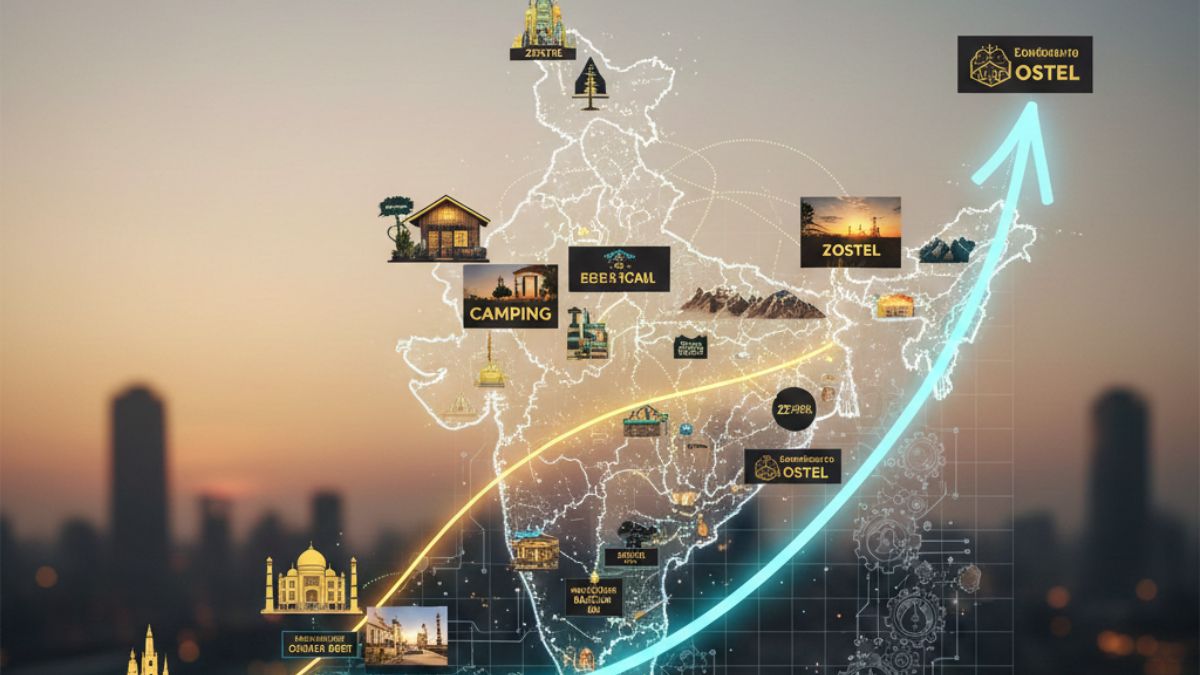
Zostel was launched in 2013 with a simple idea that had been missing from India’s travel landscape for far too long. It set out to build a chain of affordable, community-driven hostels for backpackers, students, and young travellers. At a time when India’s budget travel market was dominated by low-quality guest houses and inconsistent stays, Zostel introduced a new way to explore the country. The startup was founded by a group of college friends from IIM Calcutta and IIT BHU, who saw the rise of backpacking culture globally and realised how little of it had reached India.
The company was started by Dharamveer Singh Chouhan along with a founding team that included Paavan Nanda, Deep Banka, Akhil Malik, and several campus peers who shared the same frustration with travel options available to young Indians. The first Zostel opened in Jodhpur in 2013, and the brand has been headquartered in Gurugram while operating through a distributed network across tourist destinations. Over time, Zostel built a presence in leisure towns, Himalayan regions, beaches, heritage destinations, and emerging travel hotspots. The model was straightforward but powerful. Zostel created safe, clean, well-managed hostels designed for backpackers, priced affordably yet with consistent service, and run through a mix of owner-operated and franchise-driven properties.
The company grew by positioning itself
The company grew by positioning itself at the intersection of India’s expanding backpacking culture, the need for reliable budget accommodation, and a growing community of travellers who valued experiences over luxury. Zostel scaled using a franchise-light model where local property owners partnered with the brand for operations, quality control, and distribution. Zostel’s early success also inspired Zo Rooms, a separate budget-hotel aggregation play started by the same founders, which later became part of a complex acquisition dispute with OYO. That chapter shaped several strategic decisions but did not alter Zostel’s focus on hostels.
Today Zostel is recognised as one of India’s earliest and most influential hostel chains, shaping how young India travels. What began as an attempt to bring global backpacking culture to India has become one of the country’s best-known hospitality brands, with a footprint that has reached dozens of locations and influenced an entire generation of budget travellers.
2. The Long-Form Case Study
2.1 Early Origins and the Spark Behind Zostel
The idea for Zostel grew from a mix of frustration and curiosity. The founding team travelled extensively during college and internships, often on tight budgets. They were familiar with backpacker hostels in Europe and Southeast Asia, where community spaces, dorm beds, and organised experiences created an affordable and social travel environment. But when they travelled within India, they encountered the opposite. Guest houses were inconsistent, hotels were expensive for students, and there was no brand that represented the spirit of backpacking.
During one of these conversations in campus dorms, the founders realised India had millions of students and young professionals eager to travel but not enough accessible options. The gap seemed obvious once they saw it. The country was rich with culture, history, and landscapes, and yet lacked the infrastructure that could support a growing demographic of explorers.
Zostel was their attempt to create that missing layer.
3. The Founders’ Journeys and the Motivation Behind the Idea
The core founding team came from business and engineering backgrounds, but their shared interests went beyond academics. They were part of student clubs, travelled widely, organised events, and understood youth culture firsthand. Their motivation was shaped by personal experiences. Each had, at some point, ended up in unpredictable hotels, struggled with safety concerns, and wished for the camaraderie that hostels abroad offered. While most startups begin with market research or formal planning, Zostel’s origins were more instinctive. The founders saw themselves as the target audience. That personal alignment built the emotional foundation for Zostel.
4. What Problem Zostel Set Out to Solve
Before Zostel, India’s hostel industry was mostly unorganised. Backpacking culture existed, but only in specific pockets like Kasol or Goa. There was no national brand that represented this lifestyle. The problems Zostel identified were clear. Travellers lacked affordable stays with consistent standards. Safety, particularly for solo travellers, was a major concern. The hospitality industry had not prioritised community spaces or shared experiences. Booking options were fragmented and often unreliable.
Young travellers wanted more than just a room. They wanted like-minded people. Zostel positioned itself as the answer to all these gaps.
5. Building the First Zostel and the Early Validation Phase
The first Zostel opened in Jodhpur in 2013. Choosing Jodhpur was strategic. It was a heritage city with an active tourist flow but without the hostel ecosystem seen in places like Jaipur or Goa. The property was small, colourful, and built on the idea of community. The founders wanted it to feel like a space where travellers could talk, cook, share stories, and form connections.
The early response surprised the team. Backpackers—both Indian and international—began checking in. Many had been waiting for a hostel brand that offered basic yet well-maintained dorms and private rooms. Reviews were positive and emphasised safety, staff friendliness, and the atmosphere. This validation encouraged the founders to expand. They launched more hostels in Jaipur, Udaipur, and other tourist cities. With every new property, the brand refined its playbook. What began as experimentation soon turned into a structured model.
6. Evolution of the Product and Differentiation in the Market
Zostel did not invent hostels, but it reinvented them for India. Its differentiation came from a mix of product design, branding, and operations. The brand leaned into visual identity early on. Each property was designed with murals, bright colours, common areas, terraces, and hangout spots. This was intentional. India’s youth travel market was becoming more visually expressive, especially with social media.
Operationally, Zostel developed guidelines to ensure consistency even though each property had its own flavour. This gave the brand the reliability travellers expected from a chain. Zostel also emphasised experiences. Movie nights, local tours, pub crawls, hiking groups, and bonfires became part of the offering. This created memories that guests associated with the brand, increasing loyalty and online reviews.
7. The Turn Toward a Franchise-Driven Model
The company realised early that scaling hostels across India required local knowledge. The founders did not want a centrally owned chain where every property had identical architecture and management. Instead, they preferred working with local entrepreneurs who knew their cities and wanted to run hospitality businesses. This led to the creation of a franchise-light model. Property owners partnered with Zostel for branding, management playbooks, booking channels, technology support, and marketing. In return, they followed Zostel’s standards and paid the brand a fee or revenue share.
This approach unlocked rapid expansion. Zostel could enter new markets faster without requiring heavy capital expenditure. It also enabled the brand to expand into remote areas like Spiti, Leh, Bir, or Tirthan Valley—places where large hotel chains had no presence. Franchise partners were typically passionate about travel. They were often young entrepreneurs, returning migrants, or hospitality enthusiasts who believed in the backpacking lifestyle. This cultural alignment strengthened Zostel’s ecosystem.
8. A Brief, Neutral Look at the Zo Rooms and OYO Chapter
Zostel’s founders launched Zo Rooms in 2014 as a separate business targeting the budget-hotel aggregation market. It grew quickly and operated during a time when OYO and other players were aggressively scaling. By late 2015, Zo Rooms was in talks with OYO about a potential acquisition. Multiple media reports at the time suggested that the founders considered aligning forces because budget-hotel aggregation was becoming capital-intensive.
In the years that followed, the two companies became involved in a dispute regarding whether the acquisition was completed. This turned into a long legal process, covered widely across newspapers and industry outlets. Both companies presented their positions through legal filings and public statements.
For Zostel, the episode influenced strategic decisions about where to allocate its focus. The company continued building the hostel business, which was always positioned separately from Zo Rooms. While the legal matter became a recurring headline in some periods, Zostel’s hostel operations continued to run, expand, and refine their identity in India’s budget travel landscape.
9. Growth in the Age of Youth Travel and Social Media
Zostel’s rise aligned perfectly with the explosion of young Indians travelling for leisure. Over the past decade, India’s youth population began prioritising experiences. The growth of internet penetration and social media further accelerated this shift. Instagram posts from hostels, community kitchens, and mountain terraces became aspirational.
Zostel tapped into this cultural shift by offering stays that were not just functional but also experiential. Guests posted photos of murals, rooms, terraces, sunsets, and events. This organic online presence strengthened the brand without heavy marketing expenditure. The company’s early focus on community also helped. Travellers shared stories of friendships formed at Zostel and memories that lasted long after the trip. This user-driven advocacy gave Zostel a distinct edge in a competitive hospitality market.
10. The Business Model and Revenue Strategy
Zostel’s business model is built around scalability, community, and sustainability. From the beginning, revenue depended on accommodation bookings—both dorm-style beds and private rooms—while additional income came from franchise fees, operational support, partnerships with property owners, merchandise, curated travel experiences, and collaborations with travel platforms.
The genius of Zostel’s model was its asset-light approach. Rather than investing heavily in property ownership, it partnered with local hostel owners, enabling rapid expansion without straining capital. This approach not only kept operational costs low but also allowed the brand to focus on service quality, brand consistency, and community building. High occupancy rates followed naturally, driven by solo travellers, couples, backpackers, and digital nomads seeking affordable stays with authentic, social experiences.
Over time, this created a positive financial feedback loop: strong brand pull brought travellers in, high occupancy boosted revenue, and satisfied guests became repeat visitors, reinforcing both revenue stability and brand loyalty.
11. Go-To-Market Strategy and Distribution Channels
Zostel’s GTM strategy was multi-layered and evolved organically alongside the Indian travel landscape.
- Direct Bookings via Website: Zostel invested in building its own website early on, which became a hub for loyal users and repeat travellers. Strong SEO, storytelling, and community content drove organic traffic, reducing reliance on third-party channels.
- Online Travel Platforms: Partnerships with platforms like Booking.com, Hostelworld, and MakeMyTrip helped Zostel tap into international travellers and domestic explorers who were discovering the brand for the first time.
- Social Media & Community Marketing: Zostel’s social presence was more than marketing—it was a culture. Vibrant visuals, traveller stories, and community posts amplified word-of-mouth, inspiring guests to become brand advocates.
Over time, repeat users became one of Zostel’s most powerful growth engines. Guests who stayed at one property often sought out other Zostels in different cities, creating a natural network effect and a sense of belonging that transcended location.
12. Brand Positioning and Messaging Evolution
Zostel’s identity has always been youthful, quirky, and community-first. Early messaging emphasized affordability and the backpacker lifestyle, speaking directly to travellers seeking independence and connection. As travel preferences matured in India, the brand evolved its messaging to highlight experiences, safety, and immersive community engagement, reflecting shifting aspirations among domestic and international travellers.
Visual design has been a cornerstone of Zostel’s brand recall. Each property features vibrant murals, distinctive art installations, and a consistent design language, creating an instantly recognisable aesthetic that signals a Zostel experience before guests even step inside. This combination of emotional storytelling, aesthetic consistency, and value-focused messaging reinforced Zostel’s positioning as more than a hostel—it became a community and a lifestyle choice for a generation of travellers.
13. Key Challenges and Turning Points
Zostel faced multiple challenges while scaling. The first was educating the market. In early years, many Indian travellers did not understand hostel culture. The idea of dorms and shared spaces was unfamiliar. Zostel had to normalise the concept through reviews, content, and early adopters. The second challenge was operations in remote regions. Mountain destinations faced seasonal closures, unpredictable weather, and logistical issues. Zostel had to build strong operational systems to maintain quality.
The third challenge stemmed from competition. As hostels became popular, numerous independent and branded players entered the market. Zostel responded by emphasising community, standardisation, and brand trust. The fourth challenge was managing franchise partnerships. Ensuring quality across properties required strict monitoring, training, and systems. The company invested heavily in building processes that upheld the Zostel experience. Finally, the dispute involving Zo Rooms and OYO was a reputational and operational distraction. Although Zostel continued its hostel expansion, external noise required careful navigation. The brand maintained focus on its core mission, which helped stabilise growth.
14. How Zostel Executed Operations at Scale
Scaling a hospitality brand is deceptively complex. Every property is a living ecosystem of guests, staff, and experiences. Zostel recognized early that operations would make or break its promise of consistent, memorable stays. To manage this, it invested heavily in building structured operational systems that could be replicated across cities without losing the local charm.
Training became one of Zostel’s most critical assets. Staff were not only taught housekeeping and front-desk operations—they were trained to become community managers. They learned how to engage travellers, create experiences, and maintain high cleanliness standards consistently. This focus on people ensured that the Zostel experience didn’t vary from location to location.
Technology underpinned operational efficiency. Internal tools tracked occupancy, pricing, guest feedback, and maintenance issues in real-time. This data allowed Zostel to dynamically adjust room rates, identify potential service bottlenecks, and maintain high standards across properties. Revenue management, guest satisfaction, and operational accountability became measurable, not aspirational.
The franchise network was supported by regional management teams who acted as the bridge between corporate standards and local execution. These teams conducted audits, offered coaching, and helped property owners implement improvements while preserving autonomy. The result was a decentralized yet highly structured system—one that allowed Zostel to expand rapidly without diluting quality or brand ethos.
15. Competitive Landscape and Zostel’s Differentiation
As India’s hostel ecosystem matured, competition intensified. Independent hostels proliferated, global chains entered the market, and new domestic players experimented with niche offerings. Zostel’s early-mover advantage, however, gave it a durable edge. Brand recognition and trust were already established among travellers who sought community, affordability, and reliability.
Zostel differentiated itself through multiple intertwined factors:
- Community-Centric Experience: Every property was designed to encourage interaction. From curated events to communal spaces, Zostel created bonds that extended beyond individual stays.
- Aesthetics and Culture: Vibrant murals, art installations, and playful interiors made each hostel visually memorable. Guests didn’t just book a bed—they booked a feeling.
- Sustainable Franchise Model: By partnering with property owners, Zostel expanded without taking on the heavy capital burden of property ownership. This allowed careful scaling while maintaining operational standards.
- Consistency Across Locations: Standardized training, audits, and tech-driven monitoring ensured travellers had similar experiences, whether in Jaipur, Goa, or a remote mountain town.
Unlike competitors chasing either premium positioning or rapid expansion, Zostel remained true to its original promise: affordable, experiential, and community-driven stays. This clarity reinforced loyalty and built trust over years—a strategic moat in an increasingly crowded market.
16. Growth Metrics, Milestones, and Achievements
Over the years, Zostel steadily expanded to dozens of locations across India and a few international destinations. While exact financial metrics are not publicly disclosed, the brand achieved visible and tangible markers of success:
- It became one of India’s most recognisable hostel chains, synonymous with backpacking and youthful travel.
- Properties consistently received high ratings on global platforms like Booking.com and Hostelworld, reflecting guest satisfaction and repeat patronage.
- Awards for hospitality innovation and community-driven experiences positioned Zostel as a benchmark for budget travel in India.
- The brand’s operational and aesthetic model inspired a new wave of hostels, proving that scalable yet experiential hostels were viable in the Indian market.
Zostel’s growth was measured and sustainable. Unlike capital-fueled hyper-expansion seen in many sectors, the company prioritized consistent quality, community-building, and replicable operations. The result was a brand that travellers trusted, employees felt proud to represent, and competitors respected.
17. Team Building and Leadership Approach
Zostel’s founders understood early that a hostel is more than a building—it’s a living, breathing ecosystem where people and culture define the experience. Hiring was intentional. Early employees were often travellers themselves, people who had lived the backpacking lifestyle and understood the unspoken needs of guests. This created a team that not only believed in the mission but could naturally communicate, empathize, and anticipate guest expectations.
Leadership was deliberately participative. Local managers and franchise owners were empowered to take initiative, make on-the-spot decisions, and adapt to the unique demands of their locations. This decentralised approach made operations resilient, especially when scaling across geographies with vastly different travel cultures and expectations.
Over time, the founding team evolved their roles. They stepped away from day-to-day operations to focus on strategic initiatives—expanding the network, strengthening the brand ecosystem, and nurturing partnerships. This shift allowed Zostel to grow sustainably without losing its operational soul.
18. Technology, Operations, and Supply-Chain Insights
Technology became a quiet but critical backbone for Zostel. The company developed its own booking engine, customer management tools, pricing algorithms, and property dashboards. These systems reduced manual effort, improved occupancy rates, and enabled dynamic pricing based on demand and location. The platform allowed the brand to scale without compromising on the guest experience, creating a measurable link between operational efficiency and revenue.
Supply-chain management, though smaller than in large hotels, was essential for consistency. Bedding, housekeeping materials, safety equipment, and decor had to meet the same standards across properties. Zostel built strong vendor relationships to maintain quality while keeping costs manageable.
Operating in remote or seasonal locations added layers of complexity. Properties in mountains or coastal areas required specialised planning—managing off-season staffing, ensuring safety protocols, and preparing for weather-driven disruptions. Zostel created detailed operational guidelines, ensuring each location could function smoothly regardless of external challenges.
19. Industry Hurdles, Regulatory Issues, and Compliance
Hospitality in India is a maze of regulations, and hostels face unique challenges. Local permits and licenses vary widely by state, and certain regions restrict dormitory-style or community housing. Zostel navigated these hurdles by building relationships with municipal authorities, tourism boards, and local regulators, ensuring compliance without compromising operational flexibility.
Land-use norms, environmental regulations, and safety requirements required careful planning. Choosing locations wasn’t just about aesthetics or footfall; it was about legality and sustainability. Over time, Zostel’s experience across multiple states created a repository of knowledge, enabling smoother approvals for new properties and reducing risk for franchise partners.
20. Zostel’s Current Position in India’s Hostel Market
Today, Zostel stands as the undisputed pioneer of India’s modern hostel movement. Its presence stretches across mountains, beaches, forests, heritage towns, and urban hubs, consistently attracting young backpackers, digital nomads, solo travellers, and students.
The brand has maintained its core ethos: community, quality, safety, and affordability. Every mural, every event, every hostel manager embodies the values that made Zostel resonate with travellers in the first place. In an industry now crowded with competitors, Zostel remains differentiated not by size alone, but by its culture, operational discipline, and deep understanding of the traveller mindset. Its identity as a community-driven, experiential, and reliable hostel brand is stronger than ever—proof that consistent execution, thoughtful expansion, and human-centric leadership create enduring success.
21. Future Outlook: How Zostel Plans to Scale Nationwide
Zostel’s future will be shaped by the rise of India’s youth travel market, which continues to expand each year. The brand is likely to deepen its presence in adventure locations, remote valleys, and emerging destinations. With more Indians embracing travel as a lifestyle, hostels will remain an essential part of the accommodation mix.
The company is expected to strengthen its franchise ecosystem, invest in technology, and refine operational playbooks. As India’s fastest-growing hostel chain categories continue to evolve, Zostel will aim to maintain its leadership by focusing on community-centric experiences.
International expansion may also play a role, especially in regions where Indian backpackers frequently travel. The future of Zostel Case Study insights shows a brand that intends to grow sustainably while staying true to the ethos that defined it a decade ago.
About foundlanes.com
foundlanes.comis an independent platform dedicated to documenting and analysing India’s startup ecosystem. It publishes in-depth founder journeys, long-form business stories, and case studies that explore how Indian startups are built, scaled, and sustained. The platform focuses on factual reporting, structured research, and insights that help readers understand the mechanics of entrepreneurship in India.