News Summary
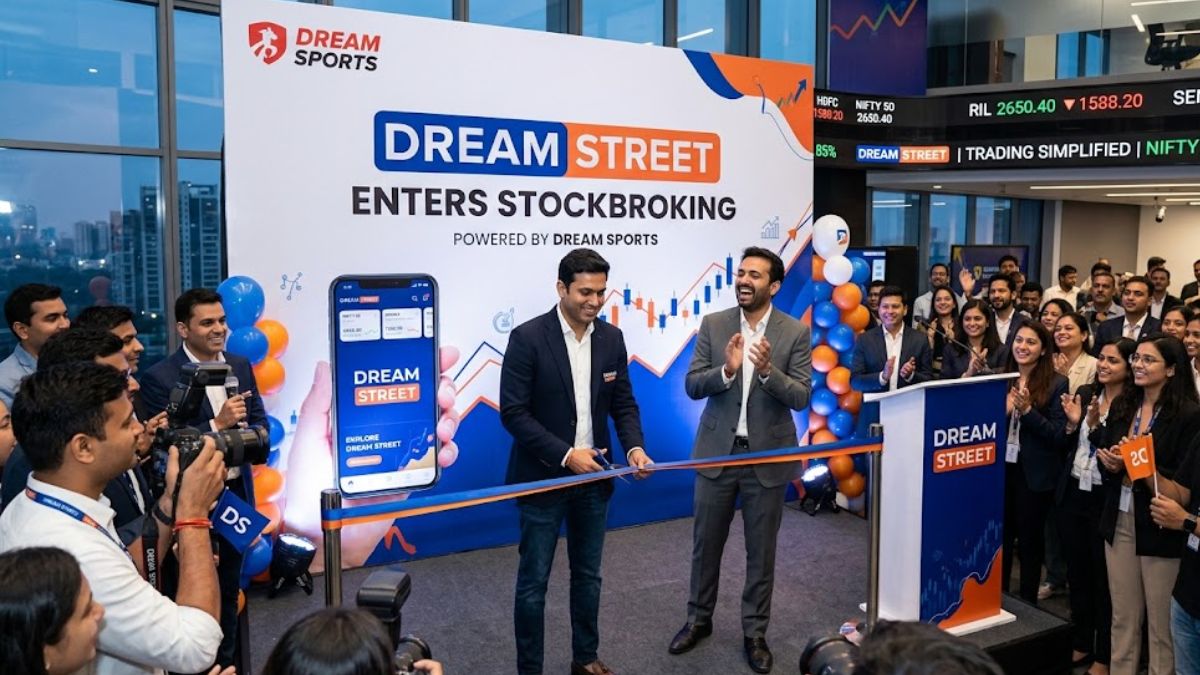
Dream Sports, the parent company of Dream11, is taking a major step beyond fantasy gaming as it enters stockbroking with its new platform, Dream Street. This move signals a strategic expansion into India’s booming fintech and digital investing space. Over the past few years, retail participation in the stock market has surged, driven by mobile-first platforms, low brokerage fees, and rising financial awareness. As a result, several tech-driven companies are now entering the brokerage business to capture this growing demand.
Dream Street is expected to focus on simplifying stock market access for young and first-time investors. The platform will likely combine intuitive design, education tools, and possibly gamification elements to create a unique investing experience. Dream Sports aims to leverage its massive existing user base from Dream11, along with its strong brand recall, to accelerate adoption.
However, the move comes with challenges. The online broking industry is already dominated by players like Zerodha, Groww, and Upstox. These companies have built trust, scale, and robust platforms. Therefore, Dream Street will need a strong differentiation strategy to succeed. Still, the timing appears right. India’s fintech ecosystem is expanding rapidly, and digital investing is becoming mainstream. As Dream Sports enters stockbroking, it reflects a larger trend where tech startups diversify into financial services to unlock new growth opportunities and revenue streams.
1. Introduction: Dream Sports Enters Stockbroking with Dream Street
Dream Sports has officially decided to expand its business scope. The company enters stockbroking with its upcoming platform, Dream Street, marking a bold shift from gaming to financial services. This move highlights a growing pattern in the startup ecosystem. Many Indian startups are exploring fintech to drive future growth. Moreover, the rise of digital platforms has made investing more accessible than ever. As a result, Dream Sports sees a clear opportunity. By entering the stock trading space, the company aims to tap into a rapidly growing market.
1.1 Evolution of Dream Sports as a Startup
Dream Sports began its journey with Dream11, a fantasy sports platform that transformed online gaming in India. Over time, it became one of the most successful Indian startups and achieved unicorn status. The company’s growth reflects strong execution and market understanding. It capitalized on cricket’s popularity and built a loyal user base. Furthermore, Dream Sports expanded its ecosystem. It launched DreamSetGo for sports experiences, DreamPay for payments, and Dream Capital for venture investments. These expansions show a clear focus on diversification. Now, as Dream Sports enters stockbroking, it continues this journey of evolution and innovation.
1.2 Strategic Intent Behind Entering Stockbroking
The decision to move into stockbroking is not random. Instead, it is driven by clear business strategies and industry trends. First, the fintech sector is one of the fastest-growing segments in India. Digital trading, online investment platforms, and wealth tech solutions are seeing massive adoption. Second, Dream Sports already has millions of users. These users are comfortable with mobile apps and digital transactions. Third, the company aims to diversify its revenue streams. Gaming revenues can be cyclical. Therefore, financial services offer long-term stability. Hence, Dream Sports enters stockbroking to align with these market opportunities.
2. Understanding Dream Street Platform
Dream Street is positioned as a modern stockbroking platform. It aims to simplify investing while making it engaging for users.
2.1 Key Features and Product Offering
Dream Street is expected to offer a wide range of services.
- Stock buying and selling
- Demat and trading account integration
- Real-time market data
- Portfolio tracking tools
- Investment education content
- User-friendly interface
These features suggest that the platform will compete directly with existing digital brokers.
2.2 Focus on User Experience and Simplicity
One of the biggest barriers in stock trading is complexity. Many new users find the process confusing. Dream Street aims to solve this issue. It will likely focus on clean design, easy navigation, and guided investing. Additionally, the platform may introduce gamification elements. This approach can make investing more engaging, especially for younger audiences.
2.3 Target Market and Customer Segments
Dream Street will focus on specific user groups.
- Young professionals entering the workforce
- First-time investors exploring stock markets
- Existing Dream11 users
- Users from Tier 2 and Tier 3 cities
These segments are growing rapidly in India’s digital economy.
3. Working Model of Dream Street
3.1 How the Platform Will Operate
At its core, Dream Street is expected to function like a modern discount broking platform, but the real story lies in how smoothly it will bring new users into investing. The entire journey, from opening an account to placing the first trade, is likely to be completely digital. No paperwork headaches, no long waiting periods. Just a few taps, basic KYC, and you’re in. For someone who has never invested before, this matters a lot. The biggest barrier in India isn’t lack of money, it’s hesitation and confusion. If Dream Street gets this onboarding experience right, it can unlock a massive new audience that has so far stayed away from the stock market.
Once inside, users won’t just see buy and sell buttons. The platform is expected to offer charts, reports, and insights that simplify decision-making. Not overwhelming, not overly technical, but practical enough to guide users. That balance is where most platforms struggle. Either they are too basic or too complex. Dream Street’s success will depend on how well it bridges that gap.
3.2 Role of Technology in Operations
If there’s one thing Dream Sports understands deeply, it’s user behavior at scale. That experience will likely shape Dream Street’s backbone. Speed will be non-negotiable. In trading, even a second’s delay can mean a different price, a missed opportunity, or a loss. The platform is expected to focus heavily on fast execution and real-time updates so users feel in control at every moment.
Security is another area where trust will make or break the product. People are not just playing with points here, they are putting in real money. Strong encryption, safe transactions, and reliable systems will be essential to build confidence, especially among first-time investors. What could truly set Dream Street apart is its use of data. Instead of dumping raw numbers, the platform may use analytics to offer personalized insights. For example, suggesting patterns based on user behavior or highlighting risks in a simple, understandable way. This is where technology stops being a feature and starts becoming a guide.
3.3 Integration with Existing Ecosystem
This is where Dream Street has a real edge. Dream Sports already has millions of engaged users through its existing platforms. These are people who understand risk, rewards, and decision-making under uncertainty. In many ways, they are already primed for investing.
By integrating Dream Street into this ecosystem, the company can introduce investing in a familiar environment. Imagine a user who comes to check fantasy sports results and gradually gets nudged towards learning about stocks. That transition feels natural, not forced. From a business perspective, this reduces customer acquisition costs significantly. Instead of spending heavily on ads, the company can tap into its own user base. From a user perspective, it feels like an extension of something they already trust. If executed well, this integration alone can accelerate adoption faster than most new-age broking platforms.
4. Revenue Model and Monetization Strategy
4.1 Core Revenue Streams
Dream Street isn’t reinventing the revenue model, but it doesn’t need to. The strength lies in execution. The primary income will likely come from brokerage fees on trades. Even if margins are thin, volume can make up for it. With a large user base, small fees across millions of transactions can generate substantial revenue. Beyond that, subscription plans will play an important role. Users who want deeper insights, advanced tools, or premium features may be willing to pay for them. This is where the platform can move from being just a utility to a value-driven product. Advanced analytics tools and partner services will add another layer. Whether it’s research reports or third-party integrations, these offerings can create additional income streams while improving user experience.
4.2 Expansion of Financial Services
This is where things get interesting. Stockbroking is rarely the end goal. It’s usually the entry point. Once users start trusting the platform with their investments, expanding into other financial services becomes much easier. Dream Street could gradually introduce mutual funds for long-term investors, wealth management for high-value users, and even margin trading for experienced traders. Insurance and other financial products could follow. This strategy increases the lifetime value of each user. Instead of earning a one-time fee, the platform builds an ongoing relationship. Over time, that relationship becomes far more valuable than individual transactions.
4.3 Long-Term Growth Strategy
The bigger picture is clear. Dream Street isn’t just aiming to be another trading app. It wants to become a complete financial destination. To achieve that, scale and engagement will be critical. Getting users onboard is just the first step. Keeping them active, informed, and confident is the real challenge. Continuous innovation will play a huge role here. Markets evolve, user expectations change, and competition never stands still. The platforms that survive are the ones that keep adapting without losing simplicity. If Dream Street can maintain that balance, it has the potential to build something much larger than a broking service.
5. Funding, Valuation, and Financial Strength
Dream Sports enters this space with a strong advantage, financial muscle. The company has already secured backing from major global investors and has reached unicorn status. That kind of valuation is not just about numbers, it reflects confidence in the company’s ability to scale and execute.
More importantly, it gives Dream Street breathing room. Building a financial platform takes time. There are regulatory hurdles, technology investments, and user trust to earn. Having deep pockets allows the company to focus on long-term growth instead of chasing short-term profits. Its investment arm, Dream Capital, adds another layer of strength. By backing emerging startups, the company stays close to innovation and new ideas, which can eventually feed back into its own ecosystem.
5.1 Role of Venture Capital and Investors
Behind every large-scale startup expansion is investor belief. In Dream Sports’ case, that belief has translated into consistent funding support. Investors are not just betting on fantasy sports anymore, they are backing a broader vision. Moving into fintech aligns perfectly with that. For investors, this is about long-term value creation. For the company, it’s about having the resources to experiment, fail if needed, and still keep building.
5.2 Financial Stability and Risk Management
Entering stockbroking is not without risk. Regulations are strict, competition is intense, and markets are unpredictable. But this is where financial strength becomes a shield. Dream Sports has the ability to invest heavily in compliance, technology, and user acquisition. It can afford to build robust systems, hire the right talent, and spend on marketing without cutting corners. From a user’s perspective, this stability matters. People are more likely to trust a platform that feels secure, reliable, and backed by a strong company. In the end, Dream Street’s journey will not just depend on what it builds, but how consistently it delivers. The foundation is strong. Now it’s about execution.
6. Founders’ Vision and Leadership Approach
Behind every product that scales to millions of users, there’s a certain way of thinking that shapes it. In the case of Dream Sports, the founders have never just built features, they’ve built behavior-driven products. Their journey so far shows a clear pattern. They don’t chase trends blindly. Instead, they observe how users behave, what keeps them engaged, and where friction exists. Then they design around it. That’s exactly the mindset they’re bringing into Dream Street.
This move into stockbroking isn’t random. It’s a natural extension of understanding how people interact with risk, rewards, and decision-making. The same psychology that keeps users engaged in fantasy sports can, if handled responsibly, be redirected towards investing. But here’s the shift. In gaming, users play with outcomes. In investing, they deal with real money, real consequences, and real emotions. That requires a different level of responsibility. The founders seem to understand that the next phase is not just about growth, it’s about trust.
6.1 Leadership Philosophy
The leadership approach has always been grounded in data, but not in a cold, mechanical way. It’s more about listening at scale. Every click, every drop-off point, every repeated action tells a story. Instead of guessing what users want, the team studies behavior patterns and builds accordingly. That’s how they’ve managed to scale rapidly in the past.
In the context of Dream Street, this approach could be even more powerful. Imagine identifying where new investors hesitate, where they panic, or where they make impulsive decisions. If the platform can recognize these patterns, it can guide users more responsibly. That’s where data stops being just a growth tool and becomes a support system.
6.2 Future Vision for Dream Street
The long-term vision is not just to build another trading app. It’s to create an ecosystem where a user can start small and grow financially over time. Dream Street could begin as a simple entry point into stock trading, but over time, it has the potential to expand into a full financial platform. One where users don’t just trade, but learn, invest, plan, and build wealth.
But none of this is guaranteed. Execution is everything here. In fintech, even small mistakes can break user trust instantly. The real test will be consistency, reliability, and how well the platform handles user expectations during both profits and losses.
7. Problem Statement: What Challenges Does Dream Street Address?
7.1 Complexity in Stock Market Participation
For someone new, the stock market feels intimidating. Charts look confusing, financial terms sound complicated, and the fear of losing money is always present. This is where most platforms lose first-time users. They assume a level of understanding that many people simply don’t have. Dream Street has an opportunity to change that experience. By simplifying the interface and guiding users step by step, it can reduce that initial hesitation. Not by dumbing things down, but by presenting information in a way that actually makes sense. If a user can understand what they’re doing, even at a basic level, they’re far more likely to stay and grow.
7.2 Lack of Financial Literacy in India
This is a deeper issue. A large part of India’s population has never been taught how markets work. Investing still feels like something meant for experts or wealthy individuals. Digital platforms can play a huge role in changing this perception. If Dream Street integrates learning into the product itself, not as a separate feature but as part of the experience, it can gradually build user confidence. Small explanations, simple insights, and timely guidance can go a long way. Over time, this doesn’t just create users, it creates informed investors.
7.3 Limited Access in Smaller Cities
There was a time when investing was largely limited to metro cities. Access, awareness, and infrastructure were all barriers. That gap is closing fast. With smartphones and affordable internet, users from Tier 2 and Tier 3 cities are entering the market at a rapid pace. What they need now is a platform that feels approachable, not intimidating. Dream Street can tap into this shift. If it speaks the language of these users, both literally and emotionally, it can unlock a massive, underserved market.
8. Industry Trends and Market Growth
8.1 Rise of Retail Investors in India
Over the last few years, India has seen a surge in retail participation in the stock market. Millions of new demat accounts have been opened, many by first-time investors. This growth didn’t happen by accident. It was driven by easier access to apps, lower brokerage fees, and increasing awareness through digital platforms. For Dream Street, this means one thing. The market is no longer niche. It’s expanding, and there’s still room for new players who can improve the user experience.
8.2 Expansion of Fintech and Digital Finance
Fintech in India is evolving at a remarkable pace. What started with digital payments has now expanded into lending, insurance, and wealth management. Investors are pouring money into this space because the potential is massive. Financial services are moving from offline complexity to digital simplicity. By entering stockbroking, Dream Sports is stepping into a space that is still being shaped. That creates both opportunity and pressure to innovate.
8.3 Technology-Driven Investment Platforms
Today’s investment platforms are no longer just transaction tools. They are becoming intelligent systems. Features like AI-based recommendations, real-time data, and advanced analytics are becoming standard. But the real challenge is not adding these features, it’s making them useful. Too much information can overwhelm users. Too little can leave them guessing. The platforms that win are the ones that simplify complexity without hiding important details. If Dream Street can strike that balance, it can stand out in a crowded market.
9. Competitive Landscape: Who Are the Key Players?
9.1 Direct Competitors in Stockbroking
Dream Street is entering a space where strong players have already built trust and scale.
- Zerodha
- Groww
- Upstox
- Angel One
These platforms have spent years refining their products. They offer low fees, reliable technology, and large user bases. Competing with them won’t be easy. But markets this large rarely stay locked. There is always space for a product that offers a better experience or reaches a different audience.
9.2 Indirect Competitors and Market Alternatives
Competition doesn’t stop at discount brokers. Traditional brokerage firms still hold a significant share, especially among older investors. Banks offer integrated trading services, which feel safer to many users. Wealth management platforms and advisory apps attract users looking for guided investing. Each of these options solves a slightly different problem. Together, they create a highly competitive environment.
9.3 Differentiation Strategy
For Dream Street, the question isn’t whether it can compete. It’s how it chooses to stand out. One possible path is gamification, making investing feel engaging without turning it into reckless behavior. If done responsibly, this could make learning about markets less intimidating. Another strong advantage is ecosystem integration. Leveraging existing users from Dream Sports can accelerate growth in a way most competitors cannot replicate.
But perhaps the most important differentiator will be simplicity. Not just in design, but in communication. If users feel comfortable, informed, and in control, they are more likely to stay. In the end, the winners in this space won’t just be the ones with the most features. They will be the ones who understand their users the best and build with empathy.
10. Regulatory Landscape and Compliance
10.1 Importance of SEBI Regulations
The moment a company steps into stockbroking in India, it enters a space where there is very little room for error. This is not like launching a new app feature or experimenting with user engagement. Here, every action is governed by rules set by Securities and Exchange Board of India.
And honestly, that’s a good thing. Because at the end of the day, people are not just clicking buttons. They are trusting the platform with their savings, their risks, and sometimes even their life goals. SEBI’s regulations exist to protect that trust. From licensing requirements to strict transparency norms, every guideline is designed to ensure that users are treated fairly. Pricing must be clear. Processes must be honest. Systems must be accountable. For Dream Street, compliance won’t just be a checklist. It will define how credible the platform feels from day one.
10.2 Challenges in Regulatory Compliance
What looks simple from the outside is actually layered with complexity behind the scenes. Compliance means building systems that can handle sensitive financial data without a single lapse. It means ensuring that every trade is executed fairly, every fee is clearly communicated, and every user action is traceable. Data security becomes non-negotiable. Even a small breach can shake confidence instantly. Transparent pricing is equally critical. Hidden charges or confusing fee structures are one of the fastest ways to lose users.
Then comes the ongoing nature of compliance. Regulations evolve. Reporting requirements change. Audits happen. This is not a one-time setup, it’s a continuous responsibility. For Dream Sports, stepping into this space means building a culture where compliance is not seen as a restriction, but as a foundation.
11. Challenges and Risks Ahead
11.1 Intense Market Competition
Let’s be real. This is not an empty market waiting to be explored. Platforms like Zerodha, Groww, and Upstox have already spent years building trust. They’ve gone through outages, market crashes, user complaints, and still managed to retain loyalty. That kind of trust is not easy to replicate.
For Dream Street, entering this space means competing not just on features, but on experience. Users will constantly compare. Every delay, every glitch, every confusing screen will be noticed. To win even a small share, the platform will need to offer something genuinely better or meaningfully different.
11.2 Building User Trust
Trust in fintech is fragile. It takes years to build and seconds to lose. A user might tolerate a bug in a gaming app. They won’t tolerate it when money is involved. If a trade fails, if an app crashes during market hours, or if there’s even a hint of security risk, it creates anxiety. And once that feeling sets in, it’s hard to reverse. Dream Street will have to earn trust slowly. Through consistency, reliability, and clear communication. Not just when things go right, but especially when something goes wrong. Because that’s when users truly judge a platform.
11.3 Market Volatility and Economic Factors
There’s another layer of unpredictability here. The market itself. Stock markets don’t move in straight lines. They react to global events, economic policies, and investor sentiment. Some days bring excitement and profits. Others bring fear and losses.
This directly impacts user behavior. During bull markets, activity rises. During downturns, many users step back or lose confidence. For Dream Street, this means revenue and engagement will not always be stable. The platform must be designed to support users emotionally as well as technically, especially during volatile periods.
12. Startup Ecosystem Impact and Industry Significance
The move by Dream Sports into stockbroking is not just about one company expanding. It reflects a much bigger shift happening across the startup ecosystem. The lines between industries are blurring. Companies are no longer staying in one lane. A gaming platform can enter fintech. A fintech company can move into lending, insurance, or wealth management. The idea is simple. If you already have user attention, you can build more services around it.
This creates powerful digital ecosystems where users don’t need to leave one platform to manage different aspects of their lives. It also raises the bar for innovation. Startups are now thinking beyond single products and focusing on long-term user relationships. In many ways, Dream Street is part of this larger transformation.
13. Dream Sports Journey: From Gaming to Fintech
The story of Dream Sports is not just about growth, it’s about evolution. It started with fantasy sports, a space that itself was once seen as niche and uncertain. Over time, the company built one of the largest user bases in the country by understanding what keeps people engaged. Then it expanded. Into sports experiences, into investments through Dream Capital, and now into financial services.
Each step wasn’t random. It was built on learning from the previous one. What makes this journey interesting is the willingness to adapt. Many companies get comfortable after success. They protect what they have. Dream Sports seems to do the opposite. It keeps pushing into new territories. Entering stockbroking is a bold move. It signals that the company is thinking far beyond its original identity.
14. Future Outlook: What Lies Ahead for Dream Street?
There’s real potential here. But potential alone doesn’t guarantee success. Dream Street is entering at a time when interest in investing is growing rapidly. More people are curious. More people are willing to try. That creates an opportunity. But turning that opportunity into a sustainable business will depend on execution.
14.1 Key Growth Drivers
One of the biggest advantages is the existing user base. Millions of users already interact with Dream Sports platforms. Even a small percentage converting into investors can create significant scale. At the same time, the overall interest in stock market investing in India is rising. People are actively looking for platforms that feel simple and trustworthy. If Dream Street can combine this demand with continuous product improvement and smart marketing, growth can come faster than expected.
14.2 Potential Expansion Opportunities
Looking ahead, the possibilities go beyond just stock trading. The platform could expand into international markets, tapping into Indian users who want global exposure. It could introduce advanced financial products for experienced investors.AI-driven tools could make investing more personalized. Instead of generic insights, users could receive suggestions tailored to their behavior and goals. Wealth management is another natural extension. Helping users not just trade, but plan their financial future. Each of these steps adds depth to the platform and increases user lifetime value.
15. Learning for Startups and Entrepreneurs
There’s a lot to take away from this move, especially for founders building their own ventures. First, growth doesn’t always come from doing more of the same. Sometimes it comes from stepping into a completely new space, but doing it with the strengths you already have. Second, a strong user base is one of the biggest assets a company can build. It reduces dependency on expensive acquisition and opens doors to new opportunities.
Third, timing matters. Entering a market when awareness is rising can make a huge difference. Fourth, execution is everything. Ideas are easy. Building something reliable, scalable, and trusted is where most companies struggle. And finally, never underestimate the power of user experience. People may try a product once out of curiosity, but they stay only if it feels right. That’s the real game.
About foundlanes.com
foundlanes.com is India’s leading startup idea discovery platform. It helps entrepreneurs find actionable startup opportunities, market insights, and industry-specific guidance to turn ideas into real businesses. With deep research and practical resources, foundlanes supports founders at every stage, from idea validation to launch and growth.