News Summary
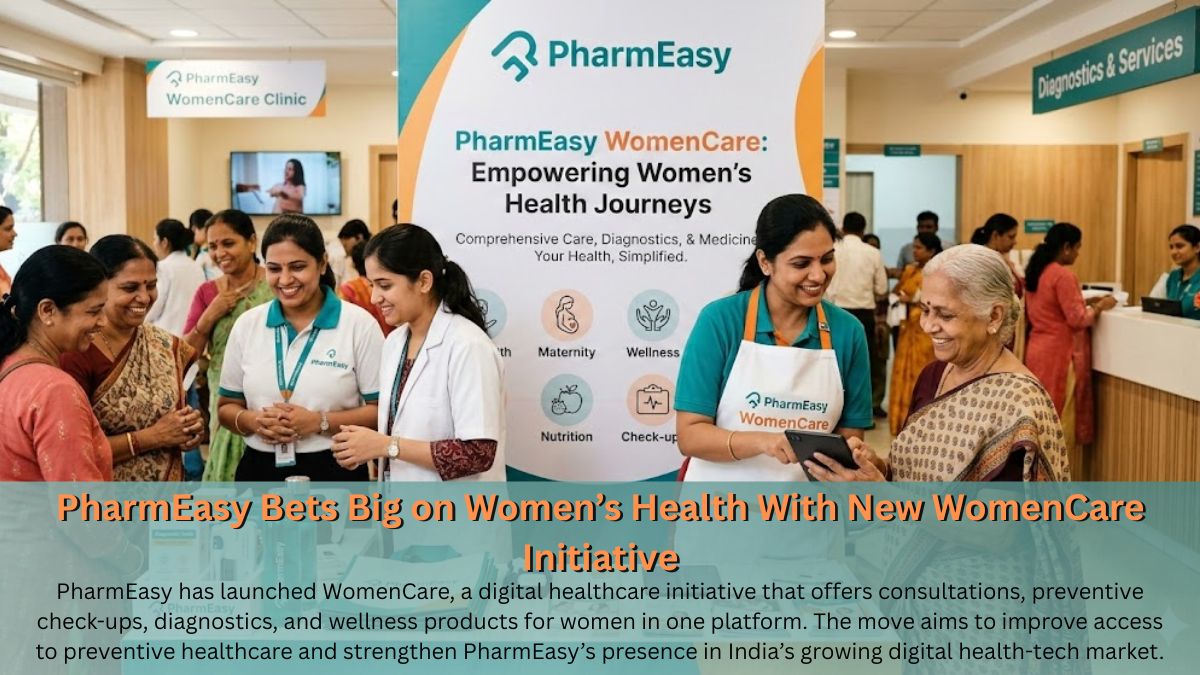
PharmEasy Bets Big on a rapidly growing healthcare segment with the launch of WomenCare, a dedicated digital health initiative designed to support women across different stages of life. The initiative aims to provide preventive healthcare services, medical consultations, diagnostic tests, and curated wellness products for women through a single digital platform. With this move, PharmEasy is strengthening its position in India’s digital healthcare ecosystem while addressing a major gap in women’s health services.
The WomenCare initiative focuses on offering end-to-end support for women’s health needs. It combines doctor consultations, health check-ups, diagnostic testing, and personalized wellness solutions. Importantly, the program seeks to make preventive healthcare more accessible and affordable. Experts say preventive health awareness among Indian women remains low, especially in smaller cities. Therefore, digital healthcare platforms are increasingly stepping in to close this gap. The launch also comes at a strategic moment for the company. India’s digital health industry is expanding rapidly, fueled by smartphone adoption, telemedicine growth, and rising health awareness. Meanwhile, investors continue to show interest in health-tech startups, making the sector one of the most active areas for venture capital funding in recent years.
PharmEasy has already built a strong presence in online pharmacy services, diagnostics, and digital health delivery. Through WomenCare, the company plans to strengthen its brand among women consumers while expanding its service portfolio. Industry observers believe that if the initiative succeeds, it could redefine how preventive healthcare is delivered to women in India. Moreover, the launch signals a broader trend in the startup ecosystem: specialized healthcare platforms that focus on specific patient groups and life stages.
2. The Story Behind PharmEasy
2.1 Founders and Startup Origins
Behind every successful startup lies a moment of frustration with the system. For the founders of PharmEasy, that frustration came from witnessing the inefficiencies of India’s pharmaceutical supply chain. The company was founded in 2015 by Dharmil Sheth, Dhaval Shah, and Hardik Dedhia. At the time, India’s healthcare system was undergoing rapid change, but the process of purchasing medicines remained largely traditional. Patients still relied on local pharmacies, which often struggled with stock shortages, pricing inconsistencies, and limited transparency.
For patients dealing with chronic illnesses, the experience could be exhausting. Imagine a family member searching for medicines across several pharmacies late at night, only to find that the required drug was unavailable. Situations like this were common across Indian cities. The founders believed technology could solve this problem. Their idea was to create a digital platform where users could upload prescriptions and order medicines online. The medicines would then be delivered directly to their homes through a network of partner pharmacies.
At first glance, the idea seemed straightforward. But in reality, building such a platform in India required solving multiple operational challenges. Logistics had to be reliable. Medicine authenticity had to be guaranteed. Regulatory compliance had to be maintained. Yet the founders persisted. Gradually, PharmEasy began gaining traction among urban consumers who valued the convenience of ordering medicines from their smartphones. Over time, the platform evolved from a simple medicine-delivery service into a broader healthcare ecosystem. The company expanded into diagnostic services, offering lab tests that could be booked online and conducted at home. This shift marked a turning point. PharmEasy was no longer just an online pharmacy. It was becoming a digital healthcare platform.
2.2 Growth of a Health-Tech Unicorn
PharmEasy’s rise mirrors the broader growth of India’s startup ecosystem. As the platform gained users, investors began recognizing its potential. Digital healthcare was still a relatively new sector in India, but the opportunity was massive. The company raised multiple funding rounds from global investors, including Temasek, Prosus, and TPG Growth. These investments allowed PharmEasy to scale aggressively.
The company expanded its presence across hundreds of Indian cities, strengthening its logistics infrastructure and diagnostic partnerships. It also invested heavily in technology, building systems capable of managing millions of healthcare transactions. One of the most defining moments in PharmEasy’s journey came with its acquisition of Thyrocare, one of India’s largest diagnostic chains.
This move was not just about expansion. It was about control over the healthcare value chain. Diagnostics play a critical role in preventive healthcare. Many medical conditions can only be detected through laboratory tests. By acquiring Thyrocare, PharmEasy ensured that it could offer integrated diagnostic services directly through its platform. The acquisition also demonstrated something larger.
India’s health-tech industry was entering a phase of consolidation. Digital platforms were beginning to merge with traditional healthcare infrastructure to create hybrid ecosystems. For PharmEasy, the goal was clear. Build a platform where a patient could manage the entire healthcare journey in one place. From consultation to diagnosis to treatment, everything could happen through a single digital interface. That vision continues to guide the company’s strategy today. And initiatives like WomenCare are a natural extension of that vision.
3. Understanding the WomenCare Initiative
3.1 What Is WomenCare?
WomenCare is not just another category inside the PharmEasy app. It is designed as a comprehensive healthcare ecosystem specifically focused on women’s needs. The initiative combines multiple services that women often require throughout different stages of life. Instead of navigating separate healthcare providers, users can access several services through one integrated platform.
These services include:
- Online doctor consultations
- Preventive health checkups
- Diagnostic testing
- Medicines and wellness products
- Specialized health packages for women
What makes WomenCare particularly interesting is its life-stage approach. Women’s healthcare needs change significantly over time. A teenager dealing with menstrual health concerns has very different needs compared to a woman managing pregnancy or navigating menopause.
Recognizing this, PharmEasy structured WomenCare around key life stages such as:
- Menstrual health and hormonal balance
- Fertility and reproductive care
- Pregnancy and post-pregnancy support
- Hormonal health
- Menopause care
This approach attempts to create continuity in healthcare support. Instead of visiting doctors only during emergencies, women are encouraged to monitor their health regularly through consultations, screenings, and diagnostic tests. For many users, this continuity can make a huge difference. Early detection of conditions like hormonal disorders, thyroid problems, or reproductive health issues often depends on regular monitoring. Without preventive care, these issues frequently go unnoticed until symptoms become severe. WomenCare attempts to address this gap.
3.2 Why the Initiative Matters
To understand the importance of WomenCare, it helps to look at the realities many women face in India. In numerous households, women tend to prioritize the health of other family members before their own. A mother might ensure that her children receive medical attention immediately, while postponing her own doctor visit. This pattern is surprisingly common. Social stigma also plays a role. Discussions around menstrual health, reproductive health, or menopause often remain uncomfortable topics in many communities.
As a result, women sometimes hesitate to seek medical advice. The consequences can be serious. Conditions like polycystic ovary syndrome (PCOS), thyroid disorders, anemia, and reproductive health issues frequently remain undiagnosed for years. Preventive healthcare could solve many of these problems. But access has always been the challenge. That is where digital healthcare platforms can make a real difference. By allowing women to consult doctors privately through smartphones, book diagnostic tests from home, and access educational resources, platforms like PharmEasy remove several barriers that previously existed. A young professional in a small town, for example, may feel uncomfortable discussing menstrual irregularities at a local clinic. But she might feel far more comfortable speaking to a doctor through a private digital consultation. Similarly, home diagnostic services eliminate the need for long hospital visits.
Convenience, privacy, and accessibility can significantly increase healthcare participation. This is the real promise behind WomenCare. It is not just about selling healthcare services. It is about creating an environment where women feel comfortable taking control of their health. And if the initiative succeeds, it could encourage more healthcare startups to invest in specialized solutions for underserved populations. Because when healthcare becomes more inclusive, the entire system becomes stronger.
4. Services Offered by WomenCare
4.1 Medical Consultations That Remove Fear and Distance
For many women in India, visiting a gynecologist is not always easy. Sometimes it is because of distance. Sometimes it is because of time. And often, it is simply because conversations about reproductive health still feel uncomfortable in many environments. This is where the WomenCare initiative by PharmEasy tries to change the experience completely. The platform allows women to consult certified doctors digitally, including specialists in gynecology, hormonal health, fertility, and reproductive care. Instead of navigating hospital queues or traveling long distances, users can speak to a doctor directly from their phone.
That small shift may sound simple, but it changes everything. A woman living in a small town may not have easy access to a gynecologist. Even in large cities, getting an appointment with a specialist can take days or weeks. Digital consultations remove that delay. Imagine a young woman experiencing irregular periods for the first time. In many households, the first response might be confusion or hesitation. Instead of waiting or ignoring the issue, she can now speak to a doctor within minutes.
4.2 The conversation happens privately
The conversation happens privately, safely, and without judgment. Doctors can guide patients through symptoms, recommend tests if necessary, and offer medical advice immediately. In some cases, that early consultation helps detect issues like hormonal imbalance, thyroid disorders, or conditions such as PCOS much earlier than traditional healthcare pathways allow.
There is also an emotional dimension to these consultations. Women often carry silent anxieties about their health. Questions about fertility, menstrual cycles, hormonal mood changes, or pregnancy complications can create stress when answers are not easily available. Digital healthcare creates a safe space for these conversations. The WomenCare model is built on that understanding. Healthcare should not feel intimidating. It should feel accessible, private, and supportive. And when those barriers disappear, more women are willing to seek help before problems escalate.
4.3 Preventive Health Check-ups That Detect Problems Early
One of the biggest challenges in healthcare is that most people seek medical attention only when symptoms become serious. Preventive care rarely becomes a priority until illness forces attention. For women, this pattern can be particularly risky. Hormonal disorders, anemia, thyroid conditions, and reproductive health problems often develop slowly. The early signs may be subtle. Fatigue, mood changes, irregular cycles, or mild pain are frequently dismissed as normal stress. But inside the body, something deeper may be unfolding.
The WomenCare initiative attempts to change this pattern by focusing strongly on preventive health checkups. Through the platform, women can book diagnostic tests and screening packages that are designed specifically for female health concerns. These tests often include hormone level assessments, thyroid function checks, reproductive health screenings, and nutritional deficiency tests. The idea is not to wait for illness. It is to detect warning signals early. When a woman identifies a hormonal imbalance early, treatment becomes simpler. Lifestyle adjustments, medication, or diet changes can prevent the condition from worsening. Similarly, reproductive health screenings can detect early indicators of fertility issues, infections, or other gynecological conditions. Another advantage of digital diagnostics is convenience.
Through PharmEasy’s diagnostic network, many tests can be conducted through home sample collection. A trained technician visits the patient’s home, collects samples, and the reports are delivered digitally. This removes one of the biggest barriers women face in accessing diagnostics: time. Many women balance work, household responsibilities, and family care. Visiting a diagnostic center during working hours may simply not be possible. Home-based testing makes preventive healthcare practical. In many ways, this service quietly changes the healthcare mindset. Instead of treating illness, women are encouraged to monitor their health regularly. And over time, that shift toward preventive healthcare can dramatically improve long-term health outcomes.
4.4 Wellness and Lifestyle Products That Support Everyday Health
Healthcare is not limited to doctor visits and laboratory tests. Daily habits, nutrition, and lifestyle choices play an equally important role in maintaining long-term health. Recognizing this, WomenCare also includes a curated selection of wellness and lifestyle products designed specifically for women. These products range from nutritional supplements to personal health essentials that support hormonal balance, energy levels, and reproductive health. For instance, iron and vitamin supplements can help address anemia, a condition that affects a large percentage of Indian women. Similarly, supplements supporting bone health or hormonal balance may become important during different life stages. But the idea behind these products is not simply retail.
They are meant to complement the larger healthcare journey. A doctor consultation might highlight a nutritional deficiency. A diagnostic test might reveal a vitamin imbalance. Wellness products then become part of the treatment plan. When consultations, diagnostics, and lifestyle support exist in one ecosystem, healthcare becomes more coordinated. This integrated model reflects a broader shift in modern healthcare thinking. Doctors increasingly recognize that health is influenced by daily routines, nutrition, stress, and hormonal cycles. By including wellness products alongside medical services, PharmEasy attempts to address health holistically rather than treating isolated symptoms. For many users, that integrated approach feels more personal and supportive.
5. PharmEasy’s Business Model
5.1 Building a Digital Healthcare Marketplace
Behind the user-friendly interface of PharmEasy lies a complex digital infrastructure designed to simplify healthcare access. The company operates as a healthcare marketplace, connecting patients with pharmacies, diagnostic laboratories, doctors, and healthcare service providers across India. In traditional healthcare systems, these services often exist separately. A patient visits a doctor in one place, purchases medicines from a pharmacy elsewhere, and schedules diagnostic tests at a third location. The process is fragmented and time-consuming.
PharmEasy’s model attempts to bring these elements together into a single digital ecosystem. Through the platform, users can upload prescriptions and order medicines online. They can schedule laboratory tests from certified diagnostic partners. They can consult doctors through telemedicine appointments. All of these services exist within one digital environment. This model offers two major advantages. First, it improves convenience for patients. Instead of navigating multiple providers, everything becomes accessible through a smartphone. Second, it allows the platform to collect valuable healthcare insights. Understanding user behavior, diagnostic trends, and medicine consumption patterns helps the company refine services and offer personalized healthcare recommendations. In many ways, PharmEasy’s platform acts like a digital healthcare infrastructure layer connecting multiple parts of India’s medical ecosystem.
5.2 Diversified Revenue Streams
Running a healthcare marketplace requires a sustainable financial model. PharmEasy generates revenue through several interconnected channels, which helps reduce dependence on a single source of income. One major revenue stream comes from medicine sales. When users order prescriptions or over-the-counter medicines through the platform, PharmEasy earns commissions through its partner pharmacy network. Another significant revenue source is diagnostics.
Laboratory tests booked through the platform generate service fees, particularly after the company strengthened its diagnostic capabilities through its acquisition of Thyrocare. Telemedicine consultations also contribute to revenue. Patients pay consultation fees when they connect with doctors through the platform. In addition, wellness and healthcare products generate retail revenue. This diversified revenue structure strengthens the company’s long-term sustainability. If one segment experiences fluctuations, other segments can continue generating income. For health-tech companies operating in complex healthcare markets like India, such diversification is often essential.
6. Funding and Venture Capital Support
6.1 A Startup That Attracted Global Investors
Building a nationwide healthcare platform requires significant capital. From logistics infrastructure to technology development, every aspect of the business demands investment. PharmEasy’s growth was made possible through strong backing from global venture capital firms. Over the years, the company raised multiple funding rounds from major investors such as Temasek, Prosus, and TPG Growth.
These investors recognized the long-term potential of digital healthcare in India. The country’s population exceeds 1.4 billion people, yet healthcare access remains uneven. Digital platforms that improve accessibility have the potential to transform the system at scale. Funding enabled PharmEasy to expand its delivery network, strengthen diagnostic partnerships, and invest heavily in technology infrastructure. It also allowed the company to pursue strategic acquisitions that accelerated its growth. Without such investment, building a nationwide digital healthcare platform would have been extremely difficult.
6.2 The Rise to Unicorn Status
As the company expanded, its valuation grew rapidly. PharmEasy eventually joined the elite group of Indian startups known as unicorns, companies valued at over one billion dollars. Reaching unicorn status is not just about financial numbers. It reflects investor confidence that the company can reshape an industry. For PharmEasy, that industry is healthcare access. The WomenCare initiative also plays a strategic role in strengthening that vision. By focusing on specialized healthcare segments like women’s health, the company can deepen user engagement while addressing critical gaps in the healthcare system. If the initiative succeeds, it could further strengthen PharmEasy’s position in the digital healthcare market.
7. The Problem PharmEasy Is Trying to Solve
7.1 The Silent Gaps in Women’s Healthcare
Despite improvements in India’s healthcare system, women’s health challenges remain widely underestimated. In many communities, health conversations focus heavily on maternal care but overlook broader aspects of women’s health. Menstrual disorders, hormonal imbalances, fertility challenges, and menopause-related issues often receive limited attention. Many women normalize symptoms that actually require medical attention.
Chronic fatigue may be dismissed as routine stress when it is actually caused by anemia. Irregular menstrual cycles may go untreated for years. Hormonal disorders may quietly affect physical and mental health. Another major challenge is access. Specialized doctors are often concentrated in large urban hospitals. Women living in smaller cities or rural regions may have limited opportunities to consult experts. These gaps create long-term health risks. And they highlight why preventive healthcare must become more accessible.
7.2 Digital Health as a Practical Solution
Digital healthcare platforms have the potential to change this reality. By connecting patients with doctors remotely, they eliminate geographic barriers. Offering home diagnostics, they simplify medical testing. By providing educational content and wellness resources, they encourage health awareness. Platforms like PharmEasy attempt to combine these solutions into one accessible ecosystem. The WomenCare initiative reflects this philosophy clearly.
Instead of waiting for women to enter the healthcare system during emergencies, the platform encourages regular health monitoring and early intervention. It is a small shift in behavior, but one that could create meaningful change. Because when women gain easier access to healthcare knowledge, doctors, and diagnostics, they gain something even more powerful. Control over their own health journey.
8. Industry Trends in Digital Healthcare
8.1 The Rise of Health-Tech Startups in India
A decade ago, the idea of managing healthcare through a smartphone would have sounded unrealistic to many Indians. Hospitals, clinics, and pharmacies were physical spaces. Patients traveled long distances, waited in crowded reception areas, and carried paper prescriptions everywhere. But something began to change around the mid-2010s. A new wave of startups started questioning the traditional healthcare experience. Instead of asking how hospitals could treat more patients, they asked a different question: How can healthcare reach people wherever they are? That question gave rise to India’s health-tech ecosystem. Companies like PharmEasy, Practo, and Tata 1mg began building digital platforms that allowed patients to order medicines, book lab tests, and consult doctors without leaving their homes. At first, adoption was slow.
Healthcare is a sensitive industry. Trust matters deeply. People hesitate to try new systems when their health is involved. But gradually, trust began to build. The COVID-19 pandemic accelerated this shift dramatically. Suddenly, visiting hospitals became risky, and telemedicine became not just convenient but necessary. Millions of Indians experienced digital consultations for the first time. That moment permanently changed healthcare behavior.
Today, digital healthcare is no longer an experiment. It is becoming a core layer of the healthcare system. Investors have noticed this shift as well. Venture capital firms increasingly view health-tech as a long-term opportunity. India’s large population, rising smartphone penetration, and uneven healthcare access create enormous demand for digital solutions. Startups are now building everything from AI-driven diagnostics to mental health platforms and chronic disease management apps. Within this evolving landscape, specialized healthcare segments such as women’s health are gaining particular attention. Initiatives like WomenCare are emerging because the industry has realized something important: broad platforms create reach, but specialized solutions create deeper impact.
8.2 The Growing Awareness of Preventive Healthcare
For decades, healthcare systems around the world focused primarily on treatment. A person became sick, visited a doctor, received medication, and recovered. Preventive care existed, but it rarely received the same attention. That mindset is now shifting globally. More people are beginning to understand that health is not something to think about only during illness. It is something that needs continuous care and monitoring. Preventive healthcare focuses on detecting medical issues before they become severe. Routine health screenings, lifestyle monitoring, nutrition awareness, and early diagnostics are central to this approach. For women, preventive healthcare can be especially powerful.
Many conditions affecting women develop gradually and often remain unnoticed for years. Hormonal imbalances, thyroid disorders, reproductive health issues, and nutritional deficiencies frequently go undiagnosed because symptoms are subtle. A woman may simply feel tired, stressed, or emotionally drained without realizing that her body is signaling a deeper issue. Preventive diagnostics help uncover those signals early. When health platforms encourage regular screening and consultations, women gain a clearer understanding of their bodies. They become more proactive about health rather than reactive.
This cultural shift is exactly what the WomenCare initiative is designed to support. Instead of waiting for illness to appear, the platform encourages regular monitoring, health check-ups, and early consultations. Over time, such habits can significantly reduce long-term health complications. In many ways, preventive healthcare represents a philosophical shift in medicine. It changes the question from How do we treat disease? to How do we protect health?
8.3 Technology as the Engine of Healthcare Innovation
Behind every modern health-tech platform lies a powerful layer of technology. Digital infrastructure is what allows millions of healthcare interactions to happen smoothly and efficiently. For companies like PharmEasy, technology plays multiple roles. Artificial intelligence helps analyze patient data and recommend relevant services. Data analytics helps identify healthcare trends, allowing platforms to improve diagnostic packages and treatment recommendations.
Even logistics technology plays a role. Delivering medicines across hundreds of cities requires sophisticated supply chain systems that ensure medicines arrive safely and quickly. Another major advancement is telemedicine technology. Secure video consultations allow doctors and patients to interact almost as if they were sitting in the same room. Electronic health records help doctors review patient history instantly. Digital prescriptions reduce paperwork and improve efficiency.
Over time, these technologies are enabling more personalized healthcare. Instead of offering generic advice, platforms can analyze medical history, lifestyle patterns, and diagnostic results to recommend more tailored healthcare solutions. For women’s healthcare in particular, personalization matters greatly. Hormonal health, reproductive cycles, pregnancy, and menopause involve complex biological processes that vary widely between individuals. Technology can help doctors understand these patterns more accurately. As digital healthcare continues to evolve, the combination of technology and medical expertise will likely transform how healthcare is delivered.
9. Competitors in the Health-Tech Market
9.1 Direct Competitors in Digital Healthcare
India’s digital healthcare industry has become highly competitive. Several major platforms now operate in the online pharmacy and telemedicine space, each trying to build a comprehensive healthcare ecosystem. One of the most prominent competitors is Tata 1mg. Backed by the Tata Group, the platform provides medicine delivery, diagnostic services, and health consultations. Its strong brand reputation and extensive healthcare database make it a significant player in the market. Another major competitor is Netmeds, which was acquired by Reliance Retail. With the backing of one of India’s largest conglomerates, Netmeds benefits from strong logistics infrastructure and retail integration.
Then there is Practo, which focuses heavily on connecting patients with doctors through its digital consultation platform. Practo built its reputation early in the telemedicine space and continues to be widely used across urban India. Each of these companies offers overlapping services such as online pharmacies, lab tests, and doctor consultations. But competition in this sector is not purely about features. It is about trust. Healthcare platforms must convince users that medicines are authentic, doctors are qualified, and diagnostic services are reliable. In a field where mistakes can have serious consequences, credibility becomes a powerful differentiator. This is why companies invest heavily in partnerships with certified laboratories, experienced doctors, and verified pharmacies.
9.2 Indirect Competition from Traditional Healthcare Providers
While digital platforms compete with each other, they also compete with the traditional healthcare system. Hospitals, clinics, and diagnostic chains still dominate healthcare delivery in India. Millions of patients rely on these institutions for consultations, tests, and treatments. However, digital platforms offer something traditional systems often struggle to provide: convenience.
Booking a lab test through a mobile app can take less than a minute. Home sample collection eliminates travel. Medicine deliveries arrive at the doorstep. For busy professionals, elderly patients, and women managing household responsibilities, these conveniences matter greatly. Cost efficiency is another factor. Digital platforms often negotiate bulk partnerships with pharmacies and diagnostic labs, allowing them to offer competitive pricing. Over time, this combination of convenience and affordability is helping digital healthcare platforms gradually capture a larger share of the healthcare market.
10. Impact on the Startup Ecosystem
The launch of WomenCare by PharmEasy reveals something important about the future of startups. The early years of India’s startup ecosystem were dominated by companies building broad, mass-market platforms. The goal was scale. Startups wanted to reach as many users as possible.But the ecosystem is now entering a more mature phase. Instead of chasing scale alone, many startups are focusing on depth. They are choosing specific customer segments and building specialized solutions tailored to those users.
Healthcare is a perfect example of this shift. Generic healthcare platforms may attract large audiences, but specialized platforms often create stronger relationships with users. Women’s healthcare, mental health, chronic disease management, and elderly care are emerging as high-impact niches where startups can create real value. Investors also appreciate this clarity. When a startup focuses on a well-defined problem and a specific audience, its strategy becomes easier to understand and support.
WomenCare reflects that philosophy. By building services specifically designed for women’s health needs, PharmEasy is strengthening its relationship with a significant but historically underserved segment of the population. If the initiative succeeds, it may encourage other startups to explore similar specialized healthcare opportunities.
11. Lessons for Startups and Entrepreneurs
Entrepreneurs studying the WomenCare initiative can draw several important lessons from it. The first lesson is about identifying overlooked markets. Women’s healthcare is one of the most important segments in the healthcare industry, yet it has historically received limited attention in India’s startup ecosystem. By recognizing this gap, PharmEasy created an opportunity for meaningful innovation.
The second lesson is about the power of technology to scale solutions. Digital platforms remove geographical barriers. A single platform can serve users across hundreds of cities simultaneously. For entrepreneurs, this scalability creates enormous potential. The third lesson involves business model diversification. PharmEasy did not limit itself to medicine delivery. It gradually expanded into diagnostics, telemedicine, and wellness services. Each new service strengthened the ecosystem and created additional revenue streams.
Finally, the most important lesson is about trust. Healthcare is one of the most sensitive industries in the world. Patients trust platforms with their personal medical information, prescriptions, and health decisions. Startups operating in this space must prioritize quality, reliability, and transparency above everything else. Without trust, technology alone cannot build a successful healthcare platform. But when trust and innovation work together, the result can transform how people experience healthcare. And that transformation is exactly what initiatives like WomenCare are trying to achieve.
About foundlanes.com
foundlanes.com is India’s leading startup idea discovery platform. It helps entrepreneurs find actionable startup opportunities, market insights, and industry-specific guidance to turn ideas into real businesses. With deep research and practical resources, foundlanes supports founders at every stage, from idea validation to launch and growth.