Summary
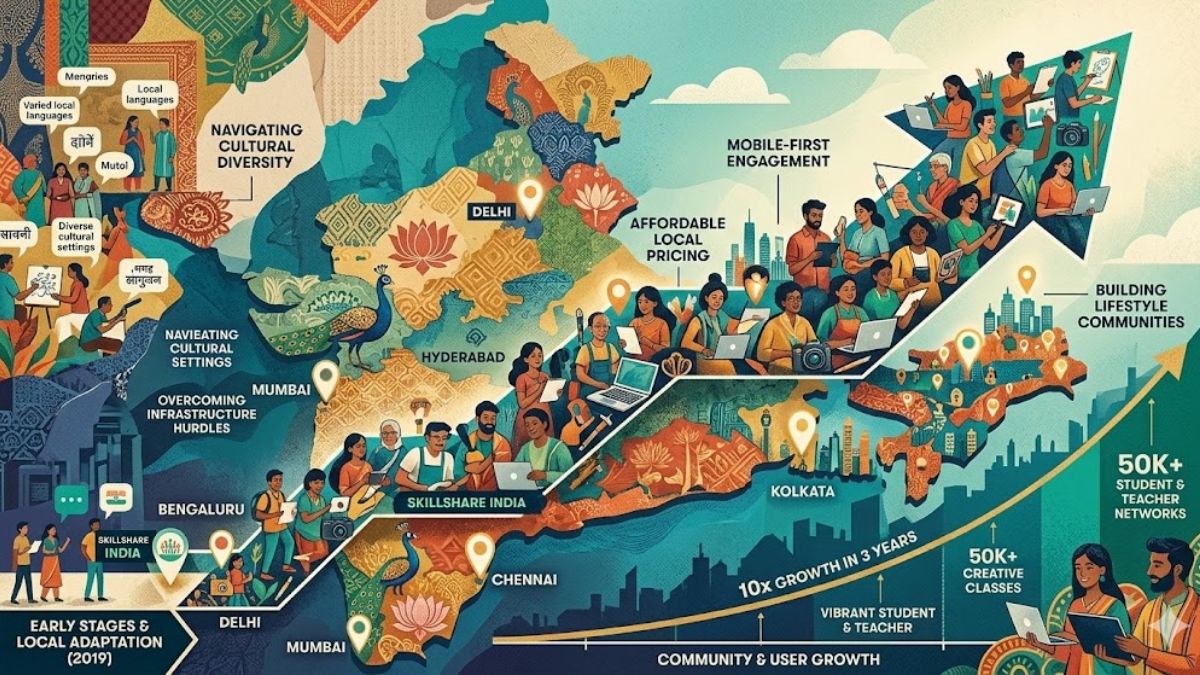
The Skillshare India Case Study offers a detailed look at how a global online learning platform found traction in one of the world’s fastest-growing digital education markets. Skillshare is an online learning platform focused primarily on creative and practical skills, including design, illustration, photography, writing, marketing, animation, and entrepreneurship. Unlike traditional academic education platforms, Skillshare built its model around project-based learning delivered by creators, industry professionals, and practitioners.
Skillshare was founded in 2010 by Michael Karnjanaprakorn and Malcolm Ong in New York City, United States. The founders originally envisioned Skillshare as a community-driven learning platform where anyone with expertise could teach practical skills to others. Over time, the platform evolved into a subscription-based online course marketplace focused on creative education. Although Skillshare is a global platform, India quickly emerged as one of its most important growth markets. The country’s expanding internet penetration, rising creator economy, and growing interest in digital skill development created the perfect environment for platforms like Skillshare.
The platform operates through a simple model. Creators and industry experts publish classes that are typically short, project-based lessons. Students pay a subscription fee to access the full catalog of courses. Teachers earn revenue based on watch time and student engagement. This approach differs significantly from traditional edtech platforms that rely heavily on structured degrees or exam preparation courses. Instead, Skillshare focuses on practical, creative learning designed for modern digital careers.
Over the years, Skillshare has raised significant funding from venture capital investors. Public reports indicate that the company has raised more than $100 million across multiple funding rounds. The platform has millions of users worldwide, including a large and growing base in India. The Skillshare India startup case study therefore provides an interesting lens into how global edtech platforms adapt to local markets while building a scalable digital education business.
1. The Global Origins Behind the Skillshare India Case Study
Before examining the platform’s growth in India, it is important to understand the origins of Skillshare and how the company developed its core philosophy around learning. The early 2010s were a period of significant transformation for education technology. Massive Open Online Courses, commonly known as MOOCs, were gaining popularity. Universities and technology companies were experimenting with new digital learning models.
At the same time, many professionals felt that traditional education systems were not evolving quickly enough to keep up with changing industries. The founders of Skillshare believed that the future of education would be more flexible, community-driven, and skills-focused. Their initial idea was simple. Instead of relying only on universities or institutions, they wanted to create a platform where anyone with real-world expertise could teach.
This concept aligned with the broader rise of the creator economy, where individuals could monetize knowledge and skills through digital platforms. The first version of Skillshare actually focused on offline classes in New York City. Users could sign up to teach workshops or attend learning sessions in person. However, the founders quickly realized that a digital platform would allow them to scale the concept globally. This insight led to the creation of the online Skillshare platform.
2. Founder Vision and the Idea of Community Learning
The Skillshare India business case study reflects a broader philosophy that the founders articulated from the beginning. Education should not be limited to formal institutions. Instead, learning could happen anywhere and at any time. Founder Michael Karnjanaprakorn often spoke about the idea of lifelong learning. In a world where technology and industries evolve rapidly, individuals must constantly update their skills.
Skillshare positioned itself as a platform that could enable this continuous learning process. The founders also believed that traditional courses were often too theoretical. Many people wanted to learn practical skills that they could immediately apply in their careers or creative pursuits. This led to the platform’s emphasis on project-based learning. A typical Skillshare class includes short video lessons followed by a project that students complete as part of the course. This approach makes learning more interactive and hands-on compared to traditional lecture-style education.
3. The Problem Skillshare Identified in Digital Education
The Skillshare India Case Study is rooted in a problem that affects millions of learners worldwide. Traditional education systems often struggle to keep pace with the rapid evolution of modern industries. New careers in digital marketing, content creation, animation, UX design, and social media strategy have emerged faster than universities can update their curricula. At the same time, professionals increasingly seek flexible learning options that fit around their work schedules. This gap created an opportunity for online learning platforms that could deliver practical skill development. Skillshare identified several key challenges in the education market. One major issue was accessibility. Traditional education often requires significant time and financial investment. Another issue was relevance. Many students felt that academic programs did not prepare them for real-world work environments. Skillshare’s model addressed these challenges by offering short, practical courses that focused on real-world skills. The subscription model also made the platform accessible to learners who wanted to explore multiple topics without paying separately for each course.
4. Entry into the Indian Market
India’s digital education sector has grown dramatically over the past decade. Rising smartphone usage, affordable mobile data, and a young population created strong demand for online learning. While India already had large edtech platforms focused on exam preparation and academic tutoring, the market for creative and professional skill learning was still developing. This created an opportunity for platforms like Skillshare.
The Skillshare India company case study demonstrates how global platforms can find traction by targeting emerging segments of the education market. In India, the platform attracted users interested in creative fields such as graphic design, photography, animation, content writing, and entrepreneurship. These skills are particularly relevant in the growing digital economy, where freelancers and creators play an increasingly important role. The rise of YouTube creators, digital marketers, and independent designers further accelerated interest in creative skill learning platforms. Skillshare’s catalog of classes aligned well with these emerging career paths.
5. How the Skillshare Platform Works
Skillshare operates as a subscription-based online course marketplace. Users pay a monthly or annual fee to access thousands of classes across multiple creative disciplines. Courses are typically short, ranging from 20 minutes to a few hours in total duration. Each course is divided into multiple short lessons that focus on specific concepts or techniques. One of the defining features of Skillshare is its project-based approach. Students are encouraged to complete practical assignments and share their work with the community. This interactive learning style differentiates Skillshare from traditional lecture-based education platforms. The platform also allows creators to publish courses and earn revenue.
Teachers receive payments based on how much watch time their classes generate among premium subscribers. This model incentivizes instructors to create engaging, high-quality courses. Over time, Skillshare built a large community of educators, designers, entrepreneurs, and creatives who contribute content to the platform. This creator-driven model helped the platform scale rapidly without needing to produce all content internally.
6. Early Traction and Growth Signals
The early success of Skillshare came from the intersection of two major trends. First was the rise of the creator economy, where individuals built careers through digital platforms. Second was the increasing demand for flexible skill development opportunities. Skillshare’s model appealed to freelancers, entrepreneurs, and professionals who wanted to upgrade their skills.
The platform’s emphasis on creativity also helped differentiate it from academic-focused edtech companies. As the platform grew globally, it began attracting a large international user base, including learners from India. The Skillshare India growth case study reflects how global digital platforms can scale organically when their value proposition aligns with local user needs. Creative professionals in India increasingly sought access to international learning resources. Skillshare’s global instructor network provided exposure to industry practices and creative techniques used around the world. This global perspective became one of the platform’s key strengths.
7. The Business Model Behind Skillshare
The Skillshare India Case Study highlights an interesting business model within the edtech sector. Instead of selling individual courses, Skillshare operates primarily through a subscription model. Subscribers gain unlimited access to the platform’s course catalog for a recurring fee. This approach offers several advantages. First, it encourages users to explore multiple topics rather than committing to a single course.
Second, it provides predictable recurring revenue for the platform. Teachers earn income through a royalty system based on watch time generated by their courses. Skillshare also offers enterprise solutions where companies provide platform access to employees for professional development. This enterprise learning segment has become an important revenue stream in the broader online education market.
8. Go-to-Market Strategy and Distribution in India
The Skillshare India Case Study becomes particularly interesting when examining how the platform approached distribution and user acquisition in India. Unlike many domestic edtech startups that relied heavily on aggressive advertising and sales-driven growth models, Skillshare followed a more organic, product-led strategy. In the early stages, the platform did not build a dedicated India-only version of its service. Instead, Indian users accessed the same global catalog that learners from other countries used. This global-first approach meant the company could enter the Indian market without large operational investments.
The primary discovery channels for Skillshare in India were digital platforms. YouTube creators, freelance designers, and social media influencers frequently recommended Skillshare courses while discussing creative learning resources. These creator endorsements played an important role in shaping early adoption. Many digital creators were already familiar with Skillshare because the platform had partnerships with international YouTubers and influencers.
As a result, Indian learners discovered Skillshare through content creators they followed online. Another key driver of growth was the rise of freelance platforms and remote work opportunities. Designers, illustrators, content writers, and digital marketers increasingly needed to upgrade their skills to compete in global markets. Skillshare classes often addressed these professional needs directly. This alignment between the platform’s content and the aspirations of India’s growing creative workforce helped drive adoption without heavy marketing spend.
9. Brand Positioning and Messaging Evolution
One of the most notable aspects of the Skillshare India company case study is the platform’s brand positioning. Skillshare did not attempt to compete directly with academic edtech companies or exam-preparation platforms. Instead, it positioned itself as a learning platform for creativity, exploration, and professional skill development. This positioning aligned well with the global creator economy, where individuals seek flexible learning paths rather than structured degree programs.
The platform’s messaging often emphasizes themes such as creativity, curiosity, and lifelong learning. Skillshare classes are designed to feel approachable rather than intimidating. Courses typically focus on practical projects rather than theoretical lectures. This tone of accessibility helped the platform appeal to a wide audience, including beginners who might feel intimidated by more formal education platforms. In India, where the traditional education system often emphasizes exams and formal qualifications, Skillshare offered a refreshing alternative. Learners could explore new skills without committing to long programs or expensive certifications. This flexibility resonated strongly with freelancers, hobbyists, and aspiring creators.
10. The Creator Economy and Skillshare’s Content Ecosystem
Another major theme in the Skillshare India growth case study is the platform’s deep connection with the global creator economy. Skillshare’s content ecosystem is built around creators who share their expertise with a global audience. Many instructors on the platform are well-known professionals in creative industries such as graphic design, animation, photography, writing, and entrepreneurship.
These instructors often bring real-world experience into their classes. Instead of purely academic teaching styles, courses typically focus on practical workflows and professional techniques. For Indian learners, this exposure to global industry practices is valuable. A designer in India, for example, can learn directly from experienced professionals working in international markets. This type of access was previously limited to expensive workshops or international education programs. The platform’s open instructor model also allows new creators to publish classes. This means that the course catalog continues expanding as more professionals contribute content. Over time, this ecosystem approach has helped Skillshare build a large and diverse content library.
11. Technology and Product Experience
The success of the Skillshare India startup case study is also tied to the platform’s user experience. Skillshare’s product design focuses on simplicity and accessibility. Courses are broken into short lessons, often between five and ten minutes long. This format makes learning manageable even for users with busy schedules. The platform also includes features that encourage interaction and engagement.
Students can upload projects, participate in discussions, and receive feedback from instructors or other learners. This sense of community differentiates Skillshare from platforms that simply host video lectures. The user interface is designed to encourage exploration. When users complete a class, the platform recommends related courses based on their interests. This recommendation system helps increase engagement and subscription retention. Mobile accessibility also played an important role in the platform’s growth in India. Since many Indian users primarily access digital services through smartphones, mobile-friendly design was essential. Skillshare’s mobile app allows learners to watch classes, save lessons offline, and continue projects on the go.
12. Funding History and Investor Support
To understand the broader Skillshare business case study, it is important to examine the company’s funding journey. Skillshare raised multiple funding rounds from venture capital investors over the years. Early investors included prominent venture firms that saw potential in the growing online learning market. These investors believed that the shift toward digital education would accelerate globally. Skillshare’s subscription-based model and scalable content ecosystem made it an attractive opportunity.
The company eventually raised more than $100 million across several funding rounds. Investors included firms such as Union Square Ventures, Amasia, and Spero Ventures. This funding allowed Skillshare to expand its course catalog, improve its technology platform, and invest in creator partnerships. Although the company operates globally, investors viewed international markets such as India as key growth opportunities. Countries with large young populations and expanding digital economies represent significant long-term demand for online learning platforms.
13. Competitive Landscape in India
The Skillshare India Case Study exists within a highly competitive edtech ecosystem. India’s online education market includes several large companies that focus on academic learning and exam preparation. Platforms such as BYJU’S, Unacademy, and Vedantu built massive businesses around school education and competitive exam coaching. However, Skillshare operates in a different segment. Its primary focus is creative and professional skill development rather than academic curriculum.
In this segment, Skillshare competes more closely with international platforms such as Udemy and Coursera. Even within that group, Skillshare’s emphasis on creative learning differentiates it from competitors that focus on structured certifications. Many courses on Skillshare are designed for creative professionals rather than corporate learners. This niche positioning helps the platform maintain a unique identity in the crowded edtech landscape.
14. Challenges and Turning Points
No startup journey is without obstacles, and the Skillshare India business case study also includes several challenges. One of the most significant challenges faced by global edtech platforms is localization. Education preferences vary widely across countries. In India, for example, many learners value certifications that can enhance career opportunities. Skillshare’s courses are often focused more on skill-building than formal certification. This difference can sometimes affect adoption among users who prioritize credential-based learning.
Another challenge involves pricing sensitivity. India is a price-sensitive market, and subscription platforms must carefully balance pricing with perceived value. However, the platform’s extensive course catalog and global instructor network help justify the subscription model. The COVID-19 pandemic created both opportunities and challenges. During lockdowns, demand for online learning surged dramatically worldwide. Skillshare experienced increased usage as people looked for ways to learn new skills from home. However, the surge also intensified competition among online learning platforms.
15. Operational Scaling and Platform Expansion
The Skillshare India growth case study reflects how digital platforms scale differently from traditional education institutions. Because Skillshare operates as a digital marketplace for courses, scaling does not require building physical campuses or hiring large teaching staff. Instead, the platform focuses on attracting high-quality instructors and expanding its course library. As more creators publish classes, the platform’s value increases for subscribers.
This network effect allows Skillshare to scale efficiently. Technology also plays a critical role in scaling operations. Content recommendation systems, analytics tools, and community engagement features help maintain user retention. The platform continually analyzes user behavior to improve course discovery and engagement. These data-driven insights allow Skillshare to refine its product experience over time.
16. Growth Milestones and Global Expansion
The later chapters of the Skillshare India Case Study reveal how the platform transitioned from an early-stage edtech experiment into a globally recognized learning marketplace. Over the past decade, Skillshare expanded its catalog to thousands of courses covering creative, professional, and entrepreneurial skills. The company’s focus on short-form project-based learning helped it attract a global user base interested in practical education rather than traditional academic instruction. The platform reported millions of users worldwide and a rapidly growing instructor community. These instructors come from diverse professional backgrounds including graphic design, animation, illustration, digital marketing, filmmaking, entrepreneurship, and writing.
The expansion of the instructor network became one of the platform’s most important growth engines. As more teachers joined the platform, the course library expanded rapidly. This growth created a positive network effect where more content attracted more students, and more students encouraged additional instructors to publish courses. The Skillshare India startup case study reflects how global digital platforms scale through community ecosystems rather than traditional organizational structures. Unlike conventional universities or training institutes, Skillshare does not rely on a centralized faculty. Instead, the platform allows industry professionals from around the world to contribute knowledge and build learning communities. This decentralized education model became a defining feature of the company’s long-term growth.
17. Team Building and Leadership Philosophy
The leadership philosophy behind the Skillshare India company case study emphasizes creativity, collaboration, and continuous learning. From the beginning, Skillshare’s leadership team positioned the platform as a place where learning should feel accessible and enjoyable. This philosophy influenced both the company culture and the product experience. The internal team focuses heavily on product design, creator partnerships, and community development rather than traditional academic structures.
This approach reflects the company’s belief that modern education platforms must evolve quickly alongside the industries they serve. Another important aspect of Skillshare’s leadership strategy involves collaboration with creators. Instead of viewing instructors simply as content providers, the platform treats them as partners in the learning ecosystem. Many instructors build strong communities around their courses and continue publishing new classes over time. This relationship between creators and learners helps sustain long-term engagement on the platform.
18. Impact on Digital Skill Education
The broader significance of the Skillshare India growth case study lies in its contribution to the evolving digital education ecosystem. In many ways, Skillshare represents a shift in how people approach learning. Traditional education systems often focus on degrees, certifications, and formal qualifications. While these remain important, modern professionals increasingly seek practical skills that can be applied immediately in their careers. Platforms like Skillshare respond to this demand by offering flexible, project-based learning experiences.
This model is particularly relevant in industries such as design, content creation, digital marketing, animation, and entrepreneurship. These fields evolve rapidly, and professionals must continuously update their skills to remain competitive. In India, the demand for digital skills has grown dramatically with the expansion of the startup ecosystem and the creator economy. Freelancers, entrepreneurs, and remote workers increasingly rely on online platforms to learn new techniques and tools. The Skillshare India business case study illustrates how global learning platforms can support this shift toward self-directed education. Instead of relying exclusively on institutions, individuals can access knowledge directly from experienced professionals around the world.
19. Competitive Differentiation in the Edtech Industry
The global edtech market includes numerous platforms offering online courses, certifications, and degree programs. However, the Skillshare India Case Study highlights several factors that differentiate the platform from many competitors. One major difference lies in the content format.
Skillshare classes are typically shorter and more project-oriented than traditional online courses. Instead of lengthy academic lectures, the platform emphasizes hands-on learning experiences. Another distinguishing factor is the creator-driven ecosystem. Many edtech platforms rely heavily on university partnerships or corporate instructors. Skillshare, by contrast, encourages independent creators to publish courses and build their own learning communities.
This approach aligns closely with the broader creator economy. As digital platforms enable individuals to monetize their expertise, Skillshare provides an additional avenue for creators to share knowledge and generate income. The subscription model also differentiates the platform. Rather than purchasing individual courses, users gain access to the entire catalog through a single membership. This structure encourages exploration and experimentation across different topics.
20. The Indian Market and the Rise of Creative Learning
The Skillshare India startup case study also reflects broader changes in India’s education and employment landscape. Over the past decade, India has witnessed a dramatic rise in digital entrepreneurship and freelance careers. Content creators, digital marketers, designers, animators, and video editors now form a significant part of the country’s emerging creative workforce.
These professionals often seek flexible learning opportunities rather than traditional degree programs. Online learning platforms play a critical role in supporting this new generation of digital professionals. The increasing popularity of remote work has further accelerated this trend. Professionals in India now compete in global freelance markets where skill development and portfolio building are essential. Skillshare’s project-based learning approach fits well within this environment. By encouraging learners to create real projects as part of their courses, the platform helps users build practical portfolios that demonstrate their abilities.
21. Current Status of the Company
Today, Skillshare remains one of the prominent platforms in the global creative learning market. The platform continues expanding its course catalog while investing in tools that improve learning experiences and community engagement. The company has also explored enterprise learning solutions where organizations provide Skillshare access to employees for professional development.
This corporate learning segment represents a growing opportunity in the broader online education market. The Skillshare India company case study shows that global platforms can build strong user bases in emerging markets even without localized operations. By offering universally relevant creative skills, the platform attracts learners across geographic boundaries. India continues to represent an important audience due to its large population of young digital professionals and creators.
22. Future Outlook of the Skillshare India Case Study
Looking ahead, the Skillshare India Case Study highlights several trends that could shape the platform’s future growth. One major trend is the continued expansion of the creator economy. As more individuals build careers around digital content creation, demand for creative learning resources will likely increase. Platforms that support creator education and professional skill development may benefit from this shift. Another important trend is the evolution of artificial intelligence in education technology.
AI tools may transform how courses are created, recommended, and personalized for individual learners. Digital learning platforms may increasingly integrate AI-driven recommendations, personalized learning paths, and interactive tools. The Indian market will likely remain an important growth area for global edtech platforms. With millions of young professionals entering the digital workforce each year, demand for practical skill education continues to grow. The Skillshare India growth case study therefore represents a broader transformation in how education is delivered and consumed. Rather than relying solely on traditional institutions, learners increasingly turn to digital platforms to build skills that align with modern career paths.
23. About foundlanes.com
foundlanes.com is a startup knowledge platform focused on documenting and analyzing the journeys of startups, founders, and emerging business models. The platform publishes detailed startup case studies, founder stories, and practical insights designed to help entrepreneurs, students, and professionals understand how modern businesses are built and scaled. Through in-depth editorial content, FoundLanes explores the strategies, challenges, and innovations shaping India’s startup ecosystem.