Summary
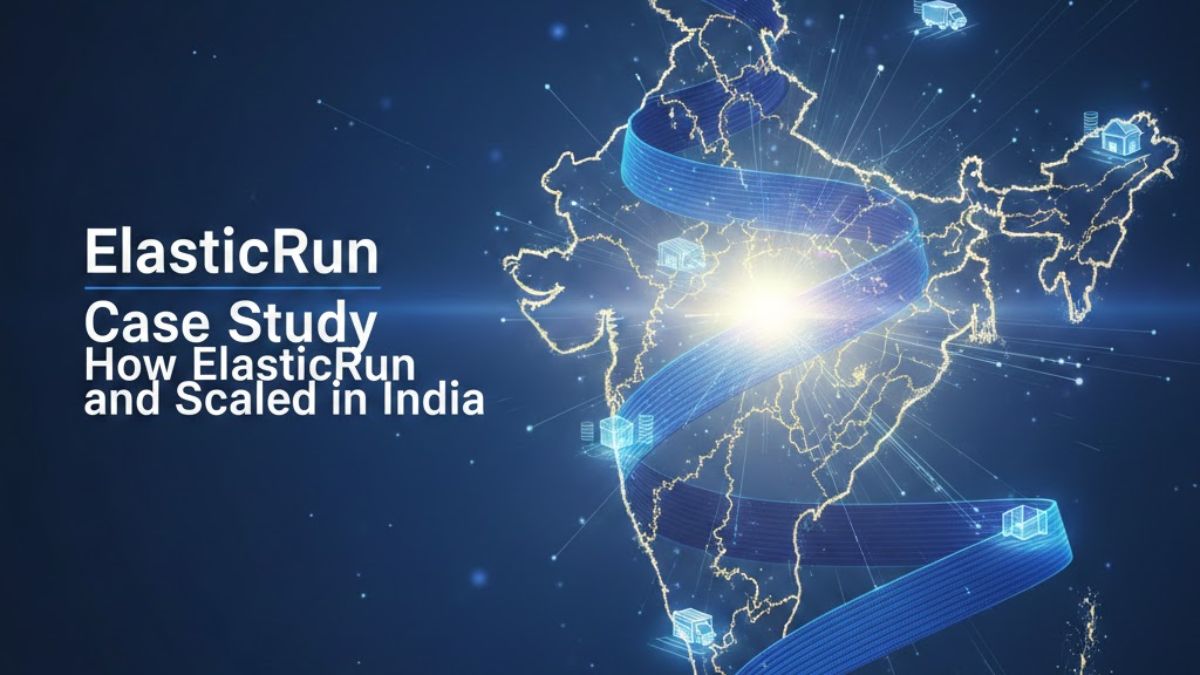
ElasticRun began as a simple idea with a complicated execution challenge: building a virtual, lightweight, tech-enabled distribution network for India’s fragmented kirana economy. Today it is one of the most recognized rural commerce platforms in the country. The startup has grown from a small experiment in Pune to a national network touching thousands of villages and small towns. At its core, ElasticRun is a demand aggregation and distribution solution created to help brands penetrate the rural market without the cost burden of traditional physical infrastructure.
ElasticRun, formed by ElasticRun, was started to solve a chronic efficiency problem in India’s consumer supply chain. Large FMCG companies struggled to reach rural kirana stores consistently because it required on-ground distributors, warehouses, route planning and feet-on-street presence in places that did not justify the cost. The founders believed there was a better way to expand rural commerce. The company was launched by Sandeep Deshmukh, Shitiz Bansal, and Abhishek Goyal, who brought years of experience in logistics, marketplaces and operational technology. The company is headquartered in Pune, a hub for supply chain talent, technical universities and enterprise logistics companies.
The startup began in 2014 with a mission to create a technology platform that could plug into underutilized transportation assets, aggregate rural demand, and help brands distribute products to places where traditional distribution struggled. Its model evolved through experimentation, but the ambition remained the same: build the largest asset-light rural distribution network in India. ElasticRun works by stitching together a network of local stores, logistics partners and last-mile operators through a proprietary platform that coordinates demand, supply, routing and delivery in real time. The company enables kirana stores to order products through its platform, consolidates demand across villages and moves inventory efficiently without needing warehouses everywhere. On the brand side, it offers deeper rural penetration, structured analytics and predictable delivery.
Over the years, ElasticRun has raised significant venture capital from global investors, including well-known growth funds. Funding details have been publicly reported across mainstream startup media, with the company reaching unicorn status in 2022 after a major investment round. Revenue details remain partially disclosed, but industry estimates and filings indicate large operational scale across multiple states. The ElasticRun case study is the story of how one company built a new kind of distribution infrastructure in India. It is also a story of timing, technology, market gaps and the complexities of India’s FMCG supply chain. The following sections explore the complete ElasticRun scaling story, covering origins, market identification, product evolution, business model, traction, funding, competition, operational execution and long-term vision.
1. The Origin Story of ElasticRun
ElasticRun’s origin story starts with the founders’ shared frustration about the inefficiencies of India’s distribution backbone. All three cofounders had lived the problem closely across earlier roles in logistics, enterprise supply chain and mobility tech. They understood how fragmented demand patterns, rural infrastructure gaps and unpredictable costs held back India’s retail economy. The founding team had worked in companies that dealt with large logistics networks and marketplace dynamics. This proximity showed them that rural distribution was not failing because of lack of demand, but because the existing model was fundamentally inflexible. Brands relied heavily on distributors, who often operated with tight margins and fixed territories. Extending this system to rural regions was expensive and slow.
In 2014, the founders started thinking about a platform that could unlock unused logistics capacity. Many small fleet owners had idle vehicles for part of the day. Many operators were willing to take on extra loads if the routing, volume and payments were predictable. Rural kirana shops needed regular supply, but not necessarily from traditional distributors. This gap was the opportunity. ElasticRun set out to create a tech-driven layer that connected underutilized logistics networks to rural retail demand. The idea was ambitious. It required convincing transporters to trust a digital system, persuading kirana stores to use a new purchasing channel, and demonstrating to large FMCG brands that rural commerce could be scalable without massive capex.
The early experiments were conducted around Pune. The founders tested whether existing logistics resources could be repurposed during low-traffic hours. They experimented with route planning algorithms that could enable shared capacity. They worked with select kirana stores to test ordering patterns. What emerged from these experiments was a clear insight: the rural supply chain needed a model that was asset-light, flexible and data-driven. With this foundation, ElasticRun began building its first version of the platform.
2. Early Background and Founder Motivation
Before starting ElasticRun, the founders had spent years dealing with high-volume supply chains, product distribution and operational bottlenecks. They saw patterns that most outside observers would miss. Their motivation was not only to fix rural distribution but to build a system that used technology to democratize access for small retailers.
Each founder contributed a unique lens. Sandeep Deshmukh brought experience in enterprise technology and marketplace systems. Shitiz Bansal had extensive operational knowledge from logistics. Abhishek Goyal, with a background in analytics and business building, understood the scalability constraints of traditional distribution. Together, they saw a white space that had yet to be addressed in India’s consumer economy. The trio agreed that disruption would not come from building more warehouses or hiring thousands of people. It would come from building a virtual network that could adapt, expand and reconfigure without the costs of fixed physical assets. By 2015, the team had a clear mission. They wanted to create a rural distribution solution that could deliver products efficiently, predictably and profitably. This clarity drove the platform development that followed.
3. The Problem ElasticRun Identified
India’s FMCG distribution ecosystem is deeply layered, with super-stockists, distributors, sub-distributors and delivery personnel. This works well in urban and semi-urban markets where density is high. Rural markets, however, introduce several challenges. Order volumes are lower. Travel time is higher. Route density is sparse. The unit economics of rural distribution often do not justify a full-time distributor presence.
Kirana stores often face stockouts, inconsistent supply and limited product variety. Many rely on traveling salesmen who visit infrequently or on local wholesalers whose margins reduce store profits. Brands also struggle with visibility into rural demand patterns. They often rely on manual reporting or extrapolated market data. ElasticRun saw a systemic gap: rural India had demand, but the distribution model was too expensive to serve it. Brands were losing potential revenue, and retailers were stuck with unpredictable supply chains. If the demand could be aggregated digitally, the distribution cost per unit could drop substantially. This insight became the foundation of ElasticRun’s value proposition.
4. How the Product Was Built and Evolved
The first version of the ElasticRun platform was designed to solve the most fundamental constraint its founders saw: the unpredictability of rural logistics. The team did not begin with a complex interface or a heavy technology stack. Their early focus was on building a routing engine that could sync demand and supply fluidly. The routing engine determined how a transporter’s unused capacity could be matched with orders from kirana stores in nearby villages.
The product evolved after long cycles of field visits, direct conversations with shop owners and testing small clusters of villages. The team discovered that kirana owners preferred simple ordering experiences. Many were hesitant to use apps, so the platform initially offered assisted ordering through field agents. Over time, as smartphone penetration increased, store owners became more comfortable placing orders digitally. ElasticRun refined its retailer-side product based on usability insights and the need for predictable delivery windows.
On the supply side, the company built tools for small transporters to accept loads, optimize routes and receive timely payments. Creating trust for transporters was as important as building value for retailers. The platform had to guarantee load availability, ensure on-time payments and reduce idle time. The startup gradually built a robust tech stack that connected all stakeholders. Inventory visibility, demand forecasting, real-time routing and delivery tracking became fundamental features. What started as a routing and demand aggregation tool evolved into a full rural commerce platform that enabled brands to reach hard-to-access markets without adding distribution layers.
ElasticRun’s product decisions were heavily informed by its operational learnings. The company learned early that rural distribution cycles could not mirror urban cycles. Villages had different demand patterns, market days, holidays and purchasing behaviors. This meant ElasticRun had to build models that responded to context rather than assumptions. As the product matured, it also integrated analytics, brand dashboards and insights tools that allowed large FMCG companies to understand rural consumption more accurately.
5. Early Traction, First Customers and Validation Phase
When ElasticRun started, many FMCG companies were skeptical of an asset-light distribution network. They were accustomed to working with distributors who stocked inventory, employed salesmen and followed fixed territories. A virtual distribution network that claimed to reduce cost while increasing reach sounded promising but unproven.
The founders had to demonstrate early traction by solving a real business problem. The first few brand partnerships happened through pilot programs. ElasticRun worked with companies willing to experiment in selected clusters where traditional distribution had limitations. The pilots focused on proving three outcomes: increased store reach, predictable delivery cycles and better visibility into rural demand. The validation phase was crucial. Brands saw that the platform could aggregate demand across dozens of villages and deliver products reliably using a flexible network of transporters. Kirana stores experienced regular supply without depending on wholesalers or long delays. The pilots helped ElasticRun build reputation and trust.
Word spread quickly among FMCG companies. Once a few successful pilots were completed, other brands wanted to test the model. ElasticRun scaled gradually, ensuring that the demand-supply engine remained stable as new geographies were added. The company did not chase rapid expansion before proving unit economics in each cluster. This disciplined approach helped maintain consistency and quality during the early years. By 2017, ElasticRun had expanded to more regions in western and southern India. The rural commerce platform had validated that demand aggregation was not only feasible but scalable. The next stage was building a business model that could support nationwide expansion.
6. Business Model and Revenue Approach
ElasticRun operates on an asset-light model designed to reduce the cost of rural penetration for brands while offering better margins for kirana stores. The company does not function as a traditional distributor. Instead, it acts as an orchestrator of demand, logistics and delivery. The platform aggregates orders from stores, consolidates them and uses partner logistics capacity to move inventory efficiently.
The company earns revenue in several ways. For FMCG brands, ElasticRun provides rural reach, analytics and predictable fulfillment. Brands typically pay the company for distribution services, often at rates more economical than traditional distributors. The company’s rural commerce platform also helps brands increase sales in under-served regions, which strengthens long-term partnerships.
For kirana stores, ElasticRun provides regular supply of products at competitive prices. Retailers benefit from centralized ordering, transparent pricing and consistent delivery. While margins may not always be significantly higher than wholesalers, the reliability and breadth of assortment make ElasticRun a preferred channel in many regions. ElasticRun’s revenue model is designed for scalability. The asset-light structure keeps overheads low because the company does not run warehouses everywhere or employ large fleets. The network grows as more transporters join the platform and more retailers place orders. The ability to operate without heavy capital expenditure is a major competitive advantage.
The company has also focused on developing data-driven monetization streams. Its analytics tools help brands understand rural consumption patterns, optimize product mixes and plan go-to-market strategies. These additional services further strengthen the company’s enterprise relationships. As the company scaled, the business model evolved to incorporate new product categories and deeper integration with brands. The core principle, however, remained constant: build a flexible distribution network driven by demand aggregation and technology.
7. Funding History and Investor Involvement
ElasticRun’s growth attracted the attention of top venture capital investors. The company raised multiple funding rounds as it demonstrated strong traction and scalable economics. Early funding came from investors who believed in the transformative potential of a virtual rural distribution network.
Subsequent rounds brought in global investment firms with deep experience in logistics, consumer internet and enterprise technology. These investors supported the company’s expansion into new regions, product categories and operational capabilities. The startup’s funding announcements received coverage in leading business publications, highlighting its rising influence in India’s rural commerce ecosystem. The company reached unicorn status in early 2022, signaling investor confidence in the model. Funding provided ElasticRun with the financial strength to expand aggressively while continuing to refine its technology stack. The company remained focused on profitability and sustainability even as it grew.
Investor involvement went beyond capital. Many investors worked closely with the founders to scale operations, improve governance systems and strengthen rural supply chain efficiency. Given the complexities of the FMCG distribution ecosystem, investors often emphasized disciplined expansion and data-driven decision-making. The company’s funding approach illustrates a balance between ambition and operational rigor. ElasticRun grew steadily rather than explosively, ensuring that the model remained viable across diverse geographies. This cautious yet strategic approach became a hallmark of its scaling journey.
8. Go-to-Market Strategy and Distribution Channels
ElasticRun’s go-to-market strategy focused on building trust with two key stakeholders: kirana stores and FMCG brands. Unlike many startups that rely heavily on digital acquisition channels, the company built much of its retailer acquisition through field engagement. Rural store owners valued personal relationships, predictable service and transparent pricing. ElasticRun’s field teams played a central role in onboarding retailers, understanding their needs and establishing credibility. The company expanded through clusters. Each cluster consisted of groups of villages connected through local logistics routes. ElasticRun tested demand patterns within a cluster before adding adjacent clusters. This incremental scaling helped avoid operational instability. The company designed its network to expand like a mesh rather than a linear chain, ensuring redundancy and flexibility.
On the brand side, ElasticRun positioned itself as a partner capable of solving rural distribution gaps at scale. Brands appreciated the platform’s ability to offer detailed insights into rural demand, which were often missing from traditional distributor networks. The company’s analytics tools became a differentiator. These tools helped brands understand which SKUs performed well, which regions required more attention and how rural consumption patterns evolved.
The distribution channels were entirely digital on the back end but had strong field presence on the ground. Retailers placed orders through the platform, field teams assisted when necessary and logistics partners delivered based on optimized routes. The hybrid engagement model made ElasticRun’s go-to-market strategy effective in regions where pure digital models struggled. ElasticRun’s focus on building deep relationships rather than chasing quick user acquisition gave it a strong foundation. As clusters grew, the company expanded its product categories, adding essential goods, food products and other high-velocity FMCG items. This widened the market opportunity and made the platform indispensable to many retailers.
9. Brand Positioning and Messaging Evolution
In its early years, ElasticRun positioned itself as a logistics optimization platform. The messaging focused on routing efficiency, underutilized transport capacity and cost reduction. While this narrative resonated with smaller logistics partners and early adopters, it didn’t fully communicate the value proposition to FMCG brands or kirana store owners.
As the company expanded, it became clear that the heart of the business was not just logistics. It was rural commerce. ElasticRun gradually refined its brand identity to reflect this shift. The platform began presenting itself as a rural distribution enabler that helped brands enter previously inaccessible markets. This repositioning was crucial because it showed that the startup could solve deep market access challenges rather than just operational inefficiencies.
The messaging also evolved on the retailer side. Kirana store owners wanted reliability, assortment, fair pricing and regular service. ElasticRun adapted its communication to emphasize these benefits. Store owners began associating the platform with a dependable supply chain rather than an experimental technology product. By the time the company reached national presence, its brand positioning reflected a clear and consistent theme: enabling consumer brands to scale in rural India without heavy infrastructure and providing kirana stores with easy access to high-quality products. This narrative helped ElasticRun establish credibility and maintain trust within the industry.
10. Key Challenges, Failures and Turning Points
ElasticRun’s journey was not linear. The company faced setbacks, operational bottlenecks and strategic pivots. The challenges were rooted in the complexities of rural distribution. Roads were inconsistent, village clusters had unpredictable demand cycles and local variations made it difficult to standardize operations. One of the earliest challenges involved transporter onboarding. Many transporters were hesitant to work with a digital system that offered variable loads rather than fixed contracts. Convincing them required building a reliable payment system and demonstrating that the platform could reduce idle time. The company invested heavily in trust-building initiatives before scale became possible.
Another turning point came during expansion to new states. ElasticRun learned that strategies successful in one region did not always translate directly to another. Cultural norms, purchasing habits, climate conditions and festival cycles influenced how stores purchased goods. The company had to modify its operational playbooks to accommodate regional differences.
There were also difficulties in managing product categories. Some SKUs that worked well in one area saw limited adoption in another. The company refined its assortment strategy and improved its data models to provide brand partners with more accurate insights. A pivotal moment arrived when ElasticRun transitioned from focusing on logistics optimization to owning the full rural commerce experience. This expanded the scope of the platform but also increased complexity. It required better inventory visibility tools, deeper partnerships with brands and closer engagement with retailers. The shift was challenging but ultimately strengthened the company’s position in the market.
Challenges with funding cycles also shaped ElasticRun’s trajectory. During certain periods, investor sentiment in the logistics-tech sector fluctuated. The company had to demonstrate sustainable growth and consistent unit economics to secure support. This disciplined approach helped ElasticRun avoid the pitfalls of excessive expansion that plagued other startups. Each challenge became a learning moment that influenced the company’s long-term strategy. Over time, these experiences helped ElasticRun refine its operations, enhance its platform and build a resilient distribution network.
11. Operational Execution and Scaling Decisions
ElasticRun approached scaling with precision. Instead of expanding to hundreds of districts at once, the company used a cluster-based model. This framework allowed it to concentrate operational resources, learn local patterns and refine its systems. Once a cluster achieved stability in demand, supply and delivery performance, the team evaluated adjacent clusters for expansion. This hyperlocal approach allowed the startup to maintain consistency as it scaled. Rural distribution depends heavily on local rhythms. Weekly market days, weather patterns and seasonal shifts influenced order cycles. ElasticRun integrated these factors into its operational model, ensuring that route planning and delivery windows aligned with ground realities.
The company’s technology platform helped manage complexity. Real-time tracking allowed operations teams to intervene quickly when routes were disrupted. Demand forecasting models helped ensure that inventory levels matched purchasing behavior. The integration of analytics into decision-making positioned ElasticRun as not just a delivery partner but an intelligence provider. A major scaling decision involved building strong enterprise relationships. Rather than onboarding dozens of small brands, the company focused on partnering with large FMCG players that had nationwide distribution needs. These partnerships provided stable demand and enabled more predictable operations. They also helped ElasticRun negotiate better terms with logistics partners.
The company’s emphasis on operational discipline became critical during phases of rapid expansion. When clusters grew, field teams were trained to maintain the same service standards. ElasticRun invested in training programs for ground staff, onboarding playbooks and monitoring systems. This operational consistency contributed significantly to the company’s reputation. ElasticRun’s scaling journey was methodical. The company resisted the temptation to expand too quickly and focused on long-term sustainability. This patience allowed it to build a network that could support large brands at a national scale.
12. Competitive Landscape and Differentiation
India’s rural distribution market is vast, fragmented and historically underserved. Traditional distributors have long dominated this space, relying on legacy systems and personal relationships. When ElasticRun entered the market, it had to compete not only with traditional players but also with a growing number of tech-enabled supply chain startups. Several companies attempted to build last-mile networks or offer ordering solutions for kirana stores. However, most focused on urban or semi-urban markets. Rural markets required a different approach. ElasticRun’s differentiation stemmed from its early and exclusive focus on rural demand. The company understood that logistics density was lower in these regions and that the economics of rural distribution required innovative models.
ElasticRun’s asset-light approach was another significant differentiator. While many competitors invested in warehouses, fleets or on-ground sales teams, ElasticRun built a virtual network powered by data and partnerships. This reduced capital expenditure and allowed the company to expand without large fixed costs. The company also differentiated itself through analytics. Brands valued the detailed insights ElasticRun provided about rural consumption trends. These insights were often more granular than traditional industry data and helped brands make informed decisions about product launches, SKU priorities and marketing efforts.
Finally, the company’s emphasis on building retailer loyalty created a strong moat. Kirana store owners appreciated the reliability of ElasticRun’s delivery system. In markets where consistency mattered more than features, this reliability helped ElasticRun outpace competitors. Despite increasing competition, ElasticRun maintained a strong leadership position in rural commerce by staying committed to operational excellence and continuous innovation.
13. Growth Metrics, Milestones and Public Achievements
Over the years, ElasticRun achieved several milestones that reflected its rapid growth and strong market adoption. Public records and industry reports noted the company’s expansion across multiple states, touching thousands of villages and onboarding a large network of kirana stores. While the company does not disclose all metrics publicly, available data suggests wide coverage areas and strong partnerships with major FMCG brands.
ElasticRun’s funding announcements also served as indicators of its achievements. Reaching unicorn status positioned the company among India’s most valuable supply chain startups. Industry observers highlighted its ability to build a rural distribution network without heavy capex as a standout accomplishment. Another milestone was the company’s expansion beyond FMCG products. As its network matured, ElasticRun added new categories that met everyday household needs. This expansion contributed to increased order volumes and strengthened the platform’s value proposition for retailers.
Internal operational benchmarks also improved. Delivery consistency, route optimization efficiency and order frequency strengthened over time as the company refined its technology and operational systems. ElasticRun’s achievements demonstrated the viability of a demand aggregation model in rural India. It proved that technology-driven distribution networks could scale in complex, low-density markets, setting a precedent for future innovations in India’s supply chain ecosystem.
14. Team Building and Leadership Approach
ElasticRun approached team building with the same discipline it applied to its operations. The founders believed that building a strong culture was essential for long-term success, especially in a business that relied heavily on field execution. They prioritized hiring individuals who understood rural markets, logistics and consumer behavior. The company built a multi-layered team that included technology specialists, operations experts, data analysts and field staff. Each group played a critical role in ensuring the stability of the network. As the business scaled, leadership focused on empowering regional teams to make decisions quickly. Rural markets required local judgment, and ElasticRun’s decentralized decision-making approach helped maintain agility.
Training became a crucial aspect of team development. Field staff were trained in retailer engagement, order management and issue resolution. Operations teams learned how to handle disruptions, adapt to local patterns and maintain performance metrics. The technology team focused on continuous product improvement and data accuracy. Leadership communicated a clear mission: enable brands and retailers through efficient, technology-driven distribution. This clarity helped maintain alignment across teams, even during rapid expansion. ElasticRun’s leadership style favored transparency, data-driven decisions and cross-functional collaboration. This thoughtful approach to team building strengthened the company’s ability to scale without losing operational consistency.
15. Technology, Operations and Supply Chain Insights
ElasticRun’s technology foundation became one of its most important competitive advantages. While the company built a powerful field network across rural India, it was the technology layer that allowed the model to function with speed, consistency and predictability. The company developed a suite of tools that addressed pain points across the supply chain. Its demand aggregation engine helped consolidate orders from kirana stores across villages, enabling efficient load-building that made rural logistics cost-effective. This engine considered historical purchasing patterns, seasonality, festival cycles and individual store preferences. As the company expanded into new regions, the engine adapted to local behavior, ensuring that demand forecasting remained accurate.
Routing optimization became another core pillar. Rural routes are often long, unpredictable and dependent on road and weather conditions. ElasticRun’s routing tool assessed daily conditions and adjusted delivery plans accordingly. This approach reduced delivery delays and helped transporters maximize vehicle utilization. The company also built systems for inventory visibility. Since ElasticRun did not operate large warehouses everywhere, visibility across partner networks was essential. Inventory management tools helped maintain clarity on stock flows while giving brands insights into rural consumption in near real time.
Operationally, the company adopted a “control tower” approach in many regions. Centralized teams monitored exceptions, delays and route issues across clusters. If disruptions occurred, they acted quickly, helping minimize service failures. This vigilance became especially important during peak seasons, when village-level demand surged. ElasticRun’s supply chain design offered several lessons for India’s logistics ecosystem. It showed that asset-light models could scale in low-density regions when backed by granular data and strong local partnerships. It also proved that technology, rather than infrastructure, could serve as the foundation for modern rural commerce.
16. Regulatory, Legal and Industry-Specific Hurdles
Rural distribution comes with its share of regulatory considerations. While ElasticRun largely avoided heavy compliance burdens due to its asset-light nature, it still had to navigate multiple frameworks. The company worked with FMCG brands that maintained strict regulations around product handling, quality checks and price compliance. Staying aligned with these requirements was essential to maintaining long-term partnerships. On the logistics side, transport regulations varied across states. Documentation, road permits and local movement guidelines required careful planning. ElasticRun invested in creating clear processes to ensure compliance across transport partners. The company also trained transporters and operators on documentation standards to minimize delays at checkpoints.
Another challenge involved local taxation and state-specific regulations, especially before GST streamlined much of the landscape. The company had to manage variations in taxation rules, invoice formats and reporting requirements. After GST’s implementation, operations became smoother, but compliance requirements still demanded robust systems.
Consumer goods also fall under regulated categories, especially food products that require adherence to safety guidelines. ElasticRun worked closely with brands to ensure that storage, handling and delivery processes met these standards across regions. Despite these complexities, ElasticRun maintained a strong compliance culture. Much of its regulatory handling became embedded into its technology systems, reducing manual intervention and lowering the risk of errors. The company’s structured approach helped it navigate legal hurdles without slowing down expansion.
17. Current Status of the Startup
ElasticRun today operates as one of India’s most extensive rural commerce networks. The company serves a large base of kirana stores across multiple states and partners with several major FMCG brands. Its platform continues to expand product categories, and the company has broadened its rural footprint steadily. Public reports indicate that ElasticRun continues to refine its business model to strengthen unit economics and improve operational efficiency. As rural demand patterns evolve, the company is adapting its routing, sourcing and assortment strategies. Market observers note that ElasticRun’s emphasis on operational discipline remains central to its approach.
The company’s rural commerce platform remains highly relevant in India’s retail landscape. With rising consumption in tier 3 towns and villages, ElasticRun plays a key role in helping brands reach new customers. Its reputation as a dependable distribution partner has positioned it well within the FMCG ecosystem.
18. Future Outlook and Long-Term Vision
ElasticRun’s long-term vision aligns with India’s expanding rural consumption story. Rising incomes in small towns and villages, driven by improved connectivity and digital literacy, are creating a large market opportunity. With its established network and technology infrastructure, ElasticRun is well positioned to strengthen its presence across these regions. The future strategy likely involves expanding product categories, deepening partnerships with large FMCG brands and exploring newer forms of rural supply chain innovation. The company may continue to invest in analytics tools, building capabilities that help brands make informed decisions about rural markets. This approach also strengthens ElasticRun’s differentiation in a competitive landscape.
The startup is expected to focus on profitability and unit economics as it scales further. Its asset-light model offers flexibility, but optimizing demand density, delivery routes and store engagement will remain top priorities. ElasticRun may also explore collaborations with new sectors that rely on rural distribution, including healthcare products, agri-inputs and digital services. From a technology standpoint, the company could expand into advanced forecasting models, AI-driven route planning and integrated marketplace tools for retailers. These enhancements would further solidify its position as a central player in India’s rural commerce infrastructure.
ElasticRun’s future outlook also includes a broader macroeconomic impact. If the company continues executing effectively, it could help redefine how brands think about rural penetration. Its platform represents a new model of distribution, one built on efficiency, technology and deep understanding of India’s consumer landscape. In the coming years, ElasticRun may play a pivotal role in shaping India’s next phase of retail growth. Its focus on rural markets, combined with disciplined execution, positions it as a long-term contributor to India’s supply chain modernization.
About foundlanes.com
foundlanes.com is a research-driven platform that documents and analyzes the evolution of Indian startups through detailed case studies, founder journeys and business breakdowns. It focuses on long-form editorial work that helps readers understand how India’s most important startups are built, scaled and sustained over time. The platform aims to provide clarity, depth and context for founders, operators and enthusiasts across the ecosystem.