
Summary
The idea of starting a meditation center has moved from the fringes of wellness culture into mainstream entrepreneurship. What once appealed to a niche set of spiritual seekers is now a practical business opportunity backed by rising urban stress, lifestyle burnout, and growing demand for structured mindfulness programs. India is witnessing a visible shift in how people approach mental wellbeing. Urban professionals, students, senior citizens, and even corporates are seeking guided meditation sessions, mindfulness coaching, and holistic health programs that offer a stable, structured alternative to unregulated wellness advice on social media.
This startup idea answers the fundamental question of what a modern meditation center should look like. It is no longer just a room with soft music and dim lights. A successful center today blends structured meditation training services, certified instructors, and community-driven wellness and meditation programs. It responds to the rising mental health crisis highlighted by organizations such as World Health Organization, which notes the sharp rise in stress-related disorders worldwide. This makes the business both relevant and financially viable.
Why entrepreneurs are stepping into this space has a clear answer
Why entrepreneurs are stepping into this space has a clear answer. The wellness sector in India is growing rapidly, and meditation programs sit at the intersection of preventive health, personal development, and lifestyle improvement. The business appeals to first-time founders because it requires moderate capital, low inventory, and the potential to build recurring revenue from class memberships, workshops, and digital programs. Anyone with experience in mindfulness training, yoga, psychology, wellness education, or community building can consider this opportunity.
Where does this idea work best? Meditation centers do well in metropolitan areas such as Bengaluru, Mumbai, and Delhi, where stress levels and demand for wellness services are high. Tier-2 cities like Pune, Jaipur, and Kochi are also emerging hotspots. Centers can be launched in residential neighborhoods, commercial areas, or coworking locations. When should an entrepreneur consider launching this business? Timing is favorable now. Post-pandemic shifts in wellbeing priorities, growing awareness of mindfulness, and rising digital fatigue have created a window where offline, instructor-led sessions feel more meaningful to people. This demand is supported by corporate wellness budgets, school mindfulness programs, and healthcare collaborations.
How to start a meditation center depends on clarity of the business model, location, certification requirements, brand positioning, and ability to create trust with customers. The process includes market research, instructor training, space selection, pricing strategy, launch planning, and building a strong digital presence. The cost varies widely based on city and scale. A small studio may require ₹5–12 lakh to begin, while a premium wellness center may need ₹20–35 lakh. This is the complete FoundLanes.com blueprint for building a sustainable, profitable meditation studio in India, crafted for founders who want detail, depth, and a clear path from idea to launch.
1. Startup Idea Overview
Starting a meditation center today is a response to rising urban stress and a fragmented wellness market filled with untrained instructors. While mental health apps have gained attention, many users prefer the discipline and human connection of an in-person meditation practice. This creates space for a professionally run center that offers guided meditation sessions, mindfulness coaching, and structured training programs. A meditation center solves the access gap by offering a safe, credible, and community-oriented environment for wellbeing. Customers want a reliable place where instructors hold verified meditation teacher certification. They also seek personalized guidance that helps them manage stress, anxiety, and burnout.
The business model is straightforward. Customers pay for classes, workshops, memberships, and specialty programs. A center can also offer corporate mindfulness training and digital programs for passive income. The mix of low operational cost and high lifetime value per customer makes this an attractive startup idea for first-time entrepreneurs.
2. Problem Statement & Solution
Urban India faces a growing crisis of stress, distraction, and lifestyle imbalance. Long working hours, digital overload, and isolation have left people seeking structured mental wellness tools. At the same time, the market is full of unverified self-help practices. Many individuals are unsure where to begin and worry about credibility. Meditation apps offer convenience, but users often abandon them due to lack of discipline. Offline spiritual retreats are expensive or too intense for beginners. The gap lies in accessible, neighborhood meditation training services that offer professional guidance without overwhelming newcomers.
A well-designed meditation center solves these issues. It offers a reliable space supported by certified instructors, consistent schedules, and guided paths for different levels. Customers receive curated mindfulness training programs designed to address stress, focus issues, emotional regulation, and sleep problems. This structured, credible format stands out against generic wellness trends and unregulated advice online.
3. Target Audience & Customer Persona
The ideal customer is a working professional aged 24 to 50 living in an urban setting. They experience high stress, long screen time, and irregular routines. They want a non-religious, accessible form of meditation that fits into their lifestyle. Most customers discover meditation after experiencing burnout or receiving a recommendation from a health practitioner. Secondary audiences include homemakers seeking mental balance, senior citizens working on emotional wellbeing, students wanting better focus, and individuals recovering from anxiety-related issues.
A separate and fast-growing segment is corporate teams. HR leaders now prioritize mental wellness and prefer structured programs from credible centers instead of generic webinars. Corporates see meditation as a preventive tool to reduce burnout and improve employee productivity. Customers choose a meditation center over apps because they want human guidance, community support, and accountability. They look for instructors with credible meditation teacher certification, personal attention, and clear progress pathways.
4. Market Opportunity & Timing
India’s wellness industry has been expanding rapidly, with mindfulness and meditation emerging as core segments. Global interest in meditation has grown significantly, with studies from organizations like Harvard Medical School highlighting the scientific benefits of meditation for stress relief and cognitive improvement. This research boosts the credibility of meditation as a mainstream practice rather than an alternative therapy.
The timing for this business is ideal. Urban lifestyles are pushing individuals to seek preventive health practices. Mental wellbeing has become a priority post-pandemic. Schools and corporates are embedding structured meditation into their programs. Consumers trust instructor-led sessions more than unregulated online advice. Metropolitan and Tier-2 cities show strong demand for meditation centers that provide structured mindfulness training, guided meditation sessions, and customized wellness and meditation programs. With increasing digital fatigue, the appeal of offline community spaces has strengthened. The market is growing quickly, and early entrants can build strong local brands with recurring customer revenue.
5. USP & Value Proposition
A successful meditation center differentiates itself with credibility, structure, and personalization. While many wellness studios offer casual meditation classes, customers now expect scientifically aligned programs, certified instructors, and a clear transformational journey.
The value proposition lies in delivering consistent results. Customers want noticeable improvements in stress levels, emotional wellbeing, and focus. This requires standardized teaching frameworks, well-planned meditation classes setup, and tailored programs for various customer profiles. A strong USP also includes transparency about instructor credentials, a calming studio design, and a consistent weekly schedule. Positioning the center as a modern, science-backed meditation studio not tied to specific religions widens the audience and builds trust among corporate clients.
6. Business Model & Pricing Strategy
Meditation centers typically use a multi-revenue model. The core income comes from class memberships. Customers pay monthly or quarterly packages that include unlimited or fixed sessions. Workshops on stress relief, sleep improvement, breathwork, and advanced mindfulness techniques provide additional earnings. Corporate programs deliver strong margins because companies pay premium rates for employee wellbeing initiatives. Personalized one-on-one sessions can be priced higher for customers who want deeper guidance.
Digital offerings expand reach beyond the physical location. These may include recorded meditation modules, online group sessions, or self-paced mindfulness training programs. The pricing strategy must reflect local market dynamics, competition, instructor experience, and studio quality. Margins are generally healthy because operational costs are moderate. Rent and instructor salaries remain the two biggest expenses. With consistent footfall, a center can achieve profitability within the first 8 to 14 months.
7. Execution Plan & Launch Strategy
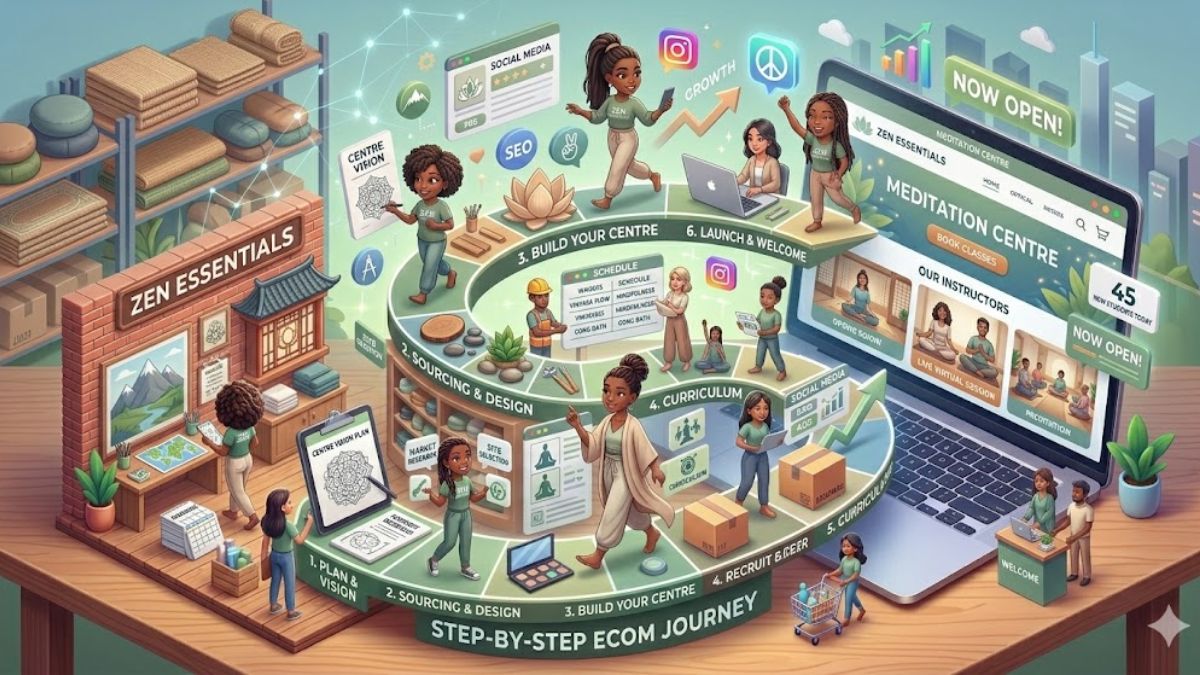
Launching a meditation center requires careful sequencing. The first step is research. Founders must study local demand, competing wellness centers, nearby yoga studios, and the presence of corporate offices. Choosing the right zone in the city can significantly influence walk-ins and memberships. The next phase involves instructor training. Founders must ensure either they or their team members acquire credible meditation teacher certification. Customers value structured teaching backed by experience. Certification also boosts credibility during corporate pitches.
Space selection is critical. A meditation center requires soundproofing, calming interiors, and minimalistic design. The layout must support group sessions and private consultations. Ventilation, fragrance, and lighting play a large role in customer perception. The launch strategy often includes a soft opening with limited slots, free trial sessions for local residents, and collaborations with fitness studios or mental health professionals. A digital presence through Instagram, Google My Business, and a simple website helps customers discover the center. A full launch happens once the team is settled, schedules are fixed, and the brand identity is ready.
8. Budget, Resources & Infrastructure
Costs vary by location and scale. A compact neighborhood meditation studio might launch within ₹5–12 lakh. A premium center with advanced facilities may require ₹20–35 lakh. The biggest cost is rent. Soundproofing, flooring, lighting, and decor also add to the setup. Essential resources include bolsters, meditation mats, cushions, audio equipment, candles, air purifiers, and basic furniture. Technology tools such as scheduling software, membership management platforms, and payment systems help streamline operations.
Human resources depend on the model. A small center can be run by the founder and one more instructor. Larger centers require a front desk manager, part-time instructors, and a marketing manager. Operational infrastructure includes a clean reception area, waiting space, meditation hall, and a small consultation room. If offering digital programs, a recording space enhances content quality.
9. Brand Strategy
Branding defines customer perception before they walk into the studio. A strong brand name should evoke calmness, clarity, and emotional balance. It must be easy to pronounce and free from religious bias. Names inspired by nature, mindfulness, or stillness work well in this sector. The logo direction should follow minimal, clean lines and soft color palettes such as pastel blue, beige, or sage green. Fonts need to be modern and simple. A meditation center’s brand voice must be empathetic, warm, and reassuring. It should communicate a sense of trust, expertise, and non-judgment. Positioning must highlight credibility, structured programs, and community building. Customers need to feel that the center is a safe, trustworthy space for personal growth.
10. Vendor & Partner Strategy
The meditation center will require vendors for mats, cushions, incense, sound systems, and interior decor. Choosing reliable suppliers ensures consistency in studio experience. Vendors must provide good quality, durable products to withstand daily use. Partnerships can help expand visibility. Collaborating with psychologists, wellness coaches, and fitness centers builds referral networks. Corporate partnerships offer steady revenue streams. Schools and colleges are also potential partners for mindfulness programs. Selecting partners based on trust, alignment in values, and long-term potential helps build a sustainable ecosystem around the center.
11. Go-to-Market & Customer Acquisition Channels
Customer acquisition depends heavily on neighborhood visibility and online presence. Google My Business listings help local users discover the center when searching for terms like starting a meditation studio or meditation center business. Social media can showcase testimonials, session glimpses, and instructor introductions. Word of mouth remains powerful. Customers who see progress often bring family and friends. Offering trial classes helps convert hesitant first-time participants.
Collaborations with mental health professionals, fitness trainers, and nutritionists widen reach. Early adopters appreciate credibility backed by experts. Workshops, community events, and wellness festivals also bring new customers. Corporate outreach is another strong channel. HR leaders frequently look for mindfulness coaching providers who can offer structured, credible programs.
12. Growth & Retention Strategy
Growth depends on consistency, trust, and community-building. A meditation center grows when customers follow long-term practice. This requires regular session schedules, instructor stability, and evolving program offerings. Retention improves when customers see progress. Measuring improvements in emotional balance, stress reduction, and sleep quality through periodic assessments can motivate long-term membership.
Introducing specialty programs such as breathwork intensives, digital detox programs, and advanced mindfulness retreats helps retain experienced practitioners. Expansion into corporate training, online courses, and merchandise creates new revenue streams. Community plays a major role. Events, festivals, challenges, and themed meditation evenings keep the experience fresh and meaningful.
13. Team Structure & Responsibilities
Starting a meditation center doesn’t require a large team, but the right people are critical to creating a serene and trustworthy experience. In the early days, a founder-instructor can lead sessions while handling strategy, programming, and client engagement, supported by one administrative staff member to manage bookings and day-to-day operations.
As the center grows, the team should expand thoughtfully. A receptionist ensures smooth check-ins, handles membership queries, and maintains the calm flow of the studio. A marketing specialist can craft digital campaigns, build community on social media, and attract new students. Hiring multiple part-time instructors allows for flexible scheduling, class diversity, and coverage during peak hours.
Instructor quality is central to success. They must combine technical knowledge of meditation with empathy, excellent communication, and the ability to make students feel seen and supported. Staff training should reinforce professional behavior, mindfulness in customer interactions, and the maintenance of a calm, welcoming environment. Administrative tasks including scheduling, membership renewals, billing, and feedback collection should be centralized under a dedicated role as the center scales, ensuring operational efficiency while allowing instructors to focus on teaching.
This layered approach balances personal connection with operational structure, enabling growth without sacrificing the intimate, transformative experience that students seek.
14. Risks, Challenges & Mitigation
Even well-run meditation centers face inherent risks. Inconsistent footfall, seasonal slowdowns, and student attrition are common challenges. The trust factor is fragile: frequent instructor turnover or inconsistent class quality can quickly erode reputation. Competition is also real, with gyms, yoga studios, and online wellness platforms offering casual meditation sessions that can attract potential students.
Mitigation requires a multi-pronged approach. Strong branding and a clear identity help distinguish the center from casual alternatives. Consistency in scheduling and instructor availability reinforces reliability. Investing in relationship-building personal check-ins, progress tracking, and community events—deepens loyalty and encourages long-term membership.
Diversification is equally important. Corporate programs, online courses, and workshops expand revenue streams and cushion against seasonal dips. Reputation management must remain a priority: ethical teaching practices, transparent communication, and a safe, welcoming environment are essential to maintaining student trust. While regulatory risks are limited compared to medical or wellness clinics, reputation risks are significant, making integrity and professionalism the foundation of sustainable success.
15. Legal, Compliance & Fundamentals
Launching a meditation center in India requires careful attention to legal structure and compliance. Choose the appropriate registration proprietorship, partnership, or private limited company—based on your scale, funding plans, and liability considerations. Depending on the premises, local municipal permissions may be needed for commercial use. Fire safety compliance is non-negotiable, especially for centers in multi-story buildings or commercial complexes.
Contracts and agreements must be clear and enforceable. This includes instructor partnerships, vendor agreements, corporate tie-ups, and any collaborations. If offering online courses or digital content, properly drafted terms and conditions, privacy policies, and disclaimers are essential to protect both the business and the learners.
Since meditation is a wellness service rather than a medical practice, licensing requirements are minimal. Yet, professionalism, adherence to safety standards, and ethical teaching practices are what ensure credibility and long-term growth. A center that invests in structured operations, regulatory awareness, and student safety cultivates trust, allowing it to thrive in a competitive wellness market.
16. Long-Term Vision & Goals (Future Outlook)
The long-term outlook for entrepreneurs looking to start a meditation center is promising. India is becoming one of the fastest-growing markets for structured wellness services. With rising awareness and growing research from organizations like National Institutes of Health reinforcing meditation’s benefits, customer adoption will continue to rise. A well-positioned center can evolve into a multi-city brand offering meditation instructor services, corporate programs, and digital wellness content. Over three to five years, founders can expand into retreats, mindfulness certification programs, and hybrid online-offline models.
Consumers are actively seeking professional meditation for stress relief, emotional balance, and better mental wellbeing. With steady demand and moderate operating costs, a meditation center can become a sustainable, respected business that contributes meaningfully to India’s wellness landscape.
About foundlanes.com
foundlanes.com is India’s leading startup idea discovery platform. It helps entrepreneurs find actionable startup opportunities, market insights, and industry-specific guidance to turn ideas into real businesses. With deep research and practical resources, foundlanes supports founders at every stage, from idea validation to launch and growth.