News Summary
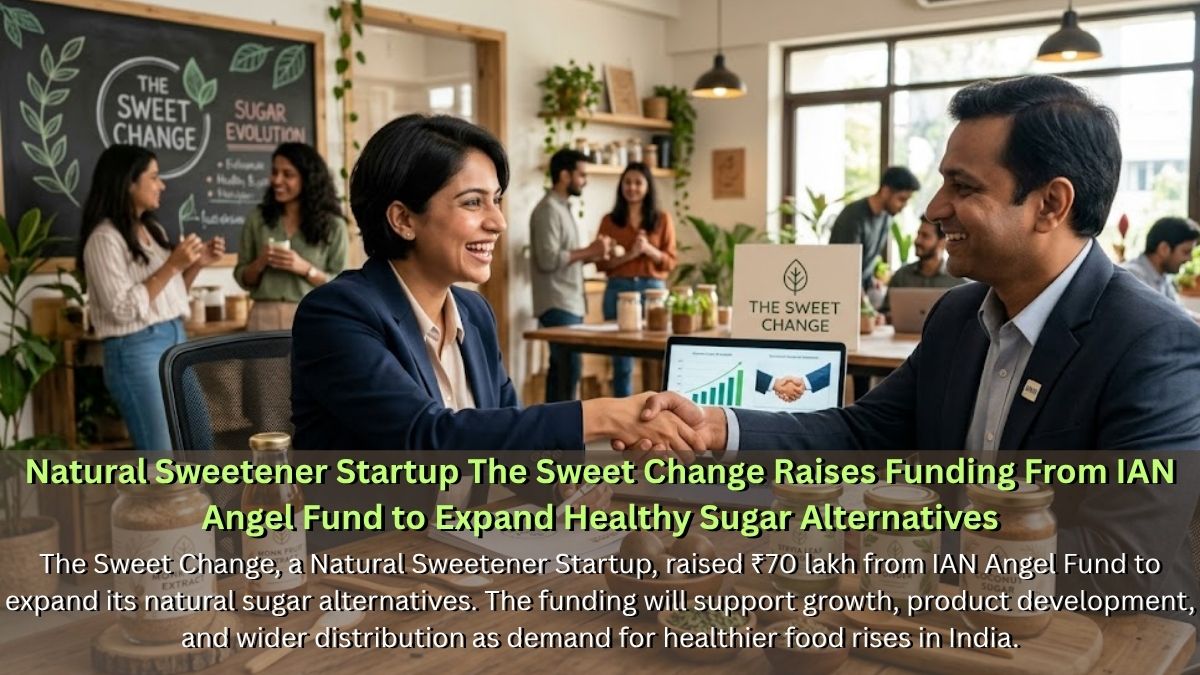
India’s health-focused food startup scene is quietly shifting in a way that feels more real than hype right now, and The Sweet Change, a Natural Sweetener Startup, is one of those names sitting right in the middle of that change. The company has managed to raise ₹70 lakh in a funding round led by IAN Angel Fund, and while it’s not a massive headline-grabbing figure, it still carries weight because of what it stands for. This isn’t just another funding story. It’s more about where people are heading with their food choices.
The Sweet Change is working in something very close to everyday life, natural sugar alternatives. And honestly, it’s one of those spaces that sounds simple on paper but connects deeply with how people actually live. Most of us don’t even think twice before adding sugar to tea, coffee, or desserts. It’s almost automatic. But at the same time, there’s this growing discomfort in the background, especially when health reports, family diagnoses, or routine checkups start pointing toward diabetes, weight issues, or lifestyle-related concerns. That’s exactly where this startup is trying to fit in. With this fresh funding, the company is planning to slowly expand its reach, improve its products, build better distribution, and most importantly, make people more aware that there are alternatives to refined sugar that don’t feel like a punishment to use.
The interesting part is how naturally this category is growing
The interesting part is how naturally this category is growing. Not too long ago, health food was something you’d only find in specialty stores or fitness circles. Now it’s slowly entering regular kitchens. People are starting to read labels, question ingredients, and think twice before calling something “healthy” just because it looks that way on the front pack. The Sweet Change is trying to meet that shift head-on, offering natural sweeteners that don’t force people to completely change their habits. It’s less about restriction and more about small, realistic swaps that people can actually stick to.
This whole space is getting more attention because health concerns are no longer distant ideas. Diabetes, obesity, and lifestyle diseases are showing up earlier in life than before. And while nobody changes their habits overnight, there is definitely a slow awareness building in households across India that sugar intake is something worth paying attention to. What makes this funding meaningful is also the kind of investors behind it. Angel networks like IAN are increasingly backing startups that deal with everyday health problems, not just digital disruption or fast-scaling tech platforms. There’s a growing belief that food, nutrition, and wellness are just as important as software when it comes to long-term impact.
At a bigger level, India’s startup ecosystem is clearly widening. It’s not only about apps and algorithms anymore. It’s also about what people eat, how they live, and how small daily choices add up over time. Companies like The Sweet Change are part of that quieter but very real transformation. With this funding, the startup now has a bit more breathing room to strengthen itself in a competitive space where trust matters as much as product quality. It’s still early days, but the direction feels aligned with where consumer behaviour is slowly heading.
1. The Rise of Natural Sweetener Startup The Sweet Change
1.1 India’s Healthy Food Startup Market Gains Momentum
If you look at India’s startup world a few years ago, almost everything revolved around fintech apps, delivery platforms, or deep tech ideas. That hasn’t disappeared, but something else has started growing alongside it in a more grounded way. Health-focused food startups are finding their place. The Sweet Change is part of this shift. It doesn’t come across like a loud, aggressive brand trying to change the world overnight. It feels more like something built around a very simple observation people want to reduce sugar, but they don’t want to give up sweetness.
That’s a very human problem, not just a market opportunity. And over the last few years, that problem has become more visible. After the pandemic especially, people started paying more attention to immunity, energy levels, weight, and long-term health. It’s not dramatic change, but more of a steady awareness that builds slowly in daily life. Because of that, natural sweeteners are no longer a “diet trend.” They’re becoming part of normal conversations at home.
1.2 Funding Announcement and Investor Participation
The ₹70 lakh funding led by IAN Angel Fund shows something important, investors are slowly getting more comfortable with backing early-stage wellness-focused brands, even if they don’t scale instantly like tech startups.
For a food startup, early money is not about glamour. It’s about survival and structure. You need time to get sourcing right. You need time to figure out packaging that actually works in the real world. Need distribution that doesn’t fall apart after the first push. And above all, you need time to build trust with customers who are careful about what they put into their bodies. That’s why this funding matters. It gives the startup space to breathe and improve instead of rushing growth.
2. Background Story of The Sweet Change
2.1 How the Startup Idea Began
The idea behind The Sweet Change comes from something very ordinary, but very real. Sugar is everywhere in our lives. And most of the time, we don’t even notice how much of it we’re consuming. Tea in the morning, snacks during the day, sweets after meals, packaged food in between it all adds up quietly. It becomes a habit more than a choice.
The founders saw that gap. People don’t really want to stop sweetness. They just want a way to reduce the harm without feeling like life is becoming strict or joyless. That’s where the idea took shape offering alternatives that feel familiar instead of foreign. Not something that forces change, but something that fits into existing routines.
2.2 The Consumer Health Problem
India is dealing with a health reality that’s becoming harder to ignore. Diabetes is rising. Weight issues are becoming more common. And lifestyle diseases are now affecting people at younger ages than before. These are not abstract statistics anymore they show up in families, friends, and everyday conversations.
One of the biggest silent contributors is excess sugar consumption. What makes it tricky is that sugar is not just about taste. It’s emotional. It’s comfort, habit, and culture all mixed together. That’s why cutting it out completely is difficult for most people. So instead of extreme changes, what’s really growing is the idea of balance. That’s where natural sweeteners come in. Not as a perfect solution, but as a more realistic middle path. And The Sweet Change is trying to build exactly around that middle space, where health and habit can slowly start meeting without forcing people to choose one over the other.
3. Working Model of the Natural Sweetener Startup
3.1 How The Sweet Change Operates
At its core, The Sweet Change works like most modern consumer food brands in India, but with a very clear focus on keeping things simple and accessible. Instead of building heavy infrastructure from day one, the startup leans on a mix of partnerships and direct consumer reach. Products are likely sourced and produced through trusted manufacturing partners, while the brand focuses more on what consumers actually see and feel the packaging, quality, messaging, and overall experience. The selling approach is split between online and offline channels. On one side, there’s direct-to-consumer sales through digital platforms. On the other, there’s gradual movement into retail spaces where everyday shoppers can discover the product while buying groceries.
This mix is important because food habits don’t change in one place. Some people discover products on Instagram or e-commerce sites, while others trust what they see on store shelves. The startup is trying to exist in both worlds at once. A big part of this model today also comes down to digital visibility. Most early-stage food brands don’t have huge marketing budgets, so they rely heavily on social media, influencer reviews, and content-led discovery. It’s not just advertising anymore, it’s storytelling that builds trust slowly over time.
3.2 Product Development Strategy
In a category like natural sweeteners, the product is everything. There’s very little room for exaggeration because people are literally consuming it every day. That’s why trust becomes the real currency here. The Sweet Change seems to be operating with a strong focus on keeping ingredients clean and understandable. Today’s consumers are more careful than ever. They don’t just want “sugar-free” written on the label, they want to know what’s actually inside, how it’s made, and whether it feels safe for long-term use. So product development in this space is not just about taste. It’s about balance between health, usability, and familiarity.
Another important part of this process is feedback. Modern food startups don’t wait years to refine products. They listen to customer reviews, repeat purchase behavior, and even social media reactions to adjust formulations and positioning. It’s a constant cycle of small improvements rather than one big launch moment.
4. Revenue Model of The Sweet Change
4.1 Direct Product Sales
The most straightforward part of the business is also the backbone of it, selling products directly to customers. Most of the revenue comes from people purchasing natural sweeteners either online or through retail channels. In early-stage consumer brands like this, repeat customers matter more than one-time buyers. If someone switches and sticks, that’s where real stability comes from.
Some customers may buy once out of curiosity, but the real growth comes when the product quietly becomes part of their daily routine, like adding it to tea or cooking. Over time, revenue can also come through repeat orders, bundle purchases, or subscription-style buying patterns, which help stabilize cash flow.
4.2 E-commerce and Retail Distribution
India’s e-commerce ecosystem has made it much easier for food startups to reach customers without building massive physical networks in the beginning. For The Sweet Change, online platforms likely act as the first major growth engine. It allows the brand to test markets, understand demand, and scale gradually without huge upfront costs. But long-term success in food is rarely online-only.
Retail presence plays a very different role. When a product sits on a supermarket shelf or in a health store, it gains a different kind of trust. People often try things simply because they see them while shopping. So the real growth path usually becomes a combination of both digital discovery and offline visibility.
4.3 Brand Partnerships and Future Opportunities
As the brand grows, opportunities naturally open up beyond just direct sales. It can move into partnerships with cafes, wellness centers, fitness studios, or even health-focused food brands that want to offer better ingredients in their menus.
There’s also room to expand into adjacent categories over time. Many successful food startups start with one focused product, then slowly build a wider portfolio once trust is established. But none of that happens quickly. In this space, growth is usually steady, not sudden. It depends heavily on consumer confidence, repeat usage, and word-of-mouth.
5. Why Investors Are Interested in Natural Sweetener Startup Businesses
5.1 Shift Toward Preventive Healthcare
One of the biggest shifts happening globally is that people are starting to think about health earlier, not just when something goes wrong. Instead of waiting for medical issues to appear, there’s a slow but growing mindset of prevention choosing better food, better habits, and better daily choices before problems start. That change is exactly why wellness-focused startups are getting attention from investors. It’s not just about selling products. It’s about tapping into a long-term behavior shift in how people live.
5.2 Strong Consumer Demand
Demand in this space is not coming from one small group anymore. It’s spread across urban professionals trying to manage fitness, families trying to reduce sugar at home, and younger consumers who are more aware of health information than previous generations.
What’s interesting is that this demand is not driven by trends alone. It’s driven by real-life experiences diabetes cases in families, weight concerns, and lifestyle stress pushing people to make small but meaningful changes. That’s what makes this category feel stable in the long run.
5.3 Scalability of Consumer Brands
Food and consumer brands work differently from pure digital startups, but when they succeed, they can grow very big very fast. India’s population size itself creates a huge opportunity. Even a small shift in consumer habits can translate into a large market. If a brand manages to build trust and becomes part of daily usage, scaling becomes more natural over time. People don’t just try it once they keep coming back for it.
That combination of habit, trust, and repeat usage is exactly what makes investors pay attention to this space, even if the early numbers look small. Because in the long run, these are the kinds of businesses that quietly become part of everyday life.
6. Industry Growth Trends in India’s Healthy Food Sector
6.1 Rising Health Awareness
Something has been quietly shifting in India over the past few years people are starting to think more seriously about what goes into their food. It’s not loud or dramatic. It shows up in small everyday moments. Someone skipping extra sugar in tea. A parent reading the back of a packet before buying snacks. A friend suddenly talking about blood sugar levels at a family dinner. Health has slowly moved from “doctor’s advice” to “daily awareness.”
A big role in this shift comes from how information flows today. Social media has made health conversations constant. Fitness creators talk about sugar the way people once talked about smoking or junk food. Nutritionists break down ingredients in simple terms. Even regular users share their personal experiments with cutting sugar or switching to alternatives. All of this has created a mindset change. People are no longer just eating what tastes good. They’re also thinking about what feels right for the body long term.
6.2 Growth of Functional Foods
Food itself is changing its identity. Earlier, food was just about hunger and taste. Now it’s also about function what it does for the body beyond filling you up. This is where functional foods come in. Things like protein-rich products, immunity boosters, low-calorie snacks, and sugar alternatives are no longer “special diet items.” They’re slowly becoming everyday choices for many people.
Natural sweeteners fall right into this shift. They sit in that space where people don’t want to give up sweetness, but also don’t want the long-term health baggage that comes with refined sugar. The Sweet Change is part of this bigger movement where food is becoming more intentional. Even something as small as sweetening your tea is turning into a conscious decision.
6.3 Increasing Startup Investments
Investor thinking is also changing along with consumer habits. For a long time, most startup funding in India was focused on apps, platforms, and digital-first businesses. That world is still strong, but now there’s a visible shift toward real-world problems things people deal with every day in their homes, kitchens, and health routines.
Food and wellness startups are getting more attention because they connect directly with lived experience. Everyone eats. Everyone makes health-related choices, even if they don’t realize it. So when a startup tries to solve something like sugar reduction, it doesn’t feel distant or abstract. It feels personal. And that’s exactly why investors are starting to look at these companies differently.
6.4 Digital Commerce Expansion
One of the biggest reasons new-age food brands can even exist today is the rise of digital commerce. Earlier, building a food brand across India meant heavy investment in shops, distributors, warehouses, and retail partnerships. It was slow, expensive, and very risky. Now things are very different.
A small startup can launch online, reach customers across cities, and build awareness through social media without needing massive infrastructure. People discover products through reels, reviews, and recommendations instead of just store shelves. This has made the entry barrier lower, but competition sharper. For brands like The Sweet Change, it means they can grow faster in the beginning, but they also need to earn trust much quicker because customers have endless options just a click away.
7. Competitive Landscape
7.1 Direct Competitors
The natural sweetener space in India is not empty. In fact, it already has some strong and familiar names that people trust.
7.1.1 Sugar Free
Sugar Free is one of those brands almost every Indian has seen at some point. It has been around long enough to become a default choice for many households and pharmacies. Its strength is not just the product. It’s familiarity. People trust what they’ve seen for years.
7.1.2 Stevia World
Stevia World focuses on plant-based alternatives, especially stevia-based sweeteners. It appeals to people who are actively trying to move away from artificial ingredients and want something closer to natural sources.
7.1.3 Organic India
Organic India operates in a wider wellness space, not just sweeteners. It’s more of a lifestyle brand for people who are already inclined toward organic and clean-label living. Its strength lies in trust and the emotional comfort of buying something that feels “safe and natural.”
7.1.4 Emerging D2C Wellness Brands
Then there are the newer direct-to-consumer brands that don’t rely on legacy distribution. These startups grow through Instagram, influencers, reviews, and word of mouth. They may not be everywhere in physical stores yet, but they often feel more relatable to younger consumers. They speak the language of modern health awareness simple, direct, and lifestyle-driven.
7.2 Indirect Competitors
Sometimes the biggest competition doesn’t look like competition at all.
7.2.1 Traditional Sugar Companies
Regular sugar still dominates most Indian kitchens. It’s affordable, familiar, and deeply tied to culture and taste habits. For many families, it’s not something they “switch away from” easily it’s just part of daily life. That’s why changing habits is harder than introducing products.
7.2.2 Artificial Sweetener Brands
Artificial sweeteners also exist in the same space, mainly targeting calorie-conscious consumers. But many people still hesitate when it comes to long-term usage, which opens space for natural alternatives to grow slowly.
7.2.3 Healthy Snack Brands
Healthy snack and beverage brands are also competing for the same emotional space in the consumer’s mind. They may not be direct substitutes, but they all target the same group of people those trying, in their own way, to live a little healthier without completely changing their lifestyle.
8. The Role of IAN Angel Fund in India’s Startup Ecosystem
8.1 Importance of Angel Investors
IAN Angel Fund quietly plays a much bigger role in India’s startup journey than most people realize. At the earliest stage, startups are often just an idea, sometimes a rough product, sometimes just a founder trying to figure things out with very limited resources. This is the phase where things are fragile. There is excitement, but also a lot of uncertainty.
Angel investors step in right here. And it’s not just about money. It’s more like a first vote of confidence from someone who has seen enough startups to know what might work and what might fall apart. For founders, that support often feels like a turning point. Suddenly, the idea is not just an idea anymore. It has a chance to live in the real world.
In cases like The Sweet Change, this early backing gives breathing space. It allows the team to experiment, make mistakes, refine the product, and slowly understand what customers actually want without the pressure of instant scale.
8.2 Why Angel Networks Matter
Most early-stage founders in India don’t struggle because they lack ambition. They struggle because everything feels too scattered in the beginning. Money is limited. Experience is limited. And the learning curve is steep. That’s where angel networks like IAN Angel Fund become more than just investors. They become a kind of early support system. Sometimes the value is a suggestion that saves months of confusion. Sometimes it’s an introduction that opens a door a founder couldn’t reach alone. And sometimes it’s just reassurance during a phase where nothing feels stable.
There’s also something important happening in the background. Angel networks connect startups with mentors, incubators, and other founders who have already been through similar struggles. That shared experience often matters just as much as funding.
9. Challenges Facing Natural Sweetener Startups
9.1 Consumer Education
One of the hardest parts of this entire space is something very basic getting people to understand why it matters. Natural sweeteners sound simple, but in real life, most consumers still have questions. Does it taste the same? Is it actually healthier? Can I use it every day without thinking too much about it? And when people are unsure, they usually do nothing. They stick to what they already know.
So startups like The Sweet Change don’t just sell products. They also end up slowly teaching the market through content, conversations, and repeated exposure. Trust doesn’t happen in one purchase. It builds over time.
9.2 Pricing Pressure
This is where reality hits. Refined sugar is cheap, familiar, and everywhere. Natural alternatives often come at a higher price because of sourcing, processing, and smaller scale operations. So even if someone is interested in switching, they pause when they compare prices. That hesitation is very normal in a price-sensitive market like India. What this creates is a slow shift, not a sudden one. People try, experiment, and gradually adopt if it fits their routine and budget.
9.3 Distribution Challenges
Even a good product can struggle if people can’t easily find it. That’s one of the quiet challenges in food businesses.
Getting into stores, maintaining supply, managing logistics, and ensuring consistent availability across regions it all takes time and coordination. Early-stage startups often underestimate how complex this part becomes. And if a customer can’t find the product twice, they often move on without thinking too much about it.
9.4 Regulatory Compliance
Food is personal. It goes directly into the body. That’s why the rules around it are strict, and rightly so. Startups need to be careful with every detail labels, claims, ingredients, packaging, and approvals. Even small mistakes can create bigger trust issues later.
So alongside building the brand, there’s also a quieter layer of responsibility making sure everything is compliant, transparent, and safe.
10. Startup Ecosystem Trends Supporting The Sweet Change
10.1 Consumer Startup Boom
India is seeing a very noticeable rise in consumer brands that don’t feel like traditional companies anymore. These are the products people discover while scrolling on their phones, see in Instagram stories, or hear about from friends rather than TV ads or big campaigns.
They live closer to everyday life kitchens, shopping carts, and daily routines. What’s interesting is how personal this has become. People don’t just buy these products. They relate to them. They try them because they feel part of a lifestyle shift happening around them.
10.2 Rise of Wellness Entrepreneurship
More founders today are building businesses from a very personal place. It’s often not just about opportunity. It’s about experience. Someone saw a family member struggle with diabetes. Someone became more conscious about their own health. Simply started questioning what “healthy” really means in packaged food.
That emotional starting point is what makes many wellness startups feel different. They are not just market-driven. They are life-driven.
10.3 Investor Diversification
Investors are also widening their lens. It’s no longer only about software or fast-scaling apps. There’s growing interest in companies that touch real-world problems clean energy, wellness, nutrition, and sustainable consumption. This shift is important because it brings balance. It allows startups that grow steadily, not just explosively, to still find support and survive long enough to build something meaningful.
10.4 Technology and Brand Building
Even though these are physical products, technology is quietly running the show in the background. From understanding customer behavior to tracking repeat purchases and running targeted campaigns, data has become a silent partner in decision-making. But beyond tools and analytics, the real shift is in how brands are built today.
They grow through stories, not just advertisements. Through conversations, not just campaigns. And through trust that builds slowly, one customer at a time. In many ways, companies like The Sweet Change are not just selling products. They are trying to become part of people’s daily habits, without making it feel like a big change at all.
11. Future Growth Opportunities for The Sweet Change
11.1 Product Expansion
Right now, The Sweet Change is focused on natural sweeteners, but that’s usually just the starting point in this kind of journey. Once a brand builds trust in food, it rarely stays in one category. People begin to associate it with a “healthier choice” in general, not just a single product.
So the next natural step could be expanding into things like healthy beverages, better-for-you snacks, or even everyday nutritional add-ons. The idea is simple when a consumer already trusts you for one thing, they’re more likely to try the next. But this only works if the core product relationship with customers stays strong. In food, trust travels slower than marketing.
11.2 International Markets
There’s also a bigger picture waiting outside India. Across the world, people are becoming more conscious about sugar, processed food, and long-term health. This is not just an Indian trend it’s global. That means, over time, products like natural sweeteners can find space in international markets too, especially among health-conscious consumers and diaspora communities.
But international expansion is never immediate. It usually comes after strong stability at home. First, the brand has to feel solid in its own backyard before it can think about stepping outside.
11.3 Strategic Partnerships
One of the most interesting growth paths for brands like this is collaboration. Instead of growing alone, startups often grow faster when they partner with the right ecosystem fitness platforms, gyms, wellness influencers, healthcare apps, or even nutrition-focused communities.
These partnerships don’t just help with sales. They help with trust. When a fitness coach or wellness platform recommends a product, it carries a different kind of weight compared to regular advertising. It feels more personal, more believable.
11.4 Retail Scaling
Online growth is important, but offline presence is where real everyday visibility begins. When a product sits on a supermarket shelf or a local health store counter, it becomes part of someone’s routine world. People pick it up while shopping for other things. They try it without much planning.
That’s powerful. For The Sweet Change, scaling retail presence could become one of the biggest long-term growth drivers. It turns a brand from something people discover into something they repeatedly encounter.
12. Broader Impact on Indian Startup News
12.1 Shift Beyond Traditional Tech Startups
Not too long ago, Indian startup news felt almost predictable fintech, apps, AI, logistics, delivery platforms. That’s still very active, but something new has quietly joined the conversation. Brands like The Sweet Change show that startup stories are no longer limited to screens and software. They are also about kitchens, grocery shelves, and lifestyle choices.
This shift matters because it reflects how the idea of “startup” itself is expanding. It’s not just about disruption anymore. It’s about daily life.
12.2 Growing Interest in Food Innovation
Food innovation is slowly becoming one of the most interesting parts of the global startup ecosystem. And it makes sense, because food is one of the most basic human needs. Everyone engages with it, every single day. Investors are beginning to realize that small changes in food behavior can create large market shifts over time. Healthier alternatives, cleaner ingredients, and smarter nutrition choices are no longer niche topics. They are becoming mainstream expectations.
12.3 India’s New Consumption Story
India’s consumer story is changing in a very visible way. As incomes grow and digital access expands, people are not just buying more they are buying more thoughtfully.
There’s a growing preference for products that feel better, safer, and more aligned with long-term health. Even small decisions like what sweetener to use are becoming part of a bigger lifestyle mindset. It’s not about luxury. It’s about awareness. And that’s slowly reshaping how brands are built, how they are marketed, and how they are remembered.
13. Learning for Startups and Entrepreneurs
13.1 Solve Real Consumer Problems
One thing The Sweet Change quietly reflects is something every founder eventually learns the strongest businesses come from real problems, not just interesting ideas. Sugar reduction is not a trend invented in a boardroom. It’s something people deal with every day in very personal ways health reports, family concerns, and small lifestyle decisions. When a product fits into that reality, it doesn’t need to push itself too hard. It naturally finds relevance.
13.2 Build Around Market Trends
Timing matters more than most people realize. Health awareness and preventive living are not short-term waves. They are long-term shifts in how people think about life and food. Startups that align with these deeper changes don’t just grow faster they tend to last longer. Because they are not fighting the direction of the market, they are moving with it.
13.3 Branding Matters
In consumer businesses, product alone is never enough. People don’t just buy what works. They buy what they understand, what they trust, and what feels familiar. That’s why storytelling becomes so important. A brand has to explain itself in a way that feels human, not technical. It has to feel like something people can relate to, not just consume. Trust builds slowly. And once it breaks, it’s very hard to rebuild.
13.4 Early Funding Can Accelerate Growth
Early investment often does something subtle but very important it buys time. Time to experiment. Time to fail. To improve without constant pressure. For startups, especially in physical product spaces like food, that time can make all the difference between something that survives and something that disappears too early.
13.5 Focus on Sustainable Growth
One of the hardest lessons in startups is that fast growth is not always healthy growth. If a company expands too quickly without strong systems, quality and trust can start to slip. And in food, even a small slip can affect how people feel about the brand. Sustainable growth is slower, but it’s steadier. It’s built on repeat customers, consistent quality, and trust that doesn’t shake easily. In the long run, that’s usually what separates brands that stay from brands that fade.
About foundlanes.com
foundlanes.com is India’s leading startup idea discovery platform. It helps entrepreneurs find actionable startup opportunities, market insights, and industry-specific guidance to turn ideas into real businesses. With deep research and practical resources, foundlanes supports founders at every stage, from idea validation to launch and growth.