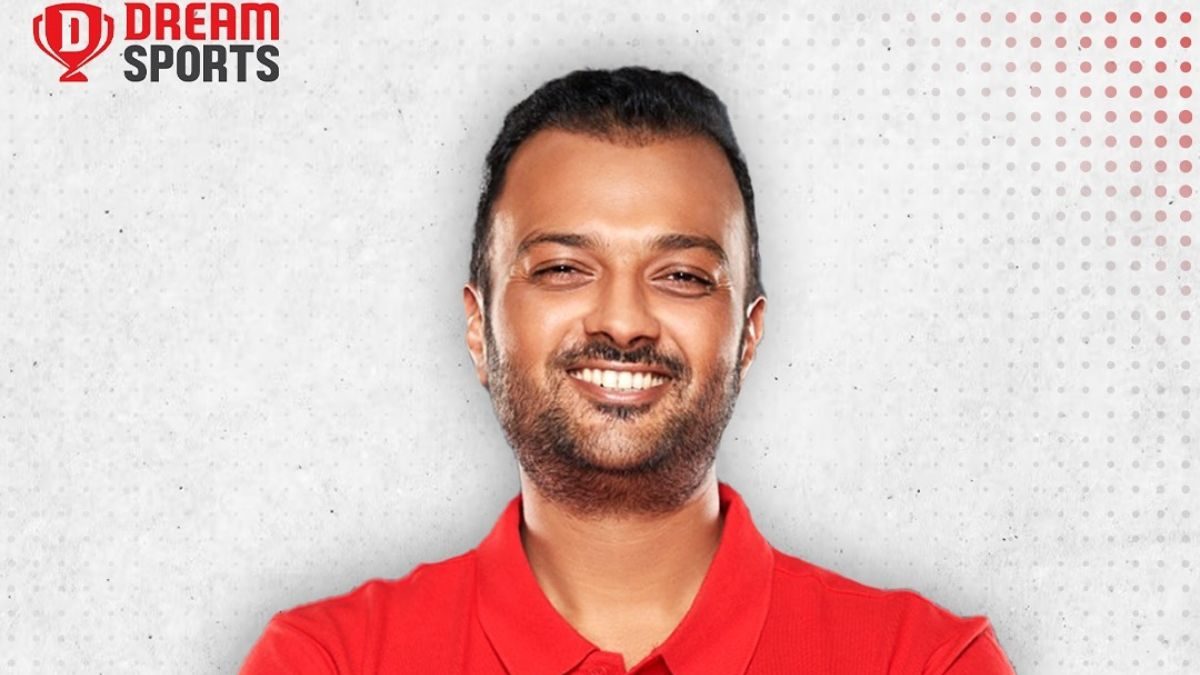
Harsh Jain is the co-founder and CEO of Dream11, India’s largest fantasy sports platform and one of the most influential consumer internet companies to emerge from the Indian startup ecosystem. Today, he is widely recognised as the architect behind a category that did not exist in India when he started. Yet, the Harsh Jain Dream11 founder journey is not a story of overnight success, inherited privilege, or perfectly timed execution. It is a long, grinding narrative of belief, failure, regulatory uncertainty, and relentless obsession with sports.
Dream11 was founded in 2008 in Mumbai, at a time when smartphones were rare, online payments were unreliable, and fantasy sports was an alien concept for Indian audiences. Harsh Jain, along with co-founder Bhavit Sheth, chose to build a product that combined sports fandom with analytical thinking. The platform allowed users to create virtual teams of real players and earn points based on actual match performance.
The idea came from Jain’s lifelong love for sports and statistics. While studying and working abroad, he saw fantasy sports platforms thrive in the US. When he returned to India, he felt Indian sports fans were just as passionate but lacked interactive tools to engage beyond watching matches. The “how” of building Dream11 involved years of educating users, surviving without traction, navigating legal grey zones, and staying committed when success seemed distant. What makes the Harsh Jain Dream11 founder journey remarkable is not just Dream11’s unicorn status, but the decade-long struggle before it. For many years, the company remained invisible, misunderstood, and dismissed. This story traces that journey in depth, revealing the struggles, lessons, failures, and beliefs behind one of India’s most iconic startup success stories.
1. Background and Early Life
Harsh Jain was born into a well-known business family in Mumbai. His father, Anand Jain, is an established industrialist associated with the Reliance Group. Business conversations were not foreign in the household, but Harsh’s earliest and deepest attachment was to sports rather than entrepreneurship.
As a child, he was obsessed with cricket, football, and basketball. He did not merely watch games. He memorised statistics, analysed player form, tracked team combinations, and constantly debated selections. This analytical obsession with sport would later become the philosophical backbone of Dream11. Despite growing up in an environment of privilege, Harsh Jain was not pushed into business early. His interests were organic and curiosity-driven. Sports taught him probability, risk, and long-term thinking long before he understood these ideas in business terms.
1.1 Education and Early Influences
Harsh Jain studied engineering at the University of Pennsylvania and later completed his MBA from Columbia Business School. These institutions exposed him to structured problem-solving, global entrepreneurship, and early internet businesses that were redefining consumer behaviour. While living in the United States, Jain encountered fantasy sports platforms that were already popular. Friends competed aggressively in fantasy leagues, discussing player statistics with intensity similar to real-world team fandom. This exposure left a lasting impression. However, Jain did not return to India with a ready-made startup plan. What he carried back was an intuition that Indian sports fans would eventually evolve beyond passive consumption. He believed the market would mature, even if it took years.
2. Founder and Company Overview
Harsh Jain is best known as the co-founder and CEO of Dream11, the company that didn’t just build a product, but quietly reshaped how India experiences sport. Alongside Bhavit Sheth, whose deep technical expertise formed the backbone of the platform, Jain set out to create something that did not exist in the Indian market—a skill-based fantasy sports ecosystem rooted in knowledge, strategy, and emotional involvement.
Founded in 2008, Dream11 emerged long before terms like “startup culture,” “unicorn,” or “consumer tech boom” became part of India’s mainstream vocabulary. Jain was not chasing a trend; he was attempting to introduce a new behavior. Dream11 allows users to create fantasy teams using real-life players from upcoming matches, with points awarded based on actual on-field performance. Every decision—player selection, captain choice, budget allocation—demands thought, analysis, and foresight.
Over time, Dream11 expanded beyond cricket into football, kabaddi, basketball, and other sports, mirroring the emotional diversity of Indian fandom itself. What began as a simple idea slowly evolved into a multi-sport platform that sat at the crossroads of sports, data, psychology, and competition. Today, Dream11 stands as a category creator, not just a category leader. The challenge wasn’t building technology alone—it was building belief. Jain and Sheth were asking Indian sports fans to move from passive spectatorship to active participation. That shift would take years.
2.1 Target Audience and Market Served
Dream11’s core audience has always been the thinking sports fan—the kind who debates team combinations, tracks player form, and believes that knowledge should count for something. These users seek deeper engagement with the game, not just entertainment but involvement.
In its early years, Dream11 appealed primarily to a niche, urban audience comfortable with technology and online payments. But as smartphones spread, data costs fell, and sports coverage exploded across digital platforms, the audience widened dramatically. What was once a product for a few became a platform for millions across cities, towns, and regions of India.
The company operates in a uniquely complex space—at the intersection of sports, technology, and real-money gaming. This brought intense regulatory scrutiny and cultural skepticism. Yet, paradoxically, these very challenges created high entry barriers. Dream11’s insistence on positioning itself as a skill-based platform, supported by data, user behavior, and legal validation, slowly built credibility and trust.
Founded in 2008, Dream11 spent nearly a decade refining its model in relative obscurity. There were no overnight wins. When mainstream recognition finally arrived, it wasn’t luck—it was compounding patience. Today, Dream11 is a unicorn-stage company with tens of millions of users and a brand that feels inseparable from modern Indian sport.
3. The Problem, Insight, and Trigger
The core problem Harsh Jain identified was deceptively simple: Indian sports fandom was emotionally intense but structurally passive. Fans watched, cheered, argued, and suffered—but had no formal outlet to apply their knowledge, predictions, or strategic thinking.
Jain’s insight was deeply personal. He was the fan who analyzed scorecards long after matches ended, who debated team selections, who mentally predicted outcomes for the sheer satisfaction of being right. Fantasy sports transformed this instinctive behavior into a structured, competitive experience. It gave intelligence a scoreboard. Dream11 didn’t invent fandom—it gave it direction. It allowed fans to feel responsible for outcomes, to experience the tension of every ball, every substitution, every missed shot as if it personally mattered.
3.1 The Trigger Moment
There was no dramatic “lightbulb” moment. Instead, the trigger was slow and observational. Jain watched fantasy sports gain mainstream acceptance in the United States while remaining virtually nonexistent in India. He believed this gap wasn’t permanent—it was merely early.
What set him apart was timing in reverse. He chose to start far ahead of the curve, fully aware that the market might take years to catch up. This meant prolonged uncertainty, slow traction, and repeated doubt. But it also meant that when India was finally ready, Dream11 would already be battle-tested.
4. Early Days and Initial Struggles
The early days of Dream11 were defined by confusion—both inside and outside the company. Users struggled to understand the concept. Many dismissed it as gambling; others found the rules overwhelming. Education became as important as acquisition.
Technology added another layer of resistance. Internet penetration was low, payment gateways failed frequently, and smartphones were far from ubiquitous. Every small user action—from signing up to completing a transaction—was a potential drop-off point. Growth was slow, sometimes painfully so. For years, Dream11 operated without applause. There were no viral spikes, no explosive adoption curves. What sustained the company was conviction—the belief that if the product was built correctly, behavior would eventually follow. That belief, forged in years of obscurity and doubt, became Dream11’s quiet competitive advantage.
4.1 What Turned Out to Be Harder Than Expected
What Harsh Jain and his team underestimated was not getting people to try Dream11, but convincing them to come back. User acquisition, while slow, was measurable. Retention, however, was brutal. Many users signed up out of curiosity, created a team once, and never returned. The habit Dream11 needed to create did not exist naturally in India—it had to be taught. Monetisation was even more complicated. Asking users to pay an entry fee for a concept they barely understood created friction and fear. Payments failed, trust was low, and hesitation was constant. Every abandoned transaction felt like a signal that the product was ahead of its time.
Slowly, a difficult realisation set in: marketing was not the real problem. Education was. Users needed to understand how fantasy sports worked, why skill mattered, and how knowledge could translate into long-term engagement. Growth would not come from louder promotion, but from patient explanation.
5. Failures, Setbacks, and Self-Doubt
The most difficult stretch of the Harsh Jain–Dream11 journey unfolded between 2009 and 2014. These were years with almost no visible progress. User numbers barely moved. Investor interest was scarce. The company existed in a fragile state—neither failing fast nor succeeding slowly, just surviving. This period tested more than business logic; it tested emotional resilience. Friends and peers moved on to stable jobs, predictable income, and clear career paths. Dream11, meanwhile, lived with uncertainty. Every season felt like a referendum on the company’s existence. Shutting down was not an emotional thought—it was a practical one that returned often.
5.1 Emotional Lows and Setbacks
Failure became repetitive and quiet. Marketing experiments didn’t convert. Product changes failed to move metrics. Each cricket season arrived with hope and left with disappointment. There were no dramatic collapses—only slow, grinding doubt. Regulatory uncertainty around online gaming added a constant layer of stress. The rules were unclear, interpretations shifted, and the risk felt existential. Every decision carried legal anxiety, not just business risk.
What kept Harsh Jain going was belief—belief in the problem, belief in Indian sports fans, and belief that timing, not the idea, was the real obstacle. Even when external validation was absent, he trusted the insight that fandom could be transformed into participation.
6. Validation and Early Traction
The change did not come from a single breakthrough, but from a shift in the ecosystem. Smartphones became common. Mobile internet grew cheaper and faster. Digital payments started to feel normal rather than risky. Gradually, user behavior changed. Engagement improved. Retention curves stabilized. During major tournaments, users returned more frequently and began inviting others. For the first time, Dream11 did not need to explain itself—users understood it intuitively. The product was no longer fighting the country’s infrastructure. India had finally caught up.
6.1 Why This Moment Changed Belief
What made this phase different was evidence. Data finally supported conviction. Metrics improved consistently, not in spikes but in patterns. Cohorts behaved better. Unit economics began to make sense. Investor conversations shifted from skepticism to curiosity. Employees felt renewed confidence. The belief that had lived quietly inside the founders for years now appeared in dashboards, charts, and decisions. Validation didn’t arrive suddenly—but it arrived steadily enough to change everything. Because for the first time, the struggle had proof.
7. Funding, Money, and Growth Constraints
For most of its early life, Dream11 survived without the cushion of large external capital. The company was largely bootstrapped, and that reality shaped every decision. Money was not a tool for acceleration—it was something to be protected. Every hire, every campaign, every technical upgrade had to justify its existence. This scarcity enforced discipline. Features were built only when absolutely necessary. Experiments were small, measured, and often painfully slow. But this constraint also forced clarity. Dream11 learned early what truly moved the needle and what was simply noise.
As traction finally began to show, institutional funding followed. Capital brought oxygen, but more importantly, it brought credibility. Investors were no longer just providing money—they were signaling that the business was real, defensible, and scalable. This external validation mattered deeply, not just to the market, but internally to a team that had spent years operating in doubt.
7.1 Capital Challenges
Even after funding arrived, growth did not suddenly become frictionless. Regulatory uncertainty around real-money gaming continued to restrict how aggressively Dream11 could expand. Public perception remained fragile. A single misstep could undo years of trust-building. As a result, marketing could not rely on hype or aggressive acquisition tactics. It had to educate, reassure, and normalize the product. Campaigns focused on skill, fairness, and transparency rather than instant winnings. Growth was slower, but it was safer. Over time, this restraint became an advantage. While competitors burned capital chasing short-term spikes, Dream11 built trust patiently. The company learned to grow within constraints—and when the market finally opened up, that discipline translated into durability.
8. Team Building and Leadership Evolution
In the early years, hiring was instinctive and imperfect. Harsh Jain often brought in generalists who could “figure things out” because the company itself was still figuring things out. Specialists felt like a luxury. Delegation was difficult, not because of ego, but because the stakes felt too high to let go.
Mistakes were inevitable. Some hires didn’t scale. Some roles were unclear. Jain found himself involved in everything—product, operations, hiring, problem-solving—because the company felt too fragile to operate without him. But as Dream11 grew, this approach became a bottleneck. The same hands-on style that had once kept the company alive now threatened to slow it down.
8.1 Leadership Learnings
Leadership, Jain realized, was not about doing more—it was about stepping back. He began evolving from an operator immersed in daily execution to a strategic leader focused on direction, culture, and long-term outcomes. He learned to trust people, even when that trust felt uncomfortable. Clear metrics replaced intuition. Ownership replaced oversight. Culture was no longer incidental—it was designed intentionally.
This evolution didn’t happen overnight. It came through mistakes, reflection, and the humility to accept that the company’s future depended not on one person’s effort, but on the strength of the system around them. By letting go, Jain didn’t lose control. He gained scale.
9. Growth, Scaling, and Operational Challenges
As Dream11 moved from a fast-growing startup to a platform handling millions of users, growth stopped being just a vanity metric and became a stress test. Every major cricket tournament—IPL, World Cups, marquee bilateral series—brought explosive traffic spikes that pushed the company’s infrastructure to its limits. Servers slowed, payment flows strained, and real-time contest systems were tested under unforgiving timelines. In fantasy sports, a few seconds of lag can erode trust built over years. Beyond technology, scaling raised deeper questions of identity. Dream11 was becoming a household name, but with mass visibility came scrutiny. The brand had to carefully walk the line between being accessible to first-time users and maintaining credibility as a skill-based platform, not a game of chance. Messaging, advertising, and product design all had to reinforce this distinction consistently, especially in a market as regulation-sensitive as India.
Internally, growth magnified everything—good decisions paid off faster, but weak processes broke just as quickly. Teams expanded rapidly, communication layers thickened, and founders could no longer rely on instinctive, hands-on control. What worked for a startup of 50 people collapsed under the weight of 500. Scaling forced Dream11 to professionalize without losing its entrepreneurial speed.
9.1 Fixes and Learnings
Each failure became a forcing function. Infrastructure outages led to overinvestment in redundancy, cloud resilience, and stress-testing far beyond normal usage scenarios. Dream11 began preparing not for average traffic, but for worst-case, record-breaking peaks. Trust systems were strengthened—clearer rules, transparent scoring, faster grievance redressal—because users who lose trust rarely return.
On the brand side, Dream11 doubled down on education. Campaigns increasingly emphasized strategy, statistics, and long-term skill, reinforcing the idea that success wasn’t luck-driven. Internally, leadership learned that scaling isn’t about preventing problems—it’s about detecting them early and responding faster than competitors. The most enduring lesson was philosophical: growth exposes weaknesses faster than stagnation ever could. What feels like chaos is often clarity in disguise.
10. Personal Sacrifices and Burnout
Behind Dream11’s upward trajectory, Harsh Jain’s personal journey was far less linear. Entrepreneurship extracted a quiet but persistent toll. Long stretches of uncertainty—especially during regulatory challenges and periods of slow traction—created emotional fatigue that success later could not instantly erase. The pressure to appear confident, to reassure teams and investors, often came at the cost of suppressing personal doubt.
Burnout didn’t arrive dramatically; it accumulated slowly. Weeks blurred into months of relentless decision-making, firefighting, and second-guessing. There were phases where effort seemed disconnected from outcomes—no visible progress, no external validation, just endurance. For founders, these periods are uniquely isolating because the responsibility never fully switches off.
10.1 Impact on Personal Life
Personal routines quietly unraveled. Social relationships thinned, health took a back seat, and time lost its normal boundaries. Celebrations were missed, weekends dissolved into workdays, and rest felt undeserved. The startup demanded not just time, but emotional availability—always being “on,” always carrying the weight of the next decision.
Over time, these experiences reshaped Jain’s leadership style. Having lived through exhaustion and uncertainty, he developed deeper empathy for teams under pressure. Burnout wasn’t dismissed as weakness; it became something to anticipate and manage. The founder’s scars translated into a more humane approach to building Dream11—one that recognized that sustainable companies are built not just on ambition, but on emotional resilience. In hindsight, the personal cost was real, but it also became part of the foundation. The same struggles that tested Jain’s limits sharpened his clarity, humility, and long-term perspective as a leader.
11. Lessons, Beliefs, and Values
If Dream11’s journey proved anything conclusively, it was that timing can matter as much as talent or vision. Harsh Jain learned this lesson the hard way. The core idea of fantasy sports in India was sound from the beginning, but the market wasn’t. Early on, low smartphone penetration, hesitant digital payments, and limited sports data awareness meant that even a well-built product struggled for adoption. The failure wasn’t of imagination—it was of readiness. Over time, as infrastructure, consumer behavior, and sports engagement matured, the same idea found its moment.
This long wait reshaped Jain’s beliefs. Perseverance stopped being a motivational word and became a survival mechanism. Integrity, especially in a grey regulatory environment, was no longer optional—it was protective armor. Most critically, user trust emerged as the company’s most fragile and valuable asset. Every product choice, policy decision, and public communication was filtered through a single question: would this strengthen or weaken long-term trust?
11.1 Non-Negotiable Values
As Dream11 scaled, certain principles became immovable. Long-term value took precedence over short-term growth spikes, even when aggressive expansion was tempting. Regulatory compliance was treated not as a hurdle to bypass, but as a framework to build within—painful at times, but stabilizing in the long run. Ethical play wasn’t just a slogan; it was embedded into contest design, fairness mechanisms, and user education. These values weren’t inherited from theory—they were forged through close calls, public scrutiny, and moments where the easier path would have compromised credibility. Saying “no” to growth that felt misaligned became a leadership muscle Jain consciously strengthened over time.
12. Present Challenges and Future Vision
Today, Dream11 stands at a scale few Indian startups ever reach, yet the challenges have not softened—they have evolved. Regulatory uncertainty continues to loom across states. Competition is relentless, well-funded, and increasingly sophisticated. User expectations are no longer limited to functionality; they demand seamless experiences, deeper engagement, and unquestionable transparency. At this scale, complacency is the biggest threat. What once felt like innovation can quickly become table stakes. The company must now innovate not to survive, but to stay relevant.
12.1 Future Outlook
The Harsh Jain–Dream11 founder journey remains anchored in product obsession. Jain’s focus has shifted from simply acquiring users to deepening their relationship with the sport itself. The ambition is not to gamify fandom superficially, but to turn passive spectators into informed, emotionally invested participants. Looking ahead, Jain envisions Dream11 as a cornerstone of a responsible sports-tech ecosystem in India—one that balances entertainment with accountability, scale with ethics, and ambition with restraint. The journey continues, driven not by the thrill of growth alone, but by a quieter, more demanding goal: building something enduring in a space where trust is the real currency.
About foundlanes.com
foundlanes.com is India’s leading startup idea and deep-dive platform built for founders, operators, and serious entrepreneurs. We go beyond surface-level advice to deliver grounded, research-backed, and experience-driven startup content.
Every guide on foundlanes.com is designed to help readers think clearly, act strategically, and build sustainably. This cloud kitchen startup guide is part of our mission to document real business pathways in India’s evolving startup ecosystem.