Summary
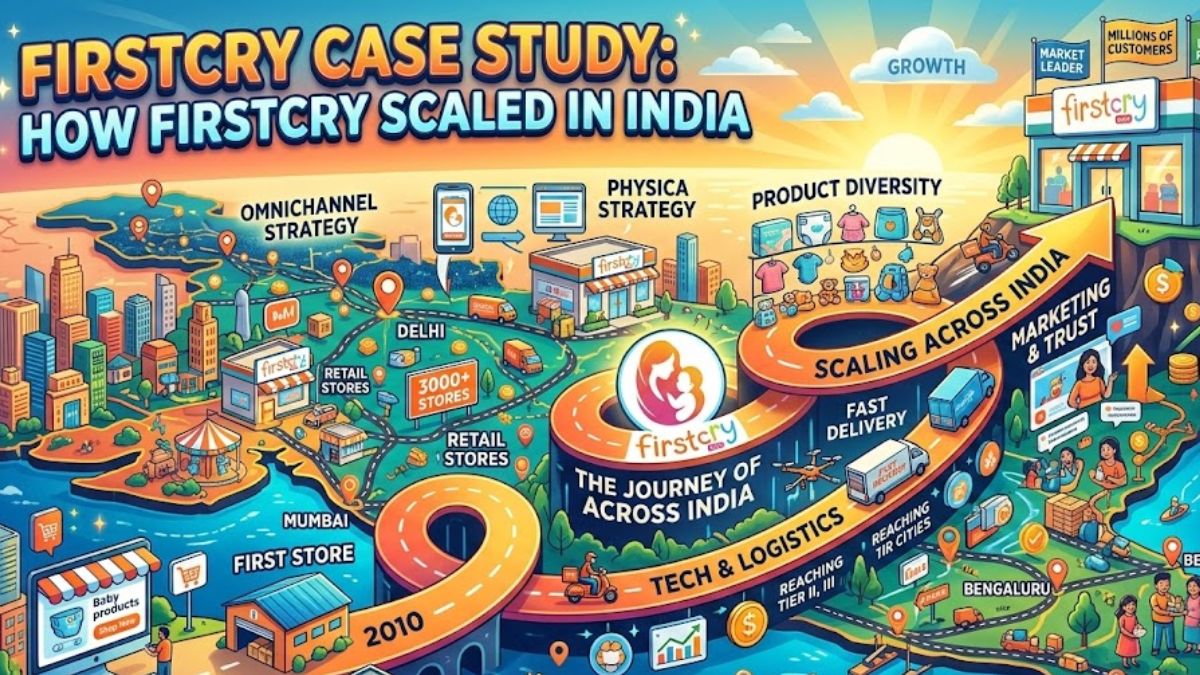
The FirstCry Case Study provides a powerful example of how a niche-focused e-commerce startup can dominate an entire retail category in India. FirstCry is a baby and kids products retailer that offers thousands of products ranging from diapers and toys to strollers, maternity items, clothing, and educational products. Over time, the company has evolved from a pure online store into a large omni-channel retail platform serving millions of parents across India. The company was founded in 2010 by Supam Maheshwari and Amitava Saha. Both founders had previously worked together in the technology and internet industry and had already built successful ventures before starting FirstCry. Their experience in building digital businesses helped them identify an untapped opportunity in India’s parenting and baby products market.
FirstCry is headquartered in Pune, Maharashtra, India. The founders realized that parents across the country struggled to find quality baby products in one place. Offline stores had limited product variety, and international brands were often unavailable or difficult to access. This gap in the market created a clear opportunity to build a dedicated retail platform focused entirely on baby and kids products. The company launched its online platform in 2010 and gradually expanded its catalog to thousands of brands and products. As internet adoption grew across India, FirstCry quickly gained traction among young urban parents looking for convenience, product variety, and trusted brands.
Over the years, the company has raised funding from major investors including SoftBank Vision Fund and Temasek Holdings. Its parent company, BrainBees Solutions, has also pursued plans for a public listing. This FirstCry startup case study explores the company’s origin story, the market opportunity it identified, the business model that powered its growth, and the strategies that helped it become one of India’s most successful niche e-commerce companies.
1. The Origin Story of FirstCry
1.1 Early Background of the Founders
The FirstCry founders story begins with two entrepreneurs who had already built technology businesses before entering the parenting retail market. Supam Maheshwari graduated in mechanical engineering from Delhi College of Engineering before completing his MBA from Indian Institute of Management Ahmedabad. His early career included roles in consulting and technology companies, where he developed a deep understanding of internet businesses. Amitava Saha, the co-founder of FirstCry, studied engineering at Indian Institute of Technology Kharagpur and later completed his MBA from Indian Institute of Management Ahmedabad.
Before launching FirstCry, the two founders worked together on an online education company called Brainvisa Technologies. The company focused on test preparation and online learning services. Their experience building Brainvisa gave them valuable knowledge about scaling digital platforms, acquiring online users, and managing technology-driven businesses.
2. The Market Problem That Inspired FirstCry
The idea behind FirstCry emerged from a real-life challenge faced by many parents in India. When Supam Maheshwari became a parent, he discovered that buying baby products in India was surprisingly difficult. Most offline stores carried a limited selection of items, and many international brands were unavailable in local markets. Parents often had to visit multiple stores just to buy essential items such as diapers, feeding bottles, or baby clothing.
At the same time, India’s e-commerce ecosystem was still in its early stages. Companies like Flipkart and Snapdeal were beginning to popularize online shopping. Maheshwari realized that the baby products category was fragmented and underserved. Parents needed a reliable platform where they could find a wide range of trusted brands in one place. This insight led to the creation of FirstCry.
3. Launching the Platform
In 2010, FirstCry was born from a simple yet ambitious idea: to make parenting easier in India by creating the country’s largest online store for baby and kids products. At first, the platform had a modest catalog, but the founders quickly realized that parents needed more than just a handful of options. They expanded the selection to include toys, maternity essentials, baby gear, clothing, feeding products, educational items, and health essentials.
This wasn’t just about selling products it was about creating a trusted companion for parents. FirstCry became a one-stop destination where new and experienced parents could find everything they needed for their child’s early years. Unlike traditional retailers that offered only a few categories, FirstCry aimed to anticipate parents’ needs at every stage from newborn diapers to toddler toys—creating a sense of reliability and emotional connection with its audience.
4. Early Growth and Market Validation
The platform’s earliest adopters were urban parents comfortable with online shopping, but what truly set FirstCry apart was its ability to solve real, recurring problems. Parents need baby products frequently—diapers, formula, feeding accessories and the convenience of home delivery resonated deeply with them.
This repeat-purchase behavior became a cornerstone of FirstCry’s growth. Many parents quickly became loyal customers, returning to the platform week after week, month after month, because they trusted the quality, variety, and reliability of the service. These early experiences were more than just transactions—they represented peace of mind for busy parents juggling work, family, and the demands of raising young children. Each delivery reinforced trust and strengthened the emotional bond between FirstCry and its users.
5. Understanding the FirstCry Business Model
From the start, FirstCry embraced a hybrid approach that combined the efficiency of e-commerce with the reach of physical retail. While online sales allowed the company to scale quickly in urban markets, the founders realized that many Indian parents still preferred to see, touch, and try certain products before buying them especially for high-value items like cribs, strollers, or car seats.
This insight led to a franchise-based retail network. By partnering with franchise operators, FirstCry could expand into cities where online shopping was still emerging, without heavy upfront capital investment. These stores weren’t just points of sale they also served as brand touchpoints, creating awareness, trust, and community engagement in areas where digital adoption was slower.
The hybrid model allowed FirstCry to combine the best of both worlds: the convenience and scalability of online retail with the tangible, reassuring experience of offline stores. This thoughtful approach reflected a deep understanding of consumer behavior and a commitment to meeting parents where they were.
6. The FirstCry Revenue Model and Business Economics
At its core, FirstCry earns revenue through retail selling products directly to customers via online and offline channels but the company’s strategy goes far beyond basic marketplace operations. By purchasing inventory from manufacturers and distributors and controlling key private-label products, FirstCry maintains oversight of pricing, margins, and availability.
Repeat demand is central to the business. Items like diapers, baby formula, feeding accessories, and clothing are not one-time purchases they’re part of a continual cycle. FirstCry capitalized on this, ensuring that its inventory, delivery, and customer service could support repeat sales, creating a predictable and stable revenue stream.
Private labels added another layer of advantage. By designing products tailored to Indian parents’ preferences and price sensitivity, FirstCry could offer higher margins while providing value that competitors couldn’t easily replicate. These in-house brands also allowed the company to respond quickly to changing consumer needs, ensuring relevance and customer satisfaction.
The combination of repeat purchases, extensive product variety, controlled supply chains, and private labels created a resilient and scalable business. Over time, this approach transformed FirstCry into one of India’s most recognizable and trusted parenting retail platforms, blending commerce with care, convenience, and credibility.
7. Funding Journey and Investor Support
The FirstCry startup funding journey reflects the growing confidence of investors in India’s consumer internet sector. In its early stages, the company raised funding from venture capital firms that believed in the long-term potential of the baby products market. One of the early institutional investors in the company was IDG Ventures India, which supported the startup during its growth phase. Later, the company attracted major international investors including SoftBank Vision Fund and Temasek Holdings. These investors recognized the scale of India’s parenting market and the strong brand recall FirstCry had built among young parents.
Funding rounds allowed the company to expand logistics infrastructure, build technology platforms, and grow its offline retail network. The parent company, BrainBees Solutions, eventually became one of the most valuable startups in India’s parenting retail segment. Investor backing also helped the company expand internationally and strengthen its supply chain operations.
8. Marketing Strategy and Brand Positioning
The FirstCry marketing strategy played a significant role in building trust with parents. Baby products are deeply connected with safety and quality. Parents are naturally cautious when selecting products for infants and toddlers. FirstCry positioned itself as a trusted destination where parents could find reliable brands and expert recommendations.
The company invested heavily in digital marketing during its early years. Search advertising, social media campaigns, and parenting blogs helped it reach new customers. Content marketing also played an important role. Parenting tips, product guides, and baby care articles helped educate customers and improve search visibility. Another important element of the marketing strategy was discounts and promotional campaigns.
Online shoppers in India are often price-sensitive, and attractive offers helped FirstCry drive initial customer acquisition. Over time, however, the brand shifted its messaging toward convenience, product range, and reliability rather than just discounts. This helped build long-term brand credibility.
9. Building an Omni-Channel Retail Network
One of the most important strategic decisions in the FirstCry startup journey was the move toward an omni-channel retail model. While the company began as an online store, the founders soon realized that offline retail still played a major role in Indian consumer behavior. Many parents prefer to see products such as strollers, cribs, and toys in person before purchasing them.
To address this preference, FirstCry began opening physical stores across India. Instead of owning every store directly, the company adopted a franchise-based model. Local entrepreneurs could open FirstCry stores under the company’s brand while following its operational standards. This model allowed rapid expansion without heavy capital investment. Over time, the network grew to hundreds of stores across cities and towns. The integration of online and offline channels created a powerful distribution network. Customers could browse products online, visit nearby stores, or order items for home delivery. This omni-channel strategy became a key factor in the company’s growth.
10. Logistics and Supply Chain Operations
Efficient logistics became critical as FirstCry expanded across India. E-commerce businesses depend heavily on reliable delivery networks and inventory management systems. The company built a large network of warehouses and distribution centers to support its operations. These facilities allowed faster delivery times and better inventory control.
Baby products often have high turnover rates. Items such as diapers and baby food must always remain in stock. Managing this demand requires accurate forecasting and strong supplier relationships. FirstCry also worked closely with manufacturers and distributors to ensure consistent product availability. Over time, the company developed sophisticated supply chain systems that allowed it to manage thousands of products across multiple locations. This operational strength helped the brand maintain customer trust.
11. Private Labels and Product Innovation
Private labels became another major component of the FirstCry business model analysis. The company introduced several in-house brands designed specifically for Indian consumers. These brands cover categories such as baby clothing, toys, feeding accessories, and nursery products. Private labels offer several advantages for retailers. They allow greater control over product quality, pricing, and inventory. They also create differentiation because the products are not available on competing platforms. For FirstCry, private labels helped improve profit margins while expanding product variety. Customers also benefited from affordable products tailored to local preferences. This strategy strengthened the company’s competitive position in the baby products market.
12. Competitive Landscape
The baby products market in India has grown rapidly over the past decade. Several e-commerce platforms and offline retailers compete in this space. Large online marketplaces such as Amazon and Flipkart offer baby products across multiple categories. However, FirstCry differentiated itself by focusing exclusively on parenting and children’s products.
This specialization allowed the company to build deeper product expertise and stronger relationships with parenting communities. Traditional retail stores also compete in this category, particularly in smaller cities. However, these stores often struggle to match the product variety offered by online platforms. By combining e-commerce with physical stores, FirstCry positioned itself between these two models. This hybrid strategy helped the company maintain a competitive advantage.
13. Technology Platform and Product Experience
Technology has always played a crucial role in the FirstCry startup strategy. The company invested heavily in building a scalable digital platform capable of handling millions of users. The website and mobile app are designed to simplify product discovery for parents. Categories are organized around age groups, product types, and parenting needs.
This structure helps customers quickly find relevant items for infants, toddlers, or older children. Recommendation systems also play a role in suggesting products based on customer behavior. For example, parents who purchase diapers may also see recommendations for wipes or baby lotions. These features improve the overall shopping experience while increasing order value. Technology also supports backend operations such as inventory management, logistics coordination, and customer service. As the company scaled, its technology infrastructure became a critical foundation for growth.
14. Growth Milestones and Market Expansion
As highlighted throughout this FirstCry Case Study, the company’s growth was not accidental. It was the result of a deliberate strategy focused on niche specialization, strong supply chains, and customer trust. After launching in 2010, FirstCry steadily expanded its product catalog to include tens of thousands of items across multiple parenting categories. The platform gradually became one of the largest online destinations for baby and kids products in India.
One of the most significant milestones in the FirstCry growth story was the expansion of its offline store network. By combining e-commerce with physical retail, the company created an omni-channel ecosystem that allowed customers to interact with the brand both online and offline. Over the years, the company opened hundreds of franchise stores across Indian cities and towns. This expansion allowed the brand to reach customers in locations where e-commerce adoption was still developing.
International expansion also became part of the company’s growth plan. FirstCry entered markets in the Middle East through a partnership with The Apparel Group, helping the brand reach customers beyond India. These milestones reinforced FirstCry’s position as a leading player in India’s parenting retail ecosystem.
15. Leadership Philosophy and Team Building
The leadership style of FirstCry’s founders has played a major role in the company’s success. Supam Maheshwari, the CEO, has often emphasized the importance of building businesses around long-term consumer needs rather than short-term trends. Instead of expanding into multiple unrelated categories, the company focused deeply on the parenting and baby products segment.
This focused approach allowed the team to build specialized expertise in areas such as product sourcing, customer experience, and parenting content. Team culture within the company has also emphasized operational discipline. Running a large retail and logistics network requires careful coordination between multiple departments. As the organization grew, the leadership team invested in building experienced teams across technology, supply chain management, and retail operations. This combination of focused leadership and operational capability helped the company scale efficiently.
16. Challenges and Turning Points
No startup journey is free from challenges, and the FirstCry startup journey also faced several critical moments. One of the earliest challenges was convincing parents to buy baby products online. In the early 2010s, Indian consumers were still building trust in e-commerce platforms. Parents were particularly cautious about purchasing items such as baby food, clothing, or toys online.
To overcome this barrier, the company focused heavily on product authenticity and brand partnerships. Offering products from trusted global brands helped reassure customers about quality and safety. Another major challenge was logistics. Delivering baby products quickly and reliably across India required strong warehouse and distribution infrastructure. Building this network required significant investment and operational expertise.
Competition also intensified as large marketplaces expanded their product categories. Platforms such as Amazon and Flipkart entered the baby products category with aggressive pricing and marketing campaigns. FirstCry responded by strengthening its niche focus and expanding its offline retail network. These turning points shaped the company’s long-term strategy.
17. Competitive Positioning in India’s E-commerce Landscape
Within India’s rapidly growing e-commerce sector, FirstCry occupies a unique position. Unlike horizontal marketplaces that sell products across dozens of categories, FirstCry focused specifically on parenting. This specialization allowed the company to build deeper relationships with brands and suppliers within the baby products industry.
It also helped create a strong emotional connection with customers. Parenthood is a life stage where trust matters significantly. Parents prefer buying products from platforms that demonstrate expertise in childcare and safety. By positioning itself as a dedicated parenting platform, FirstCry differentiated itself from general e-commerce companies. This strategic focus played an important role in the FirstCry business model analysis.
18. Brand Trust and Customer Loyalty
Customer loyalty has been one of the strongest growth drivers for FirstCry. Parents often purchase products repeatedly during the early years of a child’s life. Items such as diapers, toys, clothing, and feeding accessories require frequent replacement as children grow. This natural demand cycle created a recurring customer base.
The company also invested in building trust through customer support and product authenticity. Parents rely heavily on recommendations when choosing baby products. By offering trusted brands and consistent quality, the company strengthened long-term customer relationships. Over time, this trust translated into strong brand recall among young families.
19. The Current Status of FirstCry
Today, FirstCry has evolved into one of India’s most recognized parenting retail platforms. The company operates both online and offline channels, serving millions of customers across India. Its parent company, BrainBees Solutions, oversees operations and strategic initiatives for the FirstCry brand.
The company continues to expand its product offerings, private labels, and international presence. In addition to e-commerce and retail stores, the brand has also introduced related platforms focused on parenting content and community engagement. These initiatives help strengthen the overall ecosystem around the brand.
20. Future Outlook
The FirstCry Case Study highlights how niche specialization can lead to large-scale success in India’s e-commerce ecosystem. India’s parenting market continues to grow due to rising incomes, urbanization, and increased awareness of child care products. Digital adoption is also expanding rapidly across smaller cities and towns.
These trends create strong long-term opportunities for platforms that focus on parenting and baby products. FirstCry is likely to continue strengthening its omni-channel retail strategy while expanding private label brands and international presence. Technology investments may also play a larger role in improving customer experience, logistics efficiency, and product discovery. As the company grows, its ability to maintain customer trust while expanding operations will remain critical. The FirstCry success story in India demonstrates that startups can succeed by identifying underserved markets and building deep expertise in specific categories.
About foundlanes.com
foundlanes.com is India’s leading startup idea discovery platform. It helps entrepreneurs find actionable startup opportunities, market insights, and industry-specific guidance to turn ideas into real businesses. With deep research and practical resources, foundlanes supports founders at every stage, from idea validation to launch and growth.