Introduction
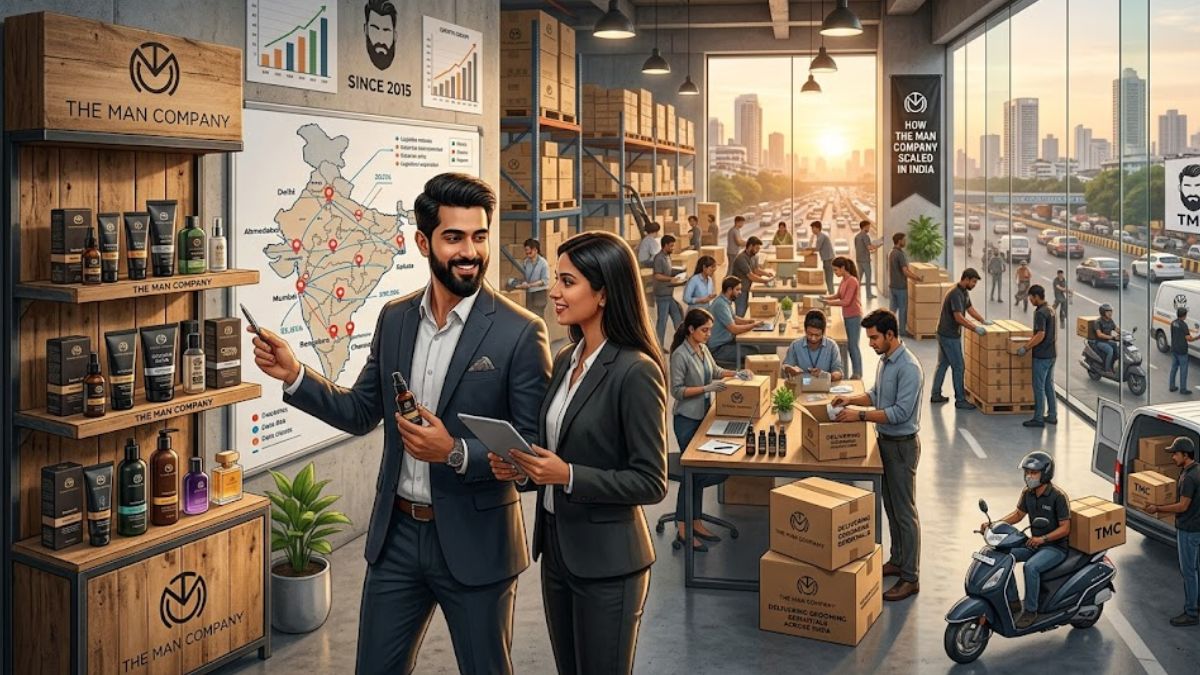
The Man Company Case Study looks at how a Delhi-based D2C grooming startup identified a quiet but important shift in India’s consumer behavior and turned it into a premium men’s grooming brand. Founded in 2015 by Hitesh Dhingra along with Bhisham Bhateja and Anuj Sharma, The Man Company was built around a simple observation. Indian men were becoming more conscious about grooming, but the market wasn’t really speaking to them in a meaningful way. At that time, grooming in India was still largely controlled by mass FMCG players like Hindustan Unilever, where products were functional but not aspirational. There was very little focus on premium experiences, ingredient transparency, or lifestyle-driven branding for men.
The Man Company stepped into that gap. Instead of treating grooming as basic hygiene, it positioned it as self-care. The brand focused on natural, essential oil-based, toxin-free formulations and built its identity around premium grooming for modern Indian men. Its product range expanded into beard care, skincare, haircare, fragrances, and wellness, designed around repeat usage and daily routines rather than one-time purchase behavior.
Early growth came through digital-first channels
Early growth came through digital-first channels, mainly its website and e-commerce platforms. This gave the company direct visibility into customer behavior. One clear signal stood out early: once customers tried the products, many came back. That repeat behavior became one of the strongest early validation points for the brand. Marketing played a big role in scaling awareness. Instead of traditional advertising, The Man Company leaned on influencer marketing and content-led storytelling. Grooming is a visual category, so showing real usage and results helped build trust faster than messaging alone. As demand grew, the brand expanded into offline retail as well, recognizing that many grooming purchases still benefit from physical discovery and shelf presence in India.
A major turning point came when Emami Limited acquired a significant stake in the company. This brought in capital, but more importantly, operational strength, manufacturing scale, and access to a wider distribution network. Today, The Man Company operates as part of Emami’s portfolio, with a stronger omnichannel presence and continued focus on premium positioning. Overall, the case shows how the brand succeeded by reading a cultural shift early, building trust through product quality, and scaling through a mix of digital-first execution and strategic partnerships.
1. The Origin Story Behind The Man Company
Every startup story that truly lasts usually begins with a moment that feels almost ordinary at the time. For Hitesh Dhingra, that moment came while traveling abroad. It wasn’t a grand insight or a sudden breakthrough. It was observation. Quiet, almost uncomfortable observation. In markets like the United States and United Kingdom, men’s grooming wasn’t treated like an afterthought. It was deliberate. Detailed. There were shelves filled with products designed specifically for men, beard oils with different blends, skincare tailored to different skin types, anti-aging solutions, fragrances layered like a ritual rather than a quick spray before stepping out.
It felt intentional. Now contrast that with India at the time. Most men followed a routine that hadn’t really changed in decades. Shaving cream, aftershave, maybe a bar of soap or a generic face wash. Grooming was functional, not personal. It solved a need, but it didn’t create an experience. That gap wasn’t just about products. It was about mindset. And once you see a gap like that clearly, it’s hard to ignore it.
1.1 Identifying the Gap in the Male Personal Care Industry
What made this observation powerful was timing. India was changing. Quietly, but rapidly. Urban consumers were being exposed to global lifestyles through travel, the internet, and social media. Men were starting to care about how they looked, not out of vanity, but out of awareness. Workplaces were evolving. First impressions mattered more. Personal presentation started becoming part of identity. But when these consumers looked at the Indian market, there was a disconnect. There were plenty of products, but very few felt like they were actually made for them.
Most brands either focused heavily on women or created unisex products that didn’t really speak to anyone specifically. Even when men were targeted, the messaging was often loud, aggressive, and rooted in outdated ideas of masculinity. There was no nuance. No sophistication. No sense of personal care as something thoughtful. This is where The Man Company found its starting point.
It wasn’t just about launching products. It was about recognizing that a new kind of consumer was emerging, one that wanted better options but didn’t yet have them. From a real business perspective, this is where strong companies are built. Not by creating demand artificially, but by recognizing a shift in behavior before it becomes obvious to everyone else.
2. Founder Journey and Early Motivation
One of the most relatable parts of this story is that Hitesh Dhingra didn’t come from a grooming background. There was no legacy in the beauty or personal care industry. No inherited expertise. And that’s exactly what makes the journey feel real. Before starting The Man Company, he worked in corporate roles that exposed him to how businesses actually function, strategy, operations, consumer psychology. These experiences don’t always feel directly connected to a future startup, but they quietly shape how you think.
They teach you how markets behave. How brands grow. Where inefficiencies exist. And sometimes, that’s more valuable than domain knowledge. The decision to start The Man Company didn’t come from a desire to sell grooming products. It came from a deeper intention to build something meaningful in a space that felt ignored. There was also a subtle but important emotional layer here.
The idea of masculinity in India had long been defined in very narrow ways. Strength, dominance, aggression. Grooming didn’t naturally fit into that narrative. But that narrative itself was evolving. The Man Company wasn’t just entering a product category. It was stepping into a cultural shift. It was saying that self-care doesn’t make you less masculine. Makes you more aware, more confident, more complete. From a founder’s lens, that’s not just business positioning. That’s belief.
3. The Problem Statement: Why The Man Company Was Needed
If you strip away the branding and storytelling, every successful company solves a clear set of problems. For The Man Company, those problems were deeply rooted in how the Indian men’s grooming market functioned. The first issue was product relevance.
Men were using products that weren’t truly designed for them. Either they were generic, or they were adapted versions of products originally meant for women. This created a gap between what men needed and what they were actually using. The second issue was awareness. Most consumers didn’t think about ingredients. They didn’t question what went into their grooming products. Sulfates, parabens, synthetic additives, these were not part of everyday conversations. But globally, this awareness was already growing.
The third issue was positioning. Even when quality products existed, they were not marketed in a way that connected emotionally with modern consumers. There was a lack of aspiration. A lack of storytelling that made users feel like they were part of something bigger than just a purchase. From real experience, this is where many categories fail. They solve functional problems but ignore emotional ones. The Man Company addressed both. By focusing on natural ingredients, it tapped into growing health awareness. By communicating clearly, it built trust. And by creating an aspirational brand, it gave consumers a reason to care.
4. Building the Product and Brand
What stands out in The Man Company journey is the discipline in how it approached growth. Instead of launching dozens of products and hoping something sticks, the company started small and intentional. Beard oils, shampoos, skincare essentials, these were not random choices. They were categories where the gap was most visible and the need most immediate. This kind of focus is harder than it sounds. From a startup perspective, there’s always a temptation to expand quickly, to capture more market, to launch more SKUs. But early-stage strength often comes from doing a few things exceptionally well rather than many things moderately.
4.1 Product Development Approach
Behind every product was a clear philosophy. The Man Company chose to build around essential oils and toxin-free formulations. This wasn’t just a marketing decision. It aligned with a global shift towards cleaner, more conscious consumption. Avoiding harmful chemicals like sulfates and parabens wasn’t just about differentiation. It was about building long-term trust.
From a consumer’s point of view, especially one who is just starting to pay attention to grooming, trust is everything. If a brand feels honest, people come back. Developing these products required collaboration with manufacturers and formulation experts. It wasn’t about speed. It was about getting the balance right between effectiveness, safety, and experience. And that attention to detail shows up in how users perceive the brand.
4.2 Branding and Positioning
If there’s one area where The Man Company truly stood apart, it was branding. At a time when many brands relied on loud, exaggerated masculinity, aggressive visuals, bold claims, it chose a completely different path. It went subtle. Refined. Almost understated.
The brand spoke about elegance, self-care, and confidence without trying too hard. It didn’t shout. It resonated. This approach might seem simple, but it requires a deep understanding of the audience. Modern consumers, especially in urban India, were already moving away from stereotypes. They didn’t want to be told what masculinity should look like. They wanted the freedom to define it for themselves.
The Man Company tapped into that sentiment. From a business perspective, this is what strong positioning looks like. It’s not about being louder than competitors. It’s about being more aligned with what your audience actually feels. And in a market where differentiation is often superficial, that kind of alignment becomes a lasting advantage.
5. Early Traction and Market Validation
In the early days of The Man Company, there was no guarantee that Indian men would suddenly start caring about grooming in the way global consumers did. That assumption had to be tested carefully, and more importantly, honestly. The brand chose digital as its starting ground. Not because it was trendy, but because it allowed direct access to the customer without filters. Through its own website and e-commerce platforms, the company could observe real behavior. What people clicked on, what they ignored, what they bought once and never returned to. That kind of feedback is raw. It doesn’t lie.
The first wave of customers came from urban India. These were people already exposed to global trends, individuals who had seen what grooming could look like outside India and were quietly waiting for similar options at home. But early traction didn’t explode overnight. It built gradually. Word-of-mouth played a bigger role than most would expect. When someone finds a product that genuinely feels different, especially in a category as personal as grooming, they talk about it. Not in a loud, viral way, but in conversations. Recommendations to friends, mentions in small circles, subtle validation.
Social media amplified this effect. Not just through ads, but through real users sharing experiences. A beard oil that actually worked. A fragrance that felt premium. A product that didn’t feel like an afterthought. From a founder’s perspective, this stage is incredibly emotional. Every order feels personal. Every review matters. Positive feedback gives confidence, while criticism forces reflection. And The Man Company leaned into that feedback loop.
Instead of pushing more products blindly, they listened. Customers talked about textures, fragrances, packaging, even how products made them feel. Those insights shaped future launches and improvements. This is what real market validation looks like. Not vanity metrics, but consistent signals that people are willing to come back.
6. Business Model and Revenue Approach
At its core, The Man Company built itself around a direct-to-consumer model. And this decision was more strategic than it might appear. Selling through its own website gave the company something invaluable in the early stage, control. Control over pricing, over how the brand was presented, over how the customer experienced the product from discovery to delivery. There were no intermediaries shaping perception.
From real experience, this level of control is critical when you’re trying to build a premium brand. Because perception isn’t just created by the product, it’s created by the entire journey. As the brand gained confidence and traction, it expanded to marketplaces like Amazon and Flipkart. This wasn’t just about chasing volume. It was about visibility. Marketplaces brought reach. They exposed the brand to customers who may not have discovered it otherwise.
Revenue, however, wasn’t built on one-time purchases. Grooming is inherently a repeat category. Beard oils run out. Face washes need replenishing. Skincare becomes part of a routine. This created a natural cycle of recurring demand. From a business standpoint, this is where real strength lies. When customers come back without needing to be convinced again, it signals trust. The premium pricing strategy added another layer. It wasn’t just about higher margins. It reinforced the brand’s identity. When customers pay more, they expect more. And when that expectation is met, it deepens the relationship. But premium pricing also comes with pressure. The product, the packaging, the experience, everything has to justify that price. The Man Company managed to balance this well, positioning itself as aspirational but still within reach for its target audience.
7. Funding and Strategic Investment
Every startup reaches a point where organic growth alone isn’t enough to unlock the next phase. For The Man Company, that moment came with the involvement of Emami Limited. This wasn’t just another funding round. It was a turning point. When Emami acquired a significant stake, it brought more than capital into the company. It brought decades of experience in building and scaling consumer brands. From the outside, funding often looks like a financial milestone. But from the inside, it’s operational transformation.
Manufacturing capabilities improved. Supply chains became more efficient. Distribution networks expanded. Marketing became more structured and strategic. These are not glamorous changes, but they are essential for scale. One of the biggest advantages was access to a wider retail network. This allowed The Man Company to step beyond its online-first identity and enter physical spaces where consumers could see, touch, and experience the products. From real experience, this transition is challenging. Moving from digital to offline requires a different kind of thinking. Shelf presence, retail partnerships, in-store visibility, these are new variables that need to be managed. But when done right, it multiplies reach significantly.
8. Go-To-Market Strategy and Distribution
The growth of The Man Company wasn’t driven by a single channel. It was the result of a layered go-to-market strategy that evolved over time. In the beginning, the focus was clear, digital-first execution.
Performance marketing helped drive initial traffic. Content marketing helped educate consumers who were still unfamiliar with specialized grooming products. And social media became the space where the brand’s personality truly came alive. This combination created both awareness and intent.
8.1 Digital Marketing and Influencer Strategy
One of the smartest moves the brand made was leveraging influencers early on. Not celebrities in the traditional sense, but relatable creators who could demonstrate how products fit into everyday routines. In grooming, seeing is believing. A beard oil isn’t just described, it’s shown. A skincare product isn’t just explained, it’s experienced. Influencers helped bridge that gap.
They made the products feel real. They showed results, textures, routines. Answered unspoken questions that potential customers had in their minds. From a practical standpoint, this built trust faster than traditional advertising could. But it wasn’t just about visibility. It was about credibility. When someone you trust uses a product and talks about it naturally, it reduces hesitation. And in a category where consumers are trying something new, that reduction in hesitation is everything.
8.2 Offline Expansion
As the brand matured, it became clear that relying only on digital channels would limit its potential. Not every customer discovers products online. Not every purchase decision is made on a screen. This led to a gradual expansion into offline retail. Modern trade stores, specialty outlets, curated retail spaces, these became new touchpoints.
The shift wasn’t just about increasing sales. It was about increasing presence. When a customer sees a product on a shelf, it creates a different kind of trust. It feels established. It feels real. From experience, omnichannel presence changes how a brand is perceived. It moves from being “another online brand” to becoming a recognizable name. And that perception plays a big role in long-term growth.
9. Competitive Landscape and Differentiation
To really understand the journey of The Man Company, you have to step back and look at the battlefield it chose to enter. The Indian grooming market is not empty. It never was. On one side, you have legacy giants like Hindustan Unilever and Procter & Gamble. These companies have been around for decades. Their strength is undeniable, deep distribution networks, massive advertising budgets, and brand recall that has been built over generations. Walk into almost any store in India, and their products are already there, waiting. But with that scale comes a certain inertia.
Innovation tends to move slower. Products are built for mass appeal, which often means they lack specificity. And when consumer preferences start shifting quickly, large organizations don’t always adapt at the same pace. On the other side, a wave of new-age D2C brands started emerging. Agile, digital-first, sharp with branding, and deeply connected to online audiences. These companies understood storytelling, understood social media, and moved fast. But they came with their own set of challenges. Scaling beyond digital isn’t easy. Building supply chains, managing inventory, expanding offline, these are complex problems. Many brands shine early but struggle when growth demands operational depth.
This is where The Man Company made a very conscious choice. It didn’t try to compete directly with legacy brands on scale. And it didn’t remain confined to the limitations of a small D2C startup. Instead, it positioned itself somewhere in between. Premium enough to feel aspirational. Structured enough to scale. From a strategic point of view, this is a difficult balance to maintain. You’re constantly pulled in two directions, staying niche while growing mass, staying premium while becoming accessible. But when it works, it creates a strong moat.
The Man Company wasn’t just selling products. It was building a space where modern Indian men could see themselves reflected, something neither traditional brands nor early D2C players fully captured at the time.
10. Challenges and Turning Points
No matter how well a startup is positioned, reality always brings friction. And the journey of The Man Company had its fair share. One of the earliest challenges was education. Today, grooming conversations feel normal. But when the brand started, the idea of using beard oils, specialized skincare, or premium grooming products wasn’t widely understood. Consumers didn’t immediately see the need.
From a founder’s perspective, this is one of the hardest phases. You’re not just selling a product, you’re trying to change behavior. And behavior doesn’t change overnight. It requires patience, repetition, and storytelling. Another major challenge was trust, especially in an online-first model.
Grooming is a sensory category. People want to feel the texture, smell the fragrance, see the packaging in real life before committing. Convincing customers to make that leap online required more than just good marketing. It required consistency. Every product delivered had to meet expectations. Every interaction had to reinforce credibility. And then came competition. As soon as the category started showing promise, more players entered. Some with aggressive pricing, others with heavy marketing. The space became crowded quickly.
This is where many startups lose clarity. They start reacting instead of leading. The turning point for The Man Company came with its partnership with Emami Limited. This wasn’t just an investment, it was a shift in capability. Suddenly, the company had access to deeper operational expertise, stronger distribution channels, and a level of stability that allowed it to think long-term. From experience, these moments are critical. They don’t just solve immediate problems, they redefine what’s possible for the company moving forward.
11. Scaling Operations and Execution
Scaling a brand is often romanticized, but in reality, it’s operational discipline. For The Man Company, growth wasn’t just about selling more products. It was about building systems that could handle that growth without breaking. Manufacturing became a key focus. Consistency in product quality is non-negotiable, especially for a premium brand. One bad experience can undo months of trust-building. Strengthening manufacturing partnerships ensured that every product met the same standard, regardless of scale. Then came logistics.
Delivery timelines, packaging quality, inventory management, these might seem like backend details, but they shape the customer experience more than most people realize. A delayed order or damaged product doesn’t just affect one transaction. It affects perception. The company invested in improving these systems, making fulfillment smoother and more reliable. Another critical layer was data.
Understanding what customers buy, when they buy, how often they return, these insights are gold for a growing brand. By investing in analytics, The Man Company could make smarter decisions. Which products to push. Which ones to refine. Customer segments to focus on. From real-world experience, this is where brands transition from intuition-led to insight-led growth. And that shift often determines how sustainable their success becomes.
12. Brand Evolution and Messaging
No brand can afford to stay static, especially in a category as personal and evolving as grooming. The Man Company understood this early. It started with a strong focus on premium grooming, clean products, refined positioning. But over time, the brand began to expand its narrative. Grooming is not just about appearance. It’s about how you feel.
This realization pushed the brand into broader territory, wellness, self-care, lifestyle. This wasn’t a random expansion. It reflected how consumer thinking was evolving. Men were becoming more open about self-care. Conversations around mental well-being, confidence, and individuality were becoming more mainstream. The brand adapted its messaging to reflect this shift.
Instead of telling men what they should be, it created space for them to define it themselves. From a branding perspective, this is powerful. Because relevance is not just about staying visible. It’s about staying aligned with what your audience is going through emotionally and culturally. And that alignment is what keeps a brand alive in a crowded, fast-changing market.
13. Growth Metrics and Milestones
When you look at the journey of The Man Company, the numbers tell one part of the story, but the real meaning sits behind them. The rise in revenue didn’t happen because of one viral campaign or a sudden spike in demand. It came from something far more steady, a gradual shift in how Indian consumers started thinking about grooming. Men who once saw grooming as a basic routine began treating it as a form of self-care. What used to be occasional purchases slowly turned into habits. Beard oils became part of a weekly routine. Skincare moved from “only when needed” to something more consistent. That behavioral shift is what fueled growth.
Even though exact financial figures are not always publicly available, the company has consistently reported strong upward movement in both revenue and customer base. But what’s more important is the quality of that growth. Repeat customers increased. Average order values improved. Product categories expanded without diluting the brand. From a real business perspective, this is what healthy growth looks like. Not just more customers, but better relationships with those customers.
One of the most defining milestones in this journey was the acquisition by Emami Limited. This wasn’t just a financial event. It was validation. Validation that a relatively young brand had managed to carve out a meaningful position in a competitive market. Validation that its model, combining premium positioning with digital-first execution, had long-term potential. From experience, moments like these change how a company is perceived. Not just by investors, but by partners, customers, and even its own team. It moves from being “a promising startup” to “a serious brand.”
14. Team Building and Leadership
Behind every product, every campaign, every milestone, there’s a team making decisions, sometimes with confidence, sometimes with uncertainty. In the case of The Man Company, leadership played a defining role in how the company evolved. Hitesh Dhingra and the core team brought together a mix that is often underestimated but incredibly powerful, entrepreneurial instinct combined with corporate discipline. Entrepreneurial thinking allowed them to move fast, experiment, and take risks when needed. Corporate experience, on the other hand, helped bring structure, processes, and long-term thinking into the picture.
This balance is not easy to maintain. Too much structure can slow innovation. Too much experimentation can create chaos. The team had to constantly find that middle ground. Culture also became an important piece of the puzzle. In growing companies, culture is often talked about, but not always practiced. Here, the focus on customer-centricity wasn’t just a statement. It showed up in decisions, how products were designed, how feedback was handled, how quickly issues were resolved. Innovation wasn’t treated as a separate function. It became part of how the team thought.
From a real-world standpoint, this is what keeps a company adaptable. Markets change. Consumer expectations shift. Competitors evolve. A strong team doesn’t just react to these changes. It anticipates them. And that anticipation is often what separates companies that grow for a while from those that sustain growth over years.
15. Technology and Operations Insights
If branding is what customers see, technology and operations are what quietly hold everything together. For The Man Company, technology wasn’t just a support function. It became a core driver of growth. Starting with e-commerce, the brand used its digital platforms not just to sell, but to understand. Every click, every purchase, every abandoned cart carried insight. What products were performing well. Which ones needed improvement. When customers were most likely to buy. How often they returned.
This data allowed the company to move from guesswork to informed decision-making. Marketing campaigns became sharper. Product launches became more targeted. Inventory planning became more efficient. From experience, this shift from intuition to data is one of the most important transitions in a startup’s journey. On the operations side, scalability was always a priority.
It’s easy to deliver quality when volumes are low. The real challenge is maintaining that quality as demand increases. Manufacturing partnerships had to be strengthened. Processes had to be standardized. Quality checks had to be consistent. At the same time, logistics had to keep up. Faster deliveries, reliable packaging, efficient fulfillment, these may seem like backend details, but they directly impact how customers perceive the brand.
One bad delivery experience can undo a great product experience. The company worked on building systems that could handle growth without compromising on these details. From a practical standpoint, this is where many brands struggle. Growth exposes weaknesses in operations. If those weaknesses aren’t addressed, they start affecting customer trust. The Man Company’s focus on strengthening both technology and operations helped it avoid that trap.
16. Industry Trends and Market Context
To really understand where The Man Company stands today, you have to zoom out and look at the bigger picture. Because no brand grows in isolation. It grows because the world around it is changing. Over the past decade, the men’s grooming market in India has gone through a quiet but powerful transformation. There was a time when grooming for men was almost mechanical. A quick shave, maybe an aftershave, and that was enough. It wasn’t something people thought deeply about. It didn’t carry emotion or identity.That has changed. Today, grooming is tied to how men see themselves.
It’s about confidence, presentation, and even self-respect. And this shift didn’t happen overnight. It was shaped by multiple forces coming together. Social media played a huge role. Suddenly, men were exposed to global standards, skincare routines, beard care rituals, fitness, wellness. It normalized conversations that were once considered unnecessary.
Urbanization added another layer. As more people moved into cities and professional environments, appearance started to matter more in everyday interactions. Lifestyle changes also contributed. Longer work hours, increased stress, changing diets, all of this made people more aware of their skin, hair, and overall well-being. From a real-world perspective, you can actually feel this shift. Walk into any modern retail store today, and you’ll see entire sections dedicated to men’s grooming. That didn’t exist at this scale a decade ago.
What’s even more interesting is how premium products have moved from being niche to becoming mainstream. Earlier, spending more on grooming products felt unnecessary for most consumers. Today, it feels justified, sometimes even expected. People are willing to pay for better ingredients, better experience, and better results.
And this is exactly the environment that created space for brands like The Man Company. They didn’t just ride the wave. They entered at a time when the wave was just beginning to form. From a strategic standpoint, that timing matters a lot. Enter too early, and the market isn’t ready. Enter too late, and the space is crowded. The Man Company found that middle ground.
17. Current Status of The Man Company
Today, The Man Company is no longer just a startup trying to prove itself. It has become a recognized name in the male grooming space. Being part of Emami Limited has added a new dimension to its journey. There is stability now. Scale. Access to resources that smaller brands often struggle to build on their own.
The product portfolio has expanded significantly. What started with a focused set of grooming essentials has grown into a broader range that touches different aspects of personal care and wellness. Distribution has also evolved. The brand is no longer limited to digital channels. It exists across e-commerce platforms, its own website, and physical retail spaces. This omnichannel presence has strengthened its visibility and accessibility. But what’s important is that despite this growth, the brand has tried to hold on to its original positioning.
Premium. Thoughtful. Clean. From experience, this is not easy. As companies scale, there’s always a temptation to dilute positioning in order to reach a larger audience. Balancing growth with identity is one of the hardest challenges any brand faces. So far, The Man Company has managed to stay relatively aligned with what it set out to be.
18. Future Outlook
Looking ahead, the path for The Man Company seems full of opportunity, but also responsibility. The men’s grooming market in India is still growing. Awareness is increasing, but it hasn’t reached saturation yet. There are still millions of consumers who are just beginning to explore this category. That creates room for expansion.
Demand for high-quality, natural, and premium products is expected to rise further. Consumers are asking more questions now. They care about ingredients. They care about authenticity. Care about whether a brand actually delivers on its promise. This shift works in favor of brands that have built their foundation on trust and quality. From a strategic standpoint, the next phase of growth will likely come from three areas.
Product innovation will remain key. Consumers don’t stay loyal just because they bought once. They stay loyal when they see continuous improvement and new offerings that genuinely add value. Category expansion is another lever. Moving beyond grooming into adjacent spaces like wellness and lifestyle feels like a natural progression, as long as it stays aligned with the brand’s core identity. Then there’s market penetration.
India is not one market. It’s many markets within one country. Reaching deeper into Tier 2 and Tier 3 cities, adapting to different consumer behaviors, and making products accessible without losing their premium feel, this will define the next stage. There’s also the possibility of international expansion. Indian brands are increasingly finding acceptance in global markets, especially when they offer strong storytelling and quality products. If executed well, this could open a completely new chapter for the company.
But with all these opportunities comes a challenge that is often underestimated, staying relevant. Consumer preferences don’t stay fixed. What feels aspirational today might feel outdated tomorrow. The future of The Man Company will depend on how well it listens, adapts, and evolves without losing its essence.
About foundlanes.com
foundlanes.com is India’s leading startup idea discovery platform. It helps entrepreneurs find actionable startup opportunities, market insights, and industry-specific guidance to turn ideas into real businesses. With deep research and practical resources, foundlanes supports founders at every stage, from idea validation to launch and growth.