Summary
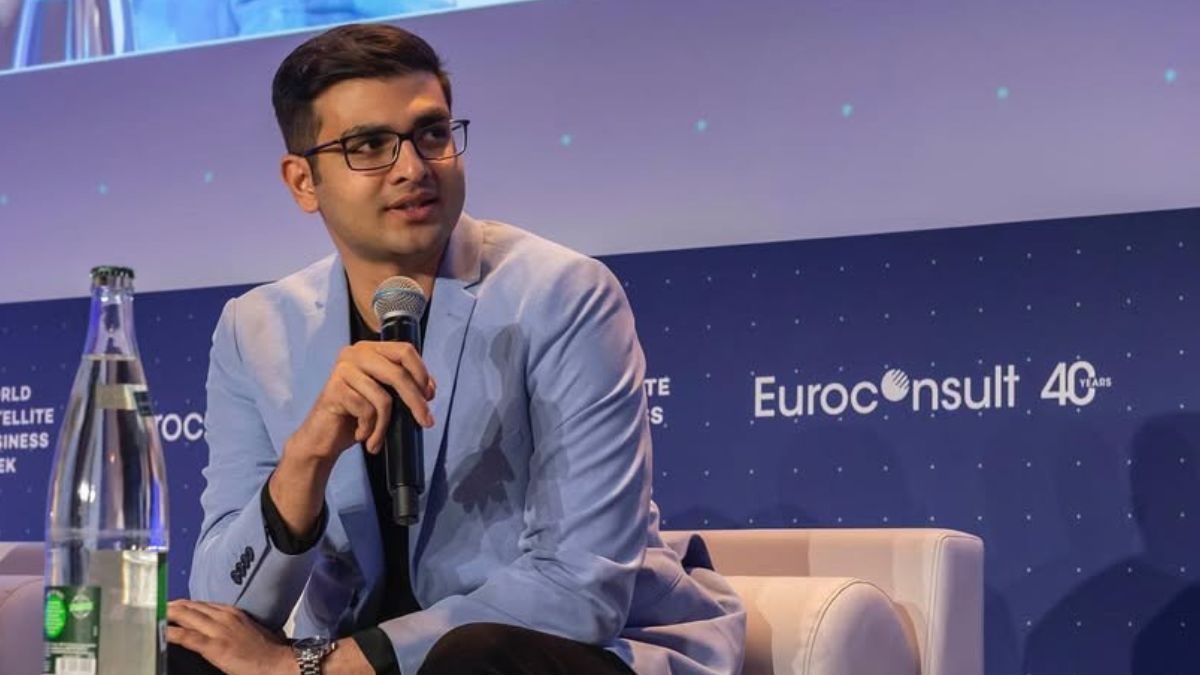
Awais Ahmed Pixxel Founder is the story of a young technologist and entrepreneur who helped build one of India’s most ambitious space technology startups from a university dorm room to a globally recognised deep-tech company. Awais Ahmed, alongside co-founder Kshitij Khandelwal, launched Pixxel in 2019 while still pursuing his undergraduate studies at Birla Institute of Technology and Science (BITS) Pilani. Pixxel is a space tech startup focused on designing and building hyperspectral imaging satellites that provide detailed earth observation data, serving use cases in agriculture, environment, energy, mining and climate monitoring. Pixxel was incubated with deep ambitions: its founders wanted to make space-derived data accessible and actionable, bridging the gap between global needs and existing satellite imaging limitations. Hyperspectral imaging captures light across a broader range of wavelengths than typical satellite imagery, opening the door to rich insights about the Earth’s surface unseen by conventional systems.
Born in Aldur, Karnataka, Ahmed grew up fascinated by space, reading encyclopedias before he had internet access at home and later pursuing mathematics at BITS Pilani, where he immersed himself in satellite projects and engineering challenges that seeded the idea for Pixxel. Under his leadership, Pixxel has raised significant capital — including an $8 million seed round in 2020, a $27 million Series A in 2022, and over $95 million in funding by late 2024 from leading global investors — making it one of India’s highest-funded space startups and a pioneer in commercial hyperspectral satellites.
Pixxel’s journey includes launching multiple demonstration satellites, developing an ambitious constellation called Fireflies, and building an Earth Observation analytics platform called Aurora. Along the way, Ahmed has earned global recognition, including inclusion in Fortune India’s 40 Under 40 and MIT Innovators Under 35, as he continues to push the boundaries of space technology and climate-relevant data analytics. This founder story explores Ahmed’s early life, the spark behind Pixxel, the challenges he faced, the technological and operational hurdles, the validation that followed, personal sacrifices, and the lessons that now guide his vision for the future of space tech.
1. Background and Early Life
Awais Ahmed’s fascination with space began long before he became a CEO. He grew up in Aldur, a rural part of Chikmagalur district in Karnataka, where access to the internet was limited until his teenage years. Before he could go online, he immersed himself in encyclopedias, exploring physics, astronomy, mathematics and the evolving world of science and technology he encountered in books. In high school, the local library became a second home for Ahmed. It was here, surrounded by space exploration dossiers and science journals, that his lifelong curiosity about how the universe works took shape. Reading about the legendary Voyager missions, early lunar landings, and the rise of private rockets left a distinct impression on him — space was not just distant and abstract, but a frontier humans were actively pushing.
This early engagement with big-picture science framed his educational choices. After finishing school, Ahmed earned admission to Birla Institute of Technology and Science (BITS) Pilani, one of India’s most selective institutions for science and engineering. He pursued a Masters in Mathematics, a discipline that sharpened his analytical rigor and prepared him for the technical complexities of satellite engineering and data modelling. While at BITS, Ahmed also enrolled in a dual degree in manufacturing engineering but chose to focus solely on Pixxel’s early development, foregoing the additional degree to dedicate himself fully to the startup he had conceptualised.
Beyond academics, BITS provided Ahmed with platforms to build real space systems. He joined a student satellite team collaborating with the Indian Space Research Organisation (ISRO) and later became a founding member and engineering lead of Hyperloop India, the only Indian team to reach the SpaceX Hyperloop Pod Competition finals in California. Experiences like these showed him that intricate engineering problems could be tackled with student resources and global collaboration, reinforcing his belief that ambitious technology startups could originate in India.
2. Founder and Company Overview
The Awais Ahmed Pixxel Founder story intertwines with another technical mind — Kshitij Khandelwal, who became CTO of Pixxel. Both were students at BITS Pilani when they co-founded Pixxel in 2019, driven by a shared vision to build a constellation of hyperspectral imaging satellites that could scan the Earth with unprecedented detail. Pixxel is headquartered in Bengaluru, India, with a presence in El Segundo, California — a reflection of its global ambitions and the cross-continental nature of space tech development. The company’s flagship offering includes the Fireflies constellation, a series of high-resolution hyperspectral satellites capable of scanning the Earth’s surface across hundreds of wavelengths — far more than traditional imaging satellites. These satellites are designed to provide actionable insights across sectors such as agriculture, energy, environment monitoring, mining, infrastructure planning and climate analysis.
In addition to building satellites, Pixxel develops Aurora, an Earth Observation data analytics platform that simplifies how clients access, visualise, and interpret remote sensing data. This combination of hardware and software positions Pixxel not just as a spacecraft manufacturer but as a provider of integrated space-derived intelligence. +Pixxel serves a global audience, including governments, commercial enterprises, and research institutions that rely on detailed Earth data that conventional satellites do not offer. The startup’s emphasis on hyperspectral data analytics speaks to a larger trend in the global space industry where detailed, machine-readable imaging and predictive insights are increasingly valuable.
3. The Problem, Insight, and Trigger
The idea behind Pixxel did not arise from a single eureka moment, but from a clear technical gap in the satellite imagery market. Ahmed and Khandelwal recognised that while major space agencies provided robust multispectral and optical imaging data, there was a lack of commercial access to detailed hyperspectral imaging, which captures a broad and continuous range of wavelengths beyond conventional cameras. This limits understanding of the Earth’s surface composition and concealed phenomena, such as chemical signatures, moisture levels and material properties.
This insight was rooted in practical experience. During their time at the Hyperloop India team and interactions with ISRO scientists, the founders learned about the intricacies of satellite systems and data capture. They realised that Earth observation data could be more granular and more useful if additional spectral bands were collected and analysed. Hyperspectral imaging, they believed, held the key to unlocking new insights about environmental health, agricultural yield, climate stress, mineral detection and more.
The trigger was twofold. First, Ahmed’s deep fascination with space and data saw him immerse himself in literature on remote sensing technologies early in college. Second, the rapid evolution of small satellite platforms — combined with falling launch costs and greater access to global launchers — suggested a window of opportunity: affordable, reliable Earth imaging with quality rivaling space agencies was now technically feasible and commercially viable. This dual realisation motivated the founders to commit to Pixxel full time, even before their academic programmes had concluded.
4. Early Days and Initial Struggles
Pixxel began as a daring idea inside a university hostel room. It sounded almost unreasonable at first: two students with no aerospace manufacturing facility, no deep-pocketed backers, and no experience running a company wanted to build satellites that even well-funded global firms struggled to perfect. When Awais Ahmed and Kshitij Khandelwal started shaping the project, their assumptions leaned more on optimism than on engineering realities.
They believed building a small hyperspectral satellite would be possible within a year. They expected that if they could show early prototypes and large potential, investors would line up. Also assumed that convincing global partners to work with an Indian university startup would be easier than it turned out to be. Once they began reaching out to vendors, component suppliers, and satellite experts, they were met with polite skepticism. Many thought they were students chasing a science project, not founders building a commercial constellation.
The toughest lesson from those early days was how hard space hardware really is. Designing a satellite on paper was one thing; manufacturing a flight-ready model that met strict reliability requirements was entirely different. Lead times for components stretched for months. Prices for specialised sensors and cameras far exceeded the estimates they had scribbled in their initial plans. Even booking a launch slot required credibility the company did not yet have.
Still, the founders managed to keep going. They moved from ideation to building a team of young engineers willing to take a chance on an unproven vision. They secured a small workspace in Bengaluru and gradually assembled their first satellite model by drawing on every relationship they had built through competitions, internships and academic collaborations. The early phase exposed them to the enormous execution gap between dreaming about space and actually sending hardware into orbit. It also strengthened their resolve to keep building even when reality pushed against them.
5. Failures, Setbacks, and Self Doubt
Every space company goes through moments when things break, plans stall and confidence takes a hit. Pixxel’s founders faced this pattern earlier than most. Their first attempt at launching a satellite through a Russian rocket fell apart when the mission was delayed repeatedly. The delays stretched across many months, creating uncertainty inside the team. They had a satellite ready, but no timeline for when it would fly.
During that period, the founders had to reassure partners, investors and their own team that the vision was still intact. The project felt stuck in limbo. Hardware sitting on the ground was burning time and money. For a young company, that kind of stagnation is emotionally draining. Awais has often spoken about that phase as one of the most difficult points in the journey. The team questioned whether they had miscalculated the timeline or overestimated what a young Indian startup could do in such an unforgiving sector.
What made it worse was the pressure of being a deep-tech company without recurring revenue. Space is capital-intensive, but the returns come only after satellites reach orbit and begin delivering data. The founders faced long nights weighing the risk of pushing ahead versus the fear of losing their early momentum. At times, they wondered if their ambition had outrun their capabilities.
But self-doubt didn’t derail them. When the Russian launch delay became untenable, Pixxel took a bold step: they shifted to a different launch provider entirely. That decision demanded more money, re-engineering and an acceptance that timelines would reset again. Still, it demonstrated something core to Pixxel’s culture — the ability to adapt quickly when the original plan collapses. That willingness to pivot kept the team afloat at a time when many young startups might have folded.
6. Validation and Early Traction
Pixxel’s first real validation came not from space agencies, but from global enterprises that saw value in what hyperspectral imaging could unlock. Even before the first satellite flew, early pilot customers from agriculture, energy and environmental analytics expressed interest in the kind of layered data Pixxel aimed to provide. It was the clearest proof that the market existed and that the problem they were solving mattered beyond theoretical enthusiasm.
The breakthrough moment arrived when the company finally put its first satellite into orbit. The successful launch transformed internal morale. It was no longer a student-founded startup experimenting with prototypes; it was a functioning space company with hardware in space. The early data they collected showed impressive detail, and that performance became evidence the founders could show to prospective clients and investors.
International recognition followed quickly. Pixxel began collaborating with global aerospace leaders, climate researchers and analytics firms that wanted access to hyperspectral data. Each conversation carried more weight now that the company had achieved its first orbital milestone. For Awais Ahmed, this shift was more than commercial—it validated years of persistence, nights spent debugging hardware, and decisions that often felt risky in the moment.
That first satellite changed how Pixxel was perceived. Investors who were once on the fence moved ahead with funding. Large organisations started exploring long-term contracts. Industry leaders began acknowledging Pixxel as a serious competitor in a space dominated by US and European firms. This early traction didn’t eliminate the challenges, but it proved they were on the right path and that their bets on advanced imaging technology were justified.
7. Funding, Money, and Growth Constraints
Pixxel’s journey through fundraising was shaped by the reality that space technology demands substantial capital long before it generates revenue. Unlike consumer startups that can show early traction with minimal investment, Pixxel needed expensive hardware, specialised engineering talent, testing facilities and launch partnerships. That put constant pressure on the team to manage money conservatively while still pushing forward at an ambitious pace. In the beginning, raising funds was harder than the founders expected. Deep-tech investing in India was still in its early phase when Pixxel launched, and very few venture firms were comfortable backing a satellite company run by founders in their early twenties. Awais Ahmed found himself pitching a complex vision to investors who were more familiar with software or consumer tech. Many initial conversations ended with encouragement rather than commitments.
Despite the challenges, Pixxel secured backing from a mix of domestic and international investors who believed in the long-term impact of hyperspectral imaging. Once the company got its first satellite into orbit, fundraising became more straightforward. The hardware in space served as proof that the team could execute, reducing doubts about feasibility. Later rounds helped the company expand its engineering team, accelerate production of additional satellites and prepare for a full constellation.
Even with fundraising momentum, growth constraints persisted. Satellite manufacturing came with long lead times, and delays from suppliers could push launch timelines by months. Capital had to be allocated carefully to avoid overextending the team. There were phases when cash flow uncertainty forced the founders to slow hiring or postpone purchases. It taught them the discipline of building a deep-tech company with patience, even when the market demand was strong. Pixxel managed to navigate these constraints by balancing ambition with pragmatism. They prioritised technical milestones that unlocked strategic partnerships, which in turn supported future funding. The company’s financial journey reflects the broader challenges of building a space enterprise in a country where venture capital for hardware-heavy innovation is still maturing.
8. Team Building and Leadership Evolution
Building a space-tech company required a very specific type of team. The early phase was shaped by youthful enthusiasm, but as the company scaled, Awais Ahmed had to reassess how leadership needed to evolve. Hiring mistakes during the first years taught him that passion alone wasn’t enough; Pixxel needed engineers and managers with experience in avionics, testing, ground systems and optical payload design.
In the beginning, the founders handled everything themselves — from hardware testing to investor relations to team coordination. That approach became unsustainable as projects grew more complex. Delegation became a critical skill. Awais has often reflected on how difficult it was to let go of hands-on oversight, especially when the stakes involved building satellites that had to work perfectly in orbit. Yet learning to trust domain experts was necessary to keep the company moving forward.
Leadership at Pixxel transformed as the company matured. Processes became more structured. Technical reviews were formalised. Cross-functional teams were created to align hardware, software and analytics efforts. The founders shifted from doing the work themselves to ensuring that the right people had clarity, direction and resources.
Building a team in a niche sector came with challenges. India had limited talent pools for specialised roles like hyperspectral calibration or radiation-hardened electronics. Pixxel solved this by training young engineers, tapping into global advisors, and bringing in specialists from abroad when needed. This blended approach allowed the company to maintain speed without compromising quality. For Awais, leadership evolution wasn’t about adopting management theories; it came from understanding what the organisation needed at each stage. As Pixxel transitioned from a student-led project to a global space-tech company, his role shifted from builder to strategist. That shift helped the company scale without losing the urgency and innovation that defined its early years.
9. Growth, Scaling, and Operational Challenges
Growth for Pixxel meant expanding far beyond satellite manufacturing. It involved building ground infrastructure, strengthening data pipelines, and ensuring that clients across industries could make sense of the information captured by the satellites. The scaling phase brought operational hurdles that tested the company at multiple levels.
One major challenge was synchronising hardware development with launch schedules. Delays from launch providers forced the team to constantly re-plan production timelines. At times, the company had satellites ready months before the rocket schedules aligned. This mismatch was costly and mentally exhausting for the team, who had to remain patient while ensuring hardware reliability during the wait.
Pixxel also had to refine its go-to-market approach. Initially, the company believed hyperspectral imagery would speak for itself, but customers needed more than raw data. They needed processed insights, interpretation layers and user-friendly platforms. This pushed Pixxel to build analytical tools that translated satellite data into actionable information for agriculture, mining, environmental monitoring and climate research.
Brand positioning evolved as well. Early messaging focused on the engineering feat of hyperspectral satellites. Over time, Pixxel refined its narrative to emphasise outcomes such as environmental resilience, supply-chain visibility, productivity improvements and sustainability. This shift helped global enterprises understand the value beyond technology.
As the constellation grew, operational breakdowns occasionally surfaced. Integrating new satellites with ground stations meant dealing with incompatibilities or calibration mismatches. Some data streams required reprocessing. Each challenge added complexity, but it also improved the robustness of Pixxel’s systems. Growth was never linear, but the company’s willingness to learn and iterate allowed it to scale with relative speed. The operational discipline that emerged during this phase strengthened Pixxel’s position in an industry where reliability and precision are non-negotiable.
10. Personal Sacrifices and Burnout
Behind Pixxel’s technical achievements lies a personal story of sacrifice. Awais Ahmed’s journey mirrors that of many deep-tech founders who give the best years of their youth to a mission larger than themselves. Running a space startup meant long nights, disrupted routines and constant uncertainty. There were stretches when personal life had to be set aside. Birthdays, family events and downtime often collided with launch deadlines, investor meetings or system failures that needed immediate attention.
Burnout became a real concern during high-pressure phases. The months leading up to satellite launches were particularly intense. Any delay meant financial cost and operational risk, and the weight of that responsibility rested heavily on the founders. Awais has acknowledged that the emotional pressure was sometimes overwhelming, especially when setbacks piled up.
Balancing ambition with mental health is a struggle few founders speak openly about, but it shaped his perspective over time. He learned to rely more on his team, rather than trying to shoulder everything alone. Leadership required pacing himself, not just pushing harder. That shift helped him build resilience in a field where failure is frequent and the stakes are unusually high. Pixxel’s growth demanded sacrifices not only from Awais but from people across the team who chose to invest years of their lives into a long-term vision. Those shared sacrifices created a strong sense of purpose inside the company, turning challenges into collective achievements.
11. Lessons, Beliefs, and Values
Over the years, Awais Ahmed developed a philosophy shaped by the extreme demands of deep-tech entrepreneurship. His lessons didn’t come from books or frameworks; they emerged from building satellites on a tight budget, working with small teams at impossible timelines and convincing global enterprises to trust a young Indian company in a field dominated by established players.
One of his core lessons was the value of intellectual obsession. Pixxel would not exist if he had treated space technology as a passing interest. Staying committed allowed the team to push through moments when everything seemed uncertain. Awais often says that deep-tech companies move slowly until they move all at once. This belief helped Pixxel in periods when progress felt invisible but foundational work was happening behind the scenes.
He also learned the importance of balancing optimism with engineering realism. It is easy to dream big in space tech, but hardware respects physics, budgets and timelines. This pushed him to adopt a mindset that celebrated ambition while accepting constraints. Over time, this influenced how he prioritised projects, hired talent and communicated expectations to the team.
Another value that shaped his leadership was transparency. Building satellites involves inherent risks, and hiding bad news only makes things worse. Awais encouraged teams to surface problems early, even if it meant slowing progress temporarily. This approach created an environment where engineers could work without fear of judgment, leading to stronger technical outcomes. Finally, he came to appreciate the power of purpose-driven work. Pixxel wasn’t launched to chase vanity metrics. Its mission to build a healthier planet through better Earth observation became a guiding principle. That purpose helped attract talent, investors and partners who believed in long-term impact, not short-term gains. These lessons gave Awais a framework to navigate uncertainty and keep Pixxel aligned with its original vision.
12. Present Challenges and Future Vision
Pixxel’s journey is still unfolding, and the company continues to face challenges that come with operating at the frontier of space technology. Scaling its hyperspectral constellation remains a complex task. Each new satellite must integrate seamlessly with existing systems, increase resolution and expand coverage. That requires precision manufacturing, strong supply-chain partnerships and ongoing R&D. The global space economy is growing quickly, but competition is rising as well. Startups in Europe, the United States and Asia are building competing Earth-observation systems. Awais Ahmed is aware that Pixxel must differentiate not only through hardware but also through the quality of insights it delivers. Building advanced analytics and machine-learning models has become essential, as enterprises increasingly want solutions, not raw data.
Another challenge lies in navigating international regulations. Satellite imagery touches sensitive domains such as agriculture, mining and environmental monitoring. Ensuring compliance while maintaining operational agility requires continuous legal and technical oversight. As Pixxel expands to new markets, the complexity of these regulations grows.
Despite these challenges, Awais remains optimistic. His long-term vision is shaped by the belief that hyperspectral imaging will become as mainstream as traditional satellite imagery. He sees a future where daily, global, high-resolution environmental monitoring can help governments and industries make faster and more sustainable decisions. Whether it is carbon mapping, crop health analysis or pollution detection, the possibilities are vast.
He also envisions Pixxel playing a pivotal role in climate intelligence. As extreme weather events increase, the world will need better tools to understand the planet’s changing patterns. Awais wants Pixxel to be at the centre of that transformation, providing data that can shape policy, infrastructure and global resource management. The problem he remains obsessed with is simple yet profound: how can humanity see the planet clearly enough to protect it? Pixxel is his answer to that question — a company built with the belief that better visibility leads to better decisions.
About foundlanes.com
foundlanes.com is India’s leading startup idea and deep-dive platform built for founders, operators, and serious entrepreneurs. We go beyond surface-level advice to deliver grounded, research-backed, and experience-driven startup content.
Every guide on foundlanes.com is designed to help readers think clearly, act strategically, and build sustainably. This cloud kitchen startup guide is part of our mission to document real business pathways in India’s evolving startup ecosystem.