Summary
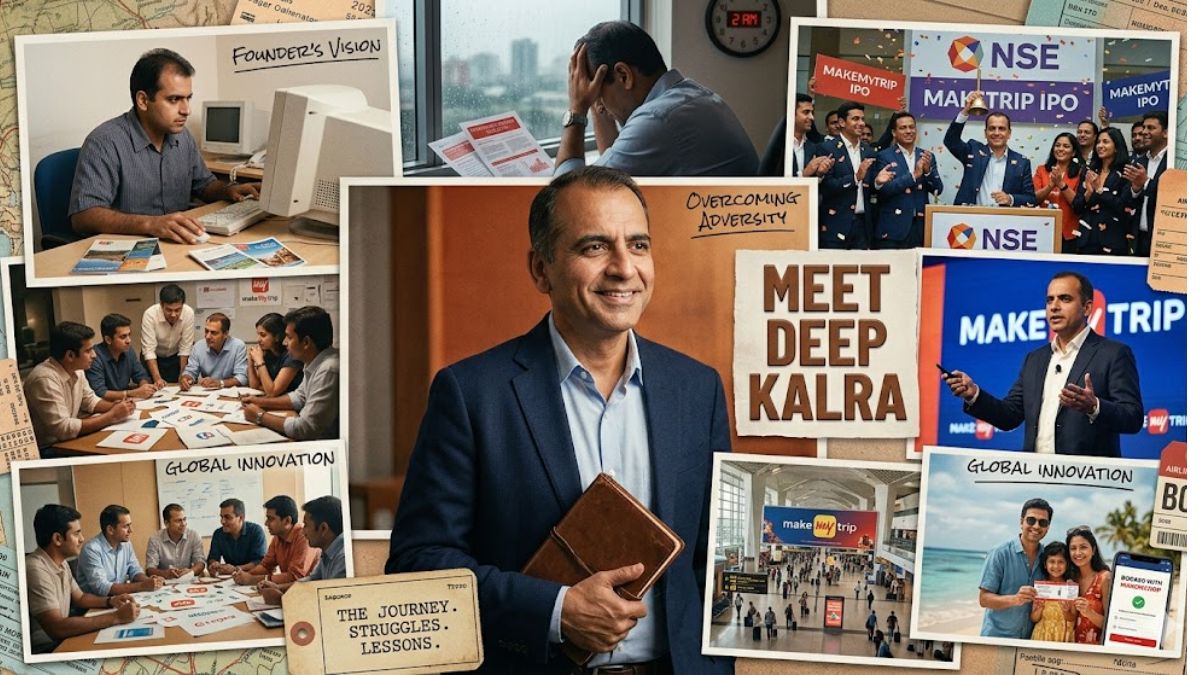
The story of Deep Kalra, the founder of MakeMyTrip, is widely regarded as one of the defining journeys in India’s early internet entrepreneurship era. At a time when most Indians still depended on travel agents and physical ticket counters, Kalra envisioned a digital platform that could simplify travel planning. His idea eventually evolved into MakeMyTrip, now one of the largest online travel companies in India and a pioneer in the country’s travel technology sector.
Kalra founded MakeMyTrip in 2000 in New Delhi, during the early days of India’s internet economy. The startup initially focused on serving the travel needs of the Indian diaspora in the United States who frequently booked flights to India. Over time, the platform expanded its services to include domestic travel, hotel bookings, holiday packages, and other tourism products. The company’s growth mirrored the rise of India’s digital economy and became a prominent example of how internet-based businesses could transform traditional industries.
However, the journey was far from smooth. Soon after MakeMyTrip was launched, the Dot-com Crash severely impacted internet startups around the world. Funding dried up, consumer trust in online businesses weakened, and many companies shut down. Kalra had to navigate these uncertainties while keeping his young startup alive. The crisis forced the team to rethink its strategy, cut costs, and rebuild confidence in online travel bookings.
Despite these challenges, MakeMyTrip gradually gained traction as internet adoption grew in India. By focusing on customer convenience, reliable service, and technology-driven solutions, the company became a trusted travel platform. In 2010, MakeMyTrip achieved a major milestone when it became the first Indian online travel company to go public on NASDAQ. Today, the journey of Deep Kalra is widely studied across the Indian startup ecosystem. His story highlights persistence, resilience, and long-term vision in building a technology company in an emerging market. From navigating early internet skepticism to scaling a travel platform used by millions, Kalra’s entrepreneurial journey offers valuable lessons for startup founders and business leaders.
1. Background and Early Life
1.1 Early Life and Family Background
Deep Kalra was born in Hyderabad and spent much of his early life growing up in different parts of India. His father served in the Indian administrative services, which meant frequent relocations during Kalra’s childhood. Exposure to different cities and cultures helped him develop a broad perspective early in life. Growing up in a disciplined household shaped Kalra’s values and work ethic. His family emphasized education, integrity, and perseverance. These principles later played a crucial role in shaping his entrepreneurial mindset. Although entrepreneurship was not a common career choice in India during the 1980s and early 1990s, Kalra developed an early curiosity about business and global markets. His upbringing gave him the confidence to pursue unconventional opportunities later in life.
1.2 Education and Early Influences
Kalra pursued his undergraduate studies at St. Stephen’s College in New Delhi, one of India’s most prestigious academic institutions. His time at St. Stephen’s exposed him to diverse ideas and ambitious peers. After completing his graduation, he went on to pursue an MBA from the Indian Institute of Management Ahmedabad, widely known as IIM Ahmedabad. The experience at IIM Ahmedabad significantly influenced his understanding of business strategy, leadership, and market dynamics.
At IIM, Kalra was exposed to global case studies and the emerging digital economy. While the internet revolution had not yet reached India in a meaningful way, the seeds of technological transformation were already visible worldwide. These early academic experiences would later help him identify opportunities in the evolving digital travel market.
2. Founder and Company Overview
2.1 Introduction to the Founder
The Deep Kalra MakeMyTrip founder story reflects the evolution of India’s digital entrepreneurship landscape. Before starting his own company, Kalra built a strong corporate career in banking and financial services. He worked with organizations such as ABN AMRO Bank and GE Capital. These roles provided exposure to international markets, financial systems, and customer service models. However, despite professional success, Kalra felt a growing desire to build something of his own. The emerging internet economy presented a new frontier where innovative ideas could transform traditional industries.
2.2 Company Overview and Offerings
MakeMyTrip started as an online travel booking platform aimed at simplifying flight reservations. Over time, the company expanded its services to cover the entire travel ecosystem. The platform offers flight bookings, hotel reservations, holiday packages, and bus and train tickets. With the rise of smartphones, MakeMyTrip also invested heavily in mobile platforms and digital customer experiences. The company’s business model revolves around connecting travelers with airlines, hotels, and tourism providers through a seamless digital interface.
2.3 Target Audience and Market Served
Initially, the platform targeted Indian travelers living in the United States who needed a convenient way to book flights to India. Later, the focus expanded to the rapidly growing domestic travel market in India. As internet penetration increased and middle-class incomes grew, more Indians began planning travel online. MakeMyTrip positioned itself as a trusted digital travel partner, helping customers compare prices, explore destinations, and plan trips easily.
2.4 Year of Founding and Business Stage
MakeMyTrip was officially founded in 2000. At that time, India’s internet penetration was extremely low, and online payments were still unfamiliar to many consumers. Launching an online travel platform during that period required not just technological innovation but also significant consumer education. Kalra’s ability to anticipate the long-term growth of digital services proved critical to the company’s success.
3. The Problem, Insight, and Trigger
The Journey of Deep Kalra founder of MakeMyTrip began with a simple observation about the inefficiencies of traditional travel booking systems. Travel planning in India was heavily dependent on offline agents. Customers had to visit travel agencies, make multiple phone calls, and deal with limited transparency around pricing.
Kalra recognized that the internet could simplify this process. A digital platform could allow travelers to search, compare, and book tickets instantly. The trigger moment reportedly came when Kalra was exploring business opportunities after leaving his corporate job. He realized that travel was a global industry that could benefit significantly from internet-based platforms. Inspired by emerging travel portals in the United States, Kalra believed a similar model could succeed in India and among the Indian diaspora. This insight eventually led to the creation of MakeMyTrip.
4. Early Days and Initial Struggles
When Deep Kalra launched MakeMyTrip, the internet in India was still in its infancy. The idea of booking travel tickets online sounded exciting to a few early adopters, but for most people it felt risky and unfamiliar. At that time, trust in online payments was extremely low. Many consumers were uncomfortable entering their credit card details on a website. The fear of fraud or failed transactions was real. People preferred visiting physical travel agents where they could see a person, ask questions, and receive printed tickets. For Kalra and his small team, this lack of trust became the biggest obstacle. Building a travel platform was not just about technology. It was about changing consumer behavior.
The company invested heavily in creating secure payment systems and reliable customer support. Users needed reassurance that their money and travel plans were safe. Even small errors could damage the fragile trust the platform was trying to build. Education became another major challenge. Most travelers did not understand why they should switch from traditional agents to an online platform. The convenience of digital booking had to be explained repeatedly. Kalra and his team ran persistent awareness campaigns to demonstrate the advantages of online booking. They emphasized faster ticket confirmations, price comparisons, and the ability to plan trips without leaving home.
The early years were full of trial and error. Some strategies worked while others failed. The product had to evolve constantly based on user feedback and behavior. Yet through every challenge, the vision remained clear. Kalra believed that the future of travel booking would eventually move online. The question was not whether it would happen, but how long it would take.
5. Failures, Setbacks, and Self-Doubt
Soon after the company was launched, the global technology industry faced a massive shock. The Dot-com Crash wiped out hundreds of internet startups around the world. Investor confidence disappeared almost overnight. Funding dried up. Many companies that had once been considered promising suddenly shut down. For MakeMyTrip, the crash created serious financial pressure. Access to capital became extremely limited, and the company had to survive with very constrained resources. This period tested the resilience of Deep Kalra and his team. Salaries had to be managed carefully, operational expenses had to be reduced, and every decision carried greater weight.
There were moments when the future of the company looked uncertain. Like many founders navigating crises, Kalra faced periods of doubt. The market was unstable, investors were cautious, and the internet economy seemed fragile. Yet abandoning the vision was never truly an option. Instead, the team focused on survival. They continued improving the platform, strengthening partnerships with travel providers, and maintaining service quality for the customers they had already gained. These difficult years shaped the company’s culture. The experience taught the team discipline, patience, and resilience. Sometimes the most defining chapters of an entrepreneurial journey are not the moments of success but the moments when a founder chooses to continue despite overwhelming uncertainty.
6. Validation and Early Traction
Slowly, the signs of progress began to appear. The first real validation came from customers themselves. Travelers who used the platform once began returning to book their next trips. Repeat bookings became a powerful signal that the platform was delivering real value. When customers come back voluntarily, it means they trust the service. During this time, internet usage in India was gradually increasing. More households were gaining access to computers, and people were becoming more comfortable exploring digital services. As this digital adoption grew, MakeMyTrip started attracting a larger audience.
Travelers appreciated several features that traditional agents could not easily provide. They could compare ticket prices across airlines within minutes. They could plan trips late at night without waiting for office hours. Most importantly, they received instant confirmations that reduced uncertainty. Positive user experiences spread through word of mouth. Friends recommended the platform to friends. Business travelers shared it with colleagues. This organic growth strengthened the company’s credibility. The journey of Deep Kalra gradually began gaining recognition in India’s emerging startup ecosystem. Entrepreneurs and investors started noticing that online travel platforms could become a powerful business model. For Kalra, these early signs of traction validated years of effort and perseverance.
7. Funding, Money, and Growth Constraints
As the company grew, it became clear that building a travel technology platform required substantial investment. Travel businesses depend heavily on strong technology infrastructure, marketing campaigns, and partnerships with airlines and hotels. Maintaining these systems while scaling the platform required significant capital. Over time, MakeMyTrip secured funding from global investors such as SAIF Partners and Tiger Global Management.
These investments helped the company expand its technology capabilities and reach more customers through marketing initiatives. However, raising capital was only part of the challenge. Travel platforms typically operate on thin profit margins. Airlines and hotel bookings offer limited commissions, which means companies must process large volumes of transactions to achieve profitability. This reality required careful financial planning. Deep Kalra had to balance aggressive expansion with disciplined spending. Growth was necessary to capture market share, but overspending could threaten the company’s stability. Managing this balance became one of the most important leadership challenges during the company’s expansion phase.
8. Team Building and Leadership Evolution
In the early days, attracting talented professionals to a startup was not easy. Large corporations offered stable salaries, established reputations, and predictable career paths. Startups, on the other hand, carried significant uncertainty. Many potential hires questioned whether a young internet company could survive in the long run. Despite these doubts, Deep Kalra gradually built a team that believed in the company’s vision. These early employees were not just workers. They were builders who were willing to take risks and grow alongside the company. As the organization expanded, Kalra’s leadership style evolved.
In the beginning, he was deeply involved in daily operations. He reviewed product decisions, participated in customer discussions, and guided marketing strategies personally. However, as the team grew larger, leadership required a different approach. Delegation became essential. Kalra had to trust his teams to make decisions and manage responsibilities independently. This shift allowed the company to scale more efficiently. Empowering people became one of the defining aspects of the company’s culture.
9. Growth, Scaling, and Operational Challenges
The growth of MakeMyTrip accelerated as India’s digital landscape evolved. Internet access expanded across cities and towns. Smartphones made online services more accessible to millions of users. Digital payment systems improved significantly. These developments created the perfect environment for online travel platforms to flourish. The company invested heavily in mobile technology, recognizing that smartphones would become the primary booking channel for travelers. At the same time, the platform strengthened its relationships with airlines, hotel chains, and tourism operators. These partnerships allowed the company to offer a wide range of travel options.
However, scaling operations also introduced new complexities. Customer service requests increased dramatically as bookings grew. Pricing competition intensified as other travel platforms entered the market. System reliability became critical because even a small technical failure could disrupt thousands of travel plans. To stay competitive, the company continuously invested in innovation and infrastructure. The goal was not just to grow but to maintain a seamless experience for millions of travelers.
10. Personal Sacrifices and Burnout
Entrepreneurship often looks glamorous from the outside, but the reality is far more demanding. Building MakeMyTrip required immense personal dedication from Deep Kalra. Long working hours became routine. Weekends often disappeared into meetings, strategy discussions, and operational reviews. The responsibility of leading a growing company left little room for personal downtime. Startup founders carry constant pressure. Employees depend on their leadership. Investors expect results. Customers rely on the platform’s reliability.
Balancing these responsibilities with personal life is rarely easy. There were periods when stress and exhaustion became unavoidable. Like many entrepreneurs, Kalra experienced moments of burnout while navigating the unpredictable challenges of startup life. Yet the belief in the company’s mission continued to drive him forward.
11. Lessons, Beliefs, and Values
Years of experience shaped Deep Kalra into one of India’s most respected startup leaders. One of his strongest beliefs is the importance of persistence. Building a successful company rarely happens overnight. Progress often comes slowly, through consistent effort and patience. Another principle he emphasizes is customer trust. In digital businesses, credibility is everything. If users believe a platform is reliable, they will return again and again. Adaptability is another core lesson. Markets change quickly, technology evolves constantly, and customer expectations shift over time.
Companies that survive are those willing to learn and adapt. Through these experiences, Kalra has demonstrated that entrepreneurship is not simply about building a business. It is about resilience, vision, and the courage to keep moving forward even when the path ahead feels uncertain.
12. Present Challenges and Future Vision
Today, Deep Kalra remains deeply involved in shaping the long-term vision of MakeMyTrip. The global travel industry continues to evolve with technology innovations such as artificial intelligence, personalized travel planning, and digital customer experiences. Kalra believes that the future of travel will be driven by technology platforms that simplify planning and enhance customer convenience. The Biography of Deep Kalra MakeMyTrip continues to inspire entrepreneurs across India.
His journey reflects the evolution of India’s startup ecosystem from the early internet era to the modern digital economy. As new startups emerge across sectors, the Deep Kalra MakeMyTrip founder story remains a powerful example of vision, resilience, and long-term thinking.
About foundlanes.com
foundlanes.com is India’s leading startup idea discovery platform. It helps entrepreneurs find actionable startup opportunities, market insights, and industry-specific guidance to turn ideas into real businesses. With deep research and practical resources, foundlanes supports founders at every stage, from idea validation to launch and growth.