Summary
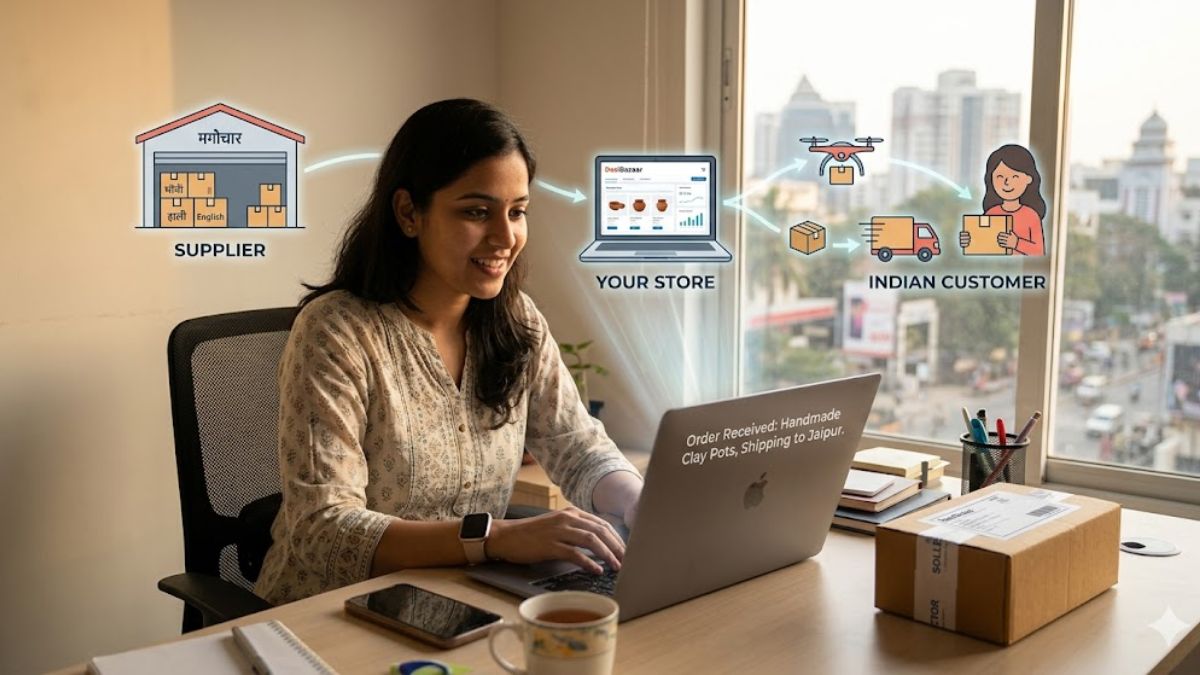
The idea to start a dropshipping business has gained enormous attention among aspiring entrepreneurs, especially in India’s fast-growing e-commerce economy. Dropshipping is a retail business model where the seller markets products online without keeping inventory. Instead, when a customer places an order, the seller forwards the order to a third-party supplier who ships the product directly to the customer. This removes the need for warehousing, inventory investment, and large upfront capital.
The rise of digital payments, improved logistics networks, and smartphone penetration has created the perfect environment to start dropshipping in India. Millions of consumers now shop online for everything from fashion and electronics to home décor and fitness products. For entrepreneurs, this means the opportunity to launch an online store quickly and test product demand without major financial risk. The dropshipping model particularly attracts young founders, students, digital marketers, and small business owners who want to build an e-commerce venture with minimal startup costs. It can be operated from anywhere with a laptop and internet connection, making it ideal for individuals seeking location-independent businesses.
India’s e-commerce market is projected to cross hundreds of billions of dollars in the coming years. Platforms such as Shopify and WooCommerce have simplified store creation, while international marketplaces and domestic suppliers provide access to thousands of products ready for dropshipping. The biggest advantage is flexibility. Entrepreneurs can experiment with multiple niches, change suppliers, or pivot quickly depending on market demand. A dropshipping startup in India can begin with a few thousand rupees and scale into a large brand if the product selection and marketing strategy work well.
This guide explains how to start dropshipping in India, covering market opportunity, customer targeting, supplier selection, costs, legal requirements, and long-term growth strategy. For anyone planning to launch a dropshipping business in India, understanding these fundamentals can make the difference between a side hustle and a scalable digital brand.
1. Startup Idea Overview
The concept of a dropshipping business in India revolves around selling products online without storing them physically. Instead of purchasing bulk inventory, the entrepreneur acts as an intermediary between customers and suppliers. In a traditional retail model, businesses must invest heavily in stock, warehousing, and logistics. This increases financial risk because unsold inventory ties up capital. Dropshipping eliminates that barrier. When a customer places an order on the online store, the seller forwards the order details to a supplier. The supplier then packages and ships the product directly to the customer.
The seller’s role focuses primarily on marketing, branding, and customer service.For example, an entrepreneur may create an online store selling fitness accessories. The products are listed on the website with images and descriptions. When customers place orders, the products are shipped by suppliers based in India or overseas. This allows entrepreneurs to earn money with dropshipping in India without owning warehouses or manufacturing units.
The simplicity of this model has attracted thousands of digital entrepreneurs globally. In India, the ecosystem is expanding due to access to global suppliers and improved shipping infrastructure. The idea is not just about reselling products. Successful dropshipping brands build strong customer trust, offer curated product selections, and invest heavily in marketing. When done correctly, dropshipping can evolve into a full-scale e-commerce brand.
3. Problem Statement & Solution
Starting an e-commerce business traditionally requires large investments. Inventory procurement, warehouse rental, packaging materials, and shipping logistics add significant operational costs. For new entrepreneurs, this barrier often prevents them from entering the online retail market. Another challenge is demand uncertainty. Businesses must guess which products will sell well. If predictions fail, unsold inventory becomes a financial loss. The dropshipping model solves both of these issues.
By eliminating inventory ownership, entrepreneurs only purchase products after receiving confirmed customer orders. This dramatically reduces financial risk. A second advantage is flexibility. If a product does not perform well, the seller can quickly replace it with another product without losing capital. This adaptability is crucial in e-commerce where consumer preferences change rapidly.
The ability to experiment with profitable dropshipping niches in India makes the model appealing to digital entrepreneurs. For customers, the benefit is access to a wide variety of products. Dropshipping stores can offer hundreds or even thousands of items without storing them physically. The model creates an efficient supply chain where suppliers handle logistics while entrepreneurs focus on brand building and customer acquisition.
4. Target Audience & Customer Persona
The typical customer for a dropshipping store depends on the niche chosen. However, most successful stores target digitally active consumers who frequently shop online. Young urban professionals between the ages of 20 and 40 form a major segment of India’s online shopping population. They are comfortable purchasing products through social media ads and mobile apps. Another important segment includes college students and young consumers who follow global lifestyle trends.
For example, trending gadgets, fashion accessories, fitness gear, and home décor products often perform well among these audiences. Customers choosing dropshipping stores usually value convenience and product discovery. Many purchases happen impulsively after seeing advertisements on social platforms. Understanding customer behavior is critical for anyone planning to start a dropshipping business. Customer personas often include:
Young professionals seeking affordable lifestyle upgrades. College students interested in trendy gadgets and fashion accessories. Online shoppers looking for niche or unique products not easily available in local markets. Successful dropshipping brands carefully design their marketing messages based on these audience segments.
5. Market Opportunity & Timing
India’s e-commerce market has witnessed extraordinary growth over the past decade. Rapid smartphone adoption, affordable internet access, and digital payment platforms have transformed online shopping habits. Millions of consumers are now comfortable purchasing products through mobile devices. This shift creates a massive opportunity for entrepreneurs to launch a dropshipping business in India.
Market analysts estimate that India’s e-commerce sector will continue expanding significantly in the coming years. Online retail penetration remains relatively low compared to developed markets, which means there is still plenty of growth potential. Several trends are driving this expansion. Social commerce is rising rapidly. Platforms like Instagram and YouTube are influencing product discovery and purchasing decisions.
Short-form video platforms have also become powerful marketing tools for e-commerce brands. Another trend is the rise of niche online stores. Consumers increasingly prefer specialized stores offering curated products rather than generic marketplaces. This environment makes it easier for new entrepreneurs to enter the market and test niche products. Entrepreneurs researching best dropshipping products in India often explore categories such as home improvement gadgets, pet accessories, fitness equipment, and travel gear. Timing also favors digital entrepreneurship. Many professionals now seek additional income streams, and dropshipping offers a relatively low-risk way to experiment with online business.
6. USP & Value Proposition
The biggest strength of the dropshipping model is accessibility. Almost anyone with basic digital skills can start a dropshipping business. Unlike traditional retail ventures that require large investments, dropshipping allows entrepreneurs to launch online stores with minimal capital. Another advantage is speed. A new store can be built within days using modern e-commerce platforms.
Flexibility also plays a major role. Sellers can experiment with multiple product categories until they discover profitable niches. This experimentation leads to better product-market fit. From the customer’s perspective, dropshipping stores often offer unique products that are not easily available in local shops. Successful brands focus on storytelling, strong branding, and curated product selections. Instead of competing purely on price, they position themselves as lifestyle brands solving specific consumer problems.
7. Business Model & Pricing Strategy
The revenue model for dropshipping is straightforward. Entrepreneurs purchase products from suppliers at wholesale prices and sell them to customers at higher retail prices. The difference between the supplier cost and retail price becomes the profit margin. Margins typically range between 15 percent and 40 percent depending on product category and supplier pricing.
Shipping costs and marketing expenses must also be factored into pricing strategies. To build sustainable businesses, entrepreneurs must carefully analyze dropshipping business cost in India. Pricing strategies often depend on perceived product value rather than production cost. For example, a trending gadget may cost ₹500 from a supplier but sell online for ₹1,500 due to strong marketing and branding. This model allows entrepreneurs to scale profits without manufacturing products.
8. Execution Plan & Launch Strategy
Launching a dropshipping startup requires structured execution. The first step is market research. Entrepreneurs must analyze product demand, competition levels, and customer trends. Tools such as Google Trends and marketplace data help identify profitable dropshipping niches in India. The next step is selecting an e-commerce platform. Popular ecommerce platforms for dropshipping include Shopify, WooCommerce, Magento, BigCommerce, OpenCart. Many entrepreneurs prefer Shopify because it offers integrated apps designed specifically for dropshipping operations.
The store design should focus on simplicity, mobile responsiveness, and fast loading speed. Product descriptions and images must clearly communicate the product benefits. Marketing preparation begins before launch. This includes setting up social media accounts, creating brand visuals, and planning digital advertising campaigns. Once the store is live, initial marketing campaigns drive the first wave of traffic and customer orders. Early data helps founders refine product selection and advertising strategies.
9. Budget, Resources & Infrastructure
One of the biggest advantages of dropshipping is the relatively low startup cost. Most entrepreneurs can start dropshipping in India with modest budgets compared to traditional retail businesses. Initial costs typically include website development, domain registration, marketing campaigns, and app integrations. The primary operational expenses involve digital marketing, customer support tools, and payment gateway fees. Platforms like Shopify dropshipping India offer ready-made templates and integrations that simplify store management.
For those using WordPress, WooCommerce dropshipping store setups provide a flexible alternative. Other essential tools include analytics platforms, email marketing software, and customer relationship management systems. While costs vary widely depending on scale, many founders launch their first store with limited investment and gradually scale as revenue grows.
10. Brand Strategy
A strong brand identity differentiates successful dropshipping stores from generic online sellers. Brand names should be short, memorable, and easy to pronounce. The logo should reflect the brand personality and niche focus. Brand voice plays an important role in building customer trust. For example, a tech gadget store may use a modern and energetic tone, while a home décor brand might adopt a more elegant style.
Storytelling also strengthens brand perception. Customers are more likely to purchase from stores that communicate clear value propositions and authentic brand narratives. Over time, consistent branding transforms a simple online store into a recognizable digital brand.
11. Vendor & Partner Strategy
Choosing reliable suppliers is one of the most important decisions in a dropshipping business. Product quality, shipping time, and supplier reliability directly affect customer satisfaction. Entrepreneurs often evaluate top dropshipping suppliers India before launching their stores. Reliable suppliers should offer transparent pricing, clear return policies, and responsive communication.
International suppliers also play a role in the ecosystem. Platforms supporting AliExpress dropshipping India enable access to global product catalogs. However, shipping times must be carefully considered when sourcing internationally. Some entrepreneurs combine domestic and international suppliers to balance speed and product variety. Strong vendor relationships improve supply chain efficiency and customer experience.
12. Go-to-Market & Customer Acquisition Channels
Marketing is the driving force behind dropshipping success. Social media advertising remains one of the most effective channels for acquiring customers. Platforms such as Facebook, Instagram, and YouTube allow entrepreneurs to target specific audiences based on interests and demographics. Influencer collaborations also play a major role in product discovery. Micro-influencers with niche audiences often deliver strong engagement and trust. Content marketing is another powerful channel.
Entrepreneurs can publish blog articles, product reviews, and tutorial videos to attract organic traffic. Search engine optimization helps stores rank for queries related to best dropshipping products in India. Over time, a combination of paid advertising and organic content builds sustainable traffic sources.
13. Growth & Retention Strategy
Scaling a dropshipping startup requires continuous optimization. Successful entrepreneurs analyze sales data to identify high-performing products. Winning products often become the foundation of long-term brands. Customer retention strategies also play a crucial role. Email marketing campaigns, loyalty programs, and personalized recommendations encourage repeat purchases.
Upselling and cross-selling techniques increase average order value. As stores grow, entrepreneurs may gradually transition from pure dropshipping to hybrid models involving private labeling or local inventory. This shift allows greater control over product quality and branding.
14. Team Structure & Responsibilities
In the early stages, many dropshipping startups operate with small teams. The founder often handles multiple roles including marketing, supplier coordination, customer service, and analytics. As the business grows, specialized roles become necessary. Digital marketing experts manage advertising campaigns and traffic acquisition.
Customer support representatives handle inquiries and order issues.Graphic designers and content creators develop product visuals and marketing materials. Some tasks such as video editing or website development may be outsourced to freelancers. Efficient team structure ensures smooth operations while controlling operational costs.
15. Risks, Challenges & Mitigation
Despite its advantages, dropshipping carries several risks. One challenge is intense competition. Because entry barriers are low, many sellers may promote similar products. Differentiation through branding and customer experience becomes essential. Another challenge involves supplier reliability. Delays or product quality issues can damage customer trust.
Working with reputable dropshipping suppliers in India reduces these risks. Other challenges include fluctuating advertising costs and changing consumer trends. Entrepreneurs must continuously monitor data and adapt their strategies. Risk management involves diversifying product categories, building strong supplier relationships, and maintaining high customer service standards.
16. Legal, Compliance & Fundamentals
Entrepreneurs planning to start a dropshipping business must comply with several legal requirements in India. Business registration is often recommended to establish credibility and manage taxation. Many founders register their ventures as sole proprietorships or private limited companies. A Goods and Services Tax registration may be required depending on sales volume and interstate transactions. Payment gateways also require compliance with financial regulations. Clear refund policies, privacy policies, and terms of service should be displayed on the website. These legal fundamentals protect both the business and its customers.
17. Long-Term Vision & Future Outlook
Dropshipping often begins as a small online store but can evolve into a large e-commerce brand. Many globally successful brands initially started using dropshipping to test product demand before investing in manufacturing and private labeling. Entrepreneurs who start a dropshipping business today may eventually build full-scale direct-to-consumer brands. Over the next five years, India’s digital commerce ecosystem is expected to expand dramatically.
Improved logistics networks, faster shipping solutions, and expanding digital payment systems will further support online retail growth. For founders willing to experiment with products, build strong marketing capabilities, and deliver excellent customer experiences, dropshipping offers a powerful entry point into the e-commerce industry. Those who successfully launch a dropshipping business in India today may find themselves operating scalable digital brands tomorrow.
About foundlanes.com
foundlanes.com is an emerging platform dedicated to startup ideas, founder journeys, and business insights. The platform focuses on practical entrepreneurial knowledge designed for aspiring founders, side-hustlers, and early-stage startup builders. Through detailed guides, startup analyses, and founder stories, foundlanes helps readers discover opportunities, understand business models, and learn how modern startups are built in India and around the world.