
Summary
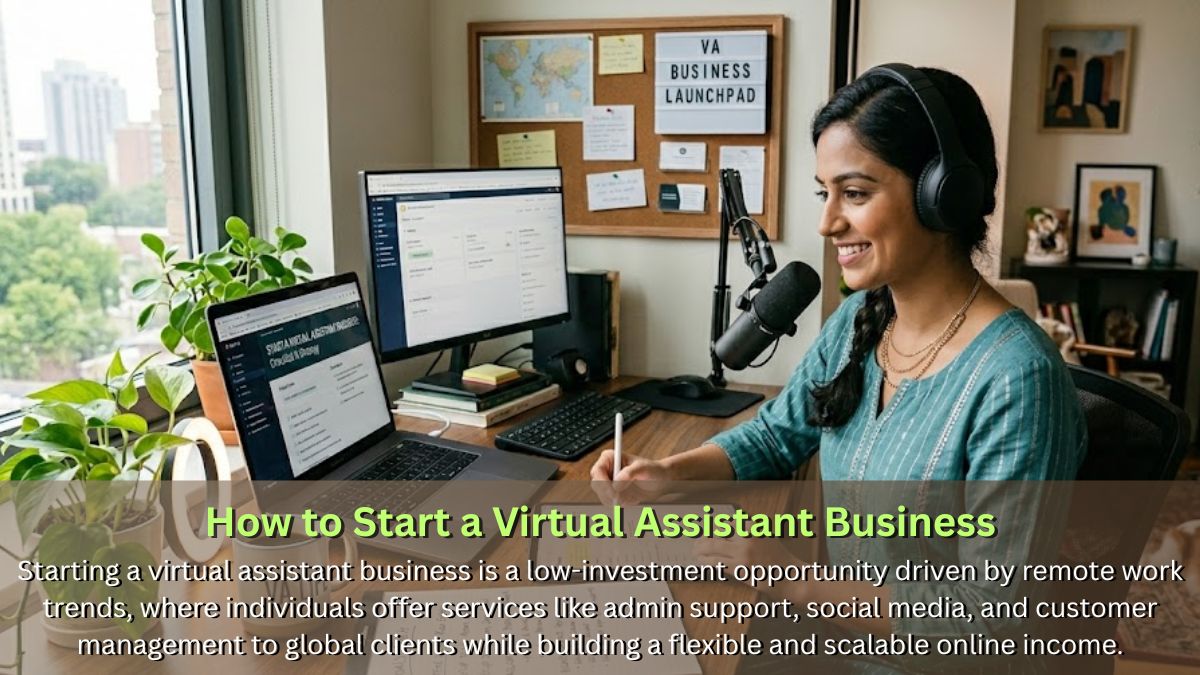
The idea to start a virtual assistant business has gained significant traction in recent years as businesses across the world embrace remote work, digital collaboration, and flexible workforce models. A virtual assistant (VA) business offers professional support services to entrepreneurs, startups, and companies remotely. These services can include administrative support, email and calendar management, customer service, social media management, data entry, and a wide range of operational tasks that help businesses run efficiently.
The rise of remote work culture and digital entrepreneurship has created strong demand for remote administrative services. Small business owners, startup founders, consultants, and content creators increasingly prefer outsourcing repetitive operational tasks so they can focus on strategy, product development, and revenue growth. This shift has opened up a massive opportunity for individuals who want to build sustainable service-based businesses online.
Anyone with basic professional skills
Anyone with basic professional skills such as communication, organization, research, scheduling, or social media management can enter the industry. Professionals with backgrounds in administration, marketing, customer support, or operations often transition into freelance virtual assistant services as independent entrepreneurs. Many also specialize in niche services such as email management services, calendar management service, or social media virtual assistant support.
A virtual assistant business can be run from anywhere with a laptop and stable internet connection. This makes it particularly attractive in emerging markets like India, where skilled professionals can offer services to global clients while maintaining relatively low operational costs. Timing also favors new entrants. The global remote work movement, increasing startup activity, and the rapid expansion of online businesses have significantly increased demand for high-demand virtual assistant services.
The investment required to start such a venture is minimal. Many entrepreneurs begin with budgets ranging between ₹5,000 and ₹50,000, covering essential tools, branding, and basic marketing. With the right positioning and client acquisition strategy, starting a virtual assistant business can quickly grow into a scalable and profitable virtual assistant business.
1. Startup Idea Overview: The Virtual Assistant Business Model
A virtual assistant business provides professional services remotely to businesses, entrepreneurs, and organizations that require operational support but do not want to hire full-time employees. Instead of hiring in-house staff, companies outsource tasks to virtual assistants who work independently or through small agencies. These assistants handle a wide range of responsibilities including administrative tasks, customer communication, scheduling, data management, and digital marketing support.
This model is gaining popularity because businesses are increasingly seeking flexible staffing solutions. Hiring remote professionals allows companies to reduce overhead costs associated with office space, employee benefits, and long-term contracts. For individuals looking to start a virtual assistant business, the opportunity lies in offering reliable and specialized services that help businesses operate smoothly.
Many founders begin by offering basic remote administrative services, then gradually expand into specialized services such as social media management, marketing support, research assistance, or project coordination. Because the business relies primarily on skills rather than capital investment, it is one of the most accessible entrepreneurial opportunities in the digital economy.
2. Problem Statement & Solution
2.1 Operational Challenges Faced by Businesses
If you’ve ever run or worked closely with a growing business, you know this feeling. Your day starts with one important task, and before you even touch it, you’re pulled into emails, calls, follow-ups, scheduling conflicts, and endless small decisions. None of these tasks are “unimportant.” In fact, they keep the business running. But together, they slowly drain your time, focus, and energy. Founders and managers today are not just decision-makers. They are operators, coordinators, customer support reps, and sometimes even marketers. The reality is simple: too many roles, not enough time.
For early-stage startups, this problem becomes even sharper. Hiring full-time staff for administrative work feels like a big financial commitment. You don’t just pay salaries. You take on long-term responsibility. And for tasks that fluctuate in volume, that often doesn’t make sense. So what happens? Founders start doing everything themselves. At first, it feels manageable. Then it becomes overwhelming. Strategic thinking takes a back seat. Growth slows down. Burnout creeps in quietly. This is not a productivity problem. It’s a structure problem.
2.2 Virtual Assistants as the Practical Solution
This is where the idea of a virtual assistant stops being “nice to have” and becomes a real operational advantage. A virtual assistant business solves this exact bottleneck by offering support that is flexible, scalable, and cost-efficient. Instead of committing to a full-time hire, businesses can delegate specific tasks to someone who is already trained, already equipped, and ready to step in. Think about the impact in real terms.
A cluttered calendar becomes structured. Meetings stop overlapping. Time blocks start making sense again. An overflowing inbox becomes manageable. Important emails are prioritized. Responses go out on time. Customer queries stop piling up. Someone is there to respond, follow up, and keep the experience smooth. And then there’s social media. Many founders know they should be active, but consistency is hard. A social media virtual assistant doesn’t just schedule posts. They bring rhythm, engagement, and continuity. The biggest shift is not just operational. It’s mental. When routine work is handled, founders finally get space to think clearly. Strategy improves. Decisions become sharper. Growth feels more intentional instead of reactive. That’s the real value.
3. Target Audience & Customer Persona
The demand for virtual assistants doesn’t come from one type of customer. It comes from people who are stretched thin and need reliable support without adding complexity. Entrepreneurs and small business owners are the most obvious group. They are building something from scratch, often with limited resources. They don’t need a large team. need the right help at the right time. Freelance virtual assistants fit perfectly into this model.
Startups, especially in early stages, operate lean by design. Every hire matters. Every cost is evaluated. Virtual assistants allow them to stay agile while still getting operational work done efficiently. Then there’s a fast-growing segment that’s often underestimated: creators, coaches, and digital entrepreneurs. These are people managing audiences, content, clients, and platforms all at once. As they grow, the workload multiplies quickly. Scheduling calls, managing DMs, handling emails, organizing content calendars. It becomes too much for one person.
Virtual assistants step in and bring order to that chaos. Another important group is professionals and executives. Their needs are slightly different. They value discretion, reliability, and precision. Travel planning, meeting coordination, document handling. These tasks require trust as much as skill. Across all these segments, one thing is consistent. People are not just looking for help. They are looking for someone dependable.
4. Market Opportunity & Timing
The rise of virtual assistants is not a coincidence. It’s a direct result of how work itself has changed. Remote work is no longer an exception. It’s normal. Teams are distributed. Collaboration happens across time zones. And because of this shift, businesses are far more open to outsourcing than they were a decade ago. For small businesses and startups, this is a huge advantage. Instead of increasing fixed costs, they can scale operations through flexible support. It’s faster, safer, and often more efficient.
At the same time, digital platforms have removed geographical barriers. A virtual assistant in India can work with a client in the US, UK, or anywhere else. This access to global clients has completely changed the earning potential and growth opportunities in this space. In India specifically, the timing couldn’t be better. The startup ecosystem is expanding. More founders, more creators, more online businesses. And all of them need operational support.
Specialization is also becoming more valuable. Virtual assistants who go beyond basic admin tasks and offer skills like CRM management, marketing support, or research are able to charge higher rates and build long-term client relationships. This is no longer just a side hustle. It’s a serious business opportunity.
5. USP & Value Proposition
At its core, a virtual assistant business is built on one promise: “I will give you your time back.” But making that promise is easy. Delivering it consistently is what builds a real business. Clients hire virtual assistants to reduce stress, not add to it. That means reliability is everything. Missing deadlines, poor communication, or inconsistent work can quickly break trust. The strongest virtual assistant businesses don’t try to do everything. They focus.
Some specialize in working with startup founders. Others focus on e-commerce operations, handling product listings, customer queries, and order tracking. Some build expertise in email management or calendar organization for executives. This focus creates clarity. And clarity builds trust. When clients know exactly what you’re good at, they rely on you more. Over time, this turns into long-term relationships, repeat work, and referrals. Efficiency also becomes a differentiator. It’s not just about completing tasks. It’s about doing them smoothly, without constant back-and-forth. The best virtual assistants anticipate needs instead of reacting to instructions. That’s when clients start seeing you not as a service provider, but as an extension of their team.
6. Business Model & Pricing Strategy
The way virtual assistants earn is flexible, just like the service itself. But choosing the right pricing model can shape the entire business. Hourly pricing is where most people start. It’s straightforward and ensures you get paid for the time you put in. For beginners, this reduces risk and builds confidence. But over time, hourly work can feel limiting. Your income is tied directly to your hours. That’s where monthly retainers come in.
Retainers bring stability. Clients pay a fixed amount for a set number of hours or services each month. For the client, it ensures consistent support. For the virtual assistant, it creates predictable income. This model is often preferred by experienced professionals who have built trust with their clients. Project-based pricing works best for specialized tasks. Things like setting up a CRM system, managing a research project, or executing a social media campaign. Here, clients pay for outcomes rather than time.
Pricing itself varies widely. Entry-level virtual assistants may charge anywhere between ₹500 to ₹1,500 per hour. As skills improve and specialization increases, rates go up significantly. Those offering high-value services like marketing automation or CRM management often command premium pricing. But pricing is not just about skill. It’s about value. If a virtual assistant helps a founder save 10 hours a week or improves customer response time, the impact is real and measurable. Clients are willing to pay more for that kind of reliability and efficiency. In the end, the most successful virtual assistant businesses are not the cheapest. They are the most dependable.
7. Execution Plan & Launch Strategy
7.1 Developing the Service Offering
Starting a virtual assistant business sounds simple on the surface. Offer services, find clients, get paid. But in reality, the difference between struggling and succeeding often comes down to one thing: clarity. What exactly are you offering, and who is it for? Most people make the mistake of trying to do everything. Admin work, social media, research, email handling, customer support. It feels safe to offer more. But in practice, it creates confusion. Clients don’t clearly understand your value, and you end up competing on price instead of expertise.
A better approach is to start with what you already know. Look at your past experience. Maybe you’ve handled operations, managed emails, coordinated teams, or worked on marketing tasks. Those are not just “skills.” They are starting points for your service offering.
Administrative support, scheduling, research, and customer communication are common entry points because businesses always need them. But over time, the goal should be to move from “general help” to “specific value.” For example, instead of saying you manage emails, you position yourself as someone who keeps a founder’s inbox organized so they never miss an important opportunity. That shift may sound small, but it changes how clients perceive your work. And when clients see outcomes, not just tasks, they’re willing to pay more.
7.2 Building an Online Presence
In the early days, people don’t know you. They don’t trust you yet. And in a remote business like this, trust is everything. Your online presence becomes your first impression. You don’t need anything overly complex. A clean LinkedIn profile, a simple website, and a portfolio that shows what you’ve done or what you can do. That’s enough to start. But what really makes a difference is how you present your work.
Instead of listing tasks, show impact. Instead of saying “handled scheduling,” explain how you reduced meeting conflicts or improved time management. saying “managed social media,” show consistency, engagement, or growth. Even small wins matter when you communicate them well. Testimonials also play a huge role. A single honest review from a client can do more than pages of self-promotion. It tells potential clients, “someone trusted this person, and it worked.” Over time, your online presence becomes more than just a profile. It becomes proof.
7.3 Acquiring the First Clients
This is the part where most people feel stuck. You’ve defined your services, set up your profile, and now you’re asking the big question: where do the clients come from? The truth is, your first clients rarely come from ads or perfect strategies. They come from conversations. Your network is more powerful than you think. Former colleagues, friends, founders you’ve interacted with, online communities you’re part of. These are often the starting points.
Reaching out can feel uncomfortable at first. But it doesn’t have to be salesy. It can be as simple as letting people know what you’re doing and how you can help. Freelance platforms also help in the beginning. They’re competitive, yes, but they give you something crucial: experience and credibility. Even a few completed projects can build momentum.
Another underrated strategy is sharing what you know. Write about productivity, operations, or common business problems. When people see you understand their challenges, they naturally start trusting your ability to solve them. That’s how you answer the question most beginners struggle with: how to actually get virtual assistant clients. Not through tricks, but through visibility and trust.
8. Budget, Resources & Infrastructure
One of the biggest advantages of starting a virtual assistant business is how accessible it is. You don’t need a big office. You don’t need heavy investment. don’t need a large team. At the basic level, all you need is a reliable laptop, a stable internet connection, and a few essential tools. Communication platforms, task management systems, and cloud storage solutions. These are the backbone of your daily work.
And that’s enough to start. As you grow, you might invest in better tools, branding, or a website. But even then, the costs remain relatively low compared to traditional businesses. This low barrier to entry is what makes the opportunity so attractive. It allows professionals to start small, learn as they go, and scale gradually without taking big financial risks. But there’s another side to this. Because it’s easy to start, the market is also competitive. That means your real investment is not money. It’s consistency, skill-building, and reliability. Those are the things that actually set you apart.
9. Brand Strategy
In a crowded space, your brand is what makes people remember you. And branding is not just about logos or colors. It’s about how people feel when they interact with you. A strong virtual assistant brand communicates three things clearly: professionalism, reliability, and clarity. Your name, your messaging, your visual identity. Everything should align with the type of clients you want to attract. If you’re targeting startup founders, your tone might be sharp and efficiency-focused. If you’re working with executives, it might be more polished and detail-oriented.
Consistency matters here. When someone visits your LinkedIn profile, your website, or your portfolio, it should all feel like the same person, the same voice, the same promise. And that promise is important. Many successful virtual assistants position themselves not as task-doers, but as partners. People who take ownership, who reduce stress, who make things easier for their clients. When your brand communicates that clearly, you don’t have to chase clients as much. The right ones start coming to you.
10. Vendor & Partner Strategy
Even though virtual assistant businesses are often solo operations, they don’t grow in isolation. The tools you use become part of your workflow and, in many ways, your silent partners. Project management platforms, scheduling tools, CRM systems. These are what help you deliver work efficiently and stay organized. But beyond tools, real growth often comes from people. Collaborating with complementary professionals can open doors you wouldn’t reach alone. A marketing consultant might need operational support. A web designer might have clients who need ongoing assistance. An accountant might work with business owners who are overwhelmed with admin tasks.
When you build relationships with these professionals, you create a network where work flows naturally. Instead of constantly searching for new clients, opportunities start coming through referrals and partnerships. And the best part is, you don’t need to build a large team to offer more value. You simply connect the dots.
11. Go-to-Market & Customer Acquisition Channels
Getting your first few clients is one thing. Building a steady flow of clients is another. This is where having a clear go-to-market approach makes a difference. Platforms like LinkedIn often become the primary channel. Not because they are magical, but because that’s where professionals already spend time. Sharing insights, engaging with posts, and staying visible can gradually build trust. Content plays a big role here.
When you write about real problems, things like managing time, handling operations, or improving productivity, you’re not just creating content. You’re showing that you understand your audience. Freelance platforms can still be part of the mix, especially in the early stages. They help you gain experience and build a track record. But over time, something interesting happens. Referrals start taking over. A satisfied client tells another founder. That founder brings you in. And just like that, your business starts growing through trust, not effort alone. That’s when things feel different. You’re no longer chasing work. You’re choosing it.
12. Growth & Retention Strategy
Getting your first few clients feels exciting. But the real test begins after that. Can you keep them? In a virtual assistant business, growth doesn’t come from constantly chasing new clients. It comes from staying valuable to the ones you already have. And that comes down to three things: consistency, communication, and reliability. Clients don’t just want tasks completed. They want peace of mind. They want to know that things are being handled without them having to check every detail. When you consistently deliver on time, communicate clearly, and take ownership, something shifts. You stop being “just a VA” and start becoming someone they depend on. That’s where long-term relationships are built.
Over time, these relationships open new doors. Clients trust you with more responsibility. They refer you to others. They increase your scope of work. This is how a small setup slowly turns into a stable, recurring revenue business. Growth also comes from evolving your services. At the beginning, it’s okay to offer general support. But as you gain experience, specialization becomes your biggest advantage. When you focus on a niche, whether it’s working with startup founders, e-commerce businesses, or content creators, you start solving deeper problems.
And deeper problems come with higher value. Retention strategies don’t need to be complicated. Regular check-ins with clients, asking what’s working and what’s not, improving your processes, and being proactive instead of reactive. These small actions make clients feel heard and supported. In the long run, people stay where they feel understood.
13. Team Structure & Responsibilities
Most virtual assistant businesses start with one person doing everything. You handle the work, talk to clients, manage your schedule, and figure out how to grow. It’s intense, but it teaches you everything about how the business actually runs. Then something changes. More clients come in. Work starts piling up. And suddenly, doing everything alone is no longer sustainable. This is where many founders hesitate. Hiring feels like a big step. But the truth is, you don’t need to build a large team overnight.
You start small. Maybe you can bring in another virtual assistant to handle basic tasks. Over time, people begin to specialize. One person focuses on customer support, another on social media, someone else on research or operations. This shift is important. Instead of being a solo worker, you become someone who manages outcomes. Even then, the structure remains flexible. You don’t need full-time employees in the traditional sense. Freelancers, part-time contributors, and remote collaborators can all be part of your team.
Administrative work like bookkeeping or marketing can also be outsourced when needed. This kind of structure keeps costs low while allowing you to scale. It gives you the freedom to grow without taking on heavy financial pressure. And more importantly, it gives you back your time again. The same thing your clients once came to you for.
14. Risks, Challenges & Mitigation
From the outside, the virtual assistant business looks simple. Low investment, flexible work, global clients. But once you’re in it, you realize it comes with its own set of challenges. Competition is one of the biggest. More people are entering this space every day. And with global access, clients can compare prices across countries. This often creates pressure to lower your rates, especially in the beginning. It’s easy to fall into that trap.
But competing on price is rarely sustainable. The real way to stand out is through value. When you specialize, improve your skills, and deliver consistently high-quality work, clients stop comparing you with everyone else. You become a category of your own. Another challenge is managing multiple clients at once. As your workload grows, so does the complexity. Deadlines overlap, expectations increase, and communication needs to stay sharp. Without proper systems, things can slip. This is why processes matter. Clear workflows, organized task management, and setting expectations upfront can prevent most issues before they even arise.
Client relationships can also be fragile if not handled carefully. Miscommunication, unclear scope, or missed deadlines can quickly damage trust. The solution is simple, but not always easy. Be transparent. Be proactive. And don’t wait for problems to escalate before addressing them. At the end of the day, most challenges in this business are not technical. They’re human. And they’re solved through clarity and consistency.
15. Legal, Compliance & Fundamentals
When you’re just starting out, legal and financial aspects often feel like something you can deal with later. But ignoring them can create problems down the line. Running a virtual assistant business is still running a business. That means you need to take care of the basics. Proper registration, understanding your tax responsibilities, and keeping your finances organized. It doesn’t have to be complicated, but it does need attention.
Contracts are another essential part. They are not about mistrust. They are about clarity. A good agreement clearly defines what you will do, what the client expects, timelines, payment terms, and boundaries. It protects both sides and avoids unnecessary confusion later. Confidentiality is especially important in this line of work.
As a virtual assistant, you often handle sensitive information. Emails, documents, customer data, internal processes. Clients need to feel safe sharing this with you. Having clear confidentiality agreements and basic data security practices in place builds that trust. Simple things like using secure tools, managing passwords responsibly, and maintaining privacy go a long way. When you take these fundamentals seriously, you don’t just look professional. You become reliable in a way that clients truly value. And in a business built on trust, that makes all the difference.
16. Future Outlook
The future for entrepreneurs who start a virtual assistant business looks increasingly promising as remote work continues to reshape global employment. Businesses are becoming more comfortable outsourcing operational tasks to remote professionals. This trend is likely to accelerate as startups and digital entrepreneurs seek flexible staffing models. The growing complexity of online businesses also creates opportunities for specialized services such as marketing support, CRM management, and customer experience management. Professionals who focus on high-demand virtual assistant services and continuously upgrade their skills will remain competitive in the evolving marketplace.
For entrepreneurs exploring how to become a virtual assistant and build sustainable careers, the opportunity lies in combining reliability, specialization, and strong client relationships. With consistent effort and strategic positioning, starting a virtual assistant business can evolve into a scalable service company serving clients across industries and geographies.
About foundlanes.com
foundlanes.com is India’s emerging startup idea platform dedicated to helping aspiring entrepreneurs discover practical business opportunities. The platform publishes detailed startup guides, founder stories, market insights, and execution strategies designed for students, professionals, and early-stage founders. By simplifying complex business concepts and presenting them in accessible formats, foundlanes aims to empower individuals to explore entrepreneurship and launch successful ventures in India’s rapidly evolving startup ecosystem.